
Korea’s total exports in May amounted to $57.27 billion. Exports of 10 out of the 15 major export items, including automobiles and petrochemicals, decreased.
In particular, automobile exports declined by 4.4% from a year ago to $6.2 billion. This was as a result of the 25% tariff on imported automobiles imposed by the USA in early April, followed by the 25% tariff on some automobile parts starting May 3.
Exports of petroleum products and petrochemicals recorded $3.6 billion and $3.2 billion, respectively, down 20.9% and 20.8% year-on-year. Exports plummeted by 20% as the prices of both items plummeted due to the low oil price trend that followed the inauguration of the Trump administration in the United States.

By region, exports decreased in seven out of the nine major markets, excluding the European Union (EU) and the Commonwealth of Independent States (CIS).
Exports to China fell by 8.4% overall to $10.4 billion due to a decrease in exports of semiconductors and petrochemicals, Korea’s two largest export items. Exports to the United States, where the impact of reciprocal and product tariffs is in full swing, decreased by 8.1% to $10 billion.
Promising Korean exporters continued to actively challenge overseas markets in order to gradually increase their export growth in the second quarter of this year.
As part of such efforts, Korean exporters are strategically developing and releasing competitive new items, which are expected to capture keen attention in global markets. For example:
Seo Young Industrial recently unveiled its cable tray system that can safely preserve cables used in manufacturing sites, even in earthquakes, and thus prevent secondary accidents.
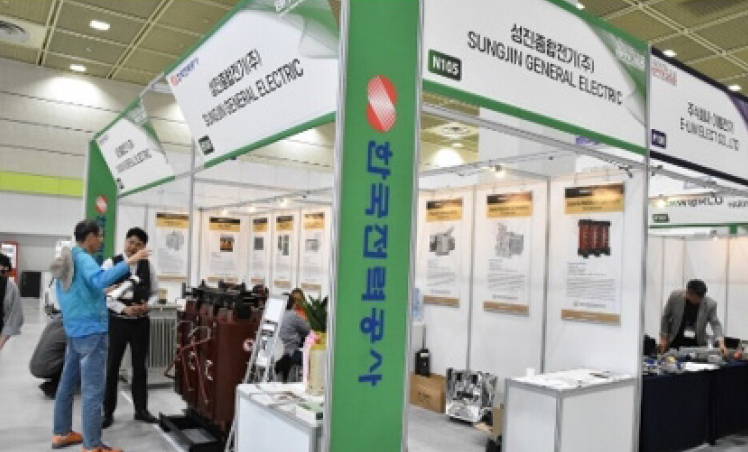
And Sungjin General Electric introduced its vacuum casting mold transformers as its main product at a recent local exhibition in Korea.

korean-machinery.com | Blog Magazine of korean-machinery, brands and Goods



 Korean-Machinery.com
Leave a comment