
Increasing Electric and Hydrogen Vehicles… 9.5 Million Units in 10 Years
K-Mobility Initiative Strategy
Raising a goal of distributing zero-emission vehicles
Reducing individual consumption and acquisition taxes until next year
The government has set a goal of restructuring the entire automotive industry, including not only complete vehicles but also parts manufacturers, centered around eco-friendly vehicles.
The Ministry of Trade, Industry and Energy, jointly with relevant ministries, recently announced the K-Mobility Global Initiative Strategy that contains such contents. The core objective is to transition not only sales of complete vehicles but also parts manufacturers toward eco-friendly vehicles. The government’s goal is to increase the proportion of eco-friendly vehicles, including electric, hydrogen, and hybrid vehicles, to comprise 90% of new vehicle sales by 2035.
According to the Korea Automobile Mobility Industry Association, cumulative sales of domestic complete vehicles as of the third quarter of 2025 reached 1,036,912 units. Of these, eco-friendly vehicles accounted for 44%, or 457,321 units. The government aims to more than double the proportion of eco-friendly vehicle sales within 10 years.
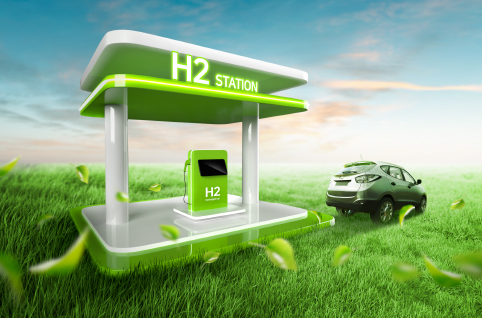
The government also set a goal for the distribution of zero-emission vehicles, including only electric and hydrogen vehicles. Assuming the 2035 National Greenhouse Gas Reduction Target (NDC), announced on the 11th, to be 53%, the lowest goal, a total of 9.52 million zero-emission vehicles must be supplied by 2035. The cumulative number of zero-emission vehicles distributed is approximately 750,000, representing only 7.8% of the target value.
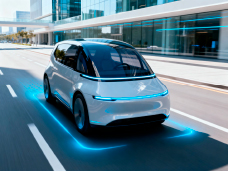
The government plans to support the distribution of eco-friendly vehicles across the entire supply and demand chain. To increase demand, subsidies for passenger EVs will be significantly expanded from next year. Until this year, subsidies were limited to a maximum of KRW 5.8 million per vehicle, but starting next year, an additional KRW 1 million will be provided. This applies to scrapping old existing vehicles and purchasing eco-friendly vehicles. The total budget for subsidies has also been increased from KRW 780 billion this year to KRW 936 billion next year.
The government set itself another goal of converting 70% of internal combustion engine parts companies into future vehicle parts companies by 2030. To facilitate allied mergers between companies, the government will provide support of up to 60% of the funding, up to a limit of KRW 20 billion. It will also support research and development, and 200 future vehicle specialized companies by training 70,000 future vehicle specialists by 2033.

korean-machinery.com | Blog Magazine of korean-machinery, brands and Goods

 Korean-Machinery.com
Leave a comment