 South Korea’s major aircraft manufacturer Korea Aerospace Industries Ltd. (KAI) and its partner U.
S.-based Lockheed Martin last month competed against each other for the first time, vying for a multi-billiondollar and multi-year U.S. Air Force project T-X program to replace an aging fleet of jet trainers, with orders of up to 1,000 aircraft expected, given the life cycle of jets.
The KAI-Lockheed Martin team is pitted against defense majors Boeing – Sweden’s Saab consortium, Northrop Grumman linked up with Britain’s BAE Systems, and Raytheon in venture with Italia’s Alenia Aermacchi.
 KAI fields homogenous T-50A, a renovated version of the T-50 Golden Eagle used by the Korean air force. The players test out their trainers before the U.S. Defense Department recently. The awarding takes place in November 2017.
T-50A is already in service and exported to many countries. Its partner Lockheed Martin supplied the U.S.
Air Force’s main fighters F-22 and F-35. The Boeing and Saab’s prototype is said to be most powerful equipped with an engine that produces as much as 22,000 pounds of thrust, followed by KAI and Lockheed Martin’s T-50A with 17,700 pounds thrust, Raytheon with 12,560 pounds and Northrop with 11,000 pounds.
The other teams have designed their jets customized for the next-generation replacement, while KAI renovated existing trainer.
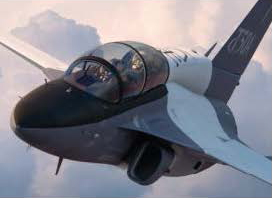 The prototype by Northrop and Raytheon excels in weight. Northrop has made the jet 22 percent lighter although it is bigger than T-50A. Raytheon’s aircraft is the smallest and lightest and boasts twin-engine for greater flight stability. Performance-wise, the horserace is expected to be two-way between KAI-Lockheed and Boeing-Saab teams, according to Konkuk University professor Lee Jae-woo.
The initial batch of 350 aircraft to replace the T-38 Talon jets in service since the 1960s is worth $15 billion, but given the domino effect, the total pipeline value could go near $90 billion.
korean-machinery.com | Blog Magazine of korean-machinery, brands and Goods
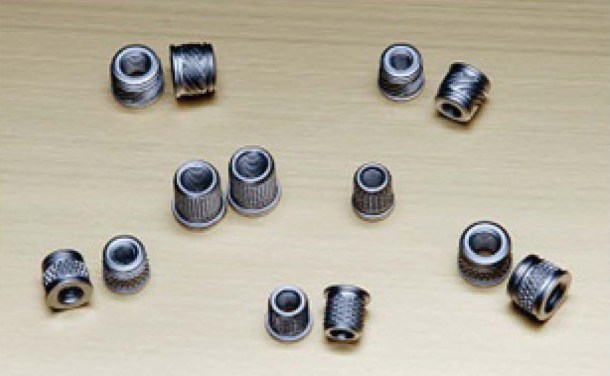
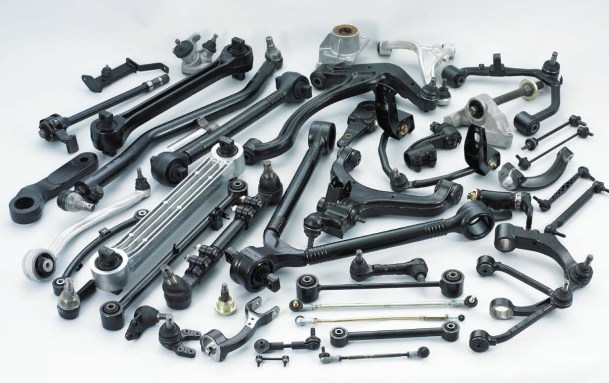

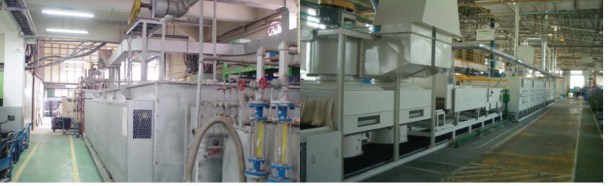
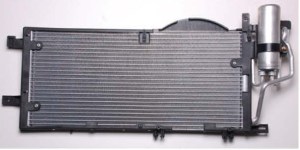 A condenser is required to cool down the hot refrigerant coming from a compressor, so it is located at the front of a car where it can be exposed to the maximum amount of air. As the hot refrigerant fl ows into the condenser, it dissipates heat by fl owing through a system of ultra-thin tubes that are held together by fi ns.
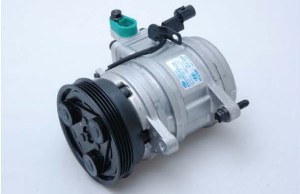 A compressor is a key part of a car’s airconditioning system and is usually driven by the engine via a V-belt or ribbed V-belt.
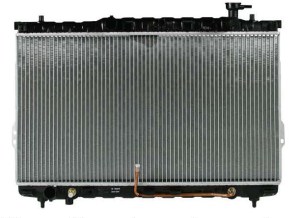 A radiator is located at the front of a car’s engine, just behind the condenser, and is the most important component of the cooling module because it keeps the engine from overheating.
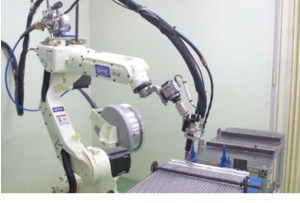 The radiator is made up of a radiator core, along with two plastic side tanks, and all the necessary connections and att achments. The radiator core is made up of a network of fi ns and tubes that run either horizontally or vertically, depending on the application.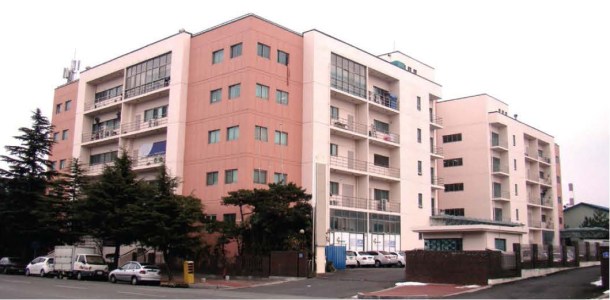
 Alternator regulators apply for 12V and 24V charging systems with a wide range of operating temperatures, from -45 to +135. A self-compensating thermal circuit with custom setting voltage as well as custom package design is available. They are multifunctional with HIC & ASVR types, including LRC function, faulty warning and protection.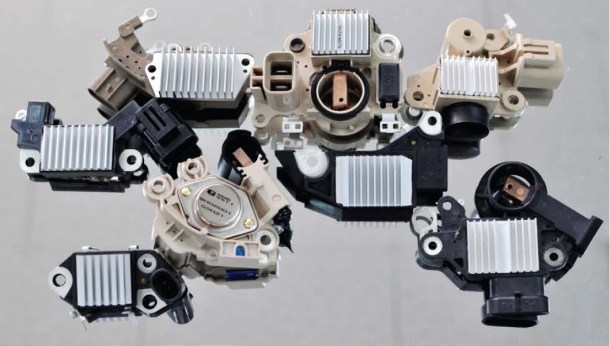

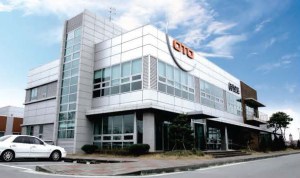 Since its foundation in 1998, OTO has developed into the top automotive powertrain parts manufacturer in Korea through continuous and self-driven technical innovation with “autonomous management” as its basis.
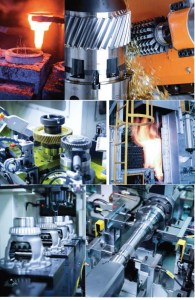 As main products, OTO produces Piston Clutch, Output Shaft, T/F Drive Gear, Speed Gear, Clutch Gear, Annulus Assembly. NEOOTO produces high-quality Helical Gear(Pinion Gear, T/F Gear, Diff Gear, Output Shaft), Ring Gear(Annulus Gear), Assembly(Diff erential Assembly, T/F Assembly)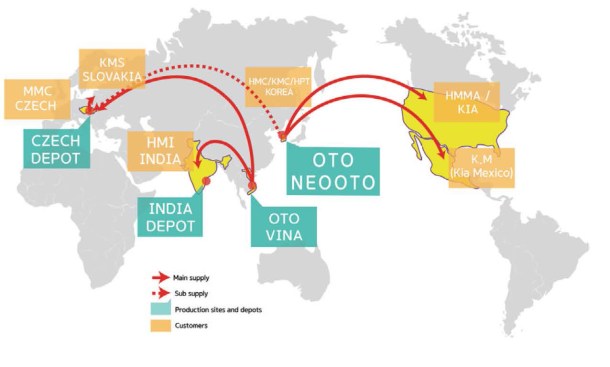
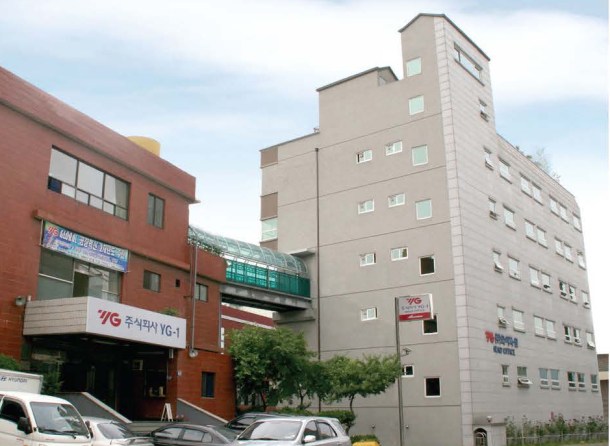
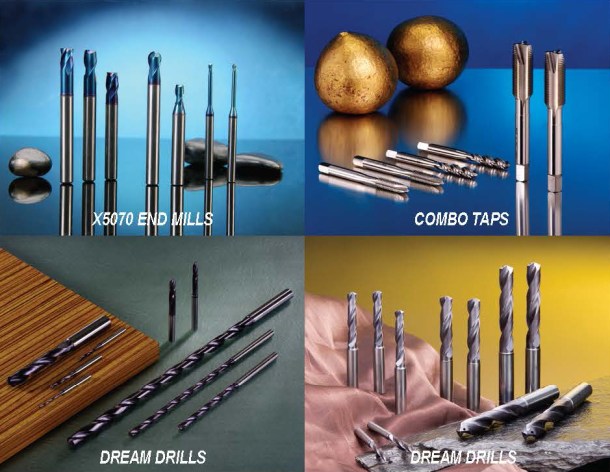
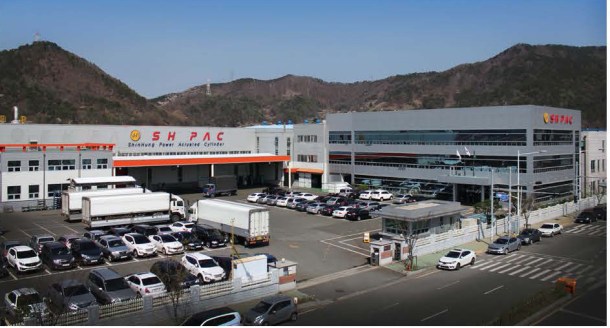
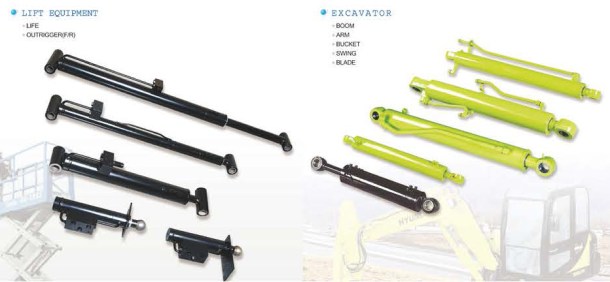 Aiming to become one of the top-fi ve global leaders in the hydraulic system fi eld, the company is developing various hydraulic system modules. It expects its annual sales turnover to reach $400 million in 2020.
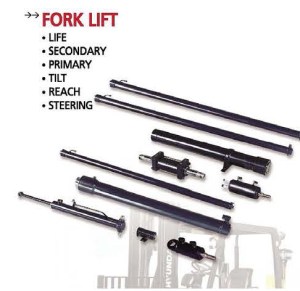 According to a company spokesman, the maker commenced overseas sales of hydraulic cylinders for folk lifts in 1987 and has constantly expanded its production line-up to satisfy everincreasing global demand.
 Korean-Machinery.com