BUTECH 2025 to Feature More Diverse Machinery Products

https://korean-machinery.com///inquiry

The Busan International Machinery Fair 2025 (BUTECH 2025) will be held at BEXCO in Haeundae, Busan, for four days from May 20 to 23.
BUTECH has been growing steadily since its first event in 2003 to promote the development of the machinery industry, establishing itself as the largest comprehensive machinery industry exhibition in Korea.
This year, BUTECH 2025, jointly organized by KIMI Co., Ltd. and the Korea Trade-Investment Promotion Agency (KOTRA), will be held with a total of 1,900 booths, with 550 companies from 30 countries (150 overseas companies, 400 domestic companies) participating.
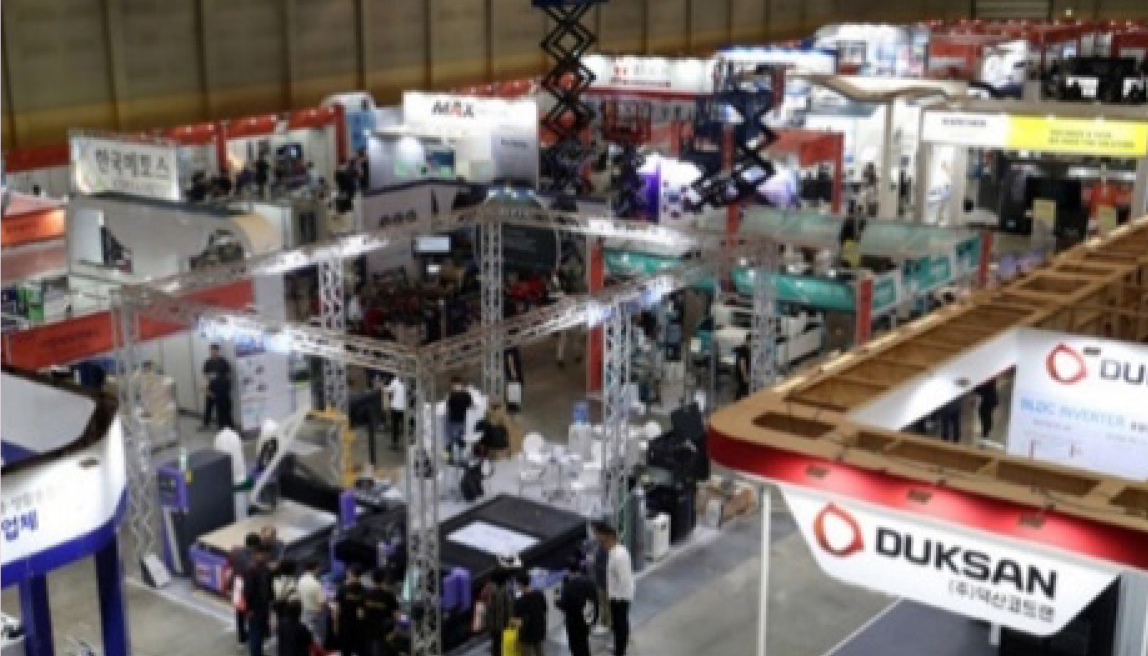
Exhibition Center 1 will host concurrent exhibitions including Machinery Fair, Die & Mold Fair, Plastic & Rubber Fair, Steel & Metal Fair, Parts & Materials Fair, Ppuri Fair, Pneumatic & Hydraulic Fair, and Fine Dust Fair.
Exhibition Center 2 will host concurrent exhibitions including Robot Fair, Factory Automation Fair, Smart Factory Solutions Fair, Machine Vision Fair, 3D Printing Fair, and Factory Equipment Fair.
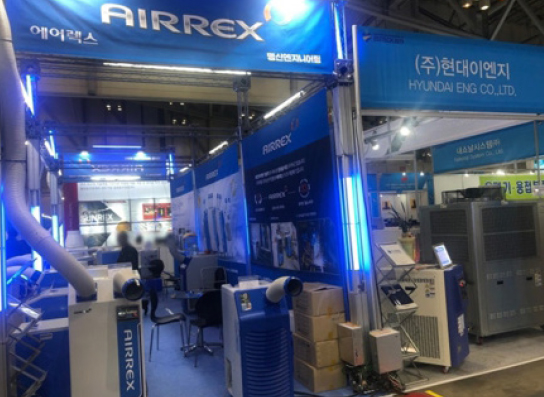
BUTECH 2025 will also host events such as conferences of academic societies related to the machinery industry, presentations of new products and new technologies, etc., to promote the machinery industry, providing a wealth of things to see, and providing useful information to employees of related companies as well as visitors who have always been interested in machinery technology.
At this BUTECH, online and offline export/purchase consultations will also be held to support domestic and international sales channels for companies participating in the event. Potential buyers from many countries and domestic related companies are expected to participate through consultation booths.

 
korean-machinery.com | Blog Magazine of korean-machinery, brands and Goods
Blossoming Journey

https://korean-machinery.com///inquiry

Blossoming Journey: 5 Must-Visit Spring Destinations in South Korea

Spring in South Korea transforms the peninsula into a vibrant canvas of colors and renewal. As winter recedes, the country awakens with blossoming landscapes perfect for unforgettable travel experiences. From iconic cherry blossom festivals to fields of golden flowers and historic sites adorned with spring’s touch, here are five exceptional destinations showcasing Korea’s springtime splendor.

Jinhae: A Spectacular Cherry Blossom Festival

Jinhae, in South Korea’s southern coastal region, is the country’s premier cherry blossom destination. Each spring, this naval city hosts the Jinhae Gunhangje Festival, Korea’s largest cherry blossom celebration. Originally started in 1952 as a memorial for Admiral Yi Sun-sin, it has evolved into a magnificent celebration of naval heritage and natural beauty. The 63rd Jinhae Gunhangje Festival in 2025 will run from March 29 to April 6, attracting millions of visitors.
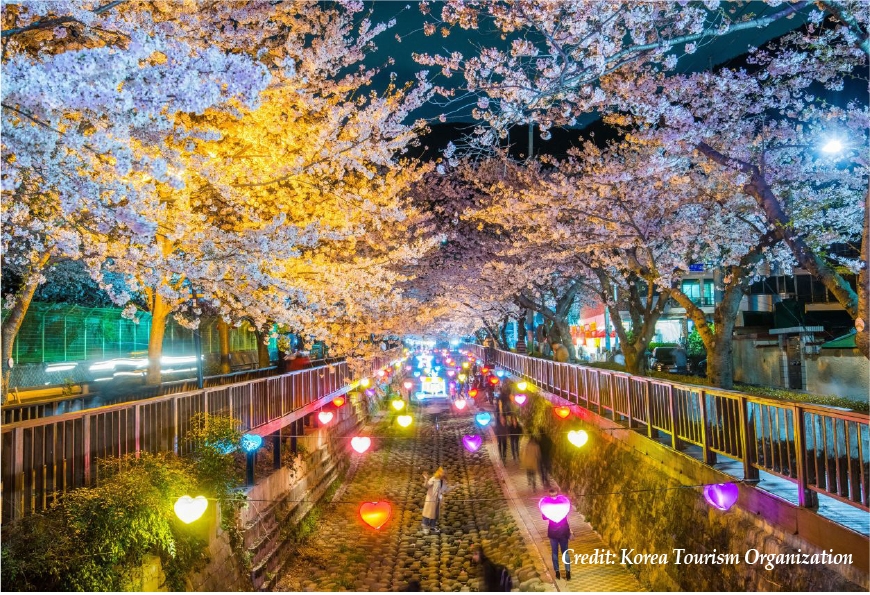
Key viewing spots include Yeojwacheon Stream, where cherry trees form a tunnel of blossoms along its banks, with the “Romance Bridge” being particularly captivating. Though now closed as a functioning station, Gyeonghwa Station’s railway tracks lined with cherry trees create one of Korea’s most photographed springtime scenes. For panoramic views, visitors can ascend Jinhae Tower at Jehwangsan Park.
Visit from late March to early April for peak bloom. From Seoul, intercity buses take 4-5 hours, or you can take the KTX high-speed train to Changwon or Busan followed by local transportation. Local delights include cherry blossom-themed foods and fresh seafood from nearby waters.

Gyeongju: Spring Amidst Ancient History

Gyeongju, the thousand-year capital of the ancient Silla Kingdom, offers a unique blend of historical landmarks and beautiful spring scenery. This UNESCO World Heritage city becomes even more captivating when cherry blossoms adorn its numerous historical sites.
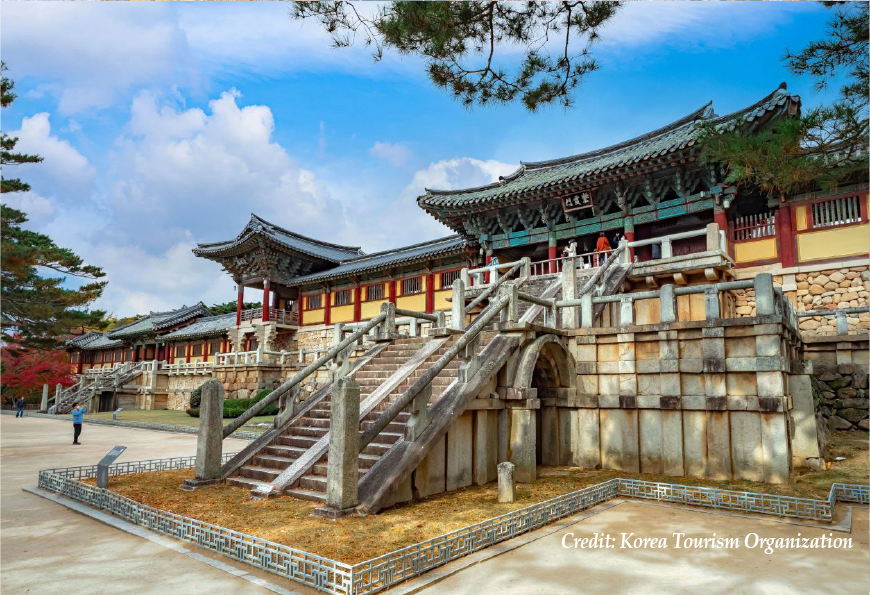
Hwangnyongsa Cherry Blossom Road, the path in front of General Kim Yu-sin’s tomb, is famous for its “popcorn-like” fluffy cherry blossoms. At Daereungwon Royal Tombs, ancient burial mounds create a striking contrast with the cherry and canola flowers that bloom around them. UNESCO World Heritage sites Bulguksa Temple and Seokguram Grotto take on an enhanced spiritual atmosphere in spring, while Bomun Lake offers leisure activities alongside cherry blossom viewing.
Spring flowers typically bloom from late March to early April. Transportation to Gyeongju is convenient, with KTX trains and express buses connecting the city to Seoul and other major centers. Accommodation options range from traditional hanok guesthouses to modern hotels and resorts. Don’t miss traditional cuisine including Gyeongju ssambap (wrapped rice) and historic Gyeongju bread.

Gurye Sansuyu Village: A Sea of Golden Yellow

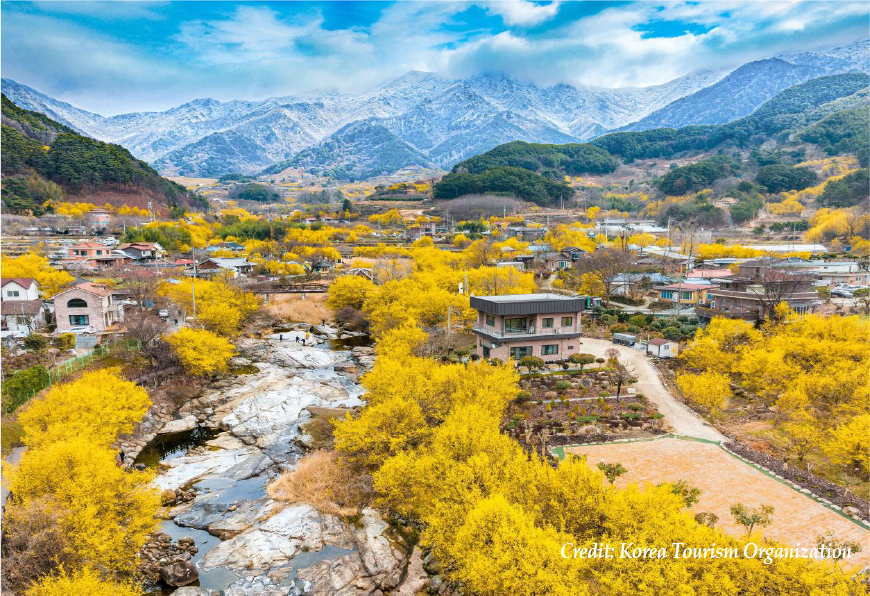
While cherry blossoms dominate much of Korea’s spring imagery, Gurye Sansuyu Village offers a distinctly different spring palette with its golden yellow cornelian cherry flowers. From mid-March to early April, the entire village transforms into a stunning landscape of bright yellow blossoms stretching approximately 2km through Daepyeong, Bangok, Hawui, and Sangwi Villages.
The sansuyu flowers hold special cultural significance in the region. According to local tradition, couples in old Gurye would exchange these flowers and fruits as a form of proposal, giving the area a romantic heritage. Peak bloom typically occurs in late March, coinciding with the annual Gurye Sansuyu Flower Festival which celebrates with various cultural performances and programs.
Accommodation includes traditional hanok guesthouses and pensions that allow visitors to experience the countryside lifestyle. The area is known for products made from sansuyu fruits such as tea and makgeolli (rice wine), which make perfect souvenirs.

Jeju Island: A Rainbow of Spring Colors

Jeju Island, Korea’s largest volcanic island, transforms into a painter’s palette in spring with multiple flower varieties blooming across its unique landscape. The combination of volcanic terrain, lush vegetation, and coastal scenery creates a multi-dimensional spring experience.
Jeonnong-ro in Jeju City becomes a 1.2km tunnel of cherry blossoms, while Noksan-ro features an enchanting blend of cherry blossoms and yellow canola flowers. In Seongeup Folk Village, traditional thatched-roof houses against a backdrop of cherry blossoms create a nostalgic scene. Gapado Island, off Jeju’s coast, is covered with fields of green barley in spring, creating an emerald sea effect against the blue ocean.
Jeju’s cherry blossoms typically bloom from late March to early April, while canola flowers bloom from March through May, making April the ideal time to experience Jeju’s full spring spectrum. Jeju is accessible via flights from major Korean cities, and renting a car is the most convenient way to explore. The island offers distinctive local cuisine featuring fresh seafood, black pork, and abalone.

Suncheon: Embracing Spring’s Ecological Awakening

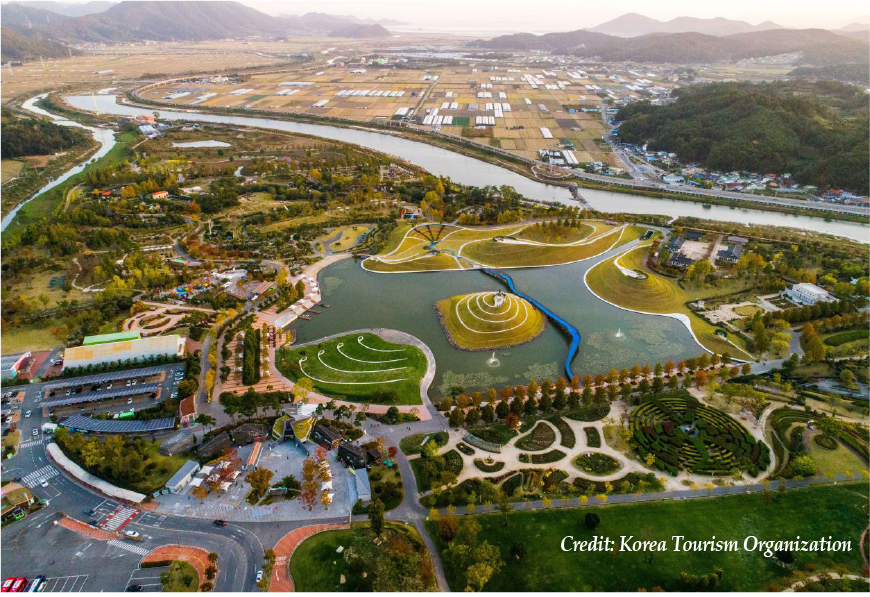
Suncheon, in South Korea’s southwestern region, offers a comprehensive spring experience centered around verdant natural environments and ecological preservation. The Suncheon Bay National Garden bursts with colorful flowers in spring, while the nearby Suncheon Bay Wetland Reserve, famous for its vast reed beds and migratory bird habitats, takes on a fresh green appearance.
For spiritual tranquility, Songgwangsa Temple surrounded by mountains offers a peaceful spring retreat, while Naganeupseong Folk Village allows visitors to imagine life in Korea’s pastoral past while surrounded by fresh spring greenery.
Spring in Suncheon brings mild temperatures and lush greenery perfect for outdoor exploration. The National Garden’s spring flowers typically reach their peak in April and May, offering a slightly later spring experience than other Korean destinations.


korean-machinery.com | Blog Magazine of korean-machinery, brands and Goods
Korea’s Exports Continue to Grow Noticeably

https://korean-machinery.com///inquiry

Indicating that the nation’s export items are gaining increasing popularity

Last March, Korea’s exports amounted to $58.28 billion, up 3.1% year-on-year. The export of semiconductors, the nation’s largest export product, recorded an amount close to the highest-ever March performance, while automobile exports also continued to increase, leading the export performance in March.
Semiconductor exports amounted to $13.1 billion, up 11.9% year-on-year. This is attributable to the strong demand for high value-added items such as high-bandwidth memory (HBM) and DDR5 used in the artificial intelligence (AI) and data center industries. Semiconductor exports exceeded $10 billion for nine consecutive months until January, increasing for 15 consecutive months compared to the same period last year, but turned to a decline in February.

Exports of computers ($1.2 billion, 33.1%) and wireless communication devices ($1.3 billion, 13.8%) also increased for two consecutive months, showing an increase in exports across all IT items. Display exports also increased by 2.9% to $1.5 billion, breaking the seven-month negative flows that had continued since August last year.
Automobile exports increased by 1.2% year-on-year to $6.2 billion. However, exports of electric vehicles (EVs) decreased significantly due to the global chasm (temporary stagnation in demand) for EVs; but exports of hybrid vehicles and internal combustion engine vehicles increased, leading to an increase in overall exports.
Ship exports increased by 51.6% year-on-year to $3.2 billion. This is the highest performance in 15 months since December 2023 ($3.7 billion). However, exports of steel (-10.6%) and petroleum products (-28.1%) decreased significantly.
By country, exports to China were recorded at $10.1 billion, down 4.1% year-on-year. It was analyzed that the decrease in semiconductor exports had a major impact. Exports to the United States increased by 2.3% to $11.1 billion.


korean-machinery.com | Blog Magazine of korean-machinery, brands and Goods
KMIRA Signs MOU for the First Hosting of E-MECO

https://korean-machinery.com///inquiry

E-MECO is the only specialized exhibition in the energy measurement and control sector in Korea, which is anticipated to contribute to the growth of the national economy.

The Korea Measuring Instruments Research Association (KMIRA) has signed a business agreement (MOU) with the Nano Technology Research Association (NTRA) for the joint hosting of NANO KOREA 2025 and E-MECO 2025, both of which are scheduled to be held from July 2 to 4 of this year.
This MOU signing is considered to be an important first stepping stone for providing networking opportunities for companies in related fields through cooperation between the two research associations. Through these exhibitions, the two associations plan to share the latest technology trends and provide venues for various discussions for industrial development.

E-MECO is the only specialized exhibition in the energy measurement and control sector in Korea, and is a newly created domestic exhibition for securing energy resources, which is emerging as a challenge internationally; and for the oil, gas, and plant sectors, which are essential to the national economy.
Lee Yong-ku, the secretary-general of KMIRA explained, “Through this official MOU, we will actively discover cooperative projects with the Nano Technology Research Association and support domestic small and medium-sized enterprises (SMEs) and member companies.”
Chung Jong-il, the executive director of the NTRA, added, “This MOU focuses on jointly hosting exhibitions and cooperation in exhibition works, and we will jointly pursue technology development, hosting workshops for member companies, and corporate promotion from now on.”
Meanwhile, E-MECO 2025 will be held from July 2 to 4 at KINTEX 1.


korean-machinery.com | Blog Magazine of korean-machinery, brands and Goods

Electronic Parking Brake System

https://korean-machinery.com///inquiry

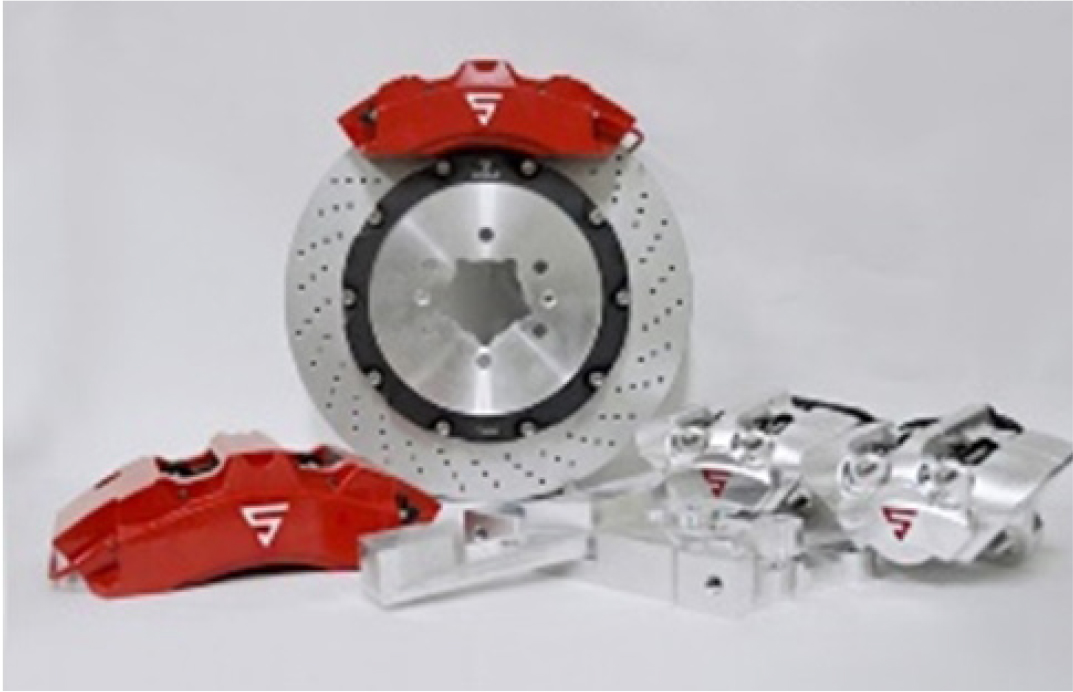
[INQ. NO. 2504M20] The rear brake structure of recently released vehicles is based on the electronic parking brake system, which is different from the existing wire type, and cannot be purchased aftermarket brakes. To address this issue, STOLZ has put its own technology into developing its EPB rear 4-piston brake system.
As a product developed for large-sized SUVs and high-performance vehicles, FEX 8-piston large calipers and 405mm rotors are installed in the front wheels and FEX 4-piston calipers and 380mm rotors are used for the rear wheels.
Thanks to the 3D precise designing technology, each of the brakes is manufactured only for their own vehicles. The bracket structure optimized for compatibility is designed to be applied to rear EPB vehicles by simply changing brackets.

The caliper is made of lightweight materials based on forged aluminum alloy and is precisely cut with the innovative MCT equipment into STOLZ’s unique designs. And the disc rotor is based on the 2-piece combination between high-performance lightweight plates that include patented ventilation-structured carbons, and the aluminum housing, so as to improve the most important factors in the braking performance such as lightweight and heat-radiation (heat-release) effects.
STOLZ Co., Ltd. is a company that manufactures and sells aftermarket calipers made of forged aluminum with its own technology developed for over 20 years in relation with automobile brake systems.
Thanks to its own expertise accumulated for many years regarding car brake systems, the company is now able to directly guide all processes needed to manufacture overall brake systems including product planning, designing, machining and selling.


korean-machinery.com | Blog Magazine of korean-machinery, brands and Goods
Hydraulic Hose Fittings

https://korean-machinery.com///inquiry

[INQ. NO. 2504M19] Since its founding in 2001, Hansol Tech Co., Ltd. has been building up various technologies and know-how on hydraulic systems used for construction equipment, shipbuilding, offshore plants, and so forth.

Starting from a business relationship with Japan-based Tokai Rubber in 2004, Hansol Tech recently made another business tie-up with Sumitomo Riko in 2021, while continuing to advance into foreign markets for more than 13 years. As a supplier, the company is also succeeding in win-win business cooperation with Hyundai Heavy Industries at home.
Based on its know-how built up through continuous technical researches and parts manufacturing, the company is planning to achieve the goal of “ZERO” defect rate, and meet the needs of customers as much as possible. All workers including the management will strive to continuously improve product quality and productivity.

Hydraulic hose fittings used for construction equipment, heavy equipment, industrial machines, agricultural machines, etc.
A hydraulic hose fitting, as a hydraulic line part used for construction equipment, heavy equipment, industrial machines, agricultural machines, etc., is made of a hose connector and a coupling, all of which are needed to operate a hydraulic machine.

Many countries around the world are expanding SOC products to respond to their economic downturns caused by COVID-19. In this sense, it is a proper time to secure new markets thanks to a possible surge in demand for construction equipment.
The company’s hose connector is mainly used for wire-braided hose. As for parts used for hose connectors, it is producing straight fittings, elbow fittings, adapter, etc. And steel, stainless steel, brass, etc. are used as the main materials for making such hose connectors.


korean-machinery.com | Blog Magazine of korean-machinery, brands and Goods

Battery Performance Tester

https://korean-machinery.com///inquiry

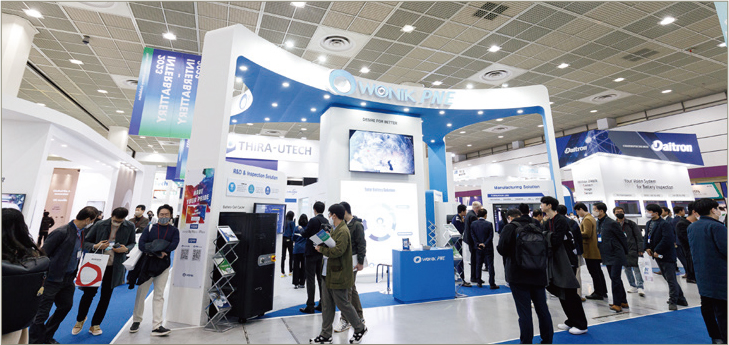
[INQ. NO. 2504M18] WONIK PNE CO., LTD. was established in November 1999, and manufactures and supplies facilities for battery production line and test equipment.
WONIK PNE has solidified partnerships with major secondary battery manufacturers, effectively cementing its status as a prominent domestic supplier. Moreover, recent times have witnessed a consistent upswing in international transactions, indicative of the company’s expanding global reach.
WONIK PNE is strategically advancing its product line and diversifying its business, and is expanding beyond the secondary battery production solutions to recycle/ reuse of used batteries.

Battery test equipment for R&D
WONIK PNE’s cycler is a battery testing equipment used in research and development (R&D) processes, facilitating the enhancement of battery quality through activities like charging, discharging, and performance evaluation, particularly in terms of cycle life.
Notably, cycler offers parallel configuration, accommodating a current range from 100A to 2,000A. and various step tests are possible including CV, CC, and CPCV tests. The technology revitalizes discharged current and significantly improves energy efficiency.
WONIK PNE supplies equipment for all types of batteries, such as pouch, prismatic, and cylindrical, and can produce customized models according to customer requests, such as high-density multi-channel configuration within the frame and the addition of various functions.

This equipment can provide precise and diverse evaluations through remote monitoring by any devices such as PC, Tablet, mobile etc. and can provide differentiated technology by maximizing space efficiency by interlocking with chambers.
WONIK PNE is working hard to develop battery-diagnosis solutions (condition and remaining capacity evaluation, etc.) and ultra-fast discharger technology to further provide solutions for reusable batteries.
Currently, WONIK PNE is forming a network with 300 companies such as LG Energy Solutions, Samsung SDI, SK on, Hyundai Motor Company, and various certification agencies.


korean-machinery.com | Blog Magazine of korean-machinery, brands and Goods

Heat-Exchanger Components

https://korean-machinery.com///inquiry

[INQ. NO. 2504M17] K-Tech Global Corp. is a competitive company and exporter of manufacturing components for heat exchangers, which have led the way in various successful projects for enterprises worldwide.
Even though it began as a small private company in 2001, K-Tech Global is today a recognized corporate legal entity, since it has consistently studied and developed its own technology. And now, by focusing on adopting advanced technology, and high-value production, it has secured both domestic and overseas shipbuilding petrochemical plants.

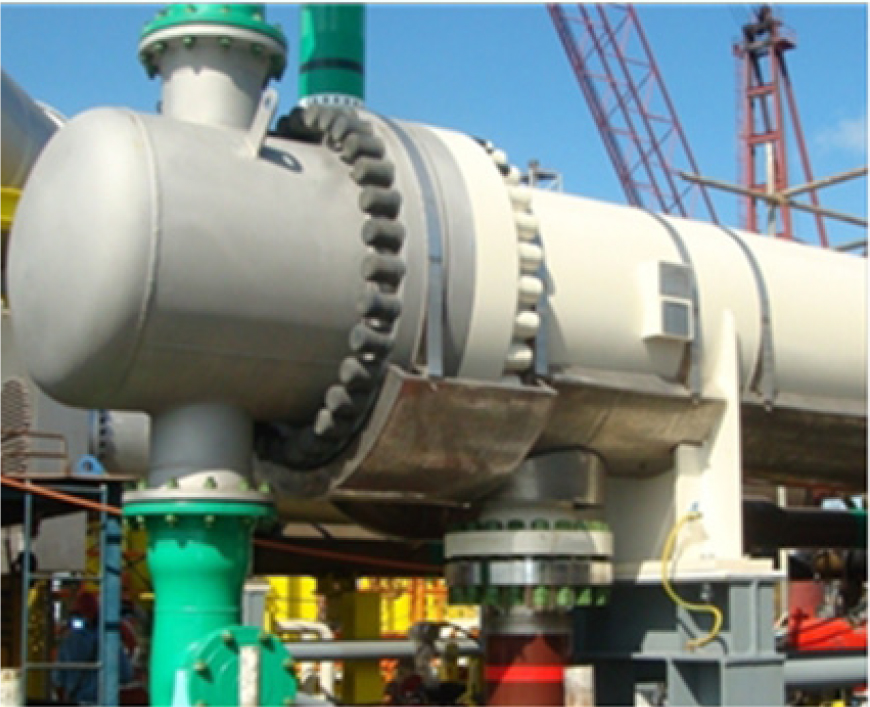
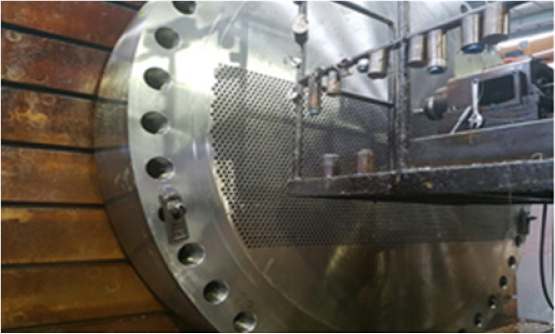
Components such as tube sheet, baffles, flanges, and nozzles are used for manufacturing heat exchangers used in shipbuilding and marine plants, oil & gas plants, and petrochemical plants.
A heat exchanger literally is for maximizing efficiency of exchange or delivery of heat, liquid, or gas through its holes.

Manufacturing appropriate products considering special environments and special materials
K-Tech Global manufactures competitive tube sheet, baffles, girth flanges, etc., for heat exchangers, taking into consideration its specialty of differentiated materials mostly used in unusual environments like deserts.

More than 90 percent of products from K-Tech Global have been exported to mostly oil-producing countries such as the UAE, Saudi Arabia, Kuwait, Singapore, Thailand, Malaysia, the USA, and Mexico.


korean-machinery.com | Blog Magazine of korean-machinery, brands and Goods

Hydrogen-Electric Hybrid UAM

https://korean-machinery.com///inquiry

[INQ. NO. 2504M16] Sambo Motors Group attracted the attention of visitors by exhibiting a hydrogen-electric hybrid Urban Air Mobility (UAM) aircraft at the Seoul Mobility Show 2025, and demonstrated an automated landing and takeoff scenario based on an autonomous robot.
The UAM presented by this company is a two-seater that uses batteries for vertical takeoff and landing, and hydrogen fuel cells for cruising via a rear propeller. It has been performing hovering flights since its development last year, and cruising tests are scheduled to begin this year.
This UAM features a groundbreaking hydrogen-electric hybrid system. A spokesperson for the company explained, “Most UAM companies use only batteries, which results in a shorter flight time and a longer charging time. However, if hydrogen fuel cells are used together with batteries, the flight time is improved by 15-20%, even though the weight of the aircraft increases slightly.”

Sambo Motors Group also created a scene where three autonomous robots roamed around the UAM aircraft and drones, and the booth. At the exhibition’s landing pad, autonomous robots demonstrated replacing hydrogen fuel cells in UAMs, loading mission equipment on the bottom of military drones, and detecting and responding to dangers by loading fire extinguishers and automated external defibrillators.

“Currently, robots are playing a supporting role in which they bring hydrogen fuel cells close to the aircraft, and then humans replace them. Ultimately, we are developing the technology by which the robot can autonomously perform replacement and collection without requiring any role of humans,” explained a spokesperson for the company.

Sambo Motors Group’s main business remains the production of bumpers and interior materials for automobiles. However, it is producing and testing UAM aircraft with the goal of acquiring technological capabilities to supply motors and propulsion parts in time for the popularization of UAM in the coming years.
 
 
korean-machinery.com | Blog Magazine of korean-machinery, brands and Goods

Korean Exporters Expanding their Territories

https://korean-machinery.com///inquiry

Korea’s exports in March amounted to US $58.28 billion, up 3.1% year-on-year. The export of semiconductors, the nation’s largest export product, recorded an amount close to the highest-ever March performance, while automobile exports also continued to increase, leading the export performance in March.

Automobile exports increased by 1.2% year-on-year to $6.2 billion. However, exports of electric vehicles (EVs) decreased significantly due to the global chasm (temporary stagnation in demand) for EVs; but exports of hybrid vehicles and internal combustion engine vehicles increased, leading to an increase in overall exports.

Ship exports increased by 51.6% year-on-year to $3.2 billion. This is the highest performance in 15 months since December 2023 ($3.7 billion). However, exports of steel (-10.6%) and petroleum products (-28.1%) decreased significantly.

Korean exporters are continuing to actively challenge overseas markets to increase their gradual growth of exports in the second quarter of this year, maintaining their growth drivers in the global market in the first quarter.

K-Tech Global is a competitive company and exporter of manufacturing components for heat exchangers. K-Tech Global is exporting its products mostly to oil-producing countries such as the UAE, Saudi Arabia, Kuwait, Singapore, Thailand, Malaysia, the USA, and Mexico. WONIK PNE manufactures and supplies facilities for battery-production lines and test equipment to global markets.


korean-machinery.com | Blog Magazine of korean-machinery, brands and Goods