Jindo Miracle Sea Road Festival

Once a year at Jindo Island in Jeollanam-do, the sea mysteriously parts and visitors can walk through the sea from the main island to a smaller nearby island. This phenomenon is due to the difference between high and low tides, creating a 2.8-kilometer-long road measuring 40 meters in width.

The Jindo Miracle Sea Road Festival takes place at the same time as this phenomenon. Visitors can enjoy walking along the sea road, gathering abalone and various other fun activities that make up the festival program. The spectacular sight of the waves parting is widely known and about half a million visitors flock from all over the world just to witness this amazing event.

Programs: Main programs include Miracle sea road walking experience, the sea road beacon light parade.

Period: April 7~10, 2016

Venue: Jindo-gun Gogun-myeon Hoedong-ri ~ Uisin-myeon Modo-ri area

Telephone: 1330 Travel Hotline: +82-2-1330 (Korean, English, Japanese, Chinese)

Website: Jindo-gun Office: eng.jindo.go.kr (Korean, English, Japanese, Chinese)

Jindo Miracle Sea Festival: miraclesea.jindo.go.kr (Korean only)

korean-machinery.com | Blog Magazine of korean-machinery, brands and Goods

Korean Companies Set to Localize Automotive Semiconductors

A new car has 800-1,000 semiconductors, which carry out diverse functions ranging from folding and unfolding side mirrors, communicating between vehicles and providing multimedia services. The advent of a smart car era will sharply increase the importance of these automotive semiconductors.

It is no coincidence then that Korea, which has relied on imports for these computer chips, appears set to localize them. The government plans to reduce Korean automakers’ dependency ratio of more than 90 percent on the United States, Japan and Europe, and expand the domestic makers’ share in global markets. IK Semicon, a “fabless” (fabrication-less) semiconductor company, which designs but does not make, chips, has supplied motor-controlling IC products to GM Korea and Hyundai Motor Group, according to industry sources. The company, which has recruited many executives and employees from the former LG Semiconductor, managed to win the supply contract after five years of effort and has also been involved in some government-initiated projects. Silicon Works, a fabless affiliated with the LG Group, has mass produced automotive sensors and supplied them to automakers here and abroad since 2014. The company plans to promote its automotive semiconductor business as a new growth engine and aims to increase related sales to at least 100 billion won ($81 million) by 2018, or 10 percent of its total turnover. iA, which has designed automotive semiconductors and supplied them to Hyundai Motor, is also pushing to reach its annual sales target of 10 billion won this year.

In addition, Hyundai Autron, a Hyundai Motor Group subsidiary, is setting up a department responsible for designing automotive semiconductors, reflecting the rising interest in this business sector among major business groups, the sources said. Dongbu Hitek, meanwhile, is pushing to launch a foundry that manufacturers automotive semiconductors, in partnerships with the domestic fabless companies.

According to HIS, a market researcher, the automotive semiconductor market is expected
to top $30 billion this year and reach $40.7 billion in 2021. But domestic manufacturers have failed to come to the front in this growing business, in part because of the strong “trust factor,” which did not allow suppliers to be changed once contracts were signed. Automotive semiconductors must undergo a confidence test for more than 18
months, during which the suppliers must prove their products last far longer than chips for home use or industrial use, and attain a zero failure rate under diverse environments. “Domestic automakers have depended on foreign suppliers, including NXP, Infineon and Renesas, for more than 90 percent of their demands,” an industry executive said. The sources said Korea’s domestic businesses were too small in scale and did not have enough experience to compete with their foreign counterparts. To develop this sector more rapidly, large companies interested in this business — such as Samsung Electronics, LG Electronics, SK Hynix and Hyundai Motor — should team up with smaller, specialized semiconductor companies to reinvigorate the industrial ecosystem for automotive semiconductors, they added.

korean-machinery.com | Blog Magazine of korean-machinery, brands and Goods
“The Sluggish Exports to China to Continue in 3Q, to be Better in 4Q”

The Institute for International Trade (President, Kim Geuk-soo, http://iit.kita.net) of the Korea International Trade Association forecasts in the report titled “The Outlook of China’s Economy in the Second Half of the Year and Its Impact on the Exports to China” that Korea’s exports to China will continue to be sluggish until the third quarter due to China’s slow economic growth and decrease of consumption due to unstable stock market but it will be better after the fourth quarter as the large scale investment, such as One Belt, One Road, in China as well as China’s exports and introduction of new products will increase.

China’s economic growth rate of the second quarter was 7.0 percent, which was higher than the expected 6.8 percent, and removed concerns over hard landing in Chinese economy. As the economy of the U.S. is recovering, China’s exports to the U.S. made turnaround to increase in June and the sales of consumer durables such as furniture, building materials and home appliances, increased due to the recovery of real estate market. In addition, as the exports and consumption increased, the industrial production growth rate slightly went up for three consecutive months.

Furthermore, the decrease of fixed asset investment slowed down due to the increase of investment in infrastructure by policies. The reason why China’s economic growth rate in the second quarter was higher than the expected was that first, the impact of the Chinese government’s mini-stimulus package is becoming visible. The Chinese government cut the benchmark interest rate by 0.75 percent point over three times in March, May and June. Particularly, the benchmark interest rate and the cash reserve ratio were down at the same time last June for the first time in seven years since the global financial crisis. In the end of March, the government implemented a powerful real estate stimulus package such as reducing the mortgage down payment ratio for the sustainable recovery of real estate market. Second, despite the manufacturing slowdown, the growth of service industry controls China’s overall economic downturn. The tertiary industry, which is service sector, took up 49.5 percent of China’s GDP in 2014. It has been constantly growing beyond the secondary industry since 2012. In the second half of the year, the growth rate of service sector went up 8.4 percent year-on-year, which is much higher than the overall economic growth rate.

In spite of financial instability and decreased consumption due to the plunge in stock market, Chinese economy in the second half of the year is expected to secure the government’s target 7.0 percent because of △ the Chinese government’s liquidity easing policy, △ exports increase led by the recovery of foreign demands, △ the rebound of real estate market.

Since China takes up about ¼ of Korea’s overall exports, Chinese economy’s sluggish growth rate has negative impact on Korea’s exports to China. In particular, the decline of China’s manufacturing, decreased consumption due to stock market anxiety and increasing self-sufficiency with the technical competitiveness of Chinese enterprises will result in Korea’s sluggish exports to China. However, Korea’s exports to China are expected to be better after the fourth quarter as the large-scale investment such as One Belt, One Road, will increase, China’s exports will recover and new products, including cars and smart phones, will be released.

Lee Bong-geol, research fellow at IIT, said “Due to the long-term economic downturn, Chinese consumer’s consumption patterns are becoming more reasonable. Therefore, Chinese companies with value for money products are rapidly taking over market share.” He stressed “In order to overcome this, Korean companies need to come up with not only quality products but also differentiated design and functions.” Moreover, he suggested “Korean companies should take advantage of all the opportunities created from the One Belt, One Road project, strongly driven by the Chinese government, new urbanization and service sector.”

korean-machinery.com | Blog Magazine of korean-machinery, brands and Goods
The World Trade in the First Half of the Year Declines the Most Since the Financial Crisis

It’s been reported that the world trade revenue in the first half of this year (based on major 67 countries) has declined the most since the financial crisis. According to the ‘World Trade Trend, First Half of 2015’ report presented by KITA’s Institute for International Trade (Director Geuk-Su Kim, http://iit.kita.net) on 31st, the trade revenue during the first six months of this year has decreased by 11.9% compared to the same period in the previous year and the decline is by far the most since 2009. The trade volume in the first half of the year (January~May) maintained similar growth rate (2~3%) to the last three years (2012~2014), however the decrease in unit price (-14.1%) has caused overall poor trade performance.

Most countries performed poorly on international trade. China was the only country which showed export increase in volume (1.0%) among the top 10 trade partners, yet its substantial decline in import (-15.5%) rendered the country to remain second after the US in terms of trade volume. US recorded 5.2% of decrease in export but was able to maintain fairly decent performance overall compared to other major countries like China, Germany, and Japan as its decline in import remains just at 3.1%.

Despite its decline (-5.2%) in export, Korea performed comparatively well in export and ranked 6th in the world for the first time. On the other hand, import and trade ranked 9th respectively, maintaining the same position as the previous year.

 The feasibility of accomplishing $1 billion in international trade seems rather negative as the trade performance in the first half of the year was poor. Both import and export will be negatively affected by various foreign conditions such as low oil price and unstable world economy due to China.

Hye-Jung Shim, a researcher at the Institute for International Trade, explained, “Although there still is a possibility that Korea may accomplish $1 billion in trade revenue this year, it is a difficult goal to reach as international oil price increase seems uncertain, the Chinese economy is unstable, the US interest rate is to be increased, and more.”

korean-machinery.com | Blog Magazine of korean-machinery, brands and Goods

SIMTOS 2016 to Showcase Latest Trends of the Global Manufacturing Industry

SIMTOS, which keeps breaking records in terms of scale every year, increased by 10.6% compared to year 2014.

Untitled-83

SIMTOS 2016 (The 17th Seoul International Manufacturing Technology Show) will take place over five days from April 13 to 17 at the 1st and 2nd exhibition halls in KINTEX (located in Goyang City, Gyeonggi Province). The participants are 1,000 companies from 35 countries, and 6,100 booths are being organized, which is a much bigger number than the 5,513 booths in 2014. Up to 100,000 visitors, comprising 95,000 and 5,000 from Korea and overseas, respectively, are expected.

The scope of metal cutting, mold formed tubes, parts/ materials and motion control tubes is drastically expanded compared to former exhibitions. The exhibition will be held even in the lobby, which is the first time in SIMTOS, and it is expected to have increased displaying equipment items for overall metal processing including metal cutting and mechanical coupling. The portion of ‘economically feasible’, ‘process shortening & optimizing’, and ‘highly efficient’ equipment and relevant products becomes higher, offering solutions for manufacturers who are suffering from business depression and poor profitability.

A greater number of foreign buyers with high purchasing power visiting Korea.

It is expected that a greater number of foreign buyers will visit global exhibition SIMTOS in Korea to check equipment produced by worldwide makers including Asia and the latest market trends. Buyers from over 50 countries around the world including the Middle East, Vietnam, and Indonesia are planning to visit Korea. Also, it seems that 300 directly invited buyers who have high purchasing power will contribute to creating profits for participants.

Untitled-84

Invited buyers include Brazilians who have purchasing potential in the Brazilian market, the biggest market in Central and South America, and about 100 buyers from Iran whose economic sanctions were relieved recently, and UAE, the center of the Middle East. A lot of European buyers from Germany, a leading country for alternative energy like wind power generation, as well as from Turkey, and Italy, were also invited.

Eight seminars arranged where bottleneck techniques, practical techniques, and optimization techniques will be introduced.

A total of eight seminars about production, manufacturing, and processing techniques are planned for machines, tools, measurement, robot/automation, CAD/CAM/software/3D printer, welding, and so forth. The objective is sharing information related to manufacturing solutions to solving issues from metal processing techniques, going beyond technical seminars oriented only toward a specific item. Smart factory technical seminars, especially, are planned to advance 4th-generation manufacturing business.

Effort to extend observation time and enhance convenience in observation for exhibition visitors

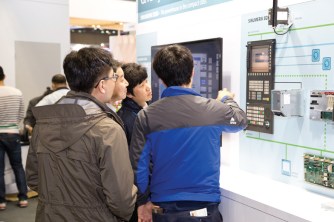
Untitled-85Photo information for exhibition products is provided so that visitors are well informed in advance with exhibition information for total six special halls in 102,431m2 of total exhibition area, and trackless trolleys and shuttle buses will be operating simultaneously between KINTEX Exhibition Center I and II for visitors’ convenience.
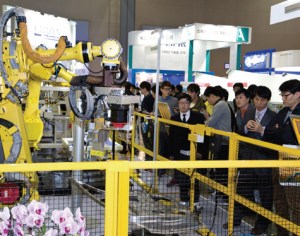
A ‘Performance event in hall 9’ is planned in the 2nd exhibition center, and a free sample event and sign- spinning are planned at the entry of the 2nd exhibition center. There will be events in participants’ booths through picket parades for the company event guide. Also, consideration for audiences’ convenience will be focused as much as possible, such as the lounge arranged at hall 8 in the 2nd exhibition center for consultation on items of interest and for their relaxation.

korean-machinery.com | Blog Magazine of korean-machinery, brands and Goods

A key economic organization to regional economy of Mokpo

Established in 1916, Mokpo CCI is a private economic organization founded in accordance with the Chamber of Commerce Law. Untitled-70Mokpo CCI is a comprehensive economic organization comprising of entire business except primary industries such as agriculture and fishery. The membership of CCI covers businesses of any size and represents the whole economic community.

The purpose of Mokpo CCI
is to provide diverse and wide range of services as a representative organization to advocate the interests of businesses. The CCI also seeks the comprehensive development of commerce and industry as well as the balanced growth of the national and local economy.

Mokpo CCI is an organization founded voluntarily by the local entrepreneurs  for the purpose of improving and developing their local commerce, industry and community. With its close cooperation network with the counterpart chamb ers  of  150  count ries,  t he  CCI  is  a  worldwide economic organization. The CCI carries out universal trade activities such as certification of international document, operation of bilateral economic cooperation committees and reception of trade missions.

Any company which runs business more than a certain scale within the jurisdiction would be automatically qualified for the membership. The major decision of the CCI is made at the General Council who are elected by the members. The Standing councils, also elected by the members, are responsible for the implementation of project plan and budget plan. The necessary operating expenses are funded by the membership dues.

“To adapt to the rapidly changing economic environment in this age of information, Mokpo CCI is making its best efforts to protect the rights and interests of member firms and to ensure the development of local business and community.

Mokpo CCI will steadily carry out its role as a local economic organization that can meet the demand of local business community, through the diversification and enhancement of its activities. We will continue to update and complement the information, and in this regard, your unwav ering s uppo rt and c onc ern would be highly appreciated,” said Kim Honam, Chairman of the CCI.

korean-machinery.com | Blog Magazine of korean-machinery, brands and Goods

Mokpo-based marine equipment enterprises to boost their market-competitiveness, invigorating the regional economy

As of 2014, the global marine equipment market was dominated by three key countries of South Korea, China, and Japan, recording around $83.4 billion in sales. The demand of the global marine equipment, in 2014, was largely created by a few leading nations – South Korea (37, 2%), China (37, 2%), Japan (18, 3%), and others (7.3%).

As the global marine base is increasingly shifting to the Asian region, the production capacity ratio of the marine equipment in the global market is also being moved to Asia, with Europe’s still comparative higher ratio than other global regions. As of 2014, the global marine equipment production was mainly made by Europe (48%), South Korea (22%), Japan (14%), China (11%), and others (5%), meaning that East Asia’s three major marine nations are continuously pursuing their stops as big hands in the global marine equipment production market.

The demand for developing newer technology in the global marine equipment industry is increasing with the rising demand for high-value vessels, coupled with the growing need for offshore drill ships and related facilities development. In response to the changing global marine market, most of S. Korea’s small-and medium-sized marine equipment manufacturers are seeking ways to develop stronger capability to develop advanced technology, escaping from their positions as manufacturers of simply producing marine equipment.Korea’s marine equipment manufacturers were being significantly affected by the nation’s shipbuilders’ order performances from overseas markets Korean shipbuilders recent recorded their increased growth in order quantities for this year, making the nation the global NO.1 country.

When looking into Mokpo’s hinterland region of Jeollanam-do province, now a total of 197 companies including enterprises of vessel blocks operate, having a big effect on the regional economy. Regional companies with technology competitiveness exert their leadership in the global market, given the overall difficulties caused by the recent Europe-originated financial crisis. Meanwhile, an increasing number of companies are equipping themselves with their own technologies, so, if the marine economy is, in the near future, invigorated, such kinds of companies’ performances are expected to be conspicuous.

Korea Buyers Guide covers four major companies recommended by Mokpo CCI in order for us to fully introduce these companies to overseas markets, and thus to increase the awareness of these enterprises in the global market.

korean-machinery.com | Blog Magazine of korean-machinery, brands and Goods

An expected low recovery trend of Korea’s machinery industry by global economic slowdown

The export of machine industries (excluding the shipping) in 2015 showed signs of reduction under the influence of intensifying competition in the overseas markets following the weak economic recovery of the US dollar and low Japanese yen while the Chinese economy was in a slump. In terms of the five major machine industries (excluding the shipping), the production, export, import and trade surplus recorded KRW450.8 trillion (1.0%), US$181.08 billion (-2.4%), US$100.44 billion (-0.4%) and US$80.64 billion, respectively.

In terms of general machinery out of five major machine industries, the production, export, import and trade surplus came to KRW101.6 trillion (0.6%), US$44.61 billion (-0.9%), US$34.13 billion (-5.0%) and US$10.48 billion, respectively.

In 2016, although the production and exports of the machine industries (excluding shipping) is expected to recover slightly if the economy of the United States, Europe and China stabilizes to a certain degree, it is anticipated that the recovery will be unsatisfactory for the time being on account of the uncertainty caused by the intensifying competition in the overseas market following the slump of the Chinese economy and low Japanese yen, the rise in the interest rate of the US dollar and the continuously low oil price.

It is expected 2016-03-09 09;53;36that in terms of five major machine industries (excluding shipping), the production, export, import and trade surplus will come to KRW458.9 trillion (1.8%), US$184.88 billion (2.1%), US$104.15 billion 3.7%) and US$80.73 billion, respectively.

It is expected that in terms of the general machinery out of five major machine industries, the production, export, import and trade surplus will amount to KRW103.0 trillion (1.4%), US$45.14 billion (1.2%), US$35.32 billion (3.5%) and US$9.82 billion, respectively.

korean-machinery.com | Blog Magazine of korean-machinery, brands and Goods

Mokpo-based marine equipment enterprises to boost their market-competitiveness, invigorating the regional economy

1As of 2014, the global marine equipment market was dominated by three key countries of South Korea, China, and Japan, recording around $83.4 billion in sales. The demand of
the global marine equipment, in 2014, was largely created by a few leading nations – South Korea (37, 2%), China (37, 2%), Japan (18, 3%), and others (7.3%).

As the global marine base is increasingly shifting to the Asian region, the production capacity ratio of the marine equipment in the global market is also being moved to Asia, with Europe’s still comparative higher ratio than other global regions. As of 2014, the global marine equipment production was mainly made by Europe (48%), South Korea (22%), Japan (14%), China (11%), and others (5%), meaning that East Asia’s three major marine nations are continuously pursuing their stops as big hands in the global marine equipment production market.

The demand for developing newer technology in the global marine equipment industry is increasing with the rising demand for high-value vessels, coupled with the growing need
for offshore drill ships and related facilities development. In response to the changing global marine market, most of S. Korea’s small-and medium-sized marine equipment
manufacturers are seeking ways to develop stronger capability to develop advanced technology, escaping from their positions as manufacturers of simply producing marine
equipment.Korea’s marine equipment manufacturers were being significantly affected by the nation’s shipbuilders’ order performances from overseas markets Korean shipbuilders recent recorded their increased growth in order quantities for this year, making the nation the global NO.1 country.

When looking into Mokpo’s hinterland region of Jeollanam-do province, now a total of 197 companies including enterprises of vessel blocks operate, having a big effect on the regional economy. Regional companies with technology competitiveness exert their leadership in the global market, given the overall difficulties caused by the recent Europe-originated financial crisis. Meanwhile, an increasing number of companies are equipping themselves with their own technologies, so, if the marine economy is, in the near future, invigorated, such kinds of companies’ performances are expected to be conspicuous.

Korea Buyers Guide covers four major companies recommended by Mokpo CCI in order for us to fully introduce these companies to overseas markets, and thus to increase the awareness of these enterprises in the global market.

korean-machinery.com | Blog Magazine of korean-machinery, brands and Goods

Korea suffers from nutcracker effects in between Japan and China In ASEAN M&A market

Many are concerned that Korea may lose its initiative in ASEAN cross-border M&A market as the country is significantly falling behind its competitors such as Japan and China. Between January 2010 and May 2015, the shares of ASEAN M&A of Japan and China were 13.0 percent (ranked No.1) and 8.1 percent (ranked 5th), respectively, based on acquisition price, while that of Korea was only 2.4 percent (ranked 12th).

The Institute for International Trade of the Korea International Trade Association released a report titled “Competition Between Japan and China in ASEAN cross-border M&A, What Is Korea’s Strategy?” According to the report, while the M&A market in ASEAN has been expanding, Japan and China have led ASEAN M&A cross-border market with the two countries’ combined shares of 33.2 percent (Japan 28.5%, China 4.7%) in 2013 and 34.5 percent (Japan 9.9%, China 24.6%) in 2014.

During the same period, Japan executed more than 50 percent of its M&As in finance sector and many analyzed that it was the solution for its finance institutions’ worsening profitabilities due to matured domestic market as well as low interest rate. In contrast, China has carried out M&As focusing on investment in infrastructure and the share expansion of manufacturing industry as the country has enough growth potential in its domestic markets.

Japanese companies’ good performance due to low yen and the Chinese government’s ‘one belt one road’ policy as well as its relaxation of foreign investment review process will help Japan and China to accelerate their expansions in ASEAN M&A market. Kim Jungkyun, a researcher at KITA said “Korea is suffering from nutcracker effects in between Japan and China in ASEAN M&A market. Thus, Korea is required to expand its M&A targeting retail and finance sectors as well as IT industries in which Korea has global
competitiveness.”

<Source: KITA>