 South Korea’s recent trade surplus with the United States declined amid the surge in oil and gas imports from the United States in order to stave off the issue of Korea’s balance of trade issue with the world’s largest economy.
According to the latest data from the Ministry of Trade, Industry and Energy (MOTIE), the nation’s trade surplus with the United States decreased 22.9 percent to $13.8 billion in 2018 from a year ago, even though the bilateral trade increased 10.3 percent to a record high of $131.6 billion.
In the past year, S. Korea’s exports to the United States reached $72.7 billion, up 6.0 percent, which means that it is faster than the country’s overall annual exports gain of 5.4 percent in the year. For some major export players, shipment of semiconductors jumped 90.6 percent, machinery, up 32.4 percent, while petroleum products rose by 15.7 percent.
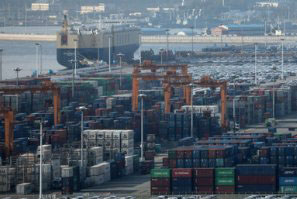 Auto exports to the United States, meanwhile, decreased 6.9 percent compared with a year earlier. Exports of mobile devices and rubber products fell by 6.2 percent and 2.2 percent, respectively.
The remaining export items from Korea comprised 2.9 percent of the U.S. market in 2018, remaining at an unchanged level over the past four years.
Korea’s imports from the United States grew by 16.2 percent year-on-year to $58.9 billion last year, mainly because of a sharp jump in energy imports to reduce the strong, consistent pressure from the Trump administration.
Last year, Korea’s imports of U.S crude oil skyrocked 520.1 percent compared with the previous year, natural gas by 179.2 percent, and liquefied petroleum gas by 50.3 percent. The global giant economy’s market share in the nation’s energy market reached 11.0 percent, outdoing Japan to become No. 2 seller.
 The service area imports between the two countries rose by 7.2 percent year-on-year to $45.2 billion in 2017, the latest comparative data showed. S. Korea’s service exports in 2017 amounted to $14.9 billion, slightly up from $14.6 billion in 2016. Service imports from the United States expanded 10.3 percent year-on-year to $31.3 billion over the same period.
S. Korea’s service trade deficit with the United States grew in 2017 to reach $16.3 billion, and the deficit has increased 20.6 percent on average from 2012 to 2017.
korean-machinery.com | Blog Magazine of korean-machinery, brands and Goods
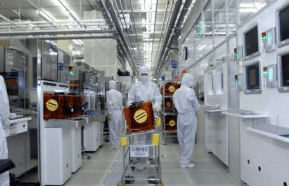 predicted to reach 10 percent thanks to the delivery of orders received over the past two years and the base effect. Petrochemicals are anticipated to see a 5.2 percent increase in exports with the help of the increase of export volume by the operation of the domestic new facilities.
 oversupply of liquid crystal display (LCD) taking 60 percent of the whole, despite the anticipated upswing in the demand for organic light emitting diode (OLED).
 Philippines (VIP) which have strong growth potentials increased 4.2 times and 3.8 times, respectively.”
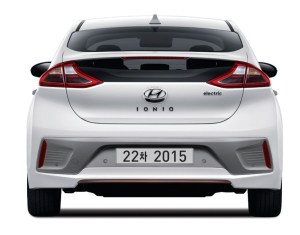 9.5% compared with the same period of the previous year. Among them, the hybrid cars and electric vehicles accounted for 6,572 units (up 3.6%) and 1,971 units (up 31.5%), respectively.
 semiconductors reached the top of the graph.
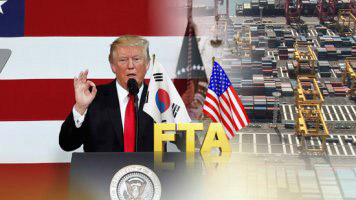 stated that it would plan to draw up measures to reduce damages including diversification of exports and boosting domestic demand. Talks on steel products are scheduled to commence on May 1.
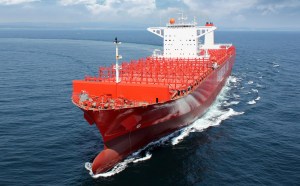 more than 8% which is fallen short of. Therefore, it is estimated that the amount of construction received in 2018 will reflect a provisional loss of about 5%.
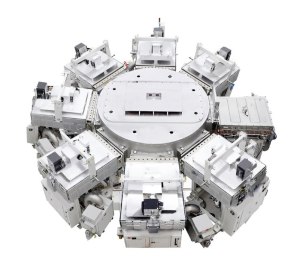 have grown in more than double-digit figures. Among the developed countries, on the other hand, the USA (29.2%), the EU (34.6%), and Vietnam (87.8%), which are emerging as overseas production bases for Korean companies among rising countries, have increased their exports to ASEAN nations (48.5%) and India.
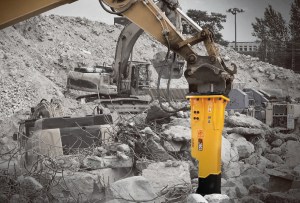
 General machinery exports, mainly machine tool exports, dipped due to reduced facility investment in Latin America following natural disasters such as earthquakes in Mexico, which is a major importer of general machinery. Machinery exports were sluggish due to reduced orders for oil and gas projects from the Middle East and surging imports from Japan. A slowdown in the Indian construction industry cut machinery exports, mainly construction machinery exports, to India.


 Korean-Machinery.com