
Hyundai Motor Company and Kia each achieved the highest export performance ever and won the ‘Export Tower’ award. Hyundai Motor Company received the $30 billion ‘Export Tower’ award and Kia received the $20 billion ‘Export Tower’ award. The two companies ranked first and second, respectively, in export volume among the 1,700 companies that received the ‘Export Tower’ award this year. These awards come 11 years after 2012, when Hyundai Motor Company received the $20 billion ‘Export Tower’ award and Kia received the $15 billion ‘Export Tower’ award.

According to the Korea International Trade Association (KITA), Hyundai Motor Company’s export performance during the corresponding period (July 1 of last year to last June 30) was $31 billion, showing a 29.6% increase compared to the same period of the previous year ($23.9 billion). Kia’s sales amounted to $23.5 billion, an increase of 30.7% compared to the same period of last year ($18 billion).
Despite uncertain external environments such as geopolitical crises, deepening protectionism, supply shortages of automotive semiconductors, and intensifying competition in the market due to the economic downturn, Hyundai Motor Company and Kia have strived to improve their sales mix by focusing on high-value-added vehicle models, launching competitive electric vehicle (EV) models, and expanding global sales, etc. ‒ thereby achieving record-high export performance. The proportion of high-value-added vehicle models among Hyundai Motors and Kia’s exports has increased significantly. This is attributable to continuously improving the sales mix through the launch of new models with global competitiveness.
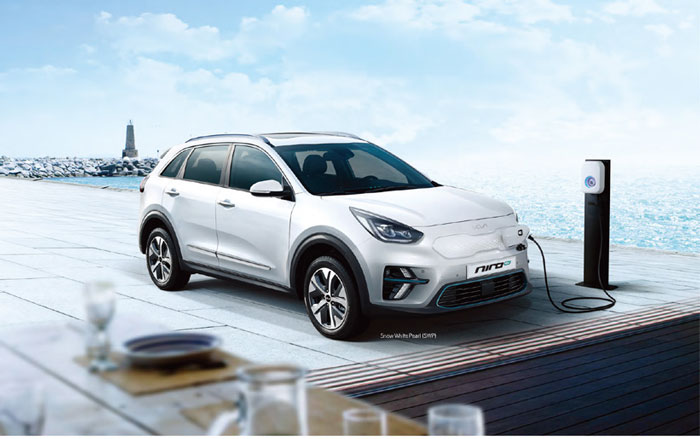
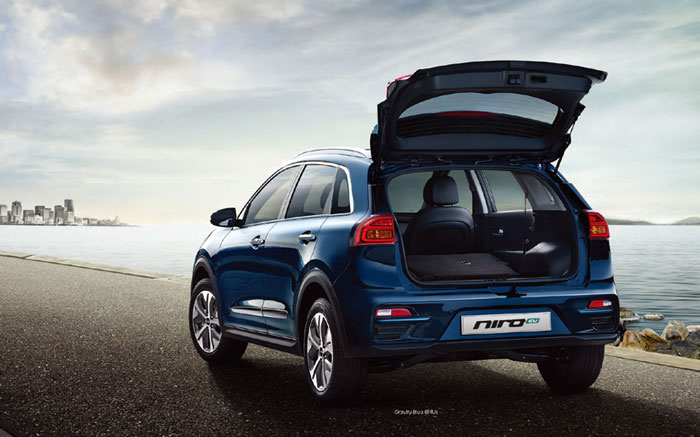
In addition, models that applied the EV platform E-GMP (Ionic 5, EV6, etc.) received favorable reviews in the global EV market, contributing to increased exports. Hyundai’s and Kia’s EV exports nearly doubled from 119,569 units in 2020 to 218,241 units last year. New EVs based on E-GMP are playing a major role in helping Hyundai Motor Company and Kia secure leadership in the global EV market.

Moreover, Hyundai Motor Company and Kia are actively expanding domestic EV production capacity to respond to the growing global demand for EVs, so exports of EVs are expected to continue increasing in the future. Last November, Hyundai Motor Company began construction of a factory at its Ulsan plant dedicated solely to EVs with an annual production capacity of 200,000 units. Similarly, Kia broke ground on a factory dedicated to customized EVs with an annual capacity of 150,000 units at Autoland Hwaseong in Gyeonggi Province in April. Autoland Gwangmyeong in Gyeonggi Province also converted some lines to EV lines. Hyundai Motor Company and Kia plan to have a total of 31 EV models by 2030.
In order to expand global sales and diversify the market, Hyundai Motor Company and Kia are not only focusing on entering new overseas bases through active market development, but also focusing on improving brand competitiveness by strengthening product lineups tailored to regional characteristics and expanding customer experience. As a result, Hyundai Motor Company’s EV sales last year grew by 9.7% compared to the previous year in the environmentally sensitive European market, led by the Ionic 5.
In the U.S. market, the increase in sales of Hyundai’s luxury brand Genesis was particularly noticeable. Genesis is solidifying its global presence by expanding market share in major regions, including breaking the highest sales record in the United States for two consecutive years.
Kia, which changed its name from “Kia Motors” and began rebranding in 2021, is actively targeting overseas markets based on improved brand reliability in all global regions. Kia’s exports last year spanned most regions of the world, including 33% to North America (the United States, Canada, and Mexico), 31% to Europe, including Germany, the United Kingdom, and France, 13% to the Middle East and Africa, 12% to Asia and the Pacific, and 7% to Central and South America. By vehicle type, Kia is significantly expanding its export performance through maximum production and timely supply of high-value-added models that are popular throughout the world.

The automobile industry’s contribution to the trade balance is even more notable. According to KITA, in 2021, automobiles and automobile parts recorded a combined trade surplus of $48.7 billion. This is approximately 1.7 times the amount of Korea’s total trade surplus of $29.3 billion in the same year.
The automobile industry, led by Hyundai Motor Group, which ranks among the top three in global automobile sales, is the foundation of the national economy and plays a pivotal role in terms of production, taxes, and added value creation. The automobile industry accounts for 12.1% of the entire manufacturing industry in terms of production, 10.8% of national and local taxes in terms of tax revenue, and 9.6% of the entire manufacturing industry in terms of added value.

A spokesperson for Hyundai Motor Company and Kia explained, “Despite the global economic downturn, we were able to achieve maximum export performance through improved sales mix and efforts to expand global sales,” adding, “We will continue to contribute to the national economy by expanding exports through strengthening our global brand competitiveness in the future.”
korean-machinery.com | Blog Magazine of korean-machinery, brands and Goods


 Korean-Machinery.com