 The industrial robot parts produced in China and education services in China and Japan are emerging as the most promising in each industry. In order for Korean robot companies to expand into the global market, it is necessary to seek strategies to enter diverse markets such as joint technological development and investment with local companies by targeting core technologies and markets of promising fields.
In regard to the robot industry, which is emerging as the convergence of traditional manufacturing technologies and information and communications technology (ICT) for the future and the biggest beneficiary of the 4th Industrial Revolution, the global market conditions and prospects was presented along with analysis of the latest technological trend, while local companies were offered a substantive roadmap to expand into foreign markets.
According to the report, Global Robot Industry Market Trends and Strategies to Make Inroads, recently published it is essential to secure technological competitiveness in smart factories, machine learning, cooperative robots, artificial intelligence, etc. for invigoration of expansion into Asian global markets based on robust domestic demand with the number of sales.
Demand for industrial robots is on the rise due to the global companies’ efforts to modernize and automatize production facilities, improve energy efficiency, utilize new materials, and improve product quality. According to the International Federation of Robotics (IFR), a 15 percent annual growth rate is expected by 2020.
China is currently the world’s largest market with 30% market share, but its robot density is significantly lower than that of advanced countries, which leaves its potential still high. The robot sales in China are expected to increase by 140% by 2020. In particular, Korean companies have high potential to export to China in terms of core components such as controllers and speed reducers, which are difficult to produce in China. As of 2016, exports of robot parts to China amounted to KRW 36 billion, up 74% from the previous year.
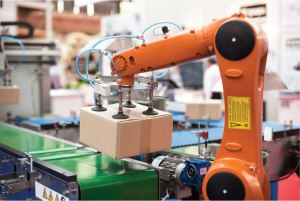 Even in the advanced markets such as the USA and France, where there are no companies within the global top 10, Korean products have a good reputation for their cost-effectiveness and installation technology. Eastern Europe, India, Thailand, and Brazil are also emerging as new sources of demand despite relatively small market sizes at present, anticipating an annual growth of more than 20% by 2020. However, there is only a limited potential for entering into Japan and Germany where robotic technology for manufacturing is the most advanced.
Although it is not easy for Korean companies to narrow the technological gaps against leading global companies in the conventional robot industry, it is necessary to secure technologies related to smart factories and cooperative robots that are currently in the limelight.
Siemens and Adidas have completed the construction of a smart factory equipped with full-blown automation and intelligentization throughout the entire manufacturing processes based on ICT, and are accelerating technological development in the USA, China, and Japan. As machine learning is an essential technology for materializing efficient smart factories, Yaskawa Electric Corporation, a Japanese manufacturer of servos, motion controllers, AC motor drives, switches and industrial robots, has introduced a machine learning software that is capable of mastering a selected craftsmanship within two hours. As for cooperative robots for which the market growth is in full swing from US$100 million in 2015 to US$1 billion in 2020, it is necessary to preempt core technologies such as lightweighting and robot mobile technologies.
It is also expected that the robots market for global services will grow significantly. IFR expects service robots for special purposes and personal services such as housekeeping to grow by 20-25%, 30-35%, and 20-25% each year by 2020. In particular, it anticipates an explosive increase in demand for logistics robots including AGV, an essential item for smart factories, medical robots for surgery and treatments, and promotional robots to provide customers with guides or information.
Held last January in Las Vegas, United States, CES 2018 was dominated by robots equipped with AI. Aibo, a robotic pet produced by Sony, and Sophia, a humanoid robot developed by Hanson Robotics, and some others demonstrated great adaptation in everyday human life through dialogues, questions and answers, and games with human participants. Also, visitors flowed in and out all day at the booths exhibiting displaying housekeeping and entertainment robots.
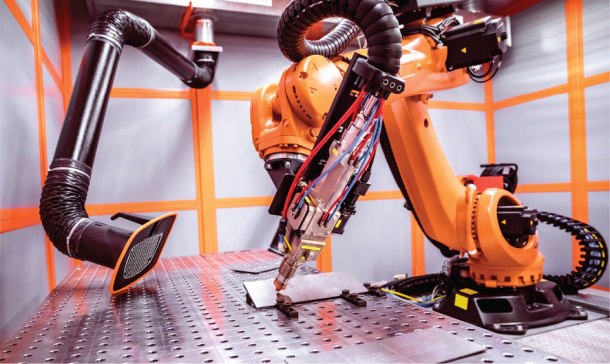
The most promising field for Korean companies to expand is the educational robots market where global companies have yet to enter. In particular, Korean company’s technological prowess is evaluated positively in the countries with high demand for English education such as China and Japan. It is necessary, however, to develop technologies such as facial recognition for user verification, emotion recognition, speech recognition, and big data in order to ensure product differentiation and competitiveness.
In terms of strategies to make inroads into global markets, it is desirable to reduce the risks involved with overseas expansion by cooperating with local venture capital, accelerators, and start-ups. Meanwhile, American venture capitals’ investments in the U.S. robotics industry are increasing rapidly, while Japan is actively supporting alliances with overseas start-ups and accelerators for the advancement of service robots at the government level. In the case of Chinese companies, the demand for technological cooperation to develop sensors and artificial intelligence is high, thereby making it easy to promote joint research and development programs.
“The robots industry, which is experiencing a rapid increase in global demand, will become a representative food business in the era of the 4th Industrial Revolution,” said Yoon Won-seok, an executive of the Korea Trade-Investment Promotion Agency (KOTRA). “Korean companies need to seek global cooperation such as joint R&D with robot technology leaders and exchange of technology and investment. We will be able to enhance our competitiveness in the global robots market by seizing initiative of future-oriented core technologies such as cooperative robots and AI technologies based on our strengths in IT and manufacturing technology.”
korean-machinery.com | Blog Magazine of korean-machinery, brands and Goods
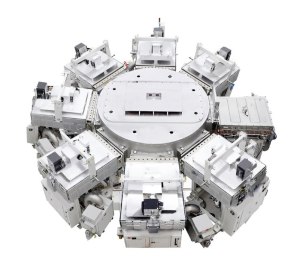 have grown in more than double-digit figures. Among the developed countries, on the other hand, the USA (29.2%), the EU (34.6%), and Vietnam (87.8%), which are emerging as overseas production bases for Korean companies among rising countries, have increased their exports to ASEAN nations (48.5%) and India.


 Korean-Machinery.com