 President-elect Donald Trump is expected to deal an enormous blow to Korea which is heavily reliant on exports as he has vowed to strengthen trade barriers.
Youn Woo-jin, a senior researcher at the Korea Institute for Industrial Economics and Trade, said that the result of the U.S. election will adversely affect Korea’s already faltering exports on increasing risks of a slowing economy there as well as aggressive protectionism.
President-elect Trump has been pledging strong protectionism, which even most of his fellow party members criticized as populism.
“Trump has been moving away from the Republican Party, which has been a traditional guardian of free trade,” Youn said.
He pointed out that Trump had been vowing to adopt far-fetched protectionist measures, such as a withdrawal from negotiations over the Trans-Pacific Partnership, the renegotiation of the North American Free Trade Agreement, and high tariffs on imports from Mexico and China. Trump has also denounced the Korea-U.S. Free Trade Agreement (FTA) as a “job killing” deal, leading to speculation that his victory will lead to renegotiations or a complete scrapping of the deal.
Youn, however, said that such pledges are “little likely to be realized as there should be cooperation from Congress, as well as when taking into account the huge impact this will have on the global economy.” The Korea Trade-Investment Promotion Agency (KOTRA), meanwhile, expects Trump will demand a renegotiation of the Korea-U.S. FTA, on top of strong pressure such as antidumping and countervailing duties.
“Even if the U.S. Congress opposes these moves, Trump may be able to scrap the FTA or levy high tariffs on certain countries, with the authority endowed to the president,” said Yun Won-sok, executive vice president for business information and trade at KOTRA, pointing out that the diverse trade related laws give considerable authority to the president.
However, he added that trade with Korea may have less priority in Trump’s agenda as he has been more aggressively criticizing China and Mexico.
He has pledged levying a 45 percent tariff on Chinese products and levying a 35 percent tariff on Mexicanproduced cars.
A trade war with China will also weigh on the Korean economy which has been exporting components and materials to China. The hard-landing of the Chinese economy also means that Korea’s biggest export market will be diminished.
As other countries will also retaliate against the United States, Trump is likely to trigger a protectionist trade war. This means the Korean economy, which has been heavily relying on exports, will be further pressured. Korea’s exports briefly rebounded in August following 19 months of falls, but they dipped again in September and October.
Youn also expects the U.S. economy to enter a recession with the trade war, with the economic growth rate projected to fall from 2.7 percent in 2016 to 0.3 percent in 2017, and to minus 0.1 percent in 2019. A recession in the United States in itself is also negative for Korean exporters.
However, some businesses may find bigger opportunities to advance into the U.S. market as Donald Trump has pledged massive infrastructure investment.
“Based on Trump’s public infrastructure policy, construction, communication, logistics and construction materials will likely see markets expanding,” Yun said.
Trump has also stressed opening the pharmaceutical market for higher efficiency of the U.S. public health system. Yun said this may be an opportunity for Korean pharmaceutical exporters as well.
korean-machinery.com | Blog Magazine of korean-machinery, brands and Goods


 KAI fields homogenous T-50A, a renovated version of the T-50 Golden Eagle used by the Korean air force. The players test out their trainers before the U.S. Defense Department recently. The awarding takes place in November 2017.
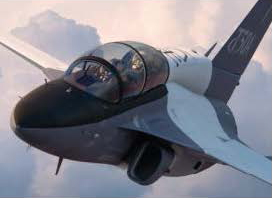 The prototype by Northrop and Raytheon excels in weight. Northrop has made the jet 22 percent lighter although it is bigger than T-50A. Raytheon’s aircraft is the smallest and lightest and boasts twin-engine for greater flight stability. Performance-wise, the horserace is expected to be two-way between KAI-Lockheed and Boeing-Saab teams, according to Konkuk University professor Lee Jae-woo.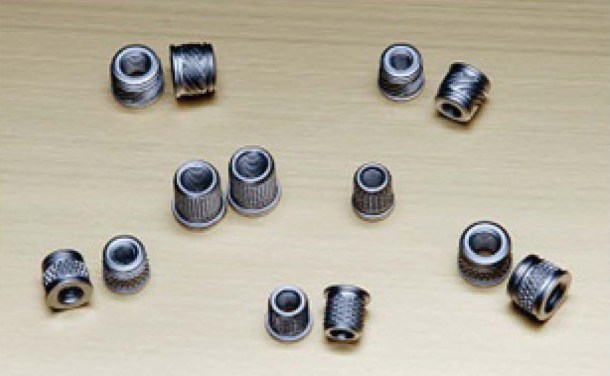
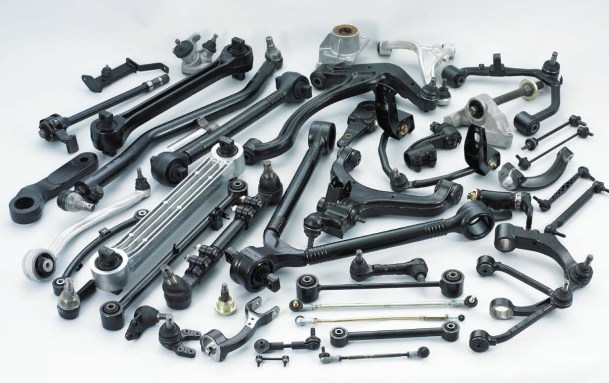

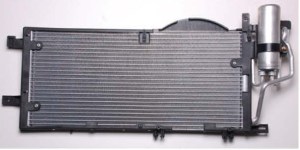 A condenser is required to cool down the hot refrigerant coming from a compressor, so it is located at the front of a car where it can be exposed to the maximum amount of air. As the hot refrigerant fl ows into the condenser, it dissipates heat by fl owing through a system of ultra-thin tubes that are held together by fi ns.
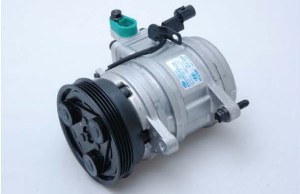 A compressor is a key part of a car’s airconditioning system and is usually driven by the engine via a V-belt or ribbed V-belt.
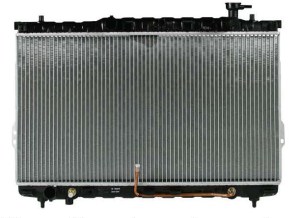 A radiator is located at the front of a car’s engine, just behind the condenser, and is the most important component of the cooling module because it keeps the engine from overheating.
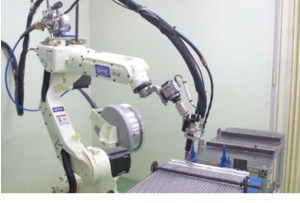 The radiator is made up of a radiator core, along with two plastic side tanks, and all the necessary connections and att achments. The radiator core is made up of a network of fi ns and tubes that run either horizontally or vertically, depending on the application.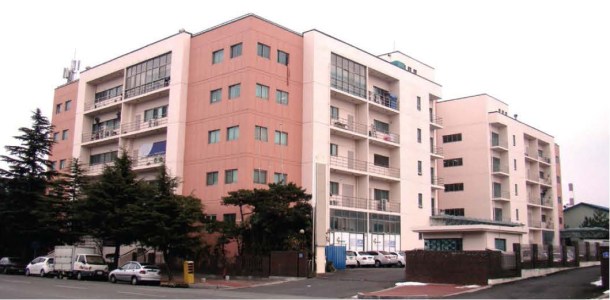
 Alternator regulators apply for 12V and 24V charging systems with a wide range of operating temperatures, from -45 to +135. A self-compensating thermal circuit with custom setting voltage as well as custom package design is available. They are multifunctional with HIC & ASVR types, including LRC function, faulty warning and protection.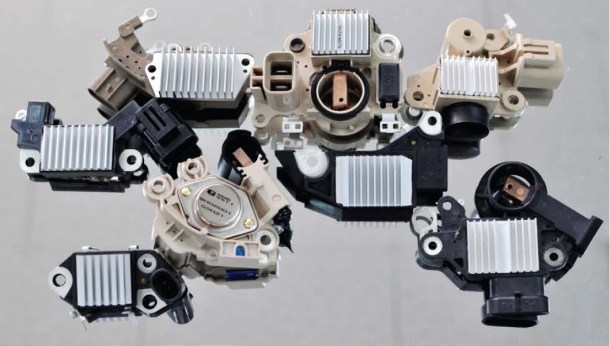

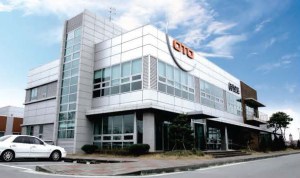 Since its foundation in 1998, OTO has developed into the top automotive powertrain parts manufacturer in Korea through continuous and self-driven technical innovation with “autonomous management” as its basis.
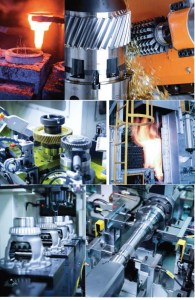 As main products, OTO produces Piston Clutch, Output Shaft, T/F Drive Gear, Speed Gear, Clutch Gear, Annulus Assembly. NEOOTO produces high-quality Helical Gear(Pinion Gear, T/F Gear, Diff Gear, Output Shaft), Ring Gear(Annulus Gear), Assembly(Diff erential Assembly, T/F Assembly)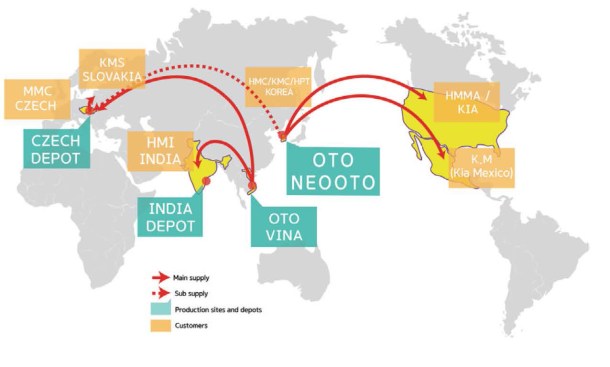



 Korean-Machinery.com