
LG Energy Solution Joins SDVerse, Global B2B Marketplace for Automotive Software
[INQ. NO. 2605M03] LG Energy Solution recently announced that it has joined SDVerse, becoming the first battery company to participate in this Global B2B Marketplace for Automotive Software.
This move underscores the company’s technological leadership as it expands beyond battery manufacturing into the software and services that power next-generation vehicles.
Co-founded in 2024 by General Motors, Magna, and Wipro, SDVerse is the automotive industry’s first B2B marketplace for automotive software. It enables sellers to list software solutions that buyers can easily search, compare, and evaluate to find the best fit. As the era of Software-Defined Vehicles (SDVs) takes shape, SDVerse has quickly evolved into a trusted digital hub that helps accelerate innovation across software-defined mobility.
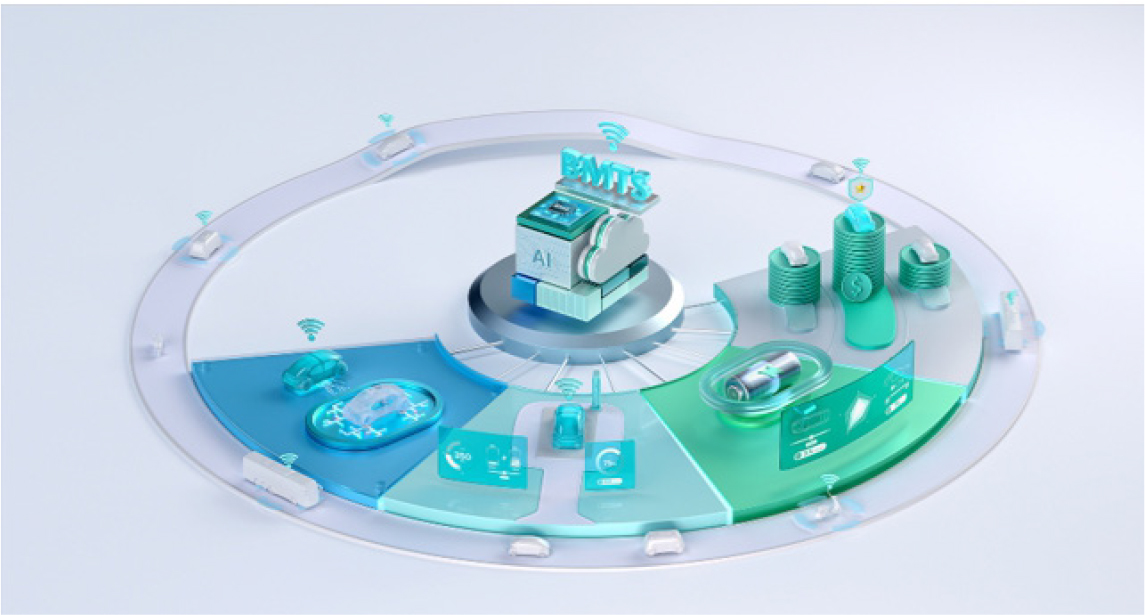
By joining SDVerse, LG Energy Solution is bringing its battery-software capabilities directly into the SDV environment, thereby enabling smarter diagnostics, safer operation, and longer battery life. The company is offering five core battery software solutions ― Battery Platform SW; Safety Diagnostic Calibration Tool; Onboard FRISM, Onboard BLiS; and Onboard DASH.
Battery Platform SW comprehensively analyzes key battery-status indicators, integrating LG Energy Solution’s proven BMS technologies into an SDV-optimized architecture.
The Safety Diagnostic Calibration Tool enables safety diagnostics and simulation validation based on battery data. This tool provides algorithms that companies can leverage to perform in-house analysis and operations without relying on external data sources, thus minimizing the risk of data leakage while enhancing security.
Onboard FRISM, also known as the Cell Data Free SOH Model, is algorithm-based automotive software that estimates battery condition based on battery field data. It enables accurate diagnosis of battery degradation without cell test data by applying machine learning–based error correction.
Onboard BLiS, which stands for Battery Life Simulator, is an algorithm that numerically predicts the battery degradation process and estimates changes in battery performance under various conditions. It can also predict how rapid-charging capability changes as batteries degrade, and simulate battery health based on a physical model by continuously monitoring voltage, current, and temperature.
Onboard DASH, which stands for Degradation Reduction Action Strategy for Battery Health, is an algorithm designed to manage the lifespan of EV batteries. It quantitatively analyzes how driving and charging behaviors affect battery degradation, monitors battery status in real time, and provides guidance to supporting long-term battery health.
“We are proud to welcome LG Energy Solution and its advanced battery management software, diagnostics, and SDV-ready battery architecture to SDVerse,” remarked Prashant Gulati, CEO of SDVerse. “By combining deep battery expertise with software-driven intelligence, LG Energy Solution is helping accelerate the development of next-generation electric vehicles.”
“The SDV era is turning vehicles into ever-evolving software platforms, and batteries are at the core of this transformation,” explained Je Young Kim, CTO of LG Energy Solution. “By introducing our battery software through SDVerse, we are not only demonstrating our readiness for the software-defined future but also ensuring that our battery intelligence is reflected at every stage of the vehicle lifecycle.”
The company has demonstrated distinctive battery software and service capabilities through more than 20 years of BMS development. Over that time, it has accumulated over 10,000 BMS-related patents, building deep expertise in the process. Last October, the company’s pioneering status was reaffirmed after becoming the first battery maker to be awarded a CES Innovation Award purely through software technology with its battery-life management solution, Better.Re.
Through its participation in the SDVerse ecosystem, LG Energy Solution plans to showcase its expertise in battery service and software technologies built over time, solidifying its position as a comprehensive energy-solution provider.
LG Energy Solution Demonstrates Sulfur Cathode Technology for All-Solid-State Batteries
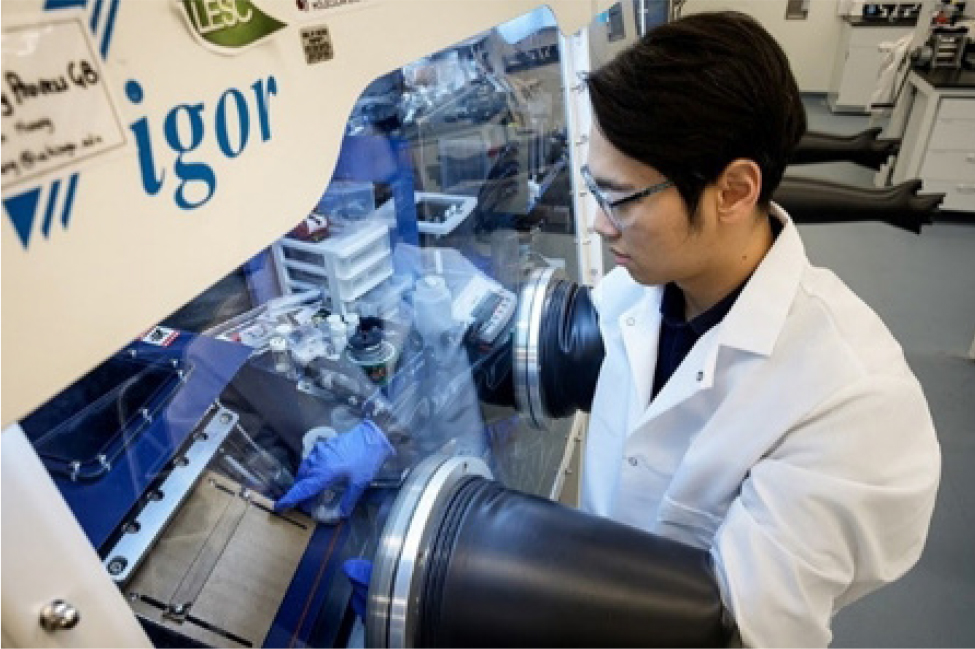
LG Energy Solution announced today that it has successfully demonstrated a high-capacity battery utilizing sulfur as a cathode material through an all-solid-state battery architecture, presenting new possibilities for next-generation, high-energy-density batteries.
The research, conducted in collaboration with Professor Shirley Meng’s research team at the University of Chicago, was published on February 27 in ITALICS, a leading international journal in the field of energy research.
The study represents a key research achievement by the Frontier Research Lab (FRL), jointly operated by LG Energy Solution with the University of California, San Diego (UC San Diego) and the Pritzker School of Molecular Engineering at the University of Chicago.
Sulfur has long been considered a promising candidate for next-generation cathode materials due to its low cost, abundant availability, and exceptionally high theoretical capacity of approximately 1,675 mAh/g. However, conventional battery systems using liquid electrolytes have faced a major challenge known as polysulfide dissolution, in which sulfur compounds generated during charge and discharge processes dissolve into the electrolytes, leading to rapid performance degradation and limited cycle life.
To address this issue, the joint research team adopted an all-solid-state battery structure that replaces liquid electrolytes with solid electrolytes. This approach effectively suppresses polysulfide dissolution and enables stable electrochemical performance.
As a result, the researchers achieved a capacity of approximately 1,500 mAh/g, while maintaining stable cycling performance. Importantly, the performance was verified not only in coin-cell testing but also in pouch-type cell configurations, thereby demonstrating the potential for practical battery applications.
“This achievement confirms the potential of sulfur cathodes to expand energy capacity beyond conventional lithium-ion batteries,” commented an LG Energy Solution representative. “Through continued collaboration with leading academic institutions, we will further advance next-generation battery technologies by strengthening safety, energy density, and cost competitiveness.”
Professor Shirley Meng, who led the research, delivered an address during The Battery Conference at InterBattery 2026, held at COEX, Seoul, in March 2026, where she shared insights into the future development of all-solid-state batteries and next-generation battery technologies.
korean-machinery.com | Blog Magazine of korean-machinery, brands and Goods





Leave a comment