
Steel exports to the USA hit a 10-year high, breaking through 50% tariff barrier
Rebar exports, previously experiencing sluggish sales, increased 11-fold
The South Korean steel industry has broken through the 50% tariff barrier and achieved its highest export performance in the U.S. market in over a decade. This is the result of explosive local steel demand driven by a confluence of large-scale U.S. infrastructure investment and a data-center construction rise fueled by the artificial intelligence (AI) boom.
According to trade statistics from the Korea Iron and Steel Association, South Korea’s steel exports to the United States reached 399,852 tons last April, marking the highest figure since February 2015 (404,155 tons). Exports to the United States, which had plummeted to 154,160 tons last August when the impact of tariffs began to take effect in full-scale, have continued a clear upward trend this year, recording 307,338 tons in February, 334,193 tons in March and 399,852 tons in April.
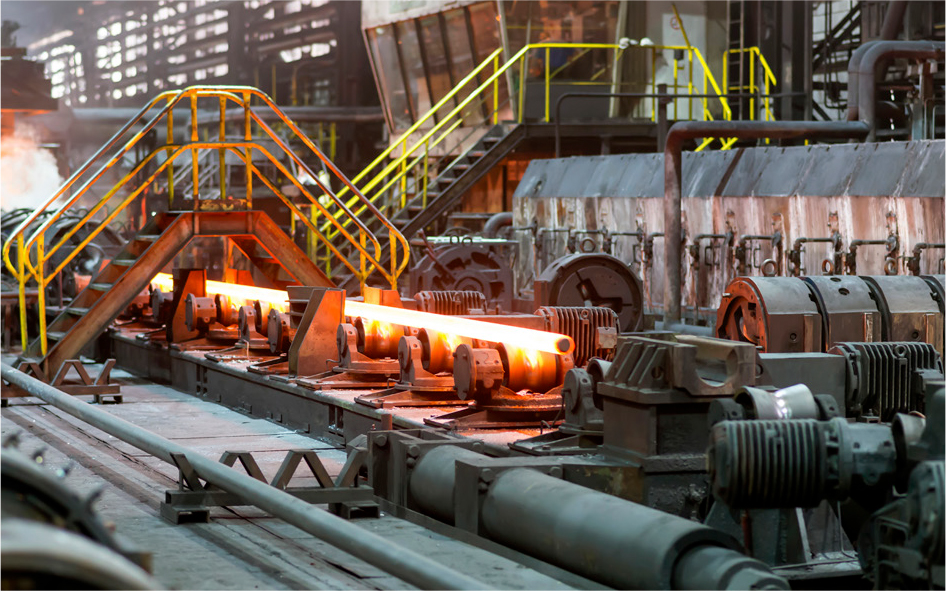
Rebar is leading the export drive. After previously accounting for practically zero of the total exports, Rebar has rapidly emerged as a new flagship product for the Korean steel industry by generating explosive demand in the U.S. market. Rebar exports to the USA reached 117,779 tons in January and 94, 115 tons in April, surging more than 11-fold compared to June of last year (8,136 tons), immediately following the implementation of tariffs.
The export boom is not limited to rebar. Exports of color-coated steel sheets to the United States in April surged by 136.8% compared to June of last year (10,122 tons) to 23,968 tons. Exports to the United States expanded across virtually all categories except heavy plates, including galvanized steel sheets (92.8%), cold-rolled steel sheets (89.4%), and steel pipes (51.6%). Steel pipes recorded the highest absolute volume among export items to the United States at 136,554 tons.
Data centers are often built on larger sites than general buildings — with high-rise or multi-story structures, requiring a greater amount of construction steel, such as Rebar.
Hyundai Steel has signed a strategic framework agreement (SFA) with Amazon Web Services (AWS) and is supplying eco-friendly steel materials, including carbon-reducing steel and H-beams, to major data centers in the Asia-Pacific region. Dongkuk Steel has also set a goal to increase its export share from 11% last year to 15% this year, with its customized steel product for data centers, called ‘D-Mega Beam.’
All of the strategies to expand exports were reflected in the first-quarter results. Dongkuk Steel achieved an earnings surprise, with its operating profit in the first quarter, KRW 21.4 billion, skyrocketing by 403.9% compared to the same period last year. Hyundai Steel also marked a turnaround from an operating loss of KRW 19 billion in the first quarter of last year to an operating profit of KRW 15.7 billion in the first quarter of this year. Hyundai Steel’s sales of rebar to the United States surged 286% compared to the previous quarter, leading to a performance rebound.
korean-machinery.com | Blog Magazine of korean-machinery, brands and Goods

 Korean-Machinery.com
Leave a comment