Increasing Electric and Hydrogen Vehicles

https://korean-machinery.com///inquiry

Increasing Electric and Hydrogen Vehicles… 9.5 Million Units in 10 Years

K-Mobility Initiative Strategy
Raising a goal of distributing zero-emission vehicles
Reducing individual consumption and acquisition taxes until next year

The government has set a goal of restructuring the entire automotive industry, including not only complete vehicles but also parts manufacturers, centered around eco-friendly vehicles.
The Ministry of Trade, Industry and Energy, jointly with relevant ministries, recently announced the K-Mobility Global Initiative Strategy that contains such contents. The core objective is to transition not only sales of complete vehicles but also parts manufacturers toward eco-friendly vehicles. The government’s goal is to increase the proportion of eco-friendly vehicles, including electric, hydrogen, and hybrid vehicles, to comprise 90% of new vehicle sales by 2035.
According to the Korea Automobile Mobility Industry Association, cumulative sales of domestic complete vehicles as of the third quarter of 2025 reached 1,036,912 units. Of these, eco-friendly vehicles accounted for 44%, or 457,321 units. The government aims to more than double the proportion of eco-friendly vehicle sales within 10 years.

The government also set a goal for the distribution of zero-emission vehicles, including only electric and hydrogen vehicles. Assuming the 2035 National Greenhouse Gas Reduction Target (NDC), announced on the 11th, to be 53%, the lowest goal, a total of 9.52 million zero-emission vehicles must be supplied by 2035. The cumulative number of zero-emission vehicles distributed is approximately 750,000, representing only 7.8% of the target value.

The government plans to support the distribution of eco-friendly vehicles across the entire supply and demand chain. To increase demand, subsidies for passenger EVs will be significantly expanded from next year. Until this year, subsidies were limited to a maximum of KRW 5.8 million per vehicle, but starting next year, an additional KRW 1 million will be provided. This applies to scrapping old existing vehicles and purchasing eco-friendly vehicles. The total budget for subsidies has also been increased from KRW 780 billion this year to KRW 936 billion next year.
The government set itself another goal of converting 70% of internal combustion engine parts companies into future vehicle parts companies by 2030. To facilitate allied mergers between companies, the government will provide support of up to 60% of the funding, up to a limit of KRW 20 billion. It will also support research and development, and 200 future vehicle specialized companies by training 70,000 future vehicle specialists by 2033.

korean-machinery.com | Blog Magazine of korean-machinery, brands and Goods

Tesla’s Self-Driving Offensive

https://korean-machinery.com///inquiry

Tesla’s Self-Driving Offensive… Korean Cars on the Edge

7th company to enter the market, following the USA, Canada, and China
GM also unveils its second-generation self-driving system.
Competing in the IT-receptive Korean market

Tesla’s flagship self-driving technology, Full Self-Driving (FSD), has been officially introduced in Korea, the seventh country in the world.
According to the automotive industry, Tesla recently released its ‘supervised FSD’ feature via an over-the-air (OTA) software update.
This update was applied to Tesla Model S and Model X vehicles equipped with the 4th-generation hardware (HW4) produced in North American factories.

This system accelerates, decelerates, changes lanes, and navigate routes on city streets and highways, but it is a Level-2 self-driving system that requires a driver to keep eyes on the road. Based on the test-drive data released by Tesla Korea, advanced features were identified — such as recognizing a speed limit sign, decelerating over a speed bump, and avoiding a stationary vehicle.
There are, however, still many obstacles to overcome before Tesla’s FSD is fully implemented in Korea. The update applied by Tesla this time is restricted to U.S.-produced vehicles. While vehicles imported into Korea under the Korea-U.S. Free Trade Agreement (FTA) can use the FSD feature without restrictions, vehicles manufactured at the Shanghai plant in China, which account for most domestic sales, are subject to separate safety standards, meaning that it will take longer until fully implemented.
As advanced global self-driving technologies are rapidly being introduced in Korea, technological competition will be also intensified. GM, ahead of Tesla, announced the launch of the Cadillac Escalade IQ this month and announced that advanced driver assistance system (ADAS) ‘Super Cruise’ will be applied. Super Cruise supports hands-free driving on tens of thousands of kilometers of highways and arterial roads.
These characteristics of the Korean market are also evident in sales of imported cars. From January to October of this year, Tesla’s Model Y ranked first in cumulative imported car sales. As 37,590 units were sold as a single vehicle, its sales are at least double those of the BMW 520 (12,408 units). Tesla ranked third among all imported vehicles, selling 47,962 units through October of this year, accounting for more than half of all imported electric vehicle sales.

korean-machinery.com | Blog Magazine of korean-machinery, brands and Goods
The Advancing Big-4 Defense Companies

https://korean-machinery.com///inquiry

The Advancing Big-4 Defense Companies to Achieve KRW 4 Trillion in Operating Profit This Year

KRW 3.5 trillion by the third quarter… 44% up from last year
“Export expansion… growth will continue for 2~3 years.”

The four largest domestic defense companies expect to exceed KRW 4 trillion in annual operating profit this year. Their combined operating profit for the 3rd quarter of 2025 (from July to September) reached KRW 3.49 trillion, already surpassing last year’s annual performance by over KRW 1 trillion.
According to each company’s disclosures, the four largest domestic defense companies — Hanwha Aerospace, Korea Aerospace Industries (KAI), Hyundai Rotem, and LIG Nex1 — have earned a cumulative operating profit of KRW 3.49 trillion through the 3rd quarter. This surpasses last year’s combined operating profit of KRW 2.4182 trillion by 44.4%, and with just 3 months left until the end of the year, their combined operating profit is likely to exceed KRW 4 trillion.

By company, Hanwha Aerospace posted operating profit of KRW 2.2817 trillion from January to September, accounting for 65% of total profits. Hyundai Rotem followed with KRW 738.2 billion, LIG Nex1 with KRW 280.8 billion, and KAI with KRW 192.2 billion.

Hanwha Aerospace achieved KRW 10 trillion in sales and KRW 1 trillion in operating profit last year for the first time in the Korean defense industry and is expected to exceed KRW 20 trillion in sales and KRW 2 trillion in operating profit this year. Hyundai Rotem’s cumulative operating profit in the third quarter also exceeded the last year’s annual performance, KRW 456.6 billion) by 61%, thanks to large-scale overseas orders including the second export contract for the Polish K2 tank.
With these companies’ defense industry orders backlog reaching KRW 118 trillion, forecasts suggest that growth will continue for the next 2~3 years.

korean-machinery.com | Blog Magazine of korean-machinery, brands and Goods
Five Hiking Courses in Seoul

https://korean-machinery.com///inquiry

Five Hiking Courses in Seoul for All Skill Levels

Seoul isn’t just home to millions of people, it’s also home to many mountains both large and small. Everywhere you look, the skyline of Seoul’s tall buildings is backed by undulating mountain ridges. From the peaks of these mountains, you can see the whole of Seoul unfold before you.
The mountains around Seoul have an average height of 410 meters, making them quite low and easy for hikers of all skill levels. The mountains are also the perfect place to enjoy Korea’s changing seasons. Especially in summer, you can enjoy the cool breeze that blows through the shaded valleys. Another attraction of the mountains is how easily accessible they are via Seoul’s extensive public transit system, with most hiking paths starting just a short walk from subway station exits. To enjoy a bird’s-eye-view of Seoul while in peaceful nature, select one of the courses below, available in various difficulty levels.

Hanyangdoseong, Seoul City Wall (Naksan Section 2.1 km) | Walk through History
1396 to protect Hanseong, the then-capital city of Joseon. Currently, the old city wall in located in the middle of Seoul, and is divided into six sections. Among these, the Naksan Section is the easiest course, and offers stunning nightscape views, making it a popular choice. You can receive a commemorative badge if you walk all six sections of Hanyangdoseong and collect stamps at the designated spots.

Inwangsan Mountain (338.2 m) | Panoramic view of Seoul
Standing atop Inwangsan Mountain is like standing in the middle of Seoul due to its location in Jongno-gu, near the center of the city. The hiking trail even starts from the middle of the city, near Gyeongbokgung Station! The path is well maintained, and is short enough that even the most inexperienced hiker can reach the summit in no time. If you’re visiting with young children or someone who has walking difficulties, the Inwangsan Jarak Trail (2.5 km / 1 hr) that circles the mountain is a great choice.

Cheonggyesan Mountain (618 m) | Stairway to Heaven
Cheonggyesan Mountain is jokingly called “cheongaesan,” a Korean play on words in reference to the thousand (“cheon gae”) stairs you must climb to reach the summit. While there aren’t actually one thousand stairs, the mountain does seem to have an endless supply of them.
Kkalddakgogae Pass in particular was named for the sharp sound of breathing you’ll produce after climbing up the steep staircase here. But if you can make it past that section, the summit will be just before you. During the summer months when it rains often, the sound of water babbling in the valley brook will keep you company.

Gwanaksan Mountain (632 m) | Path of many ups and downs
Gwanaksan Mountain isn’t that large in the grand scale of mountains, but it is quite a strenuous hike, requiring adequate warm-up before starting out. You’ll also want to be equipped with proper hiking boots. The trail begins with a rather flat walk, but quickly leads to repeated ups and downs as you follow the ridge line of this rocky mountain. Preparing gloves or hiking sticks can make your walk easier. If you enjoy an active lifestyle, you may even come to enjoy the roller-coaster-like walk.

Dobongsan Mountain (740 m) | Beautiful stone peaks
Dobongsan Mountain is located on Seoul’s northern side, bordering Uijeongbu and Yangju in Gyeonggi-do. The mountain stands out for its many rocky peaks, ranging from softly rounded to sharp points. While the mountain is smaller than Bukhansan Mountain, the rocky terrain makes it a much more difficult hike. Despite this, hikers often say the hardships at reaching the summit are all but forgotten when they take in the view from the majestic rocky peaks.

korean-machinery.com | Blog Magazine of korean-machinery, brands and Goods
Korea’s November Exports

https://korean-machinery.com///inquiry

Korea’s November Exports Increase 8.4%:
On the Verge of Reaching US$700 Billion Annually

Last month, Korea’s exports increased by 8.4% year-on-year, setting a record for the highest-ever exports for the month of November. With the continued strong trend in exports, led by semiconductors, it is expected that the nation’s annual exports will top $700 billion by the end of the year.
According to the recent ‘November 2025 Export and Import Trends’ released by the Ministry of Trade, Industry and Energy (MOTIE), Korea’s exports last month reached $61.04 billion, an 8.4% increase year-on-year. Assuming December exports remain at the same level as last year ($61.359 billion), exports this year are expected to easily surpass $700 billion.
A spokesperson for MOTIE commented, “We are approximately $59.8 billion away from achieving annual exports of $700 billion. While there is a risk because some products, such as steel and petrochemicals, are experiencing continuing sluggish sales, we still expect to achieve positive results.”

Despite the uncertainties stemming from the U.S. tariffs, semiconductors were a major factor in this year’s improved export performance. Last month, semiconductor exports increased 38.6% year-on-year to $17.26 billion. This is the result of increased demand for high-value-added memory, particularly for data centers, driving up prices. Cumulative semiconductor exports from January to November reached $152.6 billion, already surpassing last year’s previous annual record of $141.9 billion.
Automobile exports also recorded robust performance, rising 13.7% year-on-year. Exports of wireless communication devices and secondary batteries also improved by 1.6% and 2.2%, respectively, during the same period. However, petroleum products (-10.3%) and petrochemicals (-14.1%) continued their double-digit declines.
By country, exports increased in five of the nine major export regions, including China (6.9%), ASEAN (6.3%), and the Middle East (33.1%). However, exports to the United States decreased by 0.2% year-on-year. Imports increased by 1.2% over the same period, reaching $51.3 billion, resulting in a trade surplus for Korea of $9.73 billion.

korean-machinery.com | Blog Magazine of korean-machinery, brands and Goods
Korean Exhibitions

https://korean-machinery.com///inquiry

Korean Exhibitions: Platforms for Opening the Future of Industrial Innovation

The exhibition industry is a key business platform that first introduces innovations from each country and connects companies and markets. For over 20 years, the Korean government has provided support for entities to hold exhibitions through the Domestic Exhibition Support Project for Hosting, (“the Project”) and by developing exhibitions as a strategic tool for expanding exports and enhancing national trade competitiveness.
In particular, the Project supports the holding of exhibitions to strengthen industrial growth and connections with global markets, focusing on the following three key pillars:

Fostering Exhibitions by Stage of Growth
The Project categorizes the exhibitions into three growing stages: ‘New,’‘Promising,’ and ‘Global Top,’ and systematically supports the necessary capabilities for each stage.
For the New Exhibitions, the Project provides comprehensive support for attracting small and medium-sized enterprises (SMEs), and for promotional costs to secure a stable growth foundation in the domestic market.
For the Promising Exhibitions, laying the foundation for entering the global market is important, so the Project actively supports the attraction of overseas buyers, international promotion, and hosting side events to help Korean companies to advance onto the international stage.
As international exhibitions, the Global Top exhibitions are a stage that requires the advancement of their platforms. Support is provided primarily through expanding the global networks, such as attracting overseas guests and foreign journalists.
As such, Korean exhibitions, grown through such step-by-step support, are strengthening their role as a global industry platform through innovative exhibitions that lead industry trends.

Promoting Exhibitions Centered on Strategic Industries
The Korean government has designated key industries — such as semiconductors, secondary batteries, biotechnology, and robotics — as strategic industries that are crucial for the national economy, and is thus encouraging exhibitions in these fields to strengthen the nation’s industrial competitiveness.

The Project comprehensively supports the development of core capabilities of strategic exhibitions that showcase new technologies and connect global partnerships across industries, leading the expansion of the industrial ecosystem.
It is expected that these strategic industry exhibitions will grow into specialized platforms for policy announcements and technology sharing, and advance to become Global Top stages for industrial innovation at prestigious international events such as the Consumer Electronics Show (CES), Hannover MESSE, and the Mobile World Congress (MWC).

Strengthening the Foundation for Fostering Regional Exhibitions
Since 2013, the government’s efforts to foster regional exhibitions have intensified as regional exhibitions have been included in the targets of the Domestic Exhibition Support Project for Hosting. Recently, support has been focused on exhibitions linked to local industries, underlining the fact that regional exhibitions serve as key venues for showcasing regional characteristics and strengths.
In this way, regional exhibitions promote local industrial growth, support local SMEs in securing business opportunities and markets, and promote relationships for mutual growth. These changes are restoring the balance of the existing exhibition industry structure, which is concentrated in the Seoul metropolitan area, and laying the foundation for strengthening regional industrial competitiveness through growing into global-level exhibitions.
Automechanika Frankfurt, a representative global brand exhibition, has expanded its exhibition franchise model to countries like China, Turkiye, Malaysia, and the UAE — establishing itself as an international business platform that aims to connect the global supply chains into a coordinated network. Similarly, some domestically organized exhibitions that have grown under the Korean government’s systematic support are actively seeking overseas market expansion and expanding their global networks.
If more exhibitions join this trend and receive continued support at the national level, domestic exhibitions are expected to grow as global brand exhibitions for each industry, securing leading positions in the global market.

korean-machinery.com | Blog Magazine of korean-machinery, brands and Goods
Softmill

https://korean-machinery.com///inquiry

Softmill Participates in the 2025 Seoul Café Show

Releasing New Products and Gaining Big-attention

[INQ. NO. 2512M15] Softmill showcased its latest baking and confectionery equipment at the 2025 Seoul Café Show, drawing strong interest from domestic and international buyers. Industry experts praised the products’ high performance and user-friendly design, leading to active purchase inquiries and reaffirming the company’s position as a leading bakery machinery brand.
Overseas buyers, including those from Saudi Arabia, showed strong enthusiasm for the new technologies and expressed interest in future cooperation.

The new Convection Oven (washing model) gained significant attention with its four-stage automatic water-spray cleaning system, eliminating manual cleaning and improving hygiene and work efficiency.
The new dessert storage unit, The:Fresh D Case, also received positive feedback for its extended freshness retention, outperforming competing products—especially valued by professionals handling cakes and desserts.

Mini Oven Series — Completely Sold Out

Softmill’s mini oven series gained overwhelming popularity at the 2025 Seoul Café Show, with all display units selling out. Visitors who tested the product showed strong purchasing interest, and inquiries continued throughout the event.
A major coffee franchise in Saudi Arabia also expressed interest in bulk orders, highlighting the series’ global market potential.
Despite its compact size, the mini oven series offers large-oven performance with precise temperature control and even heat distribution, earning high praise for efficiency and ease of use.
The company’s CEO stated that they will continue developing innovative, field-focused technologies to lead the bakery industry in Korea and worldwide.

New Baking & Confectionery Equipment

Castella Oven
Softmill’s next-generation castella-dedicated oven was engineered for precise and delicate baking performance.
The oven features a smooth hinge-type door that opens and closes at a controlled angle, ensuring safer and easier operation while significantly reducing operator fatigue during long baking hours. Its upper baking chamber allows independent front and rear heat control, enabling fine adjustments that result in stable, uniform baking and consistently high-quality cakes.

A four-sided gasket structure minimizes heat loss and improves energy efficiency, while the innovative cooling-door design lowers the outer surface temperature by approximately 40%, enhancing workplace safety and operator comfort. In addition, high-performance ceramic heaters deliver deep, even, and gentle heat penetration, preserving the soft texture and delicate structure of castella.
The advanced step-control system allows precise adjustment of temperature and humidity at each baking stage, ensuring repeatable, reliable results and superior product consistency batch after batch.

Dessert Storage

Softmill’s specialized dessert storage system was designed to keep delicate desserts perfectly fresh from thawing to final display. This unit precisely controls both temperature and humidity, while evenly distributed airflow ensures all desserts are maintained in uniform condition regardless of their position inside the cabinet.
The hygienic thawing mode effectively minimizes drip formation and suppresses microbial growth, helping to preserve the original flavor, moisture, and texture of desserts even after thawing.
With its modern and refined design, the dessert storage system enhances not only operational performance but also visual presentation in the store. It delivers strong functional reliability alongside aesthetic appeal, making it a valuable addition to any bakery, café, or confectionery shop.

korean-machinery.com | Blog Magazine of korean-machinery, brands and Goods
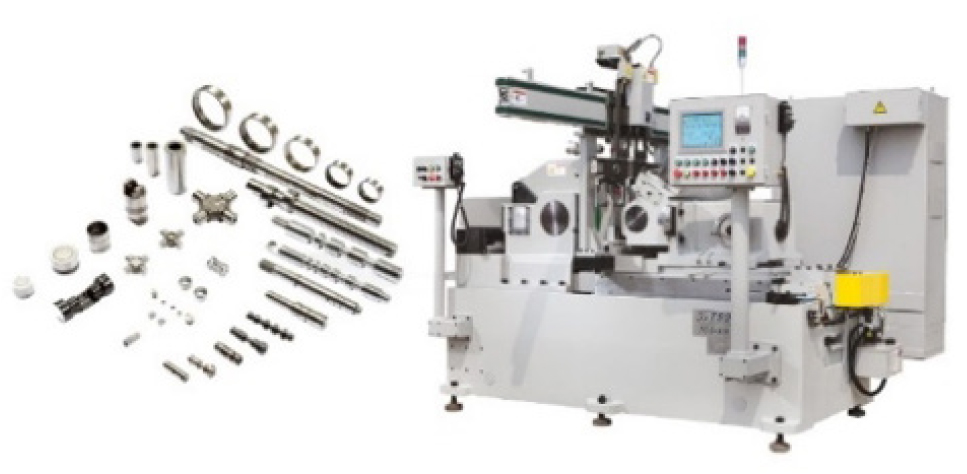
Equipment for Building Automation Lines

https://korean-machinery.com///inquiry

[INQ. NO. 2512M14] Founded in 2019, Filliper Inc. specializes in building automation lines. It currently installs and supplies equipment for building automation lines for global companies, including Samsung Electronics.
As of 2024, Filliper generated sales of KRW 4.9 billion. The company primarily manufactures various kinds of vacuum and automation equipment, custom-built for each company’s automation line. It also manufactures various types of jigs for building automation lines.
Filliper has developed various products related to building automation lines. It has developed an RoHS-compliant clean vacuum valve for LCD equipment, and a metal film coating device for plastic substrates. In addition, the company has a vacuum system for removing plating solutions and a large-capacity mechanical booster pump.

Filliper’s business is largely divided into two business segments: vacuum systems; and FA systems.
Filliper manufactures and installs customized automotive lamp assembly equipment tailored to corporate needs. The company also manufactures and installs equipment for automotive parts assembly and testing, tailored to the needs and expectations of companies.
Products attached to vacuum equipment manufactured and supplied by Filliper include angle valves, gate valves, and butterfly valves.This company also specializes in manufacturing and supplying equipment for die-casting process automation.

In particular, Filliper manufactures and installs various types of equipment specifically for analysis and inspection of semiconductor manufacturing processes. Semiconductor wafer inspection equipment is among them. The company is currently registered as a Samsung Electronics analytical equipment supplier.
“Based on our proven technological capabilities, we have signed contracts with various customers and supply a variety of quality-proven products across different industries. Going forward, we will explore new markets, both domestically and internationally, through collaboration and R&D with partners with exceptional technological capabilities,” the company’s CEO remarked.

korean-machinery.com | Blog Magazine of korean-machinery, brands and Goods
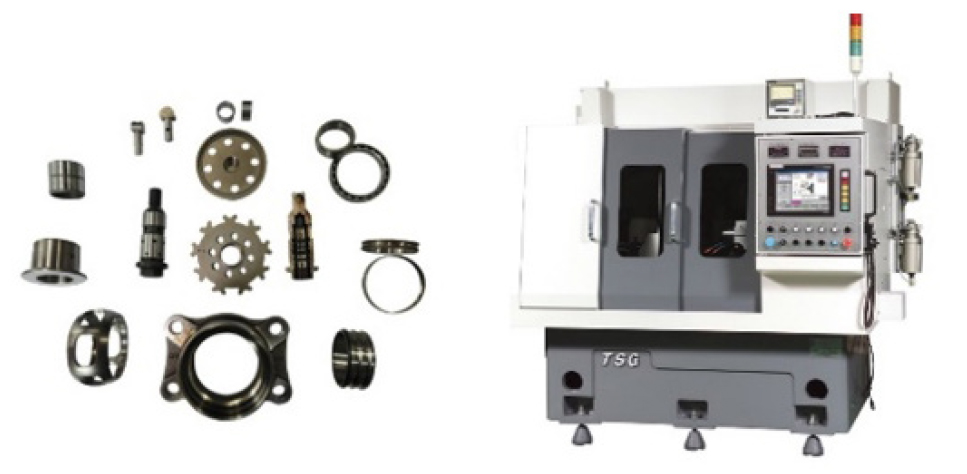
Automotive Solutions

https://korean-machinery.com///inquiry

[INQ. NO. 2512M13] With 30 years of experience in the automotive industry, JWON PROTECH has established itself as a specialized company in equipment and chemicals for automotive engine performance restoration.
JWON PROTECH is committed to always providing the highest quality and performance from its customers’ perspective.

Injector-Cleaning Equipment
Petroleum-powered internal combustion engines generate carbon as they operate. This carbon accumulates in the engine combustion chamber and fuel injector ― thus interfering with fuel injection, reducing engine output, and causing engine knocking and failure.
To address these issues, it is essential to clean the fuel deposits in the control valve inside the injector, removing foreign matter, restoring valve stem clearance, and restoring performance. In addition, when a field phenomenon occurs, such processes as the performance of injector cleaning, high-quality injector-cleaning results, and restoration of static leakage values to normal levels, are all crucial.

JWON PROTECH’s chemicals dissolve carbon deposits in the fuel injector and combustion chamber without harming the engine. Periodic application helps maintains the new feel of the vehicle.
JWON PROTECH’s injector-cleaning device, Fuel System Serve, is available for gasoline and diesel vehicles and can be easily connected to the fuel line for use.

Instead of diluting the fuel, the company’s powerful chemicals start and clean the engine, providing feedback of light and powerful output increase after they begin to work.
This device intensively cleans fuel deposits and foreign substances that accumulate in common-rail diesel injectors. It addresses issues such as reduced output, reduced fuel efficiency, increased exhaust emissions, and poor starting.

Washer
The K1 washer is larger than standard washers. While used in a variety of locations, including auto repair shops, bike shops, and industrial plants, it still provides enough space to clean most parts.
The device is designed to allow the operator to work while standing up without bending. The wash tank is easily accessible for cleaning after multiple uses, allowing for a clear view of the tank when changing the detergent.
The pressure spray nozzle is divided into two types: a front-mounted nozzle; and a hand-held high-pressure hose nozzle.
When cleaning small parts, it is convenient to hold the part with both hands and spray high-pressure water from the front-mounted nozzle. The hand-held high-pressure hose nozzle allows the worker to view and clean every nook and cranny of the part. The front view is secured by reinforced glass with an air curtain inside, which sprays air during work to help secure the worker’s view.
The interior work light is not installed inside the vehicle, but rather shines inward from the outside of the tempered glass. Since the work light does not stick to dirt and debris, proper windshield maintenance ensures long-term visibility.

Petrol System Cleaner, Pre-Mix
JWON PROTECH’s petrol system cleaner, Pre-Mix, cleans gasoline injectors and restores their injection patterns. It safely and effectively cleans the inside of the combustion chamber, and also adds safety features to various catalysts and sensors.

Diesel System Cleaner, Pre-Mix
JWON PROTECH’s diesel system cleaner, Pre-Mix, cleans diesel injectors and restores their injection patterns. It contributes to engine power restoration and smooth idling. It also helps reduce engine noise and vibration.

korean-machinery.com | Blog Magazine of korean-machinery, brands and Goods
Agricultural Aluminum Shading Screen

https://korean-machinery.com///inquiry

[INQ. NO. 2512M12] Yuk-il Agrow Spun Curtain Co., founded in 1991, is a manufacturing and distributing company specialized in heat-conservation material such as house-heating curtains and screens. It is continuously researching and working to help to increase the incomes of farmers and reduce heating energy costs, which is the most important factor in this era of high oil prices.
Yuk-il’s aluminum shading screen YI-AL has excellent thermal effect compared with other screens.
It is a screen product made of fabric, so there is no stretch at all. It successfully completed tests for thermal insulation, light blocking, and UV life at domestic and Japanese testing institutions. The inside of the buildings is brighter, since the aluminum powder reflects ultraviolet rays.
It has a long lifespan, excellent heat retention, and excellent dehumidification properties. Additionally, it reflects excessive sunlight in summer to regulate light intensity, and in winter, it maintains greenhouse temperature by reflecting radiant heat, thereby assisting crop growth.

Th company’s agricultural aluminum shading screens are widely used in smart farms, which are currently being built and implemented in many areas, and are also widely sold to general farmers. These products help maintain the optimal environment for crops by controlling the amount of light inside.
Recently, greenhouse cultivating sites require the production of high-quality and high-income garden crops by using additional facilities more efficiently. Accordingly, the smart farm industry is mainly propelling development of various additional facilities, cultivating management skills, energy saving and automation and is actively participating in reducing carbon dioxide, which is an issue around the world.
“We take the lead in not only cultivating high-income crops and saving energy but also automating various greenhouse cultivations. We will grow to become the people’s corporation that prioritizes the expansion of domestic and overseas markets through the development of new products and customer satisfaction,” explained the company’s CEO.

korean-machinery.com | Blog Magazine of korean-machinery, brands and Goods