Kia’s PV5 to Target Japan’s EV Van Market

https://korean-machinery.com///inquiry

[INQ. NO. 2511M10] Kia is making a full-scale foray into the Japanese market with the PV5. It will serve as a vanguard in realizing Kia’s vision of providing sustainable mobility solutions.
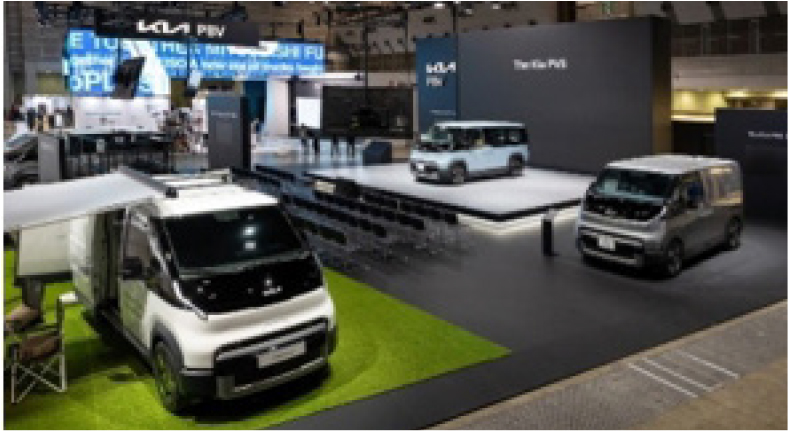
Kia unveiled the PV5 for the first time in Japan at the 2025 Japan Mobility Show held at Tokyo Big Sight in Japan, and announced its planned entry into the Japanese EV van market in 2026.
Kia has decided to enter the Japanese market with the PBV, as demand for EV vans is expected to increase in line with the Japanese government’s carbon neutrality policy of increasing electric vehicle sales to 30% of new car sales by 2030.
Kia’s entry into the Japanese market is part of Kia’s plan to expand its PBV business globally. The PV5 is currently available in South Korea and Europe, and its sales are expected to continue expanding to the Middle East, Africa, and Asia, including Japan, by 2026.
This strategy, spearheaded by the PV5 model, is expected to establish a differentiated position from existing global automakers in Japan. Furthermore, based on its dedicated platform-based EV technology and customer-centric management philosophy, Kia is expected to present a realistic solution to the carbon-reduction challenges facing Japanese society.
Last year, Kia signed a local sales agreement with Sojitz, a leading Japanese general trading company, to enter the Japanese PBV market.
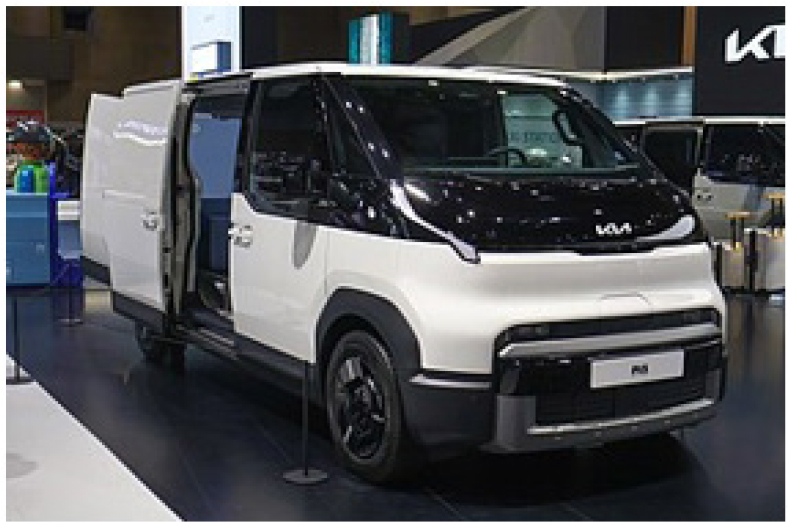
The PV5, which will go on sale in Japan starting in 2026, is based on the dedicated PBV platform E-GMP.S, and features a spacious interior and dedicated software solutions ― making it ideal for the diverse business environments faced by Japanese customers.
Kia thus plans to gradually expand its PBV business in the Japanese market, and establish itself as a global brand that grows alongside Japanese society.
In particular, a Kia spokesperson emphasized that the PV5 not only offers an excellent alternative in Japan’s limited electric commercial vehicle market, but also addresses social issues such as increased logistics, labor shortages, and regional transportation gaps.
The PV5 features a customized vehicle architecture and a comprehensive suite of cutting-edge technologies designed to cope with the diverse business environments and lifestyles of Japanese customers.
The flexible body system is a PBV-specific technology that modularizes key components such as the body, doors, and tailgate, thus enabling flexible responses to diverse customer needs. By assembling the necessary modules like a puzzle, the system can be expanded to up to 16 body configurations.
Furthermore, the PV5 offers an optimized mobility solution based on its robust EV performance. Utilizing the PV5’s EV-specific features ― Vehicle-to-Load (V2L) and Vehicle-to-Home (V2H) ― it can be used as an emergency power source, even in disaster situations such as earthquakes.
Notably, the PV5 boasts an outstanding radius rotation of 5.5 meters, based on its 4,695mm length and 1,895mm width, enabling efficient and convenient driving even on Japan’s narrow roads.

 
korean-machinery.com | Blog Magazine of korean-machinery, brands and Goods
Kia Unveils the ‘All-in-One Display 2’

https://korean-machinery.com///inquiry

A taxi-specific option based on the PV5
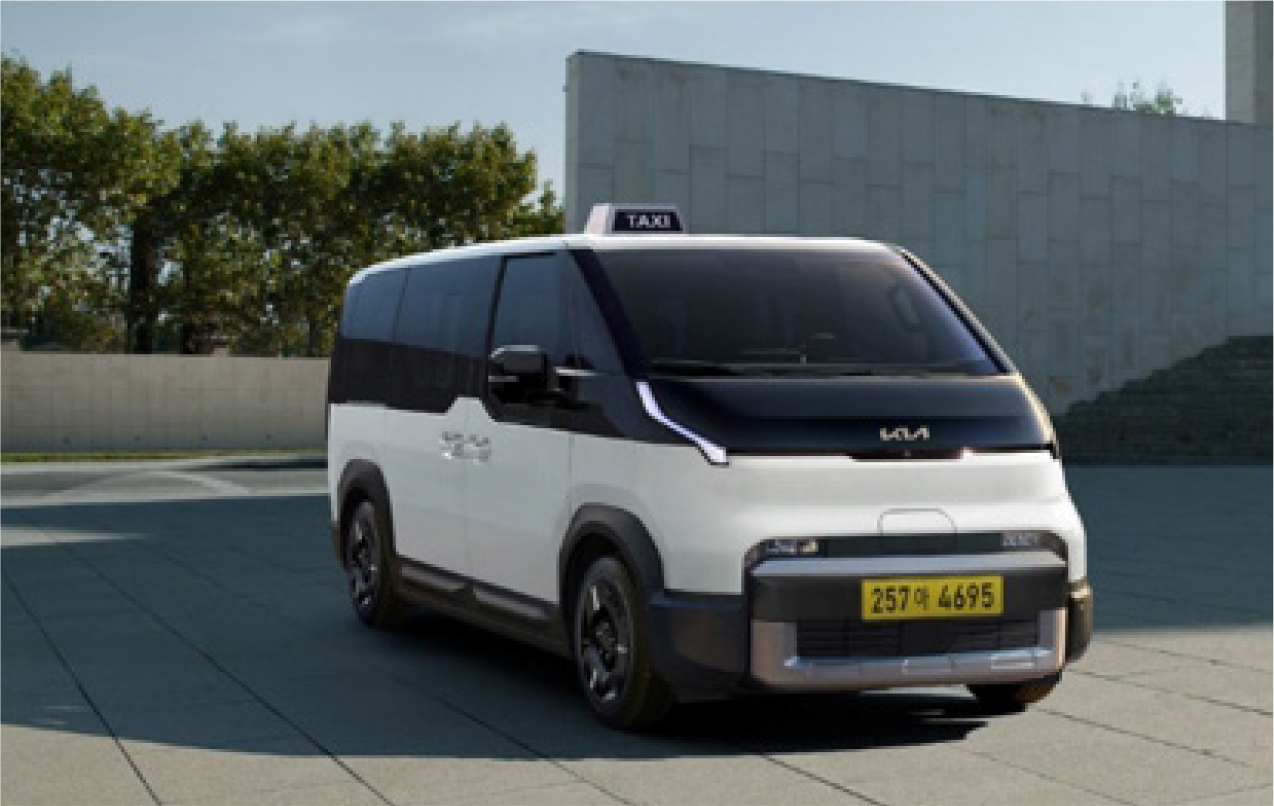
[INQ. NO. 2511M09] The All-in-One Display 2 is an exclusive option for the PV5 taxi, integrating essential taxi functions, including the taxi driver app (Kakao T), navigation app (Kakao Navi), and meter app (T-money Mobility, Joy of Travel), into a 12.9-inch large display.
This integration enhances operational efficiency by integrating key taxi functions, previously operated on separate devices, into a single, intuitive screen. Drivers can now accept call cards using a single steering wheel button, and, when using the Hi-Pass system, automatically calculate fares to simplify payment, offering enhanced convenience to both customers and drivers.
Furthermore, several features have been improved compared to the ‘All-in-One Display 1’ option available on the existing Niro Plus taxi. Kia Connect and navigation-based advanced driving assistance features can be used just like in regular vehicles, and driver convenience can be customized by directly controlling the App Meter screen on the display.
This All-in-One Display 2 is significant in that it marks the first time Kia has developed an application (app) for a PBV-specific infotainment system, based on its customer-centric PBV business philosophy, and through collaboration with external software partners.
A spokesperson for the company remarked, “With the launch of All-in-One Display 2, we aim to provide drivers with the optimal mobility experience. We plan to continue to introduce innovative and practical customized solutions for diverse industries, including not only taxis but also logistics and small businesses, to realize our SDV vision and proactively respond to the changing future mobility market.”
In addition, the PV5 taxi, launched in June, is equipped with a 71.2kWh battery and has a single-charge driving range of 358km. It also provides a practical taxi driving environment through various convenient features such as a protection mat, type C USB terminal on the first-row seatback, a footrest on the lower part of the first-row seatback, second-row sliding door, and PBV-exclusive infotainment system.


korean-machinery.com | Blog Magazine of korean-machinery, brands and Goods
Why Global EV Partners Choose SK Signet: Powering the Future of Ultra-Fast Charging

https://korean-machinery.com///inquiry

Transforming from a Hardware Manufacturer into a Comprehensive EV Charging Solutions Provider

[INQ. NO. 2511M08] Leveraging its accumulated technological expertise and global market experience, SK Signet is evolving into a turnkey (one-stop) charging solution provider that covers a wide range of processes – from design and installation to commissioning, maintenance, and data-driven operations.
Looking ahead, SK Signet plans to establish a customized and integrated service system and implement an intelligent end-to-end operational model. This model will encompass the full spectrum of services, from consulting on charging-infrastructure development, to predictive maintenance through close collaboration with key stakeholders such as charge-point operators (CPOs), vehicle OEMs, fleet operators, and real estate developers.
‘Quality First’ serves as SK Signet’s core management principle. The company ensures reliability and stability across all product lines by maintaining an innovative quality system aimed at achieving Zero Defect (0%). By capitalizing on its technological strength and integrated service capabilities, SK Signet remains committed to leading the way in quality and innovation across the entire EV-charging ecosystem.

Empowering Success through Collaboration with OEMs and Operators Worldwide
Since entering the U.S. market in 2018 after being awarded a large-scale charging-infrastructure project, SK Signet has steadily expanded its market presence through its swift responsiveness and differentiated technological competitiveness. As of September 2025, the company has secured approximately 226 sites – over 20% of the total of 1,157 NEVI program sites – establishing itself as a leading player in the ultra-fast charger market.
Collaboration with CPOs has been key to gaining leadership in the NEVI market. Through strategic partnerships with major CPOs, SK Signet has successfully executed large-scale projects and strengthened market confidence.
SK Signet is actively pursuing new global partnerships to drive the continued expansion of ultra-fast charging infrastructure. The company will continue to broaden its reliable ultra-fast charging infrastructure through close collaboration with global OEMs and operators.

Targeting the Global Market: High-Volume Manufacturing and Rapid Deployment Capabilities
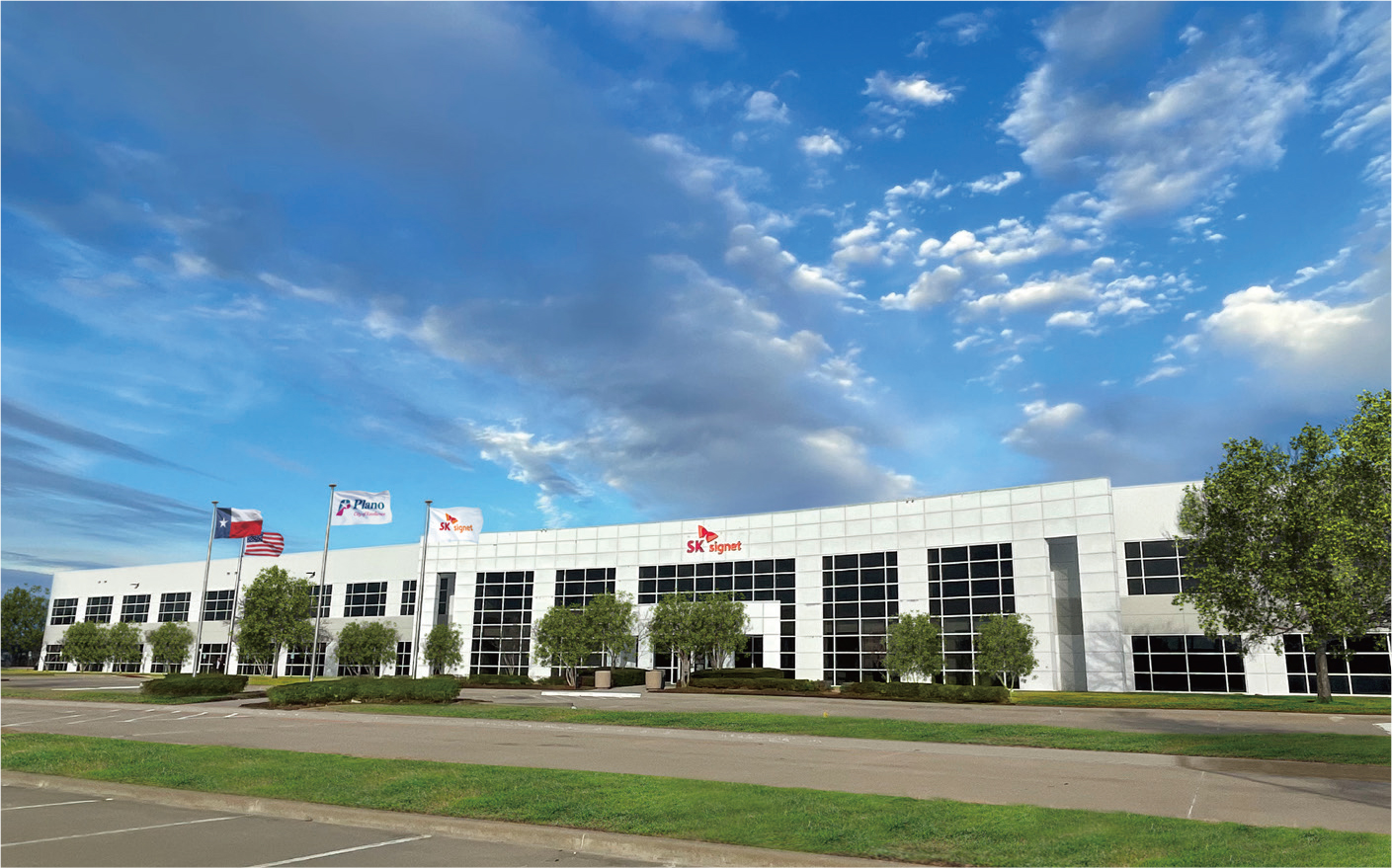
SK Signet has built an annual production capacity of over 20,000 units across Korea and the United States – including the state-of-the-art manufacturing facility completed in Plano, Texas, in 2023. This robust manufacturing base enables the company to respond swiftly and reliably to the growing global demand for EV chargers.

In addition, SK Signet’s R&D and technical support centers in Korea and the United States enhance localized production and deliver tailored engineering services with prompt technical support – helping customers to achieve optimized solutions and greater operational efficiency.
SK Signet’s global manufacturing and supply network, together with its localized technical support capabilities, serves as a key competitive advantage – facilitating the development of reliable and sustainable EV charging infrastructure that goes beyond simple product supply.

Beyond Hardware: Transforming EV Charging with Intelligent Software
SK Signet is advancing its AI-based charger monitoring and predictive maintenance systems to minimize downtime and maximize operation efficiency. The company’s proprietary Charger Integrated Support System (CISS) enables real-time diagnostics and remote updates, allowing it to predict potential failures in advance and perform corrective actions when necessary.
Building on these capabilities, SK Signet is further enhancing its AI functionality to integrate charger operation data and user behavior patterns. This advancement will enable the company to establish optimized operational strategies for each charging station, while improving energy utilization and equipment performance.


korean-machinery.com | Blog Magazine of korean-machinery, brands and Goods
Ultra-fast EV Charging Solutions

https://korean-machinery.com///inquiry

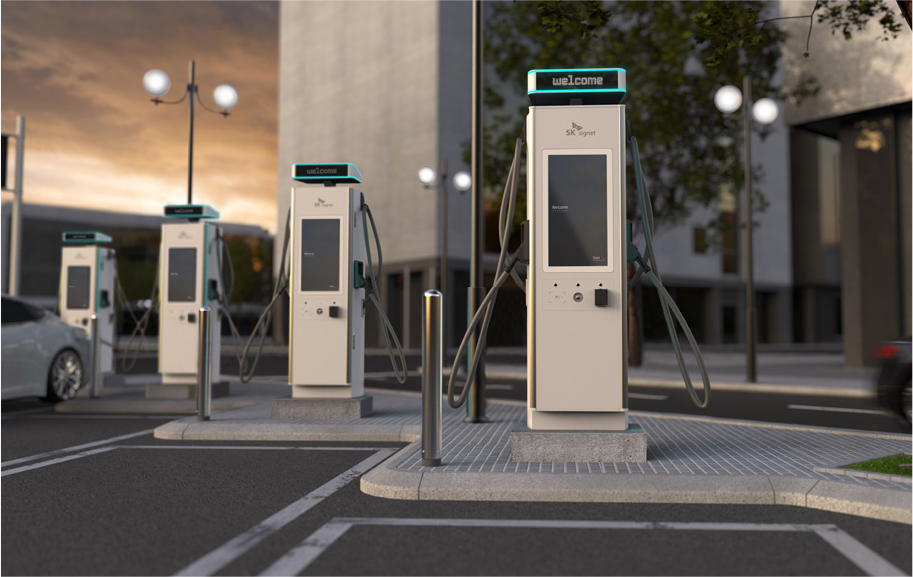
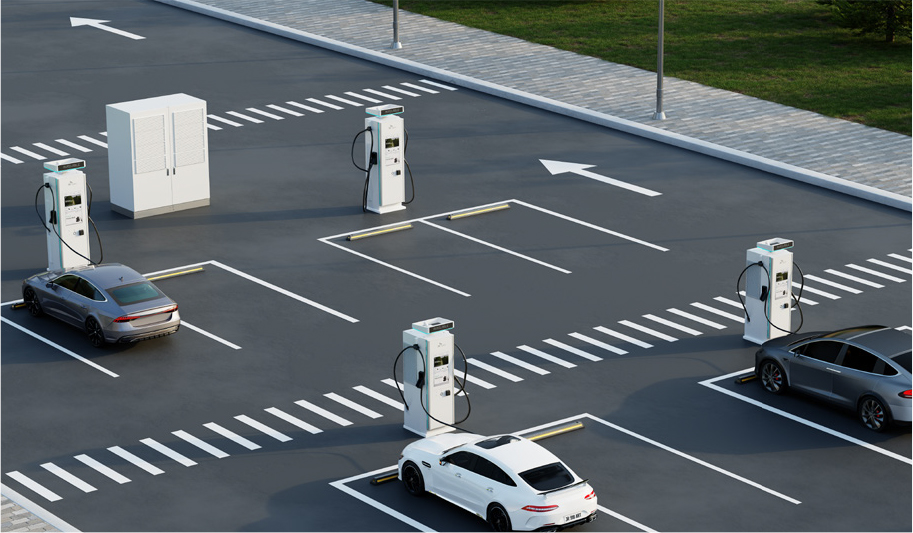
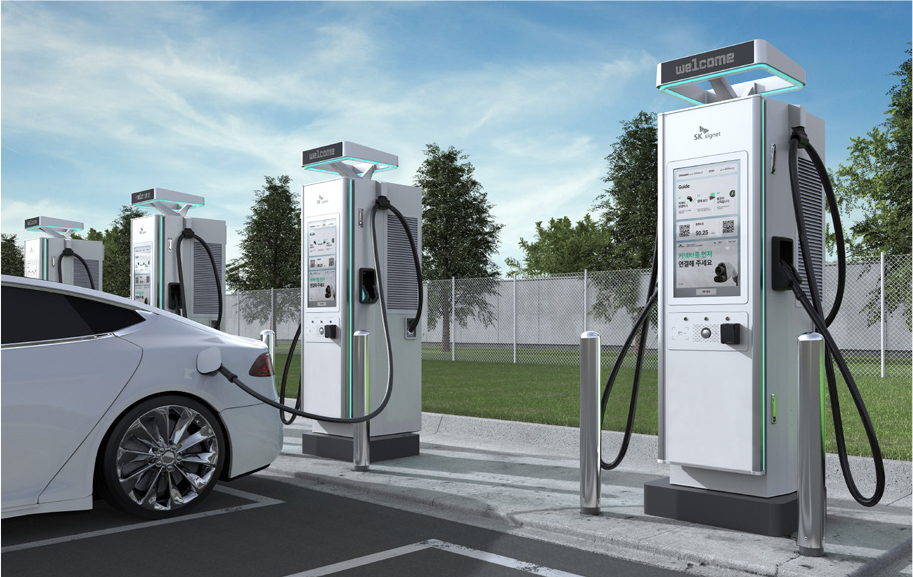
[INQ. NO. 2511M07] SK Signet America Inc. is a global electric vehicle (EV) charger manufacturer, and a market leader in the ultra-fast charging industry in the United States.
Recognized as the top-ranked manufacturer in the National Electric Vehicle Infrastructure (NEVI) ― and supported by $5 billion in federal incentive initiatives, SK Signet America has earned industry-wide trust through its world-class technological excellence and high-volume manufacturing capabilities in the United States.
As a ‘Total Solution Provider for EV charging,’ SK Signet America is committed to shaping a more sustainable future by integrating clean energy with next-generation mobility.

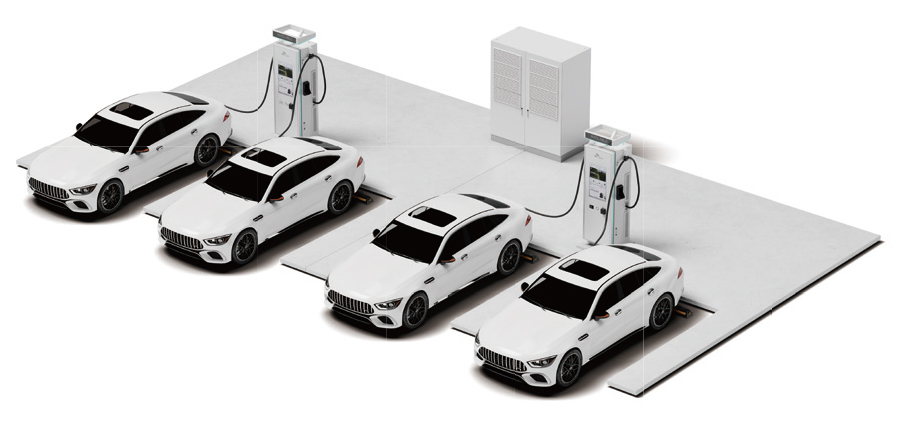
V2 Distributed Charging System

If you are seeking a reliable and efficient charging infrastructure for your business, the V2 Distributed System is the ideal solution for site owners and charge point operators looking to attract more EV drivers and maximize profitability through 400kW ultra-fast charging and government grant programs.

Maximum 600kW Output Enabling Simultaneous Charging for Four Vehicles
The V2 Distributed System is a cutting-edge fast-charging solution that combines a 600kW power cabinet with dispensers equipped with 500A dual liquid-cooled cables, enabling simultaneous charging for up to four electric vehicles. Each charging port supports a maximum output of 400kW, and when multiple vehicles are charging concurrently, this proprietary Active Power-sharing technology dynamically distributes power in 50kW increments, thereby ensuring optimal efficiency based on each vehicle’s real-time charging demand.


korean-machinery.com | Blog Magazine of korean-machinery, brands and Goods
EV Powered by Samsung SDI Battery Sets Guinness World Record for Longest Journey on a Single Charge

https://korean-machinery.com///inquiry

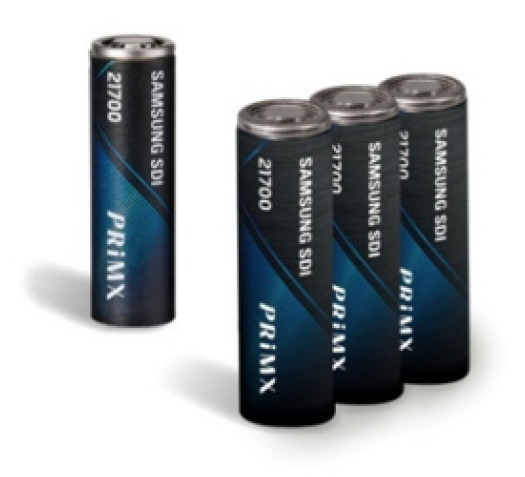
[INQ. NO. 2511M06] Samsung SDI recently announced that an electric vehicle (EV) powered by its 21700 cylindrical batteries has set a new Guinness World Record for the longest journey by an electric car on a single charge.
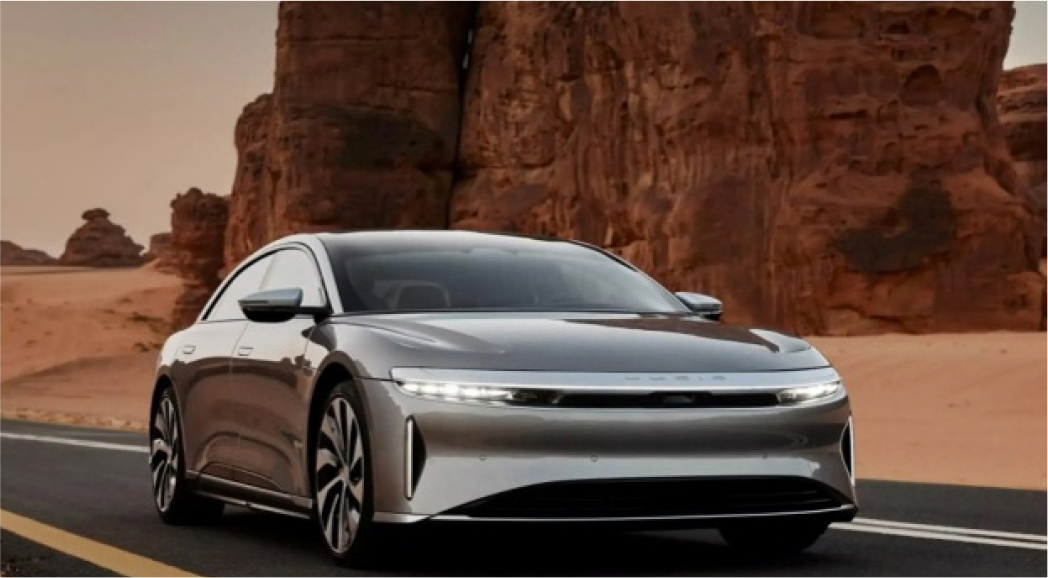
The award-winning Lucid Air Grand Touring, designed and made by Lucid, the U.S.-based technology company and maker of the world’s most advanced EVs, broke the world record for the longest distance driven on a single charge.
The Lucid Air Grand Touring was driven 1,205 kilometers (749 miles) in its July 2025 record-breaking journey between St. Moritz, Switzerland, and Munich, Germany, which included alpine roads, highways, and secondary roads.

Lucid exceeded by 160 kilometers the previous record for the longest journey of 1,045 kilometers set in June. This milestone was achieved through the synergy across Samsung SDI’s cutting-edge battery technology combined with Lucid’s in-house powertrain platform, outstanding design, and engineering.
Lucid Air Grand Touring is the longest-range variant of Lucid’s flagship sedan. In addition to its industry-leading driving range, the high-performance EV can accelerate from 0 to 100 km/h in as little as 3.2 seconds to, delivers up to 831 horsepower, and can reach a top speed of 270 km/h. The battery pack can gain up to 400 kilometers of range within just 16 minutes due to its advanced battery cell, pack, and ultra-fast charging architecture.
Samsung SDI and Lucid have been collaborating since 2016, as the EV company developed, and later launched the Lucid Air Dream Edition and subsequent Lucid models.

“With Samsung SDI’s cylindrical battery powering the world’s longest-range vehicle, we have proven our technological prowess,” remarked a Samsung SDI spokesperson, adding, “We will strengthen our partnership with Lucid to expand our global market share and accelerate the development of products that combine differentiated performance and safety.”
Founded in 2016, Lucid is advancing state-of-the-art EV technology for the benefit of all. The award-winning Lucid Air and new Lucid Gravity deliver best-in-class performance, sophisticated design, expansive interior space and unrivaled energy efficiency. Lucid assembles both vehicles in its cutting-edge, vertically integrated factory in Arizona.


korean-machinery.com | Blog Magazine of korean-machinery, brands and Goods
Samsung SDI to Collaborate on an All-Solid-State Battery Project

https://korean-machinery.com///inquiry

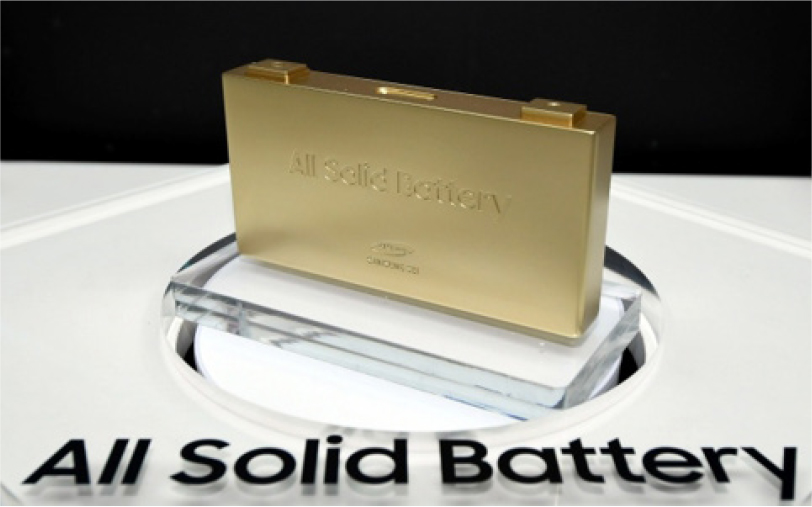
[INQ. NO. 2511M05] Samsung SDI announced recently that it had signed a trilateral agreement with Germany’s premium manufacturer, the BMW Group, and U.S. battery technology company Solid Power, to collaborate on an all-solid-state battery validation project.
Under this arrangement, Samsung SDI will supply ASSB cells, featuring both enhanced energy density and safety, by utilizing the solid electrolyte developed by Solid Power, a leading all-solid-state battery technology company, based in the United States. BMW will develop modules and packs for ASSB cells. The three partners aim to evaluate the performance of ASSB cells based on the agreed parameters and requirements, and to integrate them into BMW’s next-generation evaluation vehicles.
ASSB cells use solid electrolyte instead of liquid electrolyte found in conventional lithium-ion batteries. They offer superior safety and can achieve higher energy density compared with conventional batteries, enabling EVs to drive longer ranges without having to accept disadvantages in terms of weight of the overall storage system.
The collaboration is significant in that these three specialized companies have established a practical collaboration system and a model for global value chains for ASSB cells, aiming to pave the way for their commercialization by bringing together their complementary expertise in cells manufacturing, automaking, and materials development.
BMW has selected Samsung SDI as a partner, considering its long-standing trust in the battery maker built through a years-long partnership, as viewed by industry observers. Also, known as the front-runner in the all-solid-state battery territory, Samsung SDI is recognized for its technological prowess in the whole new battery field.
The upcoming collaboration will draw industry attention as the long-running partnership between Samsung SDI and BMW expands into a new era.
Samsung SDI and BMW have maintained a collaborative relationship since 2009 when the German automotive group chose the Korean battery supplier.
“Technological competitiveness in batteries will ultimately lead to innovation in electric vehicles,” explained Stella Joo-Young Go, Executive Vice President of the ASSB Commercialization Team at Samsung SDI. “So, Samsung SDI will work closely with great global partners like BMW and Solid Power to take the lead in commercializing ASSB.”
Martin Schuster, Vice President Battery Cell and Cell Module at the BMW Group elaborated further by saying, “With Samsung SDI joining our partnership with Solid Power, we gain significant momentum on our path toward advancing the development of new battery cell technologies,” adding. “This global collaboration is further proof of our ultimate goal: to be always in a position to offer our customers state-of-the-art battery technology.”
John Van Scoter, President and CEO of Solid Power added, “We are excited to partner with Samsung SDI and BMW to advance the development of all-solid-state batteries. Our solid electrolyte technology is designed for stability and conductivity, and by working closely with global leaders in automotive and battery innovation, we strive to bring ASSB technology closer to widespread adoption.”
Samsung SDI has been making constant efforts to strengthen its technological prowess for commercialization of ASSB cells.
In March 2023, Samsung SDI established a pilot line at the Suwon R&D Center in South Korea, the first of its kind in the country, and began producing prototypes at the end of 2023. Sample tests are currently underway in collaboration with multiple customers.
Samsung SDI has been working to boost battery capacity year-after-year through cell enlargement, and to complete tasks to set up manufacturing processes and supply chains for commercialization.
As expectations run high for wide adoption of ASSBs, not only for EVs, but also for robots and other new applications, Samsung SDI is in talks with potential customers. and intensifying its efforts to commercialize ASSB cells.


korean-machinery.com | Blog Magazine of korean-machinery, brands and Goods
LG Energy Solution and GM to Pioneer LMR Battery Cell Technology

https://korean-machinery.com///inquiry

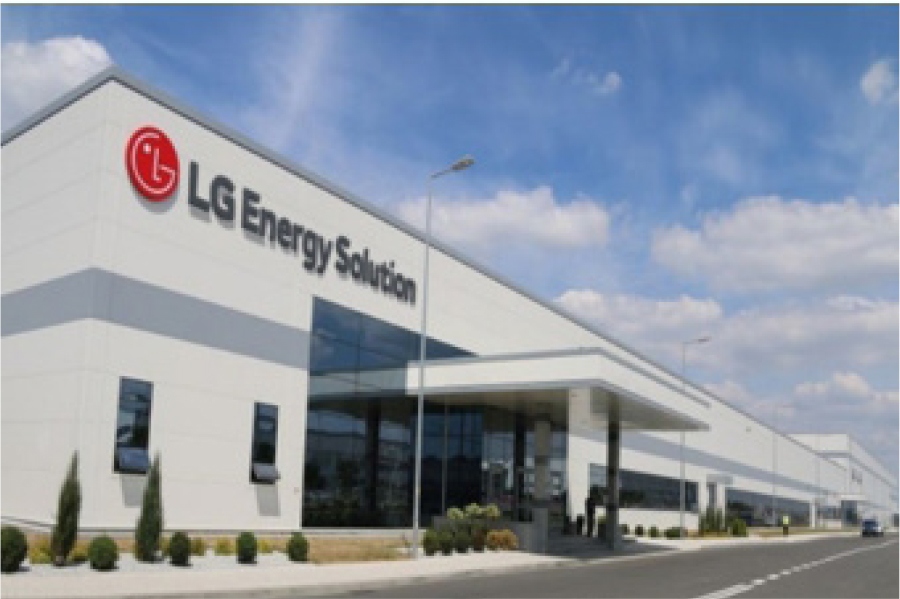
[INQ. NO. 2511M04] In a new battery technology breakthrough, General Motors and LG Energy Solution will commercialize lithium manganese-rich (LMR) prismatic battery cells for future GM electric trucks and full-size SUVs. This builds on a partnership established between the two companies to develop prismatic battery cell technology and related chemistries. It is also backed by GM’s long legacy of American ingenuity that has produced innovations like the small-block V8 engine, OnStar connected vehicle services, and hands-free Super Cruise.
GM aims to become the first automaker to deploy LMR batteries in EVs. Ultium Cells, a GM and LG Energy Solution joint venture, plans to start commercial production of LMR prismatic cells in the United States by 2028. Pre-production is expected to begin at an LG Energy Solution facility by late 2027. The final production-design of these LMR battery cells will be validated at GM’s Battery Cell Development Center in Warren, Michigan, which is expected to open earlier that year, as well as LG Energy Solution’s facility.
Battery cathodes require materials like cobalt, nickel and manganese ― with cobalt being the most expensive. LMR battery cells use a higher proportion of more affordable manganese, while also delivering greater capacity and energy density.
Battery engineers at GM and LG Energy Solution have developed a new LMR prismatic battery cell at a comparable cost that delivers 33% higher energy density compared to the best-performing lithium iron phosphate (LFP) based cells.
GM’s electric truck platform is a segment-leading range using high-nickel chemistry today. By integrating LMR battery technology and the manufacturing- and space-efficiency benefits of prismatic cells, GM aims to offer more than 400 miles (643.7km) of range for electric trucks, while achieving significant battery pack cost-savings compared to today’s high-nickel pack.

“We’re pioneering manganese-rich battery technology to unlock premium range and performance at an affordable cost, especially in electric trucks,” explained Kurt Kelty, VP of Battery, Propulsion, and Sustainability at GM, adding, “As we look to engineer the ideal battery for each vehicle in our diverse EV portfolio, LMR will complement our high-nickel and iron-phosphate solutions to expand customer choice in the truck and full-size SUV markets, advance American battery innovation, and create jobs well into the future.”
“We’re excited to introduce the first-ever LMR prismatic cells for EVs, the culmination of our decades-long research and investment in the technology,” remarked Wonjoon Suh, Executive VP and head of the Advanced Automotive Battery division at LG Energy Solution, adding, “GM’s future trucks powered by this new chemistry are a strong example of our shared commitment to offering diverse EV options to consumers.”
GM began researching manganese-rich lithium-ion battery cells in 2015, and accelerating this technology development by prototyping LMR cells at its Wallace Battery Cell Innovation Center in Warren. In collaboration with partners, GM engineers advanced cathode materials, electrolytes, additives, form factors, and cell assembly processes to overcome LMR’s legacy challenges in performance and durability.
LG Energy Solution holds the largest LMR technology IP portfolio globally, having secured over 200 patents in this technology field. Its expertise reflects extensive research, with its first patent on LMR chemistry dating back to 2010.
LMR battery technology integrates into GM’s battery supply chain and cell manufacturing processes, reinforcing strategic investments in domestic battery production ― and the responsible sourcing of critical materials like lithium, graphite, and manganese from North America.


korean-machinery.com | Blog Magazine of korean-machinery, brands and Goods
LG Energy Solution’s Battery-Life Solution Receives CES 2026 Innovation Award

https://korean-machinery.com///inquiry

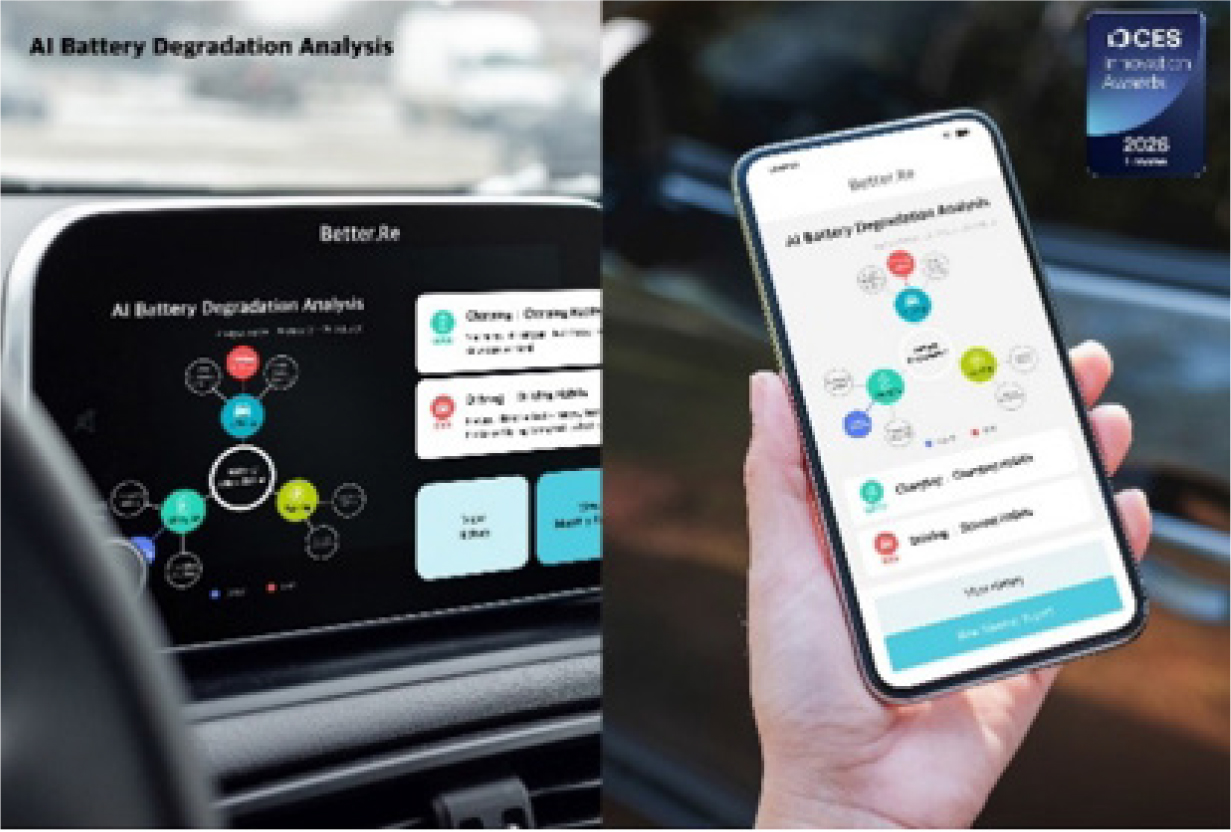
[INQ. NO. 2511M03] LG Energy Solution announced today that its integrated battery life management solution, Better.Re, has been named an honoree in the Vehicle Tech & Advanced Mobility category at the upcoming CES 2026 Innovation Awards. This marks the first time a battery company has earned this recognition purely through software technology.
Designed to maximize battery lifecycle and lower repair and replacement costs, the solution is expected to almost double the lifespan of mobility batteries.
Better.Re collects data on users’ driving, charging, and parking habits, assesses battery management against 16 key battery-aging factors, and provides personalized behavioral guidance via a dedicated app. The app’s user-friendly interface uses clear visual indicators to make battery health easier to understand, enabling more informed decisions. In addition, a reward system and certification program encourage continued use. Internal analysis suggests the solution could double the duration that an EV battery’s State of Health Capacity (SOHC), or the proportion of total expected life, is maintained at 98%, from 1.5 years to 3 years.
In certain controllable environments, such as Battery Swapping Stations (BSS), Better.Re applies proactive charging control when anomalies are predicted, in order to prevent battery degradation. According to LG Energy Solution’s internal analysis, the technology is expected to double the time from 5 years to 10 years before the SOHC of electric two-wheeler batteries drops below 70%.
As electrification expands, predicting and optimizing battery life is becoming increasingly critical, driving growth in the Battery as a Service (BaaS) market, which focuses on battery utilization across the entire product lifecycle. Better.Re provides machine learning-based prediction, anomaly detection, and safety control, establishing a cornerstone for BaaS business models — including warranty, insurance, swapping, leasing, and resale.
“This CES Innovation Award is a testament to our relentless pursuit of innovation,” explained Dal Hoon Lee, BMS R&D Group Leader at LG Energy Solution, adding, “We will continue to strengthen the competitiveness of our BaaS business with advanced technologies that effectively conduct safety diagnosis and manage battery degradation, further cementing our foothold in the energy industry.”

 
korean-machinery.com | Blog Magazine of korean-machinery, brands and Goods
Korea’s EV Industry Expected to Continue Growing, Spurred by Tech Advances

https://korean-machinery.com///inquiry

Even as the global chasm (temporary slowdown in demand) in electric vehicles continues, the global EV industry is continuously developing.
The electric vehicle (EV) industry in Korea is seen as very important as a future growth engine, and as a key industry of the future. The government is therefore sparing no efforts in providing various policies and financial support necessary for the transition to zero-emission vehicles.
As of the end of 2024, a total of 700,000 EVs have been distributed in Korea, and the charging infrastructure has also exceeded 400,000. The proportion of zero-emission vehicles among new vehicles released annually is approaching 10%.
The Korean EV market, which has shown rapid growth in recent years, is slowing down due to reduced subsidies, lack of charging infrastructure, and high interest rates.

Latest Trends in Korea’s EV Industry
Automakers are expanding their investments in the development of next-generation EV platforms, battery technology innovation, and transition to software-centric vehicles (SDVs). In particular, software competitiveness such as AI-based autonomous-driving technology, connectivity, and infotainment systems is being highlighted as important.
Korea’s battery companies are focusing on developing next-generation battery technology, expanding production capacity, and stabilizing the supply chain. In particular, there is fierce competition in the development of next-generation battery technologies such as high-performance batteries, and all-solid-state batteries.
The Korean government and private companies are spurring the expansion of charging infrastructure to expand the supply of EVs. Various practical efforts are being made, such as expanding rapid-charging facilities, improving charging convenience, and introducing charging roaming services.

The secretary-general of the Korea Electric Vehicle Association (KEVA) commented on the future outlook for the Korean EVs industry: “The Korean EV market is expected to continue growing thanks to active support from the government and the technological advancement of domestic companies. It is expected that innovation in battery technology, expansion of charging infrastructure, and advancement of autonomous driving technology will further accelerate the growth of the industry. And continued growth in the EV-related parts industry is expected.”
Korean exporters are continuing to actively challenge overseas markets to increase their gradual growth of exports in the fourth quarter of this year, maintaining their growth drivers in the global market in the third quarter.


korean-machinery.com | Blog Magazine of korean-machinery, brands and Goods
Korea’s Steel Industry Expected to Bear Added Costs of KRW 3 Trillion Due to Tariffs and Certified Emission Reductions over the Next Five Years

https://korean-machinery.com///inquiry

Free allocations for companies will be reduced starting next year
At least KRW 600 billion will be added
Soaring costs of certified emission reductions also becoming a burden

The domestic steel industry, which is already threatened by ultra-high tariffs from the USA and the European Union (EU) and the challenges of low-priced Chinese products, has faced an additional threat — the cost of certified emission reductions. As it is anticipated that additional costs of up to KRW 3 trillion would be incurred over the next five years for the two-largest steel companies alone, the industry is complaining, “We’ve been hit with a certified emissions-reduction bomb, not just a tariff bomb.”
According to the steel industry, the government’s allocation plan for the 4th Emissions Trading Scheme (K-ETS), scheduled to be implemented from 2026 to 2030, is expected to cost the nation’s two-largest steel companies, POSCO and Hyundai Steel, approximately KRW 600 billion annually, or a total of KRW 3 trillion over the next five years, in certified emission-reduction purchase costs.
Under the 4th Scheme, the total amount of certified emission reductions distributed by the government to all companies will be reduced to 450 million tons, from the annual average of 580 million tons under the 3rd plan (2021~2025). Consequently, free allocations for the steel industry will also be reduced significantly from 114 million tons under the 3rd plan to 89 million tons (industry estimates) under the 4th plan. Accordingly, companies will be compelled to purchase additional certified emission reductions on the market to fill up the deficiency, and certified emission-reduction rights prices are thus expected to rise rapidly.
According to the steel industry — if conservatively assuming that the current price of certified emission reductions of KRW 10,250 per ton (as of October 15), rises to KRW 30,000 per ton — the two-largest companies, POSCO and Hyundai Steel, alone will face a shortage of a total of 20 million tons of certified emission reductions. This will result in annual purchasing costs of approximately KRW 600 billion (industry estimates). Based on last year’s sluggish market, this is a massive amount that could consume up to 60% of the combined annual operating profit of these two companies (approximately KRW 1 trillion).
Korea’s Ministry of Climate, Energy, and Environment predicts that the cost of certified emission reductions will rise to KRW 40,000~61,000 by 2030, significantly increasing the burden on companies. Furthermore, there are growing concerns about rising electricity rates.
There are a lot of concerns that the cost burden on power-generation companies (KEPCO subsidiaries and private power generation companies like POSCO Energy and SK E&S), directly impacted by the certified emission reductions trading system, will be fully passed on to steelmakers through their industrial electricity rates. Unlike the steel industry, where pre-allocation is free, paid allocations for power-generation companies will increase 50% by 2030 under the 4th plan.
The Federation of Korean Industries estimates that an additional burden of approximately KRW 309.4 billion will be incurred by the steel industry as electricity rates are expected to rise by KRW 9.41 per kWh if the price of certified emission reductions is KRW 30,000 per ton. Combining the cost of certified emission reductions and the increased electricity rates, the steel industry’s burden could increase to as much as KRW 900 billion annually (KRW 600 billion in certified emission reductions + KRW 300 billion in electricity costs).


korean-machinery.com | Blog Magazine of korean-machinery, brands and Goods