Korea’s Steel Industry

https://korean-machinery.com///inquiry

Specialty Steel Becomes a Breakthrough for Survival of Korea’s Steel Industry

Hyundai Steel creates a dedicated organization
POSCO develops steel materials for transmission networks
SeAH Steel Holdings targets Europe

The domestic steel industry has begun targeting the ‘next-generation energy infrastructure’ market, focusing on specialty steel materials related to power grids, energy storage systems (ESS), offshore wind power, and data centers.
According to industry sources, major steel makers are actively moving to dominate the specialty steel market in the energy infrastructure sector by creating a dedicated organization.
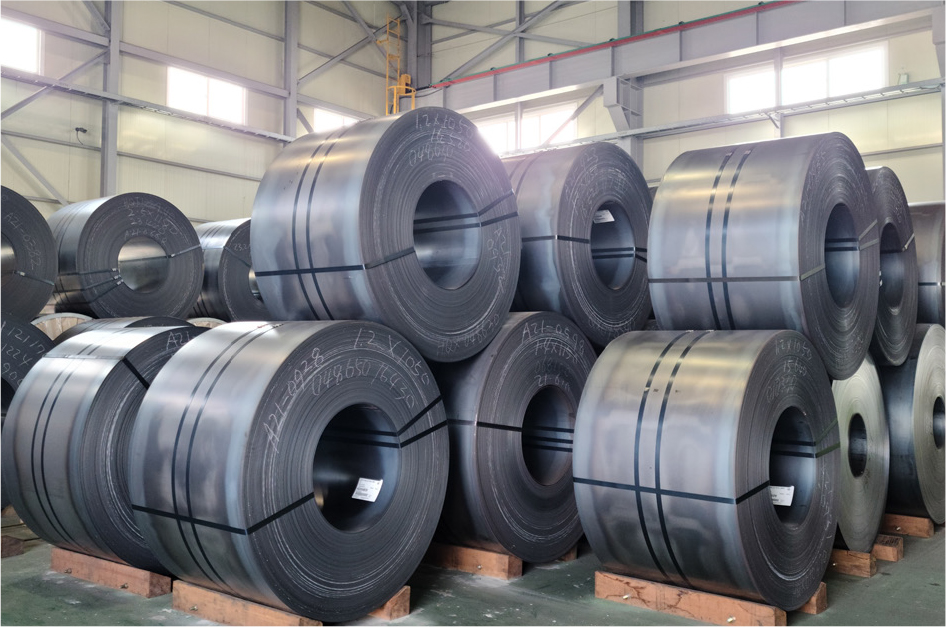
Hyundai Steel is taking the most active steps by operating the Next-Generation Power Infrastructure Task Force (TF) Team. Orders that the company has received for its steel materials for ESS enclosures (steel cases protecting power equipment such as batteries) for North America reached 10,500 tons last year, the first year of supply and 52,000 tons this year, exceeding the target five-fold.
POSCO has targeted the power grid, data center, and solar energy markets. In collaboration with Korea Electric Power Corporation (KEPCO), the company developed steel specifically for long-distance high-voltage direct current transmission (HVDC) towers and secured new demand of 90,000 tons per year.
‘PosMAC,’ the highly corrosion-resistant alloy steel sheet developed by POSCO, is expanding its application beyond solar power structures in extreme environments to ESS parts. The company is also increasing its market share in the artificial intelligence (AI) data center server room field, where space efficiency is essential by introducing ‘Pos-H,’ a customized beam structural material.
SeAH Steel Holdings is achieving significant results in its main business area, the offshore wind power substructure market. The company will supply all 62,000 tons of specialty heavy wall pipes, the largest ever, to the Shinan Ui Island Offshore Wind Power Project with a total project cost of KRW 2.6 trillion.
Dongkuk Steel Group has released D-Megabeam, a specialty steel material that can withstand the ultra-high loads of ultra-large data centers. In addition, the company is actively pursuing a new business of directly constructing and operating a data center.


korean-machinery.com | Blog Magazine of korean-machinery, brands and Goods
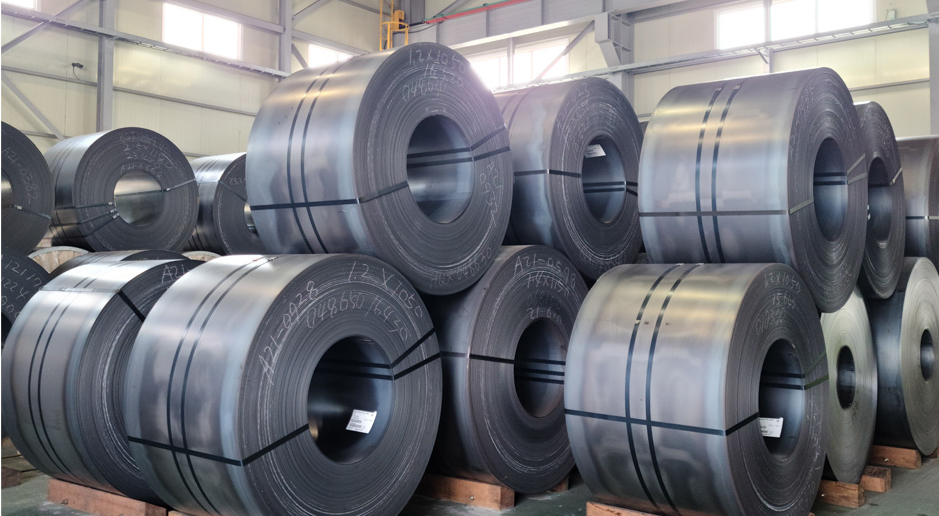
Korea’s Steel Industry Expected to Bear Added Costs of KRW 3 Trillion Due to Tariffs and Certified Emission Reductions over the Next Five Years

https://korean-machinery.com///inquiry

Free allocations for companies will be reduced starting next year
At least KRW 600 billion will be added
Soaring costs of certified emission reductions also becoming a burden

The domestic steel industry, which is already threatened by ultra-high tariffs from the USA and the European Union (EU) and the challenges of low-priced Chinese products, has faced an additional threat — the cost of certified emission reductions. As it is anticipated that additional costs of up to KRW 3 trillion would be incurred over the next five years for the two-largest steel companies alone, the industry is complaining, “We’ve been hit with a certified emissions-reduction bomb, not just a tariff bomb.”
According to the steel industry, the government’s allocation plan for the 4th Emissions Trading Scheme (K-ETS), scheduled to be implemented from 2026 to 2030, is expected to cost the nation’s two-largest steel companies, POSCO and Hyundai Steel, approximately KRW 600 billion annually, or a total of KRW 3 trillion over the next five years, in certified emission-reduction purchase costs.
Under the 4th Scheme, the total amount of certified emission reductions distributed by the government to all companies will be reduced to 450 million tons, from the annual average of 580 million tons under the 3rd plan (2021~2025). Consequently, free allocations for the steel industry will also be reduced significantly from 114 million tons under the 3rd plan to 89 million tons (industry estimates) under the 4th plan. Accordingly, companies will be compelled to purchase additional certified emission reductions on the market to fill up the deficiency, and certified emission-reduction rights prices are thus expected to rise rapidly.
According to the steel industry — if conservatively assuming that the current price of certified emission reductions of KRW 10,250 per ton (as of October 15), rises to KRW 30,000 per ton — the two-largest companies, POSCO and Hyundai Steel, alone will face a shortage of a total of 20 million tons of certified emission reductions. This will result in annual purchasing costs of approximately KRW 600 billion (industry estimates). Based on last year’s sluggish market, this is a massive amount that could consume up to 60% of the combined annual operating profit of these two companies (approximately KRW 1 trillion).
Korea’s Ministry of Climate, Energy, and Environment predicts that the cost of certified emission reductions will rise to KRW 40,000~61,000 by 2030, significantly increasing the burden on companies. Furthermore, there are growing concerns about rising electricity rates.
There are a lot of concerns that the cost burden on power-generation companies (KEPCO subsidiaries and private power generation companies like POSCO Energy and SK E&S), directly impacted by the certified emission reductions trading system, will be fully passed on to steelmakers through their industrial electricity rates. Unlike the steel industry, where pre-allocation is free, paid allocations for power-generation companies will increase 50% by 2030 under the 4th plan.
The Federation of Korean Industries estimates that an additional burden of approximately KRW 309.4 billion will be incurred by the steel industry as electricity rates are expected to rise by KRW 9.41 per kWh if the price of certified emission reductions is KRW 30,000 per ton. Combining the cost of certified emission reductions and the increased electricity rates, the steel industry’s burden could increase to as much as KRW 900 billion annually (KRW 600 billion in certified emission reductions + KRW 300 billion in electricity costs).


korean-machinery.com | Blog Magazine of korean-machinery, brands and Goods