Disc brake calipers

https://korean-machinery.com///inquiry[INQ. NO. 1605M38] Manwoo was established in 1992 and has been developing and producing automotive parts for brakes (calipers/brake housing/brackets) with its first-class equipment and expertise.

Currently, it produces various types of automotive brake parts and machine components with casting, cast steel, forged steel and aluminum. It promises it will deliver all products on the exact due date and to meet its customers’ needs. There are two types of disc brake calipers produced by the company – floating calipers and fixed calipers. The disc brake caliper is the assembly that houses the brake pads and pistons.

The pistons are usually made of plastic, aluminum or chrome-plated steel. The brake caliper is a device which uses a hydraulic system that applies pressure to the brake pads which in turn squeeze the braking disc to produce vehicle deceleration Manwoo has more than 20 years of manufacturing experience based on quality technologies, exporting its major products mainly to the U.S market over the past 10 years.

 korean-machinery.com | Blog Magazine of korean-machinery, brands and Goods

Steering wheel covers

https://korean-machinery.com///inquiry[INQ. NO. 1605M39] UB Korea with the corporate philosophy “the company keeping promises” strives to develop further business in the automobile field. It operates its business based on trust, quality and good relationships with its partners and consumers.
Started as a car mat manufacturer in 1996, today it provides a wide range of car accessory products to domestic markets as well as foreign buyers from Russia, India, Japan, and Vietnam. It is further committed to becoming a regional industry leader in Korea, remaining as the company that faithfully keeps its promises to customers.
For this year’s overseas marketing, UB Korea plans to promote its recently released steering wheel covers in the targeted overseas markets as a major product, expecting it will generate considerable amounts of exports within the next few years.
The products are basically designed with elegant form featuring multi-functions. They are easy to install, and protect the hands of drivers from slipping on steering wheels. The products give abundant volume and good grip feelings to drivers, increasing the possibility of safety driving. Now various types of steering wheel covers are manufactured, ready to be chosen by drivers around the world. The company manufactures various sizes of these products, for any demands.

 korean-machinery.com | Blog Magazine of korean-machinery, brands and Goods

Hyundai and Kia’s combined sales to hit 100 million unit milestone this month

Untitled-62.jpgCombined sales of Hyundai Motor Group including Hyundai Motor Co. and its sister company Kia Motors Corp. are expected to hit a milestone of 100 million units this month.
According to Hyundai Motor Group on Monday, Hyundai Motor has sold 64.02 million units as of the end of March while Kia Motors has sold 35.68 million units since launching their car sale. The country’s largest auto group expects the cumulative total sales of both automakers to reach the 100 million mark in 54 years since Kia Motors started selling cars in 1962, the fastest among global car makers. It took General Motors Co. 59 years to reach the same sales milestone in 1968 while 61 years for Toyota Motor Corp. 61 years in 1997.
According to the conglomerate, Hyundai Motor’s Avante sedan was the best-selling vehicle during the past 54 years with its sales volume reaching 11.19 million units, followed by the Accent with 8.24 million units and the Sonata with 7.83 million units. It also said that when 100 million units of the Avante are lined up, it would be 457,000 kilometers long, which is 11.4 times the circumference of the Earth.

Untitled-61

< Source: KITA>

korean-electronics.com | Blog Magazine of korean electronics, brands and Goods

S. Korea’s oil refiners expected to record $1.7 bn in operating profit for Q1

South Korea’s four leading oil refiners SK Innovation Co., S-Oil Corp., GS Caltex Corp. and Hyundai Oilbank Co. are expected to post a combined operating income of around 2 trillion won ($1.7 billion) for the first three months this year thanks to high cracking margins and increasing oil import from Iran.
According to oil refinery industry on Sunday, combined operating profit for SK Innovation, S-Oil, GS Caltex and Hyundai Oilbank is expected to reach between 1.9 trillion won and 2 trillion won in the first quarter ended March this year. This is a more than twofold jump from their combined operating income of 960.1 billion won a year ago and the first time to reach the 2 trillion mark since the first quarter in 2012 with 2.2 trillion won.
According to the market consensus, SK Innovation is forecast to report 700 billion won in operating income, more than double from the previous year, while GS Caltex and S-Oil are projected to post 520 billion and 500 billion won, up 74 percent and 110 percent on-year, respectively.

Untitled-80.jpg

Hyundai Oilbank is also expected to rake in around 200 billion won in operating profit in the first quarter this year. Such stellar performance of the local oil refiners is attributed to improvement in the refining margin as supply of refined products remains lower than demand. The cracking margin, or the difference between global oil price and the petroleum products, has remained in the top range.
The crude oil shipment from Iran is also adding benefits for the local refiners. A total of 8.81 million barrels of crude oil from Iran where international sanctions against the Middle Eastern country was lifted recently was imported into Korea in February. This is a similar level to 7.26 million barrels in 2011, or before the economic sanctions, and about five times from 1.77 million barrels in December last year.
The price of oil from Iran is generally lower than international oil prices. Currently, SK Innovation and Hyundai Oilbank, among the four major Korean refiners, are importing crude oil from Iran.

< Source: KITA>


korean-electronics.com | Blog Magazine of korean electronics, brands and Goods

Hyundai Motor and Cisco join hands to develop future connected car technology

Untitled-63.jpg

South Korea’s largest automaker Hyundai Motor Co. will join hands with Cisco Systems Inc., a California-based leading information technology (IT) and networking equipment supplier, to speed up development of its connected car technology.
According to the company, Hyundai Motor Vice Chairman Chung Euisun and Chuck Robbins, Cisco’s CEO, on recently met at Hyundai Motor’s headquarters in Yangjae-dong where they agreed to co-develop connected cars, via in-vehicle network technology that optimizes transferring bigger volume of data at a faster pace. The technology is essential for the upcoming era of a connected car that requires transmission of a large volume of data.
“Hyundai Motor will provide new values that go beyond our customers’ expectations in safety, quality and security through cooperating with Cisco. This collaboration will be a chance to bring closer the Hyundai Motor-led future of connected cars and shift paradigms of new mobility,” said Chung.

Cisco CEO Robbins also said, “Digital disruption into the automotive industry is being driven by technologies that are creating new user experiences; and our leadership in the areas of connected vehicles, security, and large-scale communication technologies will be crucial to establishing an industry-leading platform.”
The two companies will also work together on a connected car simulation project and allow Korean startups to join them to create the connected car ecosystem. They will jointly conduct studies to analyze the data flow in various different cases to come up with best technologies for future cars.
Hyundai Motor recently set forth its roadmap to develop connected cars, with “Hyper-connected Intelligent Cars” concept – which aims to connect cars to everyday lives.
The South Korean auto giant seeks to pursue four main goals – smart remote maintenance service, autonomous driving, smart traffic and connectivity mobility hub – along the way, as its connected car is gradually brought to life.

< Source: KITA>


korean-machinery.com | Blog Magazine of korean-machinery, brands and Goods

Korea National Arboretum

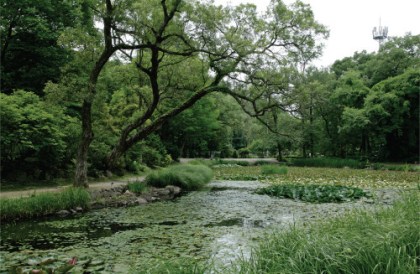
Untitled-64.jpgThe Korea National Arboretum is situated in Gwangneung forest and contains the Forest Museum where all the information on forestry is exhibited. The construction of the arboretum and museum took place on October 25, 1985 and opened on April 5, 1987. In order to preserve the forests, weekends and holiday entrance were restricted, reservations were required 5 days in advance, and no more than 5,000 visitors were accepted per day. Korea National Arboretum covers an area of 1,157ha and contains 15 specialized forests, including Conifer Garden, the Garden of Ornamental Trees, and the Aroma and Touch Garden. The Forest Museum is the largest in Asia, covering 4628 sq.m² with a traditional Korean design, and the interior and exterior are both constructed of wood and stone. The arboretum facilities consist of 5 exhibition halls (Living Forest, Forest and Man, Forestry of the World, Forestry of Korea, Nature of Korea), a Herbarium, a Special Exhibition Room, and an Audio Visual Hall.

korean-machinery.com | Blog Magazine of korean-machinery, brands and Goods
Hongneung Arboretum

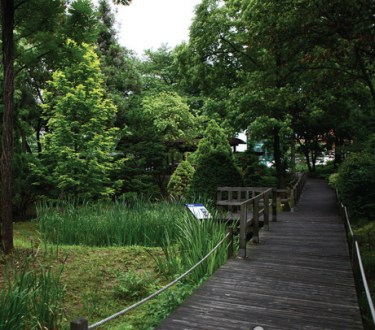
Untitled-67.jpgHongneung Arboretum is a first generation arboretum in Korea. It was established in 1922 when experimental forests were built on Hongneung burial mound, which is the royal tomb of Queen Myeong-Seong. On the 780 square meters area southwest of Mt. Cheonjangsang, there are 9 gardens such as a garden of conifers, a garden of broadleaf trees and an ornamental garden, 3 botanical gardens with edible & medicinal plants garden, an aquatic garden and a wetland garden. There are 6 resting places as well.
Hongneung Arboretum has beautiful scenery for every season. The garden of broadleaf trees behind the main building is the one that shows the change of season most dramatically. The hundreds of broadleaf trees appear their best in autumn. The arboretum is good for nature education walk because of the many nameplates offering information on the species and characteristics of each tree. There are also many things to see at the Forest Science Exhibition Hall which provides visitors with knowledge and information of the value of forests, forestry, and the forest industry. The building itself is an exhibition because the hall is made of Korean wood. Inside, there are three general exhibition rooms, a regular exhibit hall, a planning exhibit hall, and a special exhibit hall.

korean-machinery.com | Blog Magazine of korean-machinery, brands and Goods

Cheollipo Arboretum

Untitled-70.jpg

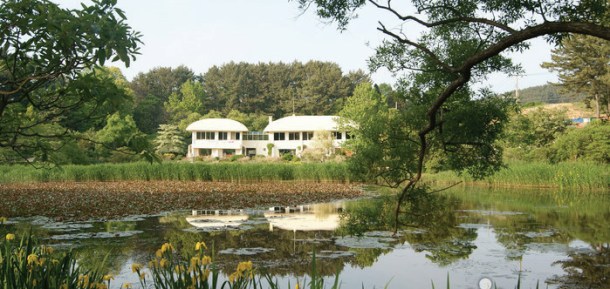
Cheollipo Arboretum located in Taean Coast National Marine Park was built in 1966 by C. Ferris Miller. The park currently contains approximately 14,000 different plant species, including some rare and endangered species.
[Suggestion: Officially recognized by the International Society of Arboriculture, the arboretum is one of the most beautiful in Korea.
This arboretum consists of 7 areas (ex: Main Garden, Dakseom Island, Sea Dune Area, etc.) on a 595,044m² (180,000 pyeong) of land. Almost 7,000 different species have been collected for nearly 3 decades. The arboretum also enjoys a coastal climate, and can sustain a variety of plant species from subarctic to subtropical environments. Tours are available throughout the year.
The value of Magnolia kobus (1,800 plants in 450 species) and Ilex cornuta (400 species) received international recognition during the hosting of the World Magnolia kobus Seminar in 1997 and World Ilex cornuta Seminar in 1998. Additionally, thanks to the balanced and healthy ecosystem, a variety of birds (nearly 60 species per year) and insects also make their homes in this arboretum.

korean-machinery.com | Blog Magazine of korean-machinery, brands and Goods

Juknokwon

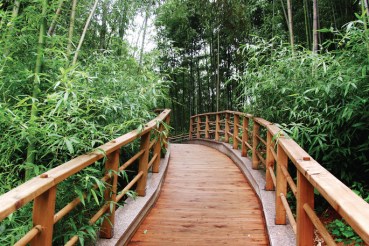
Untitled-73.jpgJuknokwon in Damyang is a bamboo forest cultivated by the town of Damyang. Seonginsan Mountain behind Damyang Hyanggyo (Confucian school) was transformed into Juknokwon Bamboo Garden featuring a beautiful artificial waterfall, pavilion, walking paths and an eco-exhibition center, a popular destination for visitors.
It takes about 1 hour to tour around the entire garden. Crossing Hyanggyo Bridge from Juknokwon, a forest for preventing floods can be seen. Lights are turned on in the evenings in the bamboo forest for night walk.
As one of popular tourist attractions in South Korea, Juknokwon has more than 1.5 million visitors annually. In 2012, the CNN picked up it as one of the 50 places that visitors to Korea must go to in South Korea.

korean-machinery.com | Blog Magazine of korean-machinery, brands and Goods

Manufacturing technology of low-cost, high-strength, and anti-abrasion silicon nitride and silicon carbide with lifespan enhanced by 10% for next-generation high-efficiency equipment

Technology overview: Related to SRBSN (Sintered Reaction Bonded Silicon Nitride), as the silicon nitride ceramics is excellent in high- strength, high-toughness, anti-abrasion properties compared with other materials, https://korean-machinery.com///inquiryand shows stable performance in extreme surroundings, such as high temperature, high load, etc., it is in the limelight as a promising material capable of replacing the existing materials, such as metal, sintered carbides, etc. As the silicon nitride ceramics were manufactured using the high-price and high-purity overseas silicon nitride powder until now, its application to industry has been limited. In order to solve this problem, we have developed the silicon nitride material based on SRBSN technology using low-cost silicon powder which can be mass-produced with low cost. Due to its eco-friendliness and reduction of the manufacturing cost, we expect that our product will be briskly applied to the overall application industry. Next, related to CDC (Carbide Derived Carbon), mechanical seal parts are mainly used in the severe surroundings both mechanically and chemically, and until now sintered carbon, sintered carbides, etc. were mainly used as the raw material of the parts, but there is a drift that the demand on the structural ceramics is increasing day by day, such as silicon carbide which is outstanding in high hardness, chemical resistance and heat resistance, or alumina. However, the performance of structural ceramics gets lowered at the unlubricated state caused by high frictional coefficient and brittleness via-a-vis general solid lubricant material, and in order to solve this problem, coating of solid lubricant is tried on the surface of ceramics.  Among them, CDC is the method of extracting only metal atom from carbide ceramics like silicon carbide and forming the carbon layer on the surface, and its property is very excellent compared with the thin film, such as DLC, MoS2. etc., already used as coating for lubrication. It is expected that application of the developed  CDC product  to the mechanical seal parts will contribute to strengthening the technology of domestic enterprises and market competitiveness pursuant to increase of the product’s lifespan.

Untitled-30.jpg

Industrialization: Related to SRBSN, the existing SUS material has been used as the material of bush bearing for zinc galvanizing and sputter roller for LCD, it is being replaced to silicon nitride material due to its weakness in anti-abrasion, and Wonik QnC Corporation  has the record of having delivered some silicon nitride products engrafted with low-price SRBSN technology. Also, we plan to carry forward sales increase by entering the market of insulation-bushing silicon nitride product for grinding pad and solar CVD of the semiconductor CMP process. Next, related to CDC, we have secured the reliability test of the CDC product  for the mechanical seal used in general pump and high-speed pump, and now we are proceeding with the customer certification test for replacing the existing mechanical seal product. We expect to have a considerable ripple effect when entering the market through already secured customers.

Problem-solving in industrialization: When developing the SRBSN material, we could solve the problem caused by the hydration reaction in the mixture pursuant to use of Si, the starting raw material, through optimization of the mixture time. Although the problem of the product’s unit cost increase was anticipated as a long-time nitriding process was required for reverting to the silicon nitride, we could produce the product with low cost vis-a-vis the existing silicon nitride through optimization of the equipment for nitriding process and the jig structure design.

Technology developer: Wonik QnC Corporation  / +82-54-479-9800 / www.wonikqnc.com

korean-machinery.com | Blog Magazine of korean-machinery, brands and Goods