Samsung SDI to Collaborate on an All-Solid-State Battery Project

https://korean-machinery.com///inquiry

[INQ. NO. 2511M05] Samsung SDI announced recently that it had signed a trilateral agreement with Germany’s premium manufacturer, the BMW Group, and U.S. battery technology company Solid Power, to collaborate on an all-solid-state battery validation project.
Under this arrangement, Samsung SDI will supply ASSB cells, featuring both enhanced energy density and safety, by utilizing the solid electrolyte developed by Solid Power, a leading all-solid-state battery technology company, based in the United States. BMW will develop modules and packs for ASSB cells. The three partners aim to evaluate the performance of ASSB cells based on the agreed parameters and requirements, and to integrate them into BMW’s next-generation evaluation vehicles.
ASSB cells use solid electrolyte instead of liquid electrolyte found in conventional lithium-ion batteries. They offer superior safety and can achieve higher energy density compared with conventional batteries, enabling EVs to drive longer ranges without having to accept disadvantages in terms of weight of the overall storage system.
The collaboration is significant in that these three specialized companies have established a practical collaboration system and a model for global value chains for ASSB cells, aiming to pave the way for their commercialization by bringing together their complementary expertise in cells manufacturing, automaking, and materials development.
BMW has selected Samsung SDI as a partner, considering its long-standing trust in the battery maker built through a years-long partnership, as viewed by industry observers. Also, known as the front-runner in the all-solid-state battery territory, Samsung SDI is recognized for its technological prowess in the whole new battery field.
The upcoming collaboration will draw industry attention as the long-running partnership between Samsung SDI and BMW expands into a new era.
Samsung SDI and BMW have maintained a collaborative relationship since 2009 when the German automotive group chose the Korean battery supplier.
“Technological competitiveness in batteries will ultimately lead to innovation in electric vehicles,” explained Stella Joo-Young Go, Executive Vice President of the ASSB Commercialization Team at Samsung SDI. “So, Samsung SDI will work closely with great global partners like BMW and Solid Power to take the lead in commercializing ASSB.”
Martin Schuster, Vice President Battery Cell and Cell Module at the BMW Group elaborated further by saying, “With Samsung SDI joining our partnership with Solid Power, we gain significant momentum on our path toward advancing the development of new battery cell technologies,” adding. “This global collaboration is further proof of our ultimate goal: to be always in a position to offer our customers state-of-the-art battery technology.”
John Van Scoter, President and CEO of Solid Power added, “We are excited to partner with Samsung SDI and BMW to advance the development of all-solid-state batteries. Our solid electrolyte technology is designed for stability and conductivity, and by working closely with global leaders in automotive and battery innovation, we strive to bring ASSB technology closer to widespread adoption.”
Samsung SDI has been making constant efforts to strengthen its technological prowess for commercialization of ASSB cells.
In March 2023, Samsung SDI established a pilot line at the Suwon R&D Center in South Korea, the first of its kind in the country, and began producing prototypes at the end of 2023. Sample tests are currently underway in collaboration with multiple customers.
Samsung SDI has been working to boost battery capacity year-after-year through cell enlargement, and to complete tasks to set up manufacturing processes and supply chains for commercialization.
As expectations run high for wide adoption of ASSBs, not only for EVs, but also for robots and other new applications, Samsung SDI is in talks with potential customers. and intensifying its efforts to commercialize ASSB cells.


korean-machinery.com | Blog Magazine of korean-machinery, brands and Goods
LG Energy Solution and GM to Pioneer LMR Battery Cell Technology

https://korean-machinery.com///inquiry

[INQ. NO. 2511M04] In a new battery technology breakthrough, General Motors and LG Energy Solution will commercialize lithium manganese-rich (LMR) prismatic battery cells for future GM electric trucks and full-size SUVs. This builds on a partnership established between the two companies to develop prismatic battery cell technology and related chemistries. It is also backed by GM’s long legacy of American ingenuity that has produced innovations like the small-block V8 engine, OnStar connected vehicle services, and hands-free Super Cruise.
GM aims to become the first automaker to deploy LMR batteries in EVs. Ultium Cells, a GM and LG Energy Solution joint venture, plans to start commercial production of LMR prismatic cells in the United States by 2028. Pre-production is expected to begin at an LG Energy Solution facility by late 2027. The final production-design of these LMR battery cells will be validated at GM’s Battery Cell Development Center in Warren, Michigan, which is expected to open earlier that year, as well as LG Energy Solution’s facility.
Battery cathodes require materials like cobalt, nickel and manganese ― with cobalt being the most expensive. LMR battery cells use a higher proportion of more affordable manganese, while also delivering greater capacity and energy density.
Battery engineers at GM and LG Energy Solution have developed a new LMR prismatic battery cell at a comparable cost that delivers 33% higher energy density compared to the best-performing lithium iron phosphate (LFP) based cells.
GM’s electric truck platform is a segment-leading range using high-nickel chemistry today. By integrating LMR battery technology and the manufacturing- and space-efficiency benefits of prismatic cells, GM aims to offer more than 400 miles (643.7km) of range for electric trucks, while achieving significant battery pack cost-savings compared to today’s high-nickel pack.

“We’re pioneering manganese-rich battery technology to unlock premium range and performance at an affordable cost, especially in electric trucks,” explained Kurt Kelty, VP of Battery, Propulsion, and Sustainability at GM, adding, “As we look to engineer the ideal battery for each vehicle in our diverse EV portfolio, LMR will complement our high-nickel and iron-phosphate solutions to expand customer choice in the truck and full-size SUV markets, advance American battery innovation, and create jobs well into the future.”
“We’re excited to introduce the first-ever LMR prismatic cells for EVs, the culmination of our decades-long research and investment in the technology,” remarked Wonjoon Suh, Executive VP and head of the Advanced Automotive Battery division at LG Energy Solution, adding, “GM’s future trucks powered by this new chemistry are a strong example of our shared commitment to offering diverse EV options to consumers.”
GM began researching manganese-rich lithium-ion battery cells in 2015, and accelerating this technology development by prototyping LMR cells at its Wallace Battery Cell Innovation Center in Warren. In collaboration with partners, GM engineers advanced cathode materials, electrolytes, additives, form factors, and cell assembly processes to overcome LMR’s legacy challenges in performance and durability.
LG Energy Solution holds the largest LMR technology IP portfolio globally, having secured over 200 patents in this technology field. Its expertise reflects extensive research, with its first patent on LMR chemistry dating back to 2010.
LMR battery technology integrates into GM’s battery supply chain and cell manufacturing processes, reinforcing strategic investments in domestic battery production ― and the responsible sourcing of critical materials like lithium, graphite, and manganese from North America.


korean-machinery.com | Blog Magazine of korean-machinery, brands and Goods
LG Energy Solution’s Battery-Life Solution Receives CES 2026 Innovation Award

https://korean-machinery.com///inquiry

[INQ. NO. 2511M03] LG Energy Solution announced today that its integrated battery life management solution, Better.Re, has been named an honoree in the Vehicle Tech & Advanced Mobility category at the upcoming CES 2026 Innovation Awards. This marks the first time a battery company has earned this recognition purely through software technology.
Designed to maximize battery lifecycle and lower repair and replacement costs, the solution is expected to almost double the lifespan of mobility batteries.
Better.Re collects data on users’ driving, charging, and parking habits, assesses battery management against 16 key battery-aging factors, and provides personalized behavioral guidance via a dedicated app. The app’s user-friendly interface uses clear visual indicators to make battery health easier to understand, enabling more informed decisions. In addition, a reward system and certification program encourage continued use. Internal analysis suggests the solution could double the duration that an EV battery’s State of Health Capacity (SOHC), or the proportion of total expected life, is maintained at 98%, from 1.5 years to 3 years.
In certain controllable environments, such as Battery Swapping Stations (BSS), Better.Re applies proactive charging control when anomalies are predicted, in order to prevent battery degradation. According to LG Energy Solution’s internal analysis, the technology is expected to double the time from 5 years to 10 years before the SOHC of electric two-wheeler batteries drops below 70%.
As electrification expands, predicting and optimizing battery life is becoming increasingly critical, driving growth in the Battery as a Service (BaaS) market, which focuses on battery utilization across the entire product lifecycle. Better.Re provides machine learning-based prediction, anomaly detection, and safety control, establishing a cornerstone for BaaS business models — including warranty, insurance, swapping, leasing, and resale.
“This CES Innovation Award is a testament to our relentless pursuit of innovation,” explained Dal Hoon Lee, BMS R&D Group Leader at LG Energy Solution, adding, “We will continue to strengthen the competitiveness of our BaaS business with advanced technologies that effectively conduct safety diagnosis and manage battery degradation, further cementing our foothold in the energy industry.”

 
korean-machinery.com | Blog Magazine of korean-machinery, brands and Goods
Korea’s EV Industry Expected to Continue Growing, Spurred by Tech Advances

https://korean-machinery.com///inquiry

Even as the global chasm (temporary slowdown in demand) in electric vehicles continues, the global EV industry is continuously developing.
The electric vehicle (EV) industry in Korea is seen as very important as a future growth engine, and as a key industry of the future. The government is therefore sparing no efforts in providing various policies and financial support necessary for the transition to zero-emission vehicles.
As of the end of 2024, a total of 700,000 EVs have been distributed in Korea, and the charging infrastructure has also exceeded 400,000. The proportion of zero-emission vehicles among new vehicles released annually is approaching 10%.
The Korean EV market, which has shown rapid growth in recent years, is slowing down due to reduced subsidies, lack of charging infrastructure, and high interest rates.

Latest Trends in Korea’s EV Industry
Automakers are expanding their investments in the development of next-generation EV platforms, battery technology innovation, and transition to software-centric vehicles (SDVs). In particular, software competitiveness such as AI-based autonomous-driving technology, connectivity, and infotainment systems is being highlighted as important.
Korea’s battery companies are focusing on developing next-generation battery technology, expanding production capacity, and stabilizing the supply chain. In particular, there is fierce competition in the development of next-generation battery technologies such as high-performance batteries, and all-solid-state batteries.
The Korean government and private companies are spurring the expansion of charging infrastructure to expand the supply of EVs. Various practical efforts are being made, such as expanding rapid-charging facilities, improving charging convenience, and introducing charging roaming services.

The secretary-general of the Korea Electric Vehicle Association (KEVA) commented on the future outlook for the Korean EVs industry: “The Korean EV market is expected to continue growing thanks to active support from the government and the technological advancement of domestic companies. It is expected that innovation in battery technology, expansion of charging infrastructure, and advancement of autonomous driving technology will further accelerate the growth of the industry. And continued growth in the EV-related parts industry is expected.”
Korean exporters are continuing to actively challenge overseas markets to increase their gradual growth of exports in the fourth quarter of this year, maintaining their growth drivers in the global market in the third quarter.


korean-machinery.com | Blog Magazine of korean-machinery, brands and Goods
Test Equipment

https://korean-machinery.com///inquiry

[INQ. NO. 2510M18] TESTONE Co., Ltd. is specialized in test-equipment manufacturing such as U.T.M., environmental chambers, etc., with the best technicians with more than 20 years career experience, and constant technical development efforts.
TESTONE supplies records mainly to universities in Korea and big Korean companies such as Samsung, LG, LS, Hyundai, TUV Korea, and so forth.

Universal Testing Machine
Universal testing machine is a representative testing device for physical properties. It is capable of measuring load, strength, and elongation of products or materials such as rubber, film, plastics, metals, etc. TESTONE can provide tensile, compression, and flexural tests, as well as desquamation static load repeat fatigue tests, and friction coefficient measurement tests are available.

AI-based Vision Test Machine
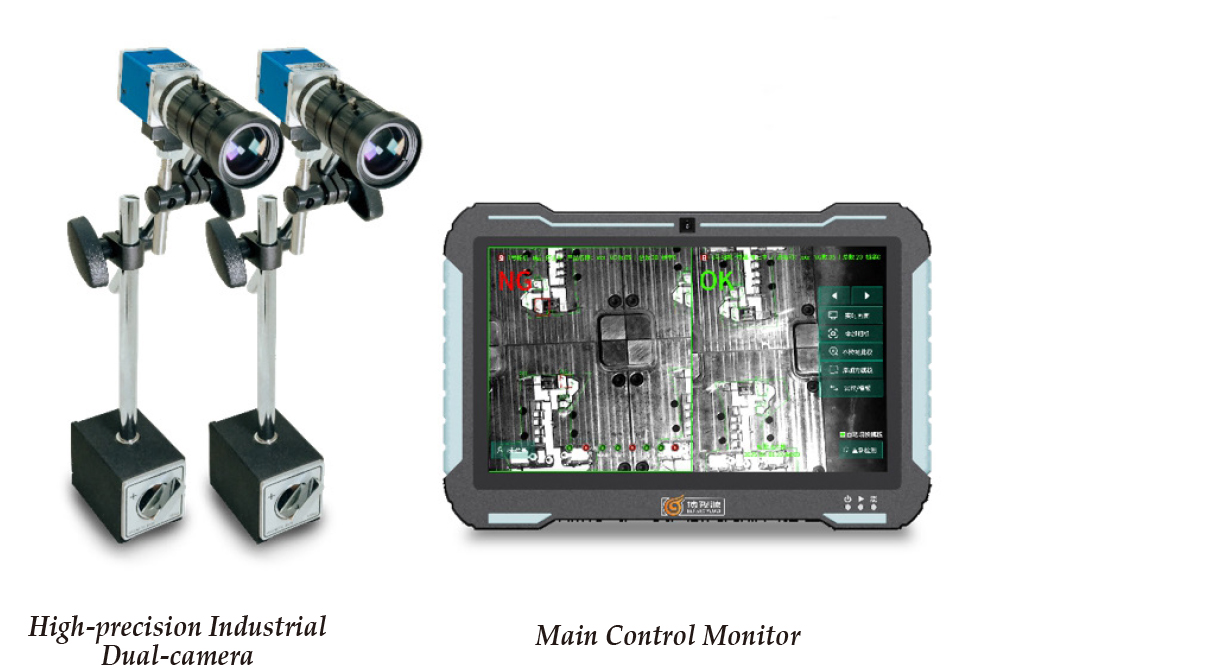
As an AI model-based automated inline blow molding vision inspection system, it consists of a process through which the operator checks and detects with the naked eye, which can reduce the detection ability depending on the operator’s fatigue. In addition, it is an automated vision-inspection system based on AI with certain detection capabilities, as automation is required due to the aging of workers. It features a one million pixels camera and a lens suitable for it to take a sample with a vision camera and check the shape dimension, foreign matter, and any cracks in the sample.
This machine is applicable to various industries including food machinery, packaging, beverages, automated systems, and pharmaceuticals & cosmetics.
Since its launch, TESTONE was able to grow rapidly with high technology and stable quality. Also, TESTONE provides its partners with total solutions including AI-based testing equipment, order production, programming, and software, and also after-sales support. TESTONE is thus recognized as a company with high customer satisfaction through fast service and response time.

 
korean-machinery.com | Blog Magazine of korean-machinery, brands and Goods
Cartoning Machine

https://korean-machinery.com///inquiry

[INQ. NO. 2510M17] Jinsung Techtem Co., Ltd., a global leader in packaging machines, was established in 1986 to help realize the dreams of its customers in this field.
Jinsung Techtem has devoted itself to realizing automated packaging systems for food, confectionery, pharmaceuticals, household goods, etc.
Jinsung Techtem’s cartoning machine is a device that automatically performs the processes of folding the flap, spraying hot melted glue, sealing, and discharging the product – after inserting it into the carton box extracted and formed from the carton magazine by the bucket conveyor.
It is applicable to products of various types and sizes such as food, confectionery, medicine, cosmetics, and miscellaneous goods.
Depending on the shape and sealing method required for the carton, the machine can perform open type (sleeve), flap tuck-in type, hot-melt type, etc.
“We will provide sincere and enthusiastic service through an advanced packaging system that is required more than undeveloped technologies. We will strive with an open mind to fulfill our responsibilities as a global leader in general packaging machines,” pledged the company’s CEO.

 
korean-machinery.com | Blog Magazine of korean-machinery, brands and Goods
Packers

https://korean-machinery.com///inquiry

[INQ. NO. 2510M16] ANAM AUTO PACKER Co., Ltd. has developed practical technology, improved productivity, and made work more precise based on its corporate philosophy, ‘Make something out of nothing rather than imitate.’ Since then, based on these values, ANAM AUTO PACKER has been producing and supplying practical packers, perfect for the new global era.

Automatic Stick-Packing Machine (12 rows, SLT-12L)
This liquid pump-type of automatic stick-packing machine is used for traditional tea, coffee, seasoning, sugar, liquid tea, granules, medicines, diet foods, health foods, and other liquid products.
A mono pump supply system is applied to each row. It produces 60ea per minute.
It has a blade shape that customers can use easily, so it is more convenient to use than normal stick types. When packing 3g, it has a deviation of ±3%. Simple but precise explosion-prevention is applied.

Premium High-Speed Automatic Liquid packer (LQ HS-1R)
This packer is used for sauces, soy sauce, broth, seasoning, and other liquids. This is manufactured to be used both three-sided and four-sided. The product’s length is automatically adjusted. For width, only film needs to be exchanged and the I-mark is automatically set.It uses submerged adhesion so it can block the air entering. It can also pack various types.
The body of the machine is covered with ST-2t, so it is hygienic. It is charged using a SUS pump, so adjustable charging is always available while in operation.


korean-machinery.com | Blog Magazine of korean-machinery, brands and Goods
Checkweighers

https://korean-machinery.com///inquiry

[INQ. NO. 2510M15] INTECH KOREA Co., Ltd. is a leading company in weighing technology with abundant know-how accumulated over 21 years in the precision weighing field.
Based on this experience, INTECH KOREA has commercialized the world’s first multi-stick product checkweigher and high-accuracy pharmaceutical star wheel checkweigher.

Combi-type Metal Detector
This metal-detector integrated checkweigher saves installation space by using an integrated frame. It separates metal NG products, and weighs NG products by using a two-section detector.

Individual Stick Pack Checkweigher (impeller type)
The controller and weighing part are separated, thus saving installation space. By installing the chute, the product can be reliably received from the packaging machine, and more accurate checkweighing is possible. Also, the individual sensor is installed in order to provide more accurate feedback.
“We always try our best to make the best products, and we make products that always are supplied with the highest trust for our customers. We will continue to develop products that will lead the future markets,” remarked the company’s CEO.

 
korean-machinery.com | Blog Magazine of korean-machinery, brands and Goods
Induction Cap Sealers

https://korean-machinery.com///inquiry

[INQ. NO. 2510M14] TRUESEAL Co., Ltd. is a company specializing in manufacturing induction sealers for packaging, using high-frequency induction heating.
Twenty-five years ago, TRUESEAL developed induction equipment, for the first time in Korea, which had previously been dependent on induction imports. It now supplies induction sealers suitable for various production environments to the product lines of major domestic companies in each field.

Induction Cap Sealers
Induction cap sealers can be supplied in manual type, automatic type, air cooled, and water-cooled type.
The main products include a passive model, OSTS1000, an automatic water-cooled model, OSTS3000W, an automatic air-cooled model, OSTS3000A, and an induction no-cap sealer, TODA-1000CL.

Induction No-Cap Sealer
The induction no-cap sealer is an automatic machine for sealing bottles without a cap in sizes of 10-120mm, and at a speed of 10-100 per min. With the automatic sealer there is no need to change parts for other-size sealing.
TRUESEAL supplies induction sealers, equipment, and films optimized for production sites based on accumulated experience and know-how in all processes, on a one-stop basis – from product request, to development, testing, and production.
TRUESEAL has installed a 600BPM automatic sealer on a high-speed beverage production line through continuous development, and supplies domestic packaging equipment companies and exports to overseas markets as OEM and ODM.
The induction-cap sealing system is used for sealing the lip of a bottle that contains all kinds of materials, and is specially required for product protection, leakproofing, and freshness, increasing shelflife in the industrial field such as food, dairy, petroleum, chemicals, agro-chemicals, beverages, cosmetics, and pharmaceuticals.
“We will strive to think and act from the user’s perspective with the goal of technological development and trust. We will always do our best, and we appreciate your support,” remarked the company’s CEO.


korean-machinery.com | Blog Magazine of korean-machinery, brands and Goods
Electric Ambulance

https://korean-machinery.com///inquiry

[INQ. NO. 2510M13] Autech Corporation, a company specializing in special-purpose vehicles, recently introduced its new concept ‘ST1 electric ambulance’ at a domestic fire-safety exhibition.
Autech’s newly developed ST1 electric ambulance is an electric-vehicle-based emergency mobility that integrates Autech’s unique emergency mobility technology, which has for many years produced special firefighting ambulances and negative pressure special ambulances. The mobility of Staria and the wide space of Solati were applied to increase usability.
ST1 (Service Type 1) is a new electric commercial vehicle developed by Hyundai Motor Company, and is a business platform that can be expanded into an optimized form depending on the purpose of use, based on the chassis-cab.
Autech developed the ST1 electric ambulance concept car ST1. In addition, Autech also exhibited several competitive products: special ambulance; negative pressure special ambulance; low-floor special ambulance; negative-pressure special ambulance; and emergency medical equipment.

A spokesperson for Autech explained, “Autech, a leader in advanced emergency mobility, has developed the ST1 electric ambulance concept car in line with the global transportation environment changing towards eco-friendly mobility,” adding, “We will collaborate with the National Fire Agency (NFA) in the future to enhance the practicality of the ST1 electric- ambulance concept car by reflecting the vivid opinions of firefighting paramedics in the field.”
Autech is leading the era of the 4th industrial revolution with its ‘No.1 Products’ made with a set of integrated and combined next-generation technologies such as AI technology, IoT, and so forth. Also, with the new idea which never existed before, Autech is working hard to become more influential in the global market by making aggressive investments in R&D.

  
korean-machinery.com | Blog Magazine of korean-machinery, brands and Goods