
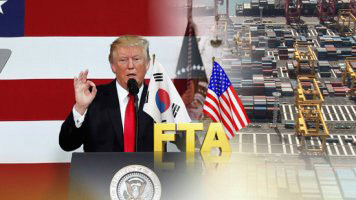
Marking the 10th anniversary of the signing of the FTA between the two nations
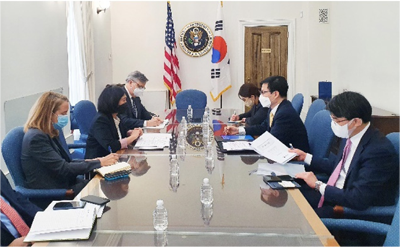
This year marks the 10th anniversary of the signing of the Korea-U.S. FTA. Trade of Goods agreement in 2011 before the ratification of the bilateral FTA, which stood at US$100.8 billion, and then soared to US$169.1 billion in 2021. This shows a 67.8% increase in trade within a decade.
For the United States, Korea accounted for 9.3% of trade of goods in 2011 before the ratification of the Korea-U.S. FTA. This figure rose to 13.4% in 2021, making Korea the second-largest trading partner for the Unites States. Korea’s exports to the United States were led by automobiles, automobile parts, petroleum products, secondary cells, refrigerators and synthetic resins, resulting in US$11.6 billion worth of trade surplus for Korea before the ratification of the bilateral FTA, increasing to US$ 22.7 billion in 2021.

Korea attracts the largest size of foreign direct investment (FDI) from the United States, and at the same time, the United States is the largest investment destination for Korean companies. After the ratification of the bilateral FTA, 22.3% of FDI to Korea came from the United States and a whopping 25.2% of Korea overseas investment went to the United States. Korea’s investments in the United States dramatically increased with a bulk of investment directed to the battery, semiconductor and e-vehicle sectors, which contributed to expanding production facilities in the United States and job creation. This also proved to be an opportunity for Korea, as Korean enterprises were able to expand their markets.
The Korea-U.S. FTA as a main contributor to strengthening cooperation in the supply- chain sector between the two countries deserves to be stressed.
Taking the semiconductor industry as an example, the two countries were able to establish a strong valuechain based on each other’s respective strengths. The United States, with its excellence in semiconductor designing on top of a foundation of a stable source of investment, and Korea, with its strengths in the manufacturing sector, established a strong value chain. A similar example can be witnessed in the battery industry sector.

Korean battery production companies and the American automobile companies are engaged in joint investments. This resulted in establishing mutually beneficial cooperative relations between Korea and the United States. It enabled Korean companies to gain a competitive edge compared to other rival countries by securing large-scale clients in advance and allowed American automobile companies to secure a stable source of battery supply.
Aside from these examples, bilateral cooperation based on the contract manufacturing organization (CMO) of medicine and medical supplies amid the Covid pandemic developed into a vaccine alliance, which is seen as another example of solidifying the supply chain.
The report released by the Korea Institute for International Trade (KITA) says, “Based on a stronger cooperative economic partnership with the signing of the Korea-U.S. FTA and expanded trade and investment, Korea rose to become a core partner in terms of supply chain for the United States.” It also added, “A strengthened cooperation in the supply chain sector between Korea and the United States is becoming ever more apparent, especially in core industry sectors, including the semiconductor, battery and pharmaceutical product sectors. The reorganization of supply chain based on mutual trust is gaining greater attention as the two countries experienced a series of supply chain crises triggered by the confrontation between the USA and China and the Covid pandemic.”
Yu-jin Lee, the head researcher at KITA, forecasted, “Future trade agreements will go beyond allowing greater access to each other’s markets and will focus on solidifying alliance from the perspective of economic security.” The researcher also said, “The United States is recently stressing solidarity with its allies and partners as the United States proposes the Indo-Pacific Economic Framework (IPEF). Korea should thus consider ways on how it can utilize the cooperative relationship between Korea and the United States made possible by the FTA between the two countries, and link it with discussions on new regional economic security alliance.” <Source: KITA>
korean-machinery.com | Blog Magazine of korean-machinery, brands and Goods
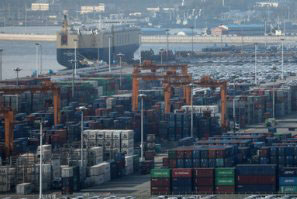 Auto exports to the United States, meanwhile, decreased 6.9 percent compared with a year earlier. Exports of mobile devices and rubber products fell by 6.2 percent and 2.2 percent, respectively.
 The service area imports between the two countries rose by 7.2 percent year-on-year to $45.2 billion in 2017, the latest comparative data showed. S. Korea’s service exports in 2017 amounted to $14.9 billion, slightly up from $14.6 billion in 2016. Service imports from the United States expanded 10.3 percent year-on-year to $31.3 billion over the same period.
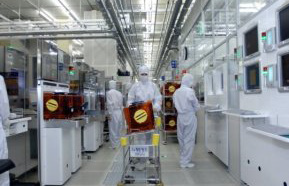 predicted to reach 10 percent thanks to the delivery of orders received over the past two years and the base effect. Petrochemicals are anticipated to see a 5.2 percent increase in exports with the help of the increase of export volume by the operation of the domestic new facilities.
 oversupply of liquid crystal display (LCD) taking 60 percent of the whole, despite the anticipated upswing in the demand for organic light emitting diode (OLED).
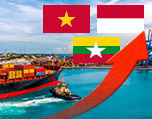 Philippines (VIP) which have strong growth potentials increased 4.2 times and 3.8 times, respectively.”
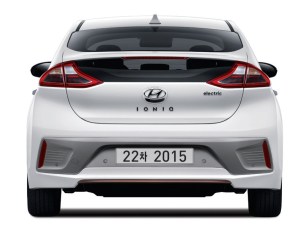 9.5% compared with the same period of the previous year. Among them, the hybrid cars and electric vehicles accounted for 6,572 units (up 3.6%) and 1,971 units (up 31.5%), respectively.
 semiconductors reached the top of the graph.
 stated that it would plan to draw up measures to reduce damages including diversification of exports and boosting domestic demand. Talks on steel products are scheduled to commence on May 1.
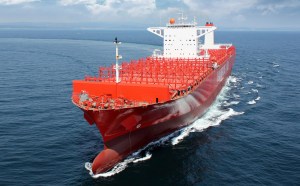 more than 8% which is fallen short of. Therefore, it is estimated that the amount of construction received in 2018 will reflect a provisional loss of about 5%.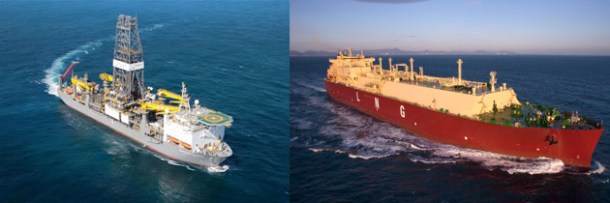
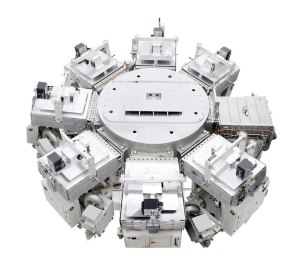 have grown in more than double-digit figures. Among the developed countries, on the other hand, the USA (29.2%), the EU (34.6%), and Vietnam (87.8%), which are emerging as overseas production bases for Korean companies among rising countries, have increased their exports to ASEAN nations (48.5%) and India.

 Korean-Machinery.com