Gyeongbokgung Palace is one of the most recognizable cultural heritage and tourist sites in Korea. Once a palace where the kings of the Joseon dynasty resided and ruled the kingdom, its shining presence can still be found amid majestic buildings in the heart of Seoul. The area surrounding the palace is full of experience spaces, exhibition halls, and restaurants beloved by Gen Z. This area can broadly be divided into Seochon and Bukchon areas, centered around different themes. Considering the area’s historical significance, wearing a hanbok as you explore the area can enrich your memory of the visit even further.
Explore the sensibilities of small alleyways in the Seochon area
Seochon is a village west of Gyeongbokgung Palace and can be accessed through Yeongchumun Gate, the western gate of Gyeongbokgung Palace. Once a village occupied by artists, Seochon has a rather humble, unique atmosphere with small, single-story buildings lining the narrow alleyways, in contrast to the glittering splendor of central Seoul. In recent days, Seochon has begun to draw a large crowd of younger visitors with chic and elegant boutiques, galleries, and cafés that renovate the old buildings with contemporary sensibilities.
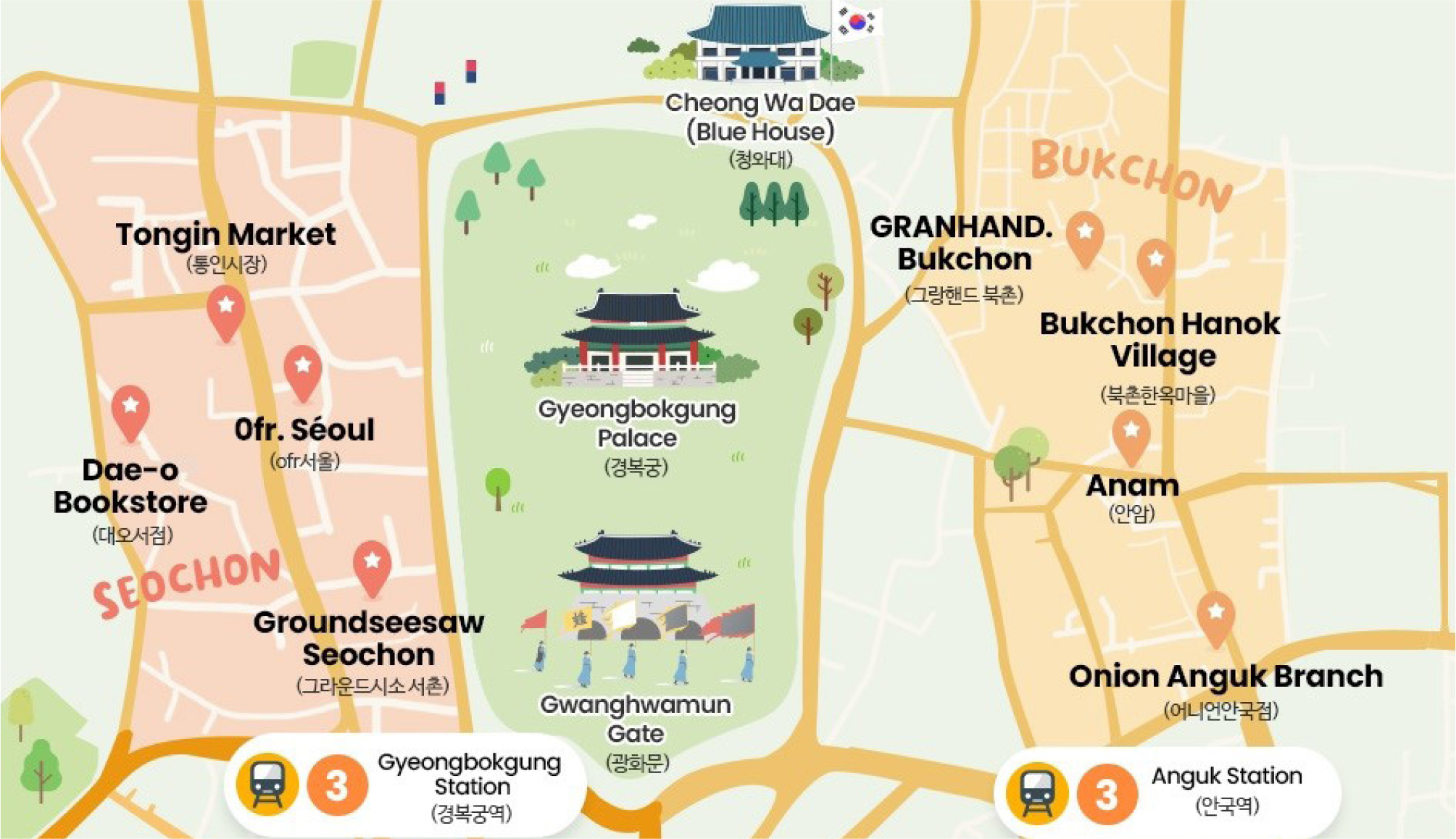
The first stop in this Seochon trip is Groundseesaw Seochon. This exhibition space became prominent with hip and interesting exhibitions like “Photographs by YOSIGO: Holiday Memories” and “Accidentally Wes Anderson: Inspire. Discover. Adventure Awaits.” The building itself impresses with its architectural merits, which were recognized by the 2020 Seoul Architecture Award. Going inside, one can find a pond and a garden built at the center of the building, creating a peaceful ambience like that in a forest. Just visiting the building, in that sense, is an experience that exceeds one’s expectations.
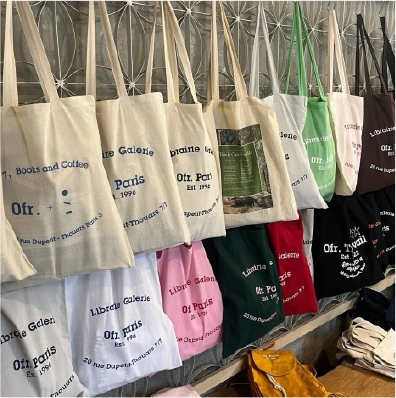
When emerging from the complex net of alleyways, one finds a two-story residential building with a small signboard. This building houses the Korean branch of “Ofr.,” a French independent bookstore. This seemingly mundane residential building houses a treasure trove of chic and quirky items waiting to be discovered by the discerning shopper. From rare edition books from abroad casually arranged in piles to design posters hung up on walls with peeling paint and colorful tote bags thrown around the space, the interior space exemplifies the casual yet chic ambience that has captivated many members of the Korean Gen Z. For travelers, Ofr. offers T-shirts made in-house, cute accessories, and interior decorations that make for great souvenirs.
In a village awash in retro sensibilities, Dae-o Bookstore stands out as the most analog of its spaces. From the peeling paint of its signboard to the worn organ once belonging to the elderly couple who owned the bookstore, earthenware pots, and furniture adorned with jagae (mother-of-pearl and lacquer craft), this old hanok (traditional Korean house) building contains numerous stories that have accumulated in it since 1951. Its unique ambience led to the interior being featured in the jacket photograph of singer-songwriter IU’s first cover album, “A Flower Bookmark.” Today, Dae-o Bookstore functions as a book café, open to those who order beverages.
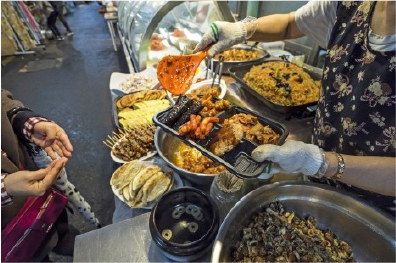
A two-minute walk from Dae-o Bookstore brings one to Seochon’s famous Tongin Market, a local market with a hundred-year-long history. The delicious smell from the market makes it difficult to just go past the market. The most famous dish served in the market is the oil tteokbokki, rice cakes seasoned and stir-fried in a hot pan. Unlike other tteokbokki, oil tteokbokki has a thick sauce. The rice cakes become crispy flavor bombs dense with savory flavors, culminating in a unique gourmet experience. Another option is to go for the “Coin Lunchbox,” a DIY lunchbox you can assemble with different dishes offered in Tongin Market. The coins used in exchange replicate the coins used in the Joseon period. Multilingual signage makes the experience accessible to international visitors as well.
Take the pic of the day, with hanok buildings as a backdrop, at the Bukchon area
Bukchon is another tourist site that one can visit in conjunction with Gyeongbokgung Palace. Compared to Seochon, the hanok buildings in Bukchon tend to be much better preserved, and Bukchon also has parks, a café street, and other interesting sights. The gate that originally led to Bukchon was Geonchunmun Gate, the eastern gate of Gyeongbokgung Palace, but today, visitors must use the entrance of the National Folk Museum of Korea instead.
The centerpiece of the Bukchon area is Bukchon Hanok Village. Originally a historic neighborhood occupied by the members of the royal family, yangban (aristocracy), and state officials in the Joseon period, most hanok buildings in the village follow the urban format, which eschews the open arrangement of traditional hanok buildings that reveals the central courtyard to the beholder, instead featuring higher walls that ensure greater privacy. The photo spot at the top of the hill allows one to capture the unique scenery of the hanok buildings and Namsan Seoul Tower at a distance in a single frame. Bukchon Hanok Village is a residential neighborhood, so one should not disrupt the residents’ privacy or enter the residents’ houses without permission.
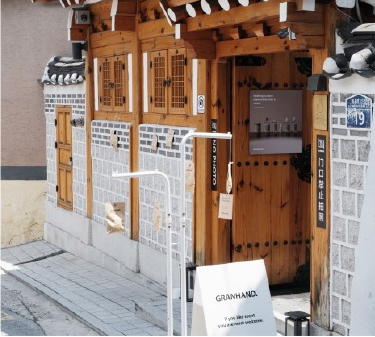
When starting from Gyeongbokgung Palace and coming up the road via the Bukchon Hanok Village Information Center, one soon finds a curiously fragrant spot at the entrance to an alleyway. The fragrance comes from the brand shop “GRANHAND.,” a hip Korean fragrance brand that enjoys considerable popularity among the members of Gen Z in Korea. GRANHAND. has eight stores across Seoul. Bukchon’s branch, established in 2014 as the brand’s first store, is also the only GRANHAND. store set in a hanok building. The store offers a range of fragrance products, from perfumes to diffusers, candles, and oils. GRANHAND. is famous for describing its fragrances like works of literature. Unfortunately, these descriptions are not available in languages other than Korean. Visitors can test the fragrances to search for their favorite among the many offered in the store. The earthenware pot-shaped candle, in particular, is only offered in the Bukchon branch, so it makes for a great souvenir or a gift.
One can find a unique restaurant serving gukbap (rice soup), a Korean soul food, at the alley that leads to the National Museum of Modern and Contemporary Art, Seoul. It is ANAM, a Bib Gourmand restaurant included in the MICHELIN Guide Seoul 2024. Koreans often associate “pork and rice soup” with white or red soup, but the one served in ANAM is green in color, which comes from the oil used to flavor the soup. In winter, the oil is made with Cheongyang chili pepper and kale, while in summer, the oil features Cheongyang chili pepper and pigweed. The oil imbues the soup with a rich fragrance of vegetables. One can also add cilantro to taste.
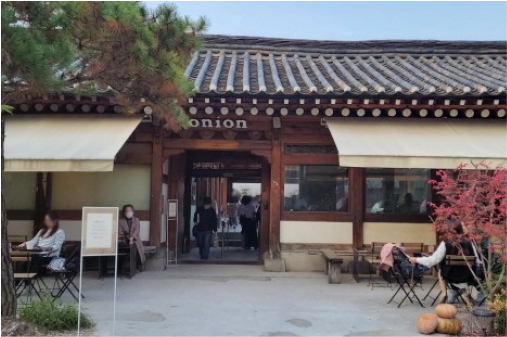
After a meal, head to Onion Anguk for sweet desserts and tea. This bakery café is housed in a hanok space refined with contemporary sensibilities. There are terrace and table seats, but the most popular seats in the café are those in the wood-floor hall, where one can sit on the floor. Another claim to fame is its baked goods menu, represented by the Pandoro and Ang Butter (bread with red bean paste and thick butter slices). Add an iced Americano or their signature milk tea to add a layer of richness to the desserts.
korean-machinery.com | Blog Magazine of korean-machinery, brands and Goods
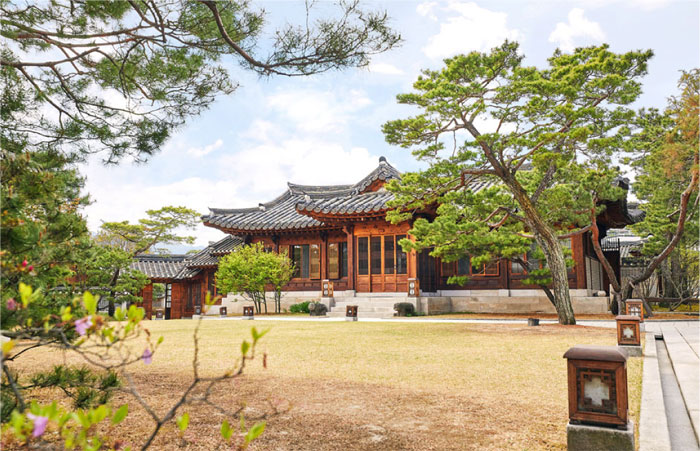


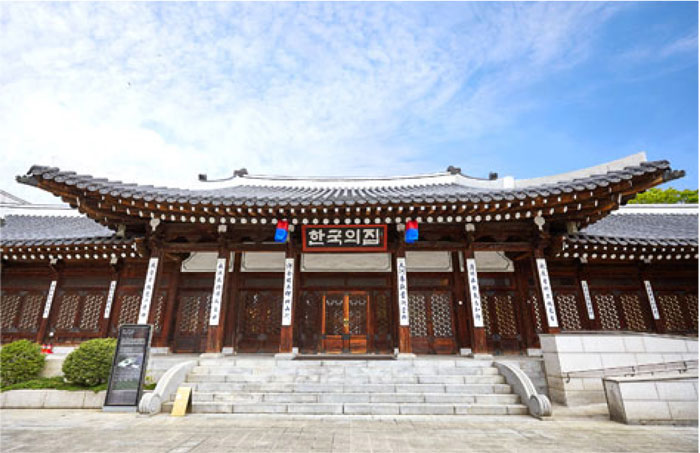
 Established in 1950 as Asia’s first national theater, National Theater of Korea presents diverse performances spanning over Korea’s traditional arts, ballet and opera performances. World renowned performance groups and organizations from overseas often hold performances here as well. The theater is composed of Haeoreum Theater, the main hall; Daloreum Theater, a smaller theater; Byeoloreum Theater, with a customizable stage; and Haneul Theater, an outdoor stage.
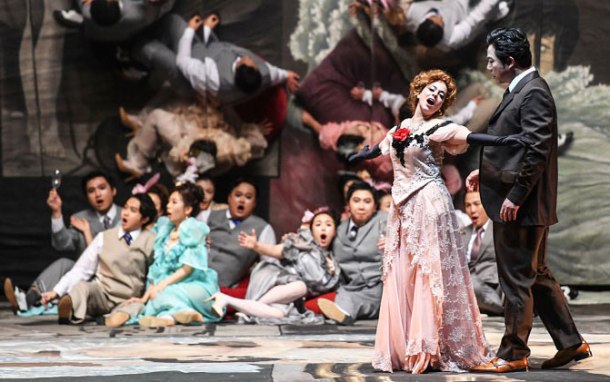 Korea’s unique traditional architecture is merged with modern design to create the grand yet elegant appearance of Sejong Center. Sejong Center holds a variety of performances of diverse genres including traditional Korean, classics, and even crossovers. The main theater, Grand Theater, has a wide stage equipped with the largest pipe organ in Asia. Sejong Center is a popular attraction among tourists as it is located across from Gwanghwamun Square and Gyeongbokgung Palace.
 The building of Seoul Museum of Art, which was once used for the Supreme Court, is highly recognized for its splendid modern image after undergoing renovation. Featured exhibitions are not limited to traditional arts, but include a wide range of media including architecture, films, music, fashion, handicraft, and even works that do not belong to any specific genre. The museum also features non-Western artwork, such as those from Africa and Latin America. If you are visiting Deoksugung Palace, consider adding Seoul Museum of Art to your schedule as they are located right next to each other.
 Located inside Seoul Arts Center, Hangaram Art Museum features various plastic arts. It consists of six exhibition halls and an art shop. Most featured exhibitions are based on modern art, making it easier for youths to approach the world of art. Often visited by people watching performances at Seoul Arts Center, Hangaram Art Museum makes it comfortable to explore with pleasant, open-style exhibition halls.