Samsung Heavy Industries to fully launch floating SMR
Hanwha Ocean pursues unmanned surface vehicles.
The three major domestic shipbuilders are accelerating efforts to secure next-generation growth engines to lead the post-LNG carrier era. As China rapidly catches up in the high-value-added ship market, including LNG carriers, it appears to be shifting its battleground beyond simple shipbuilding competition to advanced vessel types and future maritime platforms that encompass energy, data, and defense industries.
Samsung Heavy Industries has announced that it has signed an MOU with Sargent & Lundy (S&L), a U.S. nuclear design and engineering firm, for the development of a standard platform for general-purpose floating small modular reactors (FSMRs). This agreement is a follow-up effort to advance the FSMR project, the conceptual design of which was completed last year, into the commercialization stage.
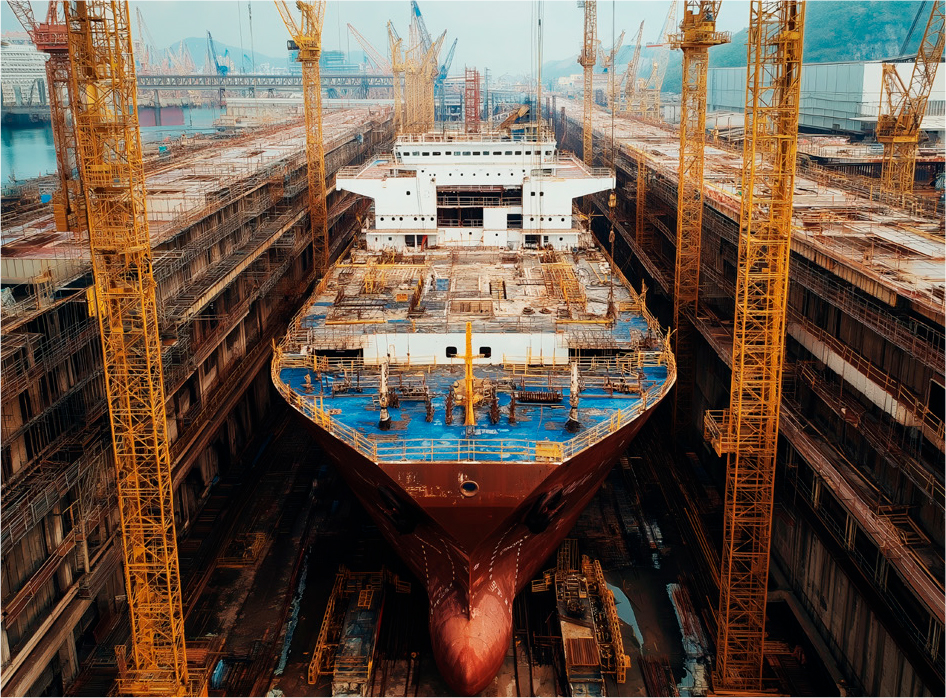
Samsung Heavy Industries’ strategy is to preempt the maritime nuclear power market, targeting AI data centers and power supply for island regions, based on its engineering, procurement, and construction (EPC) capabilities accumulated in the maritime plant sector, such as floating liquefied natural gas (FLNG) production facilities.
HD Korea Shipbuilding & Offshore entered the nuclear power business by investing USD 30 million in the U.S. small modular reactor (SMR) company TerraPower in 2022, and last year, won a contract to manufacture the reactor vessel for the next-generation sodium reactor being built by TerraPower in Wyoming, USA.
HD Korea Shipbuilding & Offshore recently began jointly developing FDC infrastructure with Schneider Electric, a global data center infrastructure company, and also signed a strategic partnership with Kiwit, the largest EPC company in the United States, laying the groundwork for entering the North American data center infrastructure market.
Hanwha Ocean is expanding its future business portfolio, focusing on defense and maritime plants. In cooperation with Hanwha Systems and U.S. AI defense company Havoc AI, it is seeking to participate in the unmanned surface vehicle (MUSV) project, scheduled for mass production in 2027. In addition, it is also accelerating the development of ammonia-propelled carbon-free vessels and liquefied carbon dioxide (LCO2) carriers.
korean-machinery.com | Blog Magazine of korean-machinery, brands and Goods