AI Teat Recognition-based Robot Milking Machine

https://korean-machinery.com///inquiry

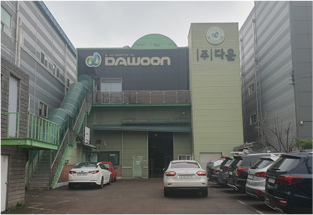
[INQ. NO. 2407M10] Established in 1996, DAWOON Co., Ltd. is a company that supplies various smart solutions and robotic solution products, starting with automatic feeders, for Korean cattle, plus dairy cows, poultry, and ducks.
By establishing an ICT-integrated control system with advanced robot/AI technology, monitoring and remote control are provided for all types of breeding management such as livestock feeding, milking, cleaning, and barn environments — and various robots can move under the automation system in place of actual human labor.
DAWOON provides monitoring and remote control of all feeding and management such as meal feeding, milking, cleaning, livestock environments, etc. – by establishing advanced robots & AI technology, and an ICT-integrated control system.
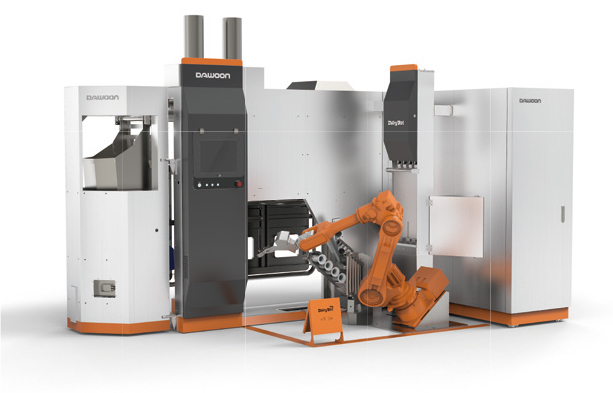
DAWOON specializes in smart & robotic farms that provide smart unmanned livestock sheds in which various robots work through an automated system in place of actual human labor.
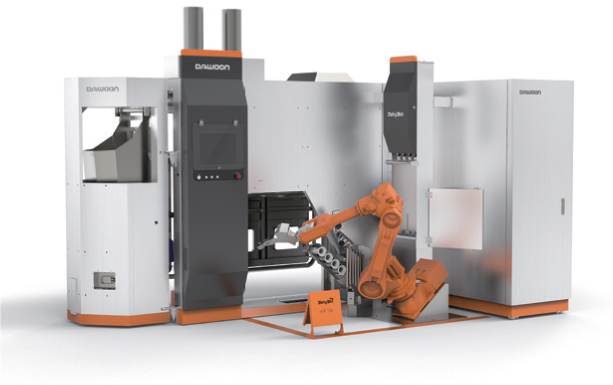
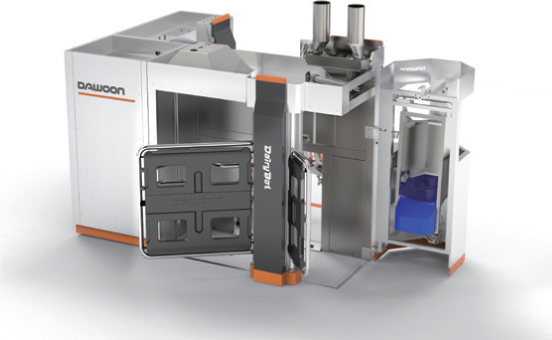
DairyBot, a robotic milking machine from DAWOON, is an unmanned milking robot that attaches a milking cup and squeezes milk after a cow enters the milking room and eats automatically supplied feed. This robot automatically performs the entire process of human washing, attaching milking cups, milking, and disinfection, all of which were originally carried out by manpower.
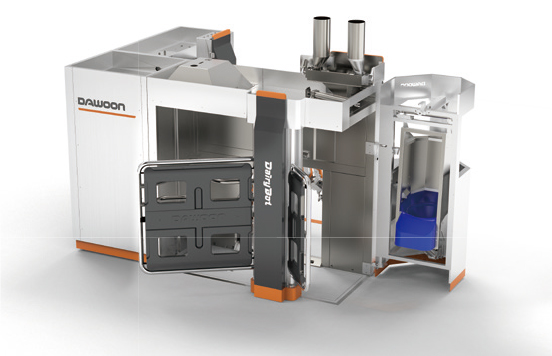
Realizing complete automation of milking labor
DAWOON’s robot milking machine enables the complete automation of milking labor, which takes up 67% of the working hours of dairy farms, by enabling innovative labor-reduction with robot automatic milking and automatic feeding technology.
It is an all-in-one system that integrates the cleaning, pre-milking, milking, and soaking into one process, and all processes are performed at once by attaching a milking cup. It reduces the milking time required for each process and ensures fast milking time. It implements 98% accurate nipple-recognition technology by utilizing a built-in 3D camera.
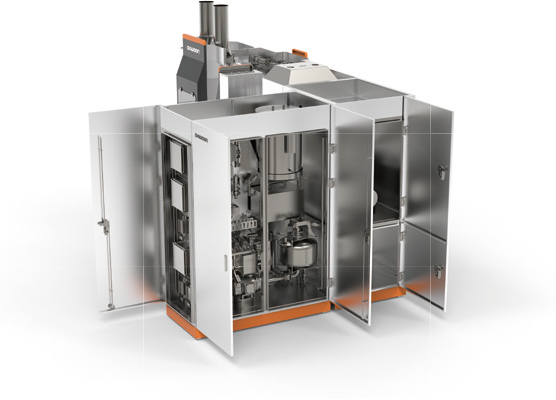
During milking, milk-quality analysis and milk-quantity measurement for each individual cow and each udder are provided to the user, and real-time confirmation and remote service of analysis results through web/mobile are available.


korean-machinery.com | Blog Magazine of korean-machinery, brands and Goods
Collaborative Robots

https://korean-machinery.com///inquiry

[INQ. NO. 2207M08] Rainbow Robotics Inc., founded by experienced researchers from the prestigious KAIST Humanoid Robot Research Center (HUBO Lab), leads the robot platforms industry.


Rainbow Robotics’ mission is to commercialize cutting edge robots through relentless research and development. It aims to achieve this by securing its own technology and offering high-quality products at competitive prices.

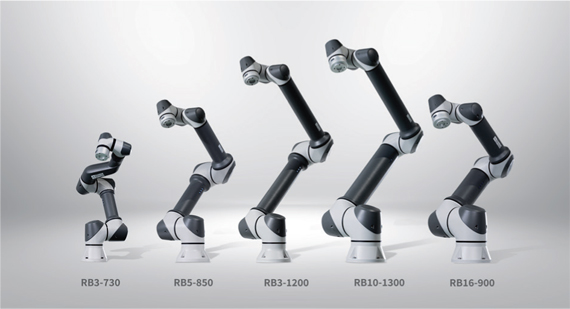
Various models of collaborative robots (Cobots) with cutting-edge six-axis robotic arms
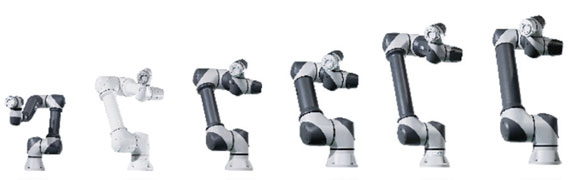
The RB series collaborative robots known as ‘Cobots’, are equipped with cutting-edge 6-axis robotic arms, developed using its exclusive technology. Rainbow Robotics offers a wide range of options, including the models RB3-730, RB3-1200, RB5-850, RB10-1200, and RB16-900, to cater to clients’ diverse needs in different work environments.


Additionally, all RB Cobots undergo rigorous testing and inspection by TÜV SÜD, a globally renowned certification body. As a result, they have earned CE and KCs certification and meet the following standards: ISO 13849-1, Cat.3, PL d, ISO 10218-1, ISO/TS 15066.


The RB series is the perfect solution for those looking for affordable prices, easy programming, and versatile functions. Rainbow Robotics takes pride in its in-house developed parts, which make the RB series much more reasonably priced than its competitors.


By developing core components like actuators, encoders, brakes, and controllers in-house, Rainbow Robotics is able to provide the RB series at affordable prices without compromising on quality. Its Cobots have high driving speeds, precise controls, and exceptional braking performance without any play or instability in the braking system.

Real-time robot operating system is available
The RB series is equipped with a real-time robot operating system that simplifies programming. With its supervisory control algorithm, users can create complex programs with just a few clicks and respond flexibly to process changes. The single-line commands make it easy to create automated processes without needing to write many lines of code.

Wide range of built-in functions for various applications
The RB series also offers a wide range of built-in functions that are easily accessible by inputting a few settings values. It also has specialized functions built in for various applications, such as welding, screw driving, dispensing, and 3D vision. Choose the RB series for affordable, easy-to-use, and versatile Cobots.


korean-machinery.com | Blog Magazine of korean-machinery, brands and Goods

AI Teat Recognition-based Robot Milking Machine

https://korean-machinery.com///inquiry

[INQ. NO. 2207M07] Established in 1996, DAWOON Co., Ltd. is a company that supplies various smart solutions and robotic solution products, starting with automatic feeders, for dairy cows, Korean cattle, pigs, poultry, and ducks.


By establishing an ICT-integrated control system with advanced robot/AI technology, monitoring and remote control are provided for all types of breeding management such as livestock feeding, milking, cleaning, and barn environments — and various robots can move under the automation system in place of actual human labor.


DAWOON provides monitoring and remote control of all feeding and management such as meal feeding, milking, cleaning, livestock environments, etc. – by establishing advanced robots & AI technology, and an ICT-integrated control system.


DAWOON specializes in smart & robotic farms that provide smart unmanned livestock sheds in which various robots work by an automated system in place of actual human labor.


DairyBot, a robotic milking machine from DAWOON, is an unmanned milking robot in which a robot attaches a milking cup and squeezes milk while a cow enters the milking room and eats automatically supplied feed. This robot automatically performs the entire process of human washing, attaching milking cups, milking, and disinfection, all of which were originally carried out by manpower.

Realizing complete automation of milking labor
DAWOON’s robot milking machine enables the complete automation of milking labor, which takes up 67% of the working hours of dairy farms, by enabling innovative labor-reduction with robot automatic milking and automatic feeding technology.


It is an all-in-one system that integrates the cleaning, pre milking, milking, and soaking into one process, and all processes are performed at once by attaching a milking cup. It reduces the milking time required for each process and ensures fast milking time.


It implements 98% accurate nipple recognition technology by utilizing a built-in 3D camera.


During milking, milk-quality analysis and milk-quantity measurement for each individual cow and each udder are provided to the user, and real-time confirmation and remote service of analysis results through web/mobile are available.


korean-machinery.com | Blog Magazine of korean-machinery, brands and Goods
Robot for Waste Sorting

https://korean-machinery.com///inquiry

[INQ. NO. 2306M01] AETECH Co., Ltd. recently developed the
robot ‘ATron’ for waste-sorting operations.
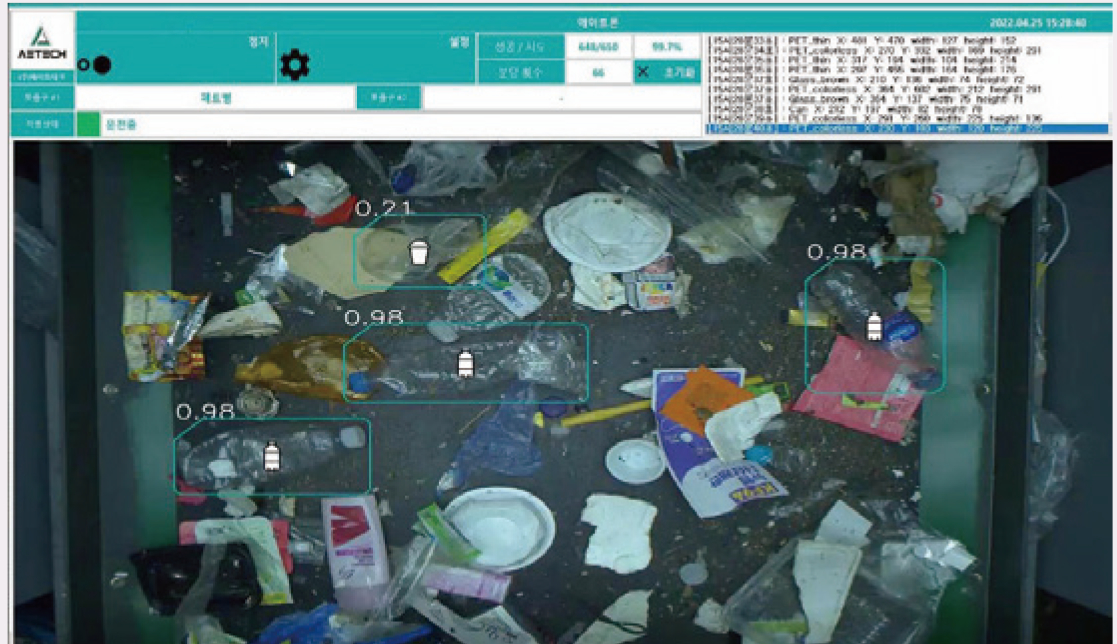
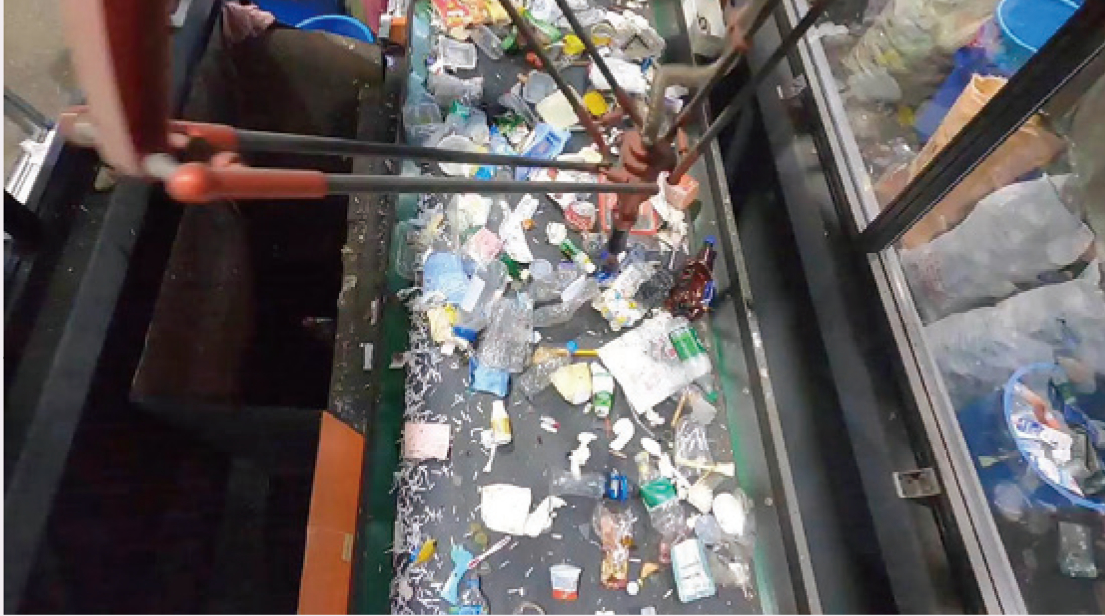
ATron is a robot that automates the process of sorting recyclables by hand. By teaching the characteristics of recycled goods to the deep learning algorithm, it is possible to quickly sort recyclables by using a robot. By applying this technology, the sorting of recyclables can be performed faster and more accurately than by humans.
The selection process that utilizes this product can select twice more resources than the existing process at the same time. In addition, based on the data learned by AI, it can perform tasks that are diffi cult for humans to perform, and select more recyclable resources.
AETECH developed both the software and hardware of the ATron itself. In the software part, it developed a neural network based on an algorithm optimized for waste classifi cation.
Its performance is enhanced with know-how securing optimal learning environments and high-quality data, improved movement, and trajectory tracking algorithms. Its accuracy is enhanced through a complex analysis method utilizing a multi-AI model.

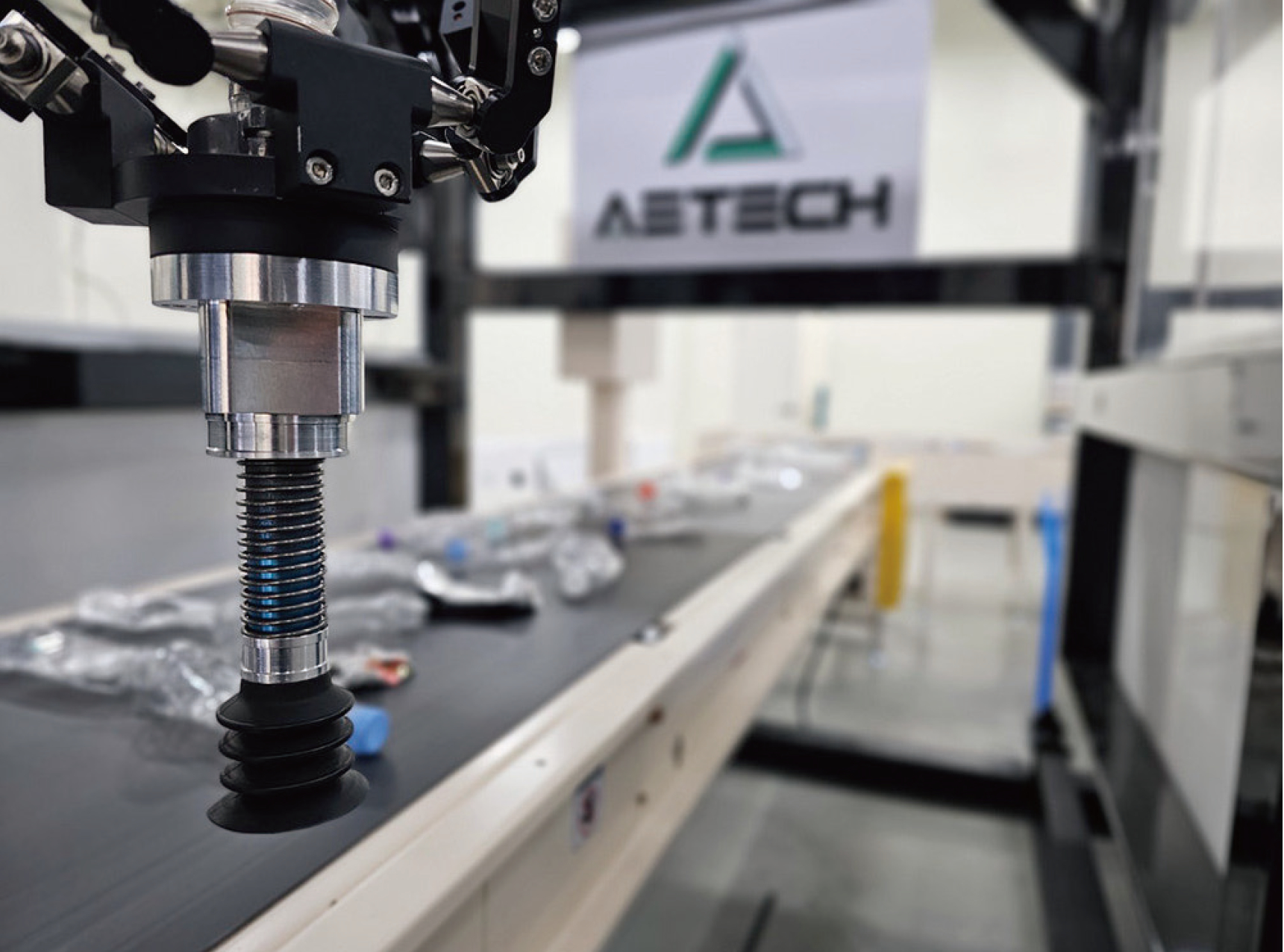
For hardware, AETECH developed blower vacuum technology, a suction pad, etc. Even the heavy products or wastes that have not kept their shape can be perfectly sorted. Also, the company lowered the production costs by localizing all parts based on its own production capacity.
AETECH’s president explains, “Our goal is to completely automate the resource circulation center that can be movable without human intervention. These eff orts of ours will raise the existing environmental technology to a higher level, and contribute to maintaining the sustainability of the planet Earth.”
AETECH develops technology for the environment through advanced IT technology and seeks to become company that can be trusted by customers.


korean-machinery.com | Blog Magazine of korean-machinery, brands and Goods
Collaborative Robot

https://korean-machinery.com///inquiry

[INQ. NO. 2209M21] Rainbow Robotics Inc. is a robot platform company established by researchers from KAIST Humanoid Robot Research Center (HUBO Lab). From the world’s best rescue robots to self-developed collaborative robots, the company is working hard to secure its own technologies through continuous R&D and commercialize robots by providing outstanding robots at rational prices.


Based on the core robot technologies built up over the past 20 years, Rainbow Robotics is researching and developing a number of robots including collaborative robots, precisely-tracking mounts, quadruped robots, humanoid robots, etc., and is also expanding its business areas.


The collaborative robot (cobot) RB series is a 6-axis robot developed independently by the company by utilizing its core robot technologies. The company is using self-developed core components such as actuators, controllers, brakes, sensors, etc. Thanks to such technologies, it is able to achieve high-speed operation, precisely-controlled performance, and braking performance without any play or instability in the braking system.


In addition, the RB series operates through the company’s own real-time robot operating system and user interface, thus providing easy robot-programming support for users.


The RB series consists of RB5-850, RB3-1200, and RB10-1300 and comes with a built-in pneumatic option. All of the products have obtained CE and KCs (ISO 13849-1, Cat.3, PL d, and ISO 10218-1, ISO/TS 15066) certifications through the global certification body TÜV SÜD.

Collaborative Robots can be widely used for both manufacturing and service businesses
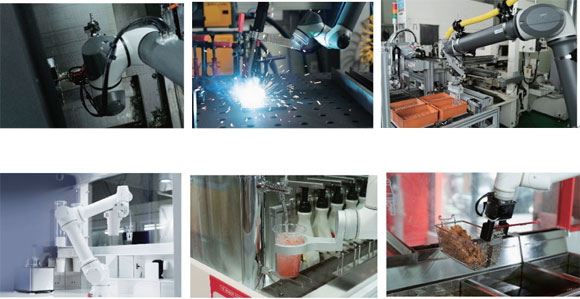
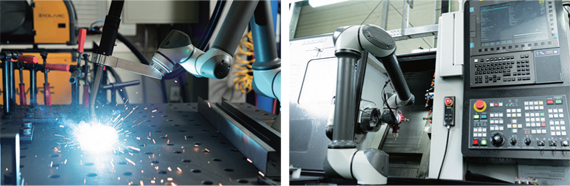
The RB series can be widely used for both manufacturing and service businesses. Having obtained IP66 level in waterproofing and dustproofing, they are being actively used in CNC machine tending, welding, etc. Moreover, RB3-730, RB16-900 and other new products are to be released to meet various customers’ needs.


korean-machinery.com | Blog Magazine of korean-machinery, brands and Goods
Six-axis Articulated Industrial Robot

https://korean-machinery.com///inquiry

[INQ. NO. 2208M17] Zeus Co., Ltd. is an engineering company that has grown along with the development of the IT industry, featuring the sequential development process of semiconductors, display, and smart factory industries since its founding in 1970.


Listed on the KOSDAQ stock exchange in Korea, Zeus has about 700 employees and keeps growing.


Zeus’s annual sales amounted to about US$300~400 million, and it is continuing to maintain strong financial stability with its diverse portfolio, despite the down-cycles of the IT industry.


Zeus is now celebrating its 50th anniversary and is preparing for a second leap forward to provide high-end solutions in Industry 4.0. Its first step is the ZERO series, the small industrial robots created through its experience in the equipment and robotics industry over the past decades.


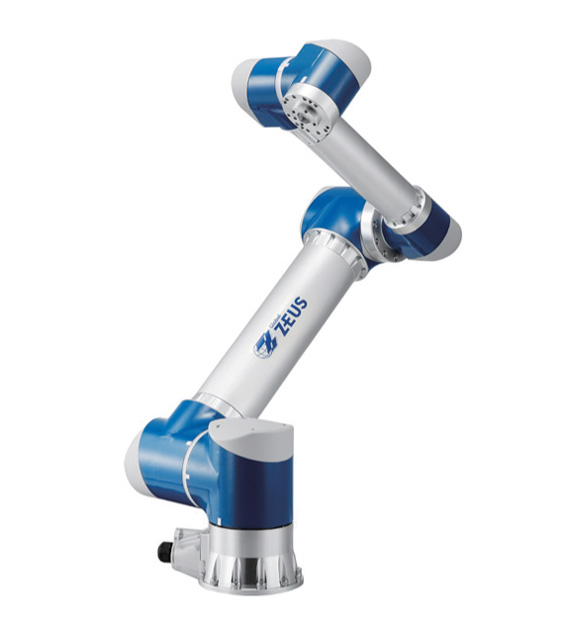
In 2019, Zeus released its first 6-axis articulated industrial robot. With its payload of 5kg, ZERO six-axis articulated robot is designed for various applications including pick-and-place, PCB assembly, and vision inspection. As the path is shortened through passthrough, the tact-time can also be reduced by 10-20%.
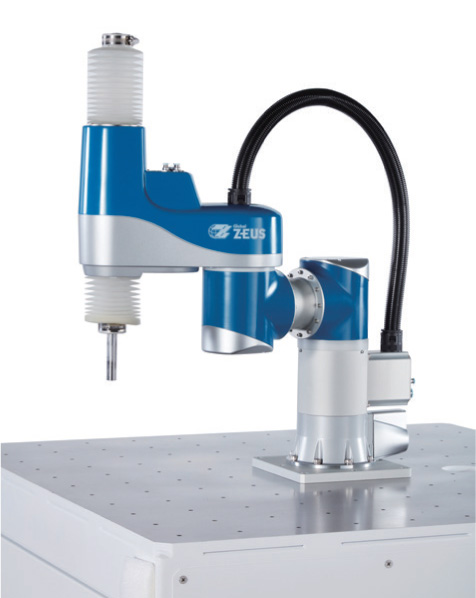
The Scara has a payload of 4Kg and shows reproducibility of ±0.01mm, which is the best in its specification class. The weight of the robot is 16 kg, so one adult can carry it alone easily. Two types were released — a general type, and a clean room type (Class 100).


With a repeatability accuracy of ±0.1mm, Delta is suitable for applications requiring the use of conveyors, such as pharmaceuticals, electronic devices, and packaging materials. It is designed to be very light at only 27kg including the frame. It is a tabletop robot that can be installed on a workbench.


korean-machinery.com | Blog Magazine of korean-machinery, brands and Goods
Eight New Industries Emerge as Export Growth Engines

https://korean-machinery.com///inquiryThe eight new industries related to the 4th Industrial Revolution, such as robots and electric vehicles, are emerging as new export growth engines of Korea, while contributing to an increase in jobs.
According to the report, “Trend Analysis of Job Creation in the Eight Emerging Export Industries and Trade with China” published by the Institute for International Trade (IIT) of the Korea International Trade Association (KITA), exports of the eight emerging industries in Korea have increased from an average of US$47.8 billion in 2014 to US$73.6 billion in 2017. The share of total exports rose from 8.3% to 12.8%. In particular, exports of the eight emerging industries increased by 27.7 percent last year, creating 415,000 jobs.
The figures for employment inducement per US$ million of exports also increased considerably from 5.16 persons in 2014 to 5.63 persons in 2017. The largest employment inducement figure was recorded in the next-generation semiconductor sector, while the robot industry was found most effective in inducing employment. The employment inducement figures were the largest in the next-generation semiconductor sector (188,000), followed by nextgeneration display (8.0 million), new energy (4.5 million) and bio-health (4.3 million) in 2017. Inducement per US$ million of exports varied relatively largely ranging from 10.7 in the robot sector, 9.7 for electric cars, 9.4 for bio-health, and 8.7 for nextgeneration display in 2017.
Last year, exports of the new industries have shown outstanding results in all the eight sectors and major regions of the world except Japan.
By sectors, exports of electric vehicles (186.8%), aerospace (37.3%), robots (36.2%), next-generation displays (34.4%), next-generation semiconductors (27.1%), new energy products (23.7%), high-tech materials (15.2%), and bio-health goods (13.7%) have grown in more than double-digit figures. Among the developed countries, on the other hand, the USA (29.2%), the EU (34.6%), and Vietnam (87.8%), which are emerging as overseas production bases for Korean companies among rising countries, have increased their exports to ASEAN nations (48.5%) and India.
Exports of the eight new industries to China grew at a CAGR of 5.2% from US$ 17.4 billion in 2014 to US$ 20.3 billion in 2017. Revenues for the same period increased by an annual average of 24.6%, from US$ 3.9 billion to US$ 7.5 billion. The increase in imports outstripped the growth in exports. This reflects China’s relentless pursuit in the new industries.
Exports of new industries to China amounted to 27.6% in 2017, which was 2.8% higher compared to exports of all sectors to China (24.8%). In particular, the dependence on exports of next-generation displays (37.6%), advanced materials (36.0%) and nextgeneration semiconductors (29.8%) to China turned higher than 30%, underscoring an urgent need for market diversification.
“Nurturing the new industries requires a management strategy aimed at overseas markets that can manifest the scale-oriented economy from the earliest stages,” said Moon Byung-gi, a researcher at the IIT of KITA. “In order for the new industry to continue to grow and create employment, It is necessary to establish a system for effective cooperation and division of labor such as joint investment and technical cooperation between Korea and China along with the development of composite materials, parts and products matching with the trend of the 4th Industrial Revolution.”

korean-machinery.com | Blog Magazine of korean-machinery, brands and Goods
Staying Ahead of the Competition in the Robot Industry through Cooperation and Service Robots

https://korean-machinery.com///inquiryThe Korean government made a full-fledged start to advance the robot industry. According to the “New Government’s Industrial Policy Direction” announced in December last year, the Ministry of Trade, Industry and Energy (MOTIE) recently held the Intelligent Robot Industry Development Strategy Conference at the Korea Institute for Robot Industry Advancement to discuss development plans for the robot industry.
While the world’s leading companies are competitively launching high-tech robots equipped with artificial intelligence, and the market for cooperative robots design to work with humans in industrial fields, is expected to grow rapidly from US$200 million in 2016 to JPY$ 3.24 billion in 2022. The United States and Japan invested US$22.5 million and JP¥ 29.41 billion in 2016, respectively. With the growing demand for service robots to improve the quality of life due to the increase of the elderly population and the demand for personalized service, the International Federation of Robotics (IFR) expects an average annual growth rate of 10% with US$ 14.9 billion in 2020.
On the other hand, the growth of the Korean robot industry is centered on large companies manufacturing automobiles and electronic appliances. This resulted in more than three times the difference in manufacture robot production with KRW 2.67 trillion and service robot production with KRW 770.4 billion in 2016, thus posing a concern that it will be fixed as manufactureroriented.
Therefore, the Ministry of Trade, Industry and Energy (MOTIE) announced a plan in the conference to create leading markets and support growth centered on cooperative and service robots, which are expected to lead the global market in the future.
First, the companies equipped with smart factory construction and root companies will be provided with cooperative robots to improve the productivity of small and medium-sized manufacturers suffering from the burden with minimum wage and manpower shortage. In addition, the commercialization of service robots is planned for the five promising areas including smart home, medical, rehabilitation, disaster and safety, unmanned transportation, and agricultural robots.
In order to strengthen the innovation capability, MOTIE will concentrate its support on research and development of the three major robot parts including operation, sensing, and control, for the robot-mounted platform and the CNC control machine standard model, with a plan to specialize the research and support organizations by dividing them into three regions. This growth support measures include preparing cooperative robots safety guidelines, improving regulations that may impede the proliferation of robots, and expanding new jobs related to robot service.
Moon Seung-Wook, Director-General of MOTIE, urges the industry, academia, and research field to work together to contribute to the global competitiveness of the robot industry and to the creation of jobs for youths. The government also emphasized efforts to create tangible outcome through speedy promotion of development strategy regarding the intelligent robot industry.

korean-machinery.com | Blog Magazine of korean-machinery, brands and Goods