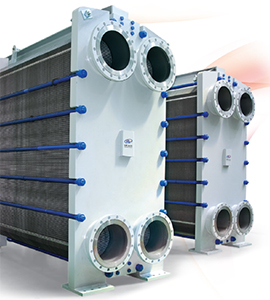

LHE: A Leading Maker of Plate and Frame Heat Exchanger

LHEhttps://korean-machinery.com///inquiry[INQ. NO. 1401M17] LHE is a globally leading manufacturer of heat exchangers. With persistent efforts, this maker could secure the world’s top-class production facilities of the 25,000ton and 50,000ton hydraulic presses with its own technology. Such facilities enable the company to fully respond to demands from markets at home and abroad. LHE shows its prominent competiveness in manufacturing of plate and frame heat exchangers in the global market. The competitiveness of the product is based on its conspicuous features in structure and functions as below and those are strong and unique features.

The plate heat exchanger is fixed by numbers of thin and corrugated heat transfer plates, hanging between the carrying bar on the above and the guide bar on the below. These heat transfer plates provide flow channels for two kinds of fluid, and the chevrons on the heat transfer plate make the turbulent flow and support the plate against the pressure difference between the two fluids. The plate pack is to be placed between the fixed cover and the movable cover, and fixed with tie bolts.

A gasket is attached to the heat transfer plate which forms a flow channel and seals in the fluid not to leak to the outside. The number of the heat transfer plates is determined according to the quantity of fluid, physical properties of fluid, the pressure drop and thermal conditions. The covers prevent the plates bended from the difference of pressure. In the assembly of plate, the surface with gasket is directed to the fixed cover and each plate is hanged in opposite directions alternately. And two fluids cannot be mixed and separated by a thin plate.

One fluid always flows in “A” channel and the other fluid always flows in “B” channel. The heat transfer plate forms corrugation to maximize the heat transfer efficiency and chevrons to create turbulence flow also designed to make countercurrent flow which enables reduction of the quantity of fluid remaining in the heat exchanger and eliminates the deadzone.

LHE_2
The plate heat exchanger can obtain five (5) times heat transfer efficiency compared with shell and tube heat exchangers. The strength of the plate is excellent, compared with other companies’ products with the point contact type, as the metal contact point has the surface contact feature when the plates are assembled. And the durability and corrosion resistance are greatly improved by minimizing deformation and stress concentration. Besides, the section of the gasket is designed and manufactured to have a pressure-resistant structure that enables the minimum contact area with the fluid, and thus to withstand a high pressure.

The gasket can be fixed tightly and quickly on the heat plate in the optimum condition with the dual fixing device (snap on type), and is designed and manufactured to have the glue type and glue free type so that it can be selected according to the usage. It is designed to prevent loosening of the tightening bolts and nuts during continuing operation, which prolongs the equipment’s operation lifetime and prevents leakages.

LHE has grown to be a market leader in Korean industries such as shipbuilding, steel, chemicals, construction, and power plant, etc. It took about 10 years to accomplish this goal. In an attempt to accomplish the higher goal of leading the global market, LHE focuses on ceaseless innovative R&D, which serves its potential customers as the most suited to their needs in an energysaving and environment-friendly way.


korean-machinery.com | Blog Magazine of korean-machinery, brands and Goods
Fluctuating Korean Exports in Last year

According to the official data unveiled by the Ministry of Trade, Industry and Energy, Korea’s exports saw 0.2percent growth as of November last year year-on-year, marking a considerable drop from 7.2% year-on-year growth recorded in October last year.

Last year, Korea’s exports failed to show a consistent recovery with the growth rate fluctuating from month to month. The growth rate of Korean exports in January 2013 rose 10.9% year-on-year but fell 8.6% in February compared to the previous year.

The nation’s exports growth rate kept an upward trend between March and August in 2013, except for June when it marked a -1.0% growth. However, exports again fell into a negative growth mode in September, followed by another up and down pattern in the following months.

Regional polarization is also seen as a major factor hindering the recovery of Korean exports, with exports to the USA, China and the EU showing a relatively sound growth rate in November at 2.9% 3.7% and 6.8%, respectively. However exports to ASEAN fell sharply by 11.2% in November. Regional polarization is also considered as a major cause blocking the recovery of Korean exports.

Korean exports to the US, China and the EU showed a relatively sound growth rate in November last year at 2.9%, 3,7% and 6.8%, respectively. But exports to the ASEAN fell sharply by 11.2% in the month.


By Kim Min-su : Here

Korea Reaches the World’s Three Largest FTA Economic Territory

In the FTA economic territory, which means the combined gross domestic product (GDP) of countries that have concluded FTAs with a certain country, Korea ranks in the No. 3 position after Chile and Mexico.

The recent bilateral FTA negotiation with Australia has actually concluded, so Korea’s FTA economic territory is expected to be far broadened. Moreover, if agreement on a Korea-China FTA is reached, Korea is likely to take the world’s No. 1 position in terms of FTA economic territory.

According to the recent data from the Ministry of Trade, Industry and Energy (MOTIE), Korea has an effectuated status of FTAs with 46 nations after the effectuation of the Korea-Chile FTA in 2004. The foreign nations include 26 countries of the EU and 10 countries of ASEAN.

The combined GDP of Korea’s FTA partner nations is $40.3trillion, or 57.7% of the world’s GDP of $69.9trillion as of 2012. The portion of the combined GDP of Korea’s partner nations is the world’s third largest following Mexico (64.1%) and Chile (78.5%). It is also 3.4 times higher than Japan with an economic territory of 17 percent. Chile boasts the world’s No. 1 position in terms of FTA economic territory with FTA conclusions with three major global economic giants of the US, China, and Japan.

Once Australia with GDP of $1.5trillion and Canada with GDP of $1.8trillion are added to Korea’s FTA economic territory, Korea’s portion of economic territory will rise to 62.5%. The FTA negotiation with Canada saw a tangible progress, so the conclusion is expected to be made in the very near future.

If Korea soon reaches an FTA agreement with the world’s No. 2 economy China with GDP of $7.9917trillion, the share of Korea’s FTA territory in the world climbs to 74%, or the world’s No. 1 position. Korea recently reached an FTA agreement with Colombia and is under the FTA negotiations with China, Vietnam, Indonesia, New Zealand, and GCC member nations including Saudi Arabia, Kuwait, Bahrain, Qatar, Oman, and U.A.E.


By Kim Min-su : Here

Hyundai Heavy Clinches Power Plant Construction Order Worth $970 bil.

Hyundai Heavy Industries has won a 1 trillion won ($948 billion) power plant construction order. Korea-based, the world’s largest shipbuilder, in terms of sales volume and technological leadership, said that a consortium led by GDF Suez of France has clinched the order to construct a power plant in Kuwait.

Under the deal with the Kuwait government, the shipbuilder will build a power plant with a generation capacity of 1,500MW and France’s SIDEM will be responsible for the construction of a desalination plant with a processing capacity of 107MIGD(486,000m3).

The high-grade plant will be built on a site located on the Persian Gulf, about 100 kilometers south of Kuwait City. The deal is part of a plan initiated by the Kuwait government to construct power and desalination plants. The Korean company won the order from a consortium led by GDF Suez of France.

“Construction performance proven for over 30 years was a driving force in the deal,” said an unknown spokesman of Hyundai Heavy Industries. Onshore plants are emerging as Hyundai Heavy’s other growth engine. The company had a signing ceremony to construct a 3.7 trillion won thermal power plant with Saudi Electricity Company(SEC) in August. It also received a 3.3 trillion won order to build another thermal power plant f 


By Kim Min-su : Here

rom SEC in October last year.

Samsung Heavy Secures Contracts Worth $300mil. in Orders

Korea’s leading shipbuilder Samsung Heavy Industries won combined $300 million orders for three vessels. Under the deal with BW, a global shipping company, the Korean shipbuilder will deliver a Liquefied Natural Gas Floating Storage Regasification Unit (LNG-FSRU) by 2016.

The shipbuilder said it also signed a contract with an undisclosed European shipping company to provide two petrochemical carriers. The shipbuilders has secured orders worth $12.6 billion so far this year, achieving 97% of its 2013 target of $13billion.


By Kim Min-su : Here

Korea and Australia Put Finishing Touches to FTA Agreement

Korea had virtually concluded a bilateral free trade agreement (FTA) in December 2013. The successful conclusion of negotiations came four years and seven months after the first round of meetings began in May 2009.

The two parties reached an agreement that most of the export/import items will be tariff-free within eight years after the agreement becomes effective. For automobiles with a five percent tariff rate, a major Korean export item to Australia, they agreed that tariffs will be completely eliminated on 20 items (76.6 percent of the value of total imports) including gasoline-powered mid-sized cars and compact cars.

According to an explanation of the Ministry of Trade, Industry and Energy, while tariffs on autos, under other FTAs that Korea previously reached agreement on, would generally be scrapped after three to five years, under the Korea-Australia FTA, Korea could enjoy the tariffs being removed immediately after the FTA takes effect.

Tariffs on home appliances including TV, refrigerator, electronics and general machinery will be eliminated immediately after the FTA becomes effective while auto components will be tariff-free within three years.

The Minister of Trade Industry & Energy said the government will minimize any harmful impact that the market opening could have on the domestic market through a 15-year tariff concession and safeguard measures for agricultural products.


By Kim Min-su : Here

Eutectic Cold Top

truc
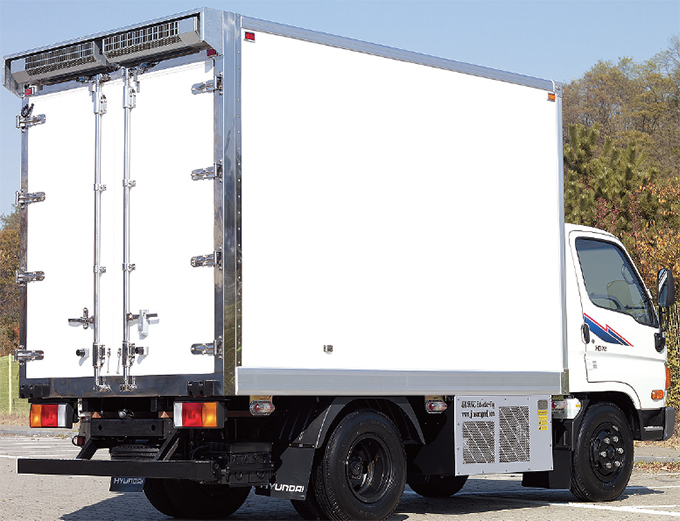
https://korean-machinery.com///inquiry[INQ. NO. 1401M16] Launched in 1991, Jinsung Refrigerator has since then been professionally engaged in manufacturing refrigeration equipment and eutectic cold tops.

The company’s eutectic cold top is suitable for use in hot climates, where eutectic cold top vehicles for freezing storage can reduce fuel costs, environmental pollution and operational noise. With it, users do not need to operate a refrigerator attached to the car engine. When operating the refrigerator with AC power (220- 380V), the PCM (Phase Change Material) plate inside the cold top is slowly cooled down by -37°C, thus being charged with chill. While the vehicle is running, the stored chill is slowly emitted, thus stably keeping the interior temperature at an average -30~-20°C.

It is strongly recommendable for users wishing to transport frozen food, ice cream, seafood, etc. in hot climates. Thus, the refrigerator is operated regardless of the car engine’s operation. Given that high oil prices are increasingly becoming a major obstacle to normally operating businesses, the product is gaining a very good reputation among these industries.

The company is further seeking to broaden the existing giant global markets especially in the Americas and Europe.

 
korean-machinery.com | Blog Magazine of korean-machinery, brands and Goods
Remote Condensers

Condensers
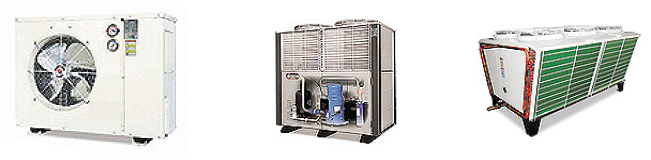
https://korean-machinery.com///inquiry[INQ. NO. 1401M15] A condenser unit used in central air conditioning systems typically has a heat exchanger section to cool down and condense incoming refrigerant vapor into liquid, a compressor to raise the pressure of the refrigerant and move it along, and a fan for blowing outside air through the heat exchanger section to cool the refrigerant inside.

A typical configuration of such a condenser unit is as follows: The heat exchanger section wraps around the sides of the unit with the compressor inside. In this heat exchanger section, the refrigerant goes through multiple tube passes, which are surrounded by heat transfer fins through which cooling air can move from outside to inside the unit. There is a motorized fan inside the condenser unit near the top, which is covered by some grating to keep any objects from accidentally falling inside on the fan.

The fan is used to blow the outside cooling air in through the heat exchange section at the sides and out the top through the grating.

Joongwon Refrigeration & Heating-manufactured these condenser units are located on the outside of the building they are trying to cool, with tubing between the unit and building, one for vapor refrigerant entering and another for liquid refrigerant leaving the unit. Of course, an electric power supply is needed for the compressor and fan inside the unit.

Joongwon Refrigeration & Heating has been a manufacturer of industrial refrigerators, freezers, heaters and other heat exchangers since 1993 in Korea. The maker’s major products include unit coolers, condensing units, evaporators, air coolers, condensers, condensing units, heat pumps, dry coolers and coils for cold rooms, cold storage and air-conditioning for buildings in the industrial field.

 
korean-machinery.com | Blog Magazine of korean-machinery, brands and Goods
Al Return Bend Auto Brazing M/C

Bend Auto Brazing
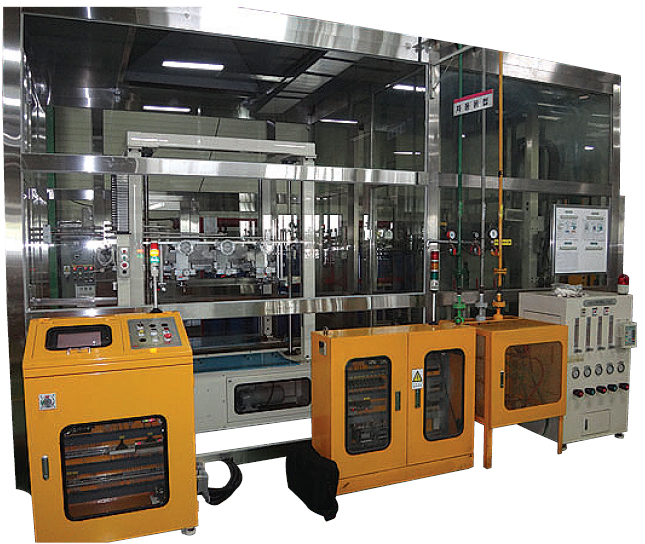
https://korean-machinery.com///inquiry[INQ. NO. 1401M14] Jaehyun Autonics manufactures the automated brazing/soldering system and provides related equipment. Jaehyun Autonics manufactures automated machines for areas of brazing and soldering operations and peripheral equipment and factory automation machine.

The current major products include Index Type Brazing M/C, Robot Brazing System, In-Line Brazing M/C, Soldering M/C, Electronic Gas Saver, etc. Placing the first priority in manufacturing of its products in the aspect of elevating the quality of manufactured products, the company is also deeply considering another important aspect in design and manufacturing of how to manufacture systems that are convenient to operate in real application.

Al Return Bend Auto Brazing M/C leads the company’s current step toward the upcoming AHR Expo 2014 at which this maker aims to make this new year of its own strategic pace of massive promotion at the place. This M/C is now a product recognized as one of strong items that have strong potential for the nation to increase its national rank in terms of trade capability.

The reliable background based on some facts: it is quite suitable for mass production; it supports successive production line; it is applicable to the workpiece necessary for frequent modification: it also supports standardization according to the applications. According to the models, for the M/C, conveyor speed is adjustable.

Moreover, in its operation process, distance and angle of nozzle is also adjustable according to the models. A representative application of the product includes heat exchanger U-Bend brazing.


korean-machinery.com | Blog Magazine of korean-machinery, brands and Goods

Brazed Plate Heat Exchanger

Heat Exchanger
https://korean-machinery.com///inquiry[INQ. NO. 1401M13] Jang Han Engineers processes heat plate processed in latest automatic press line of Sweden’s AP&T into reliable high quality brazed plate heat exchanger (BPHE) by using called Vacuum Furnace technology developed by the world’s leading company in the field of German Schmetz.

Jang Han Engineer’s BPHE is a top-quality product with R-Mark (Reliability) through several processes of design strength inspection, manufacturing inspection, and stringent quality inspection, based on a standard of UL 1995-33.2.

BPHE’s stable lattice structure (Chevron) has an excellent heat exchange efficiency and high pressure in use (maximum:46bar, passed an design strength inspection led by the KRAIA). As its purpose in design, BPHE is used for evaporator/condenser for heat pump using a new refrigerant of high pressure R410A, solar thermal, economizer, and liquid heat exchanger for absorption chiller.

This light weight of heat exchanger allows optimum design according for application system. Overall cost needed in transferring, installation, and maintenance.

With adoption of the module production method, this company can produce various models of precise, uniform BPHEs.


korean-machinery.com | Blog Magazine of korean-machinery, brands and Goods