KEVA, Korea’s Representative Organization for EVs

https://korean-machinery.com///inquiry

Acting as a bridge for discovering future business models

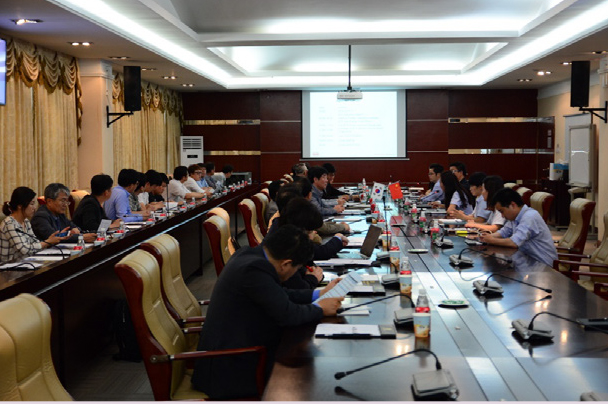
The Korea Electric Vehicle Association (KEVA) is a representative organization established for the development of the electric vehicle (EV) industry in Korea.

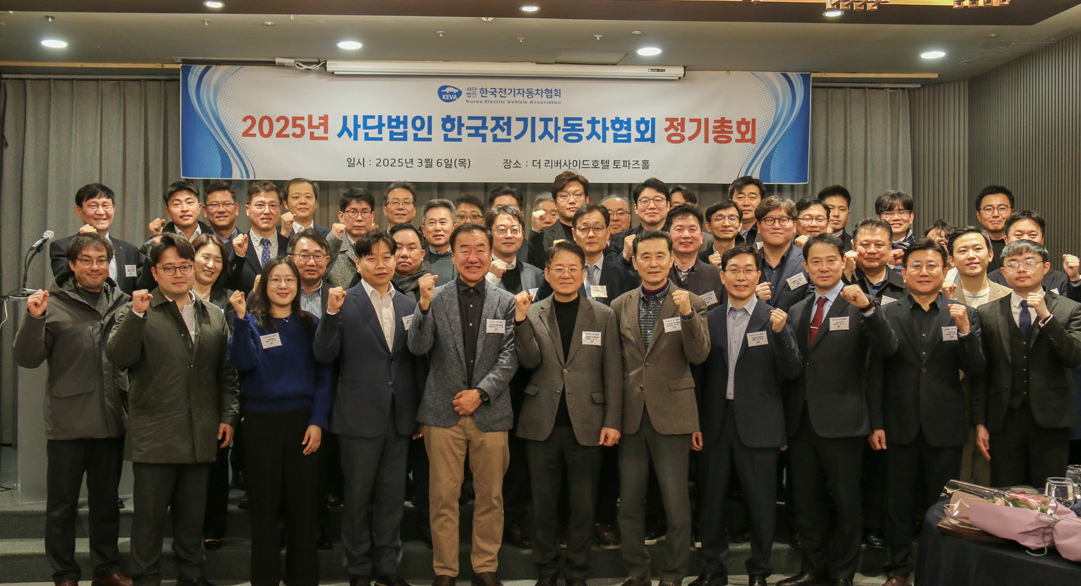
KEVA’s member companies comprise four divisions ― EV manufacturers, EV batteries, EV charger manufacturing and service, and EV-related parts companies. Currently about 100 companies are active, including Hyundai, Samsung, LG, and SK, which are Korea’s major global companies.

KEVA is carrying out various activities for the future of electric vehicles, which is a trend of the times, and is acting as a bridge for discovering future business models in the public and private sectors, as well as providing policy, legal, and institutional advices to the Korean government.
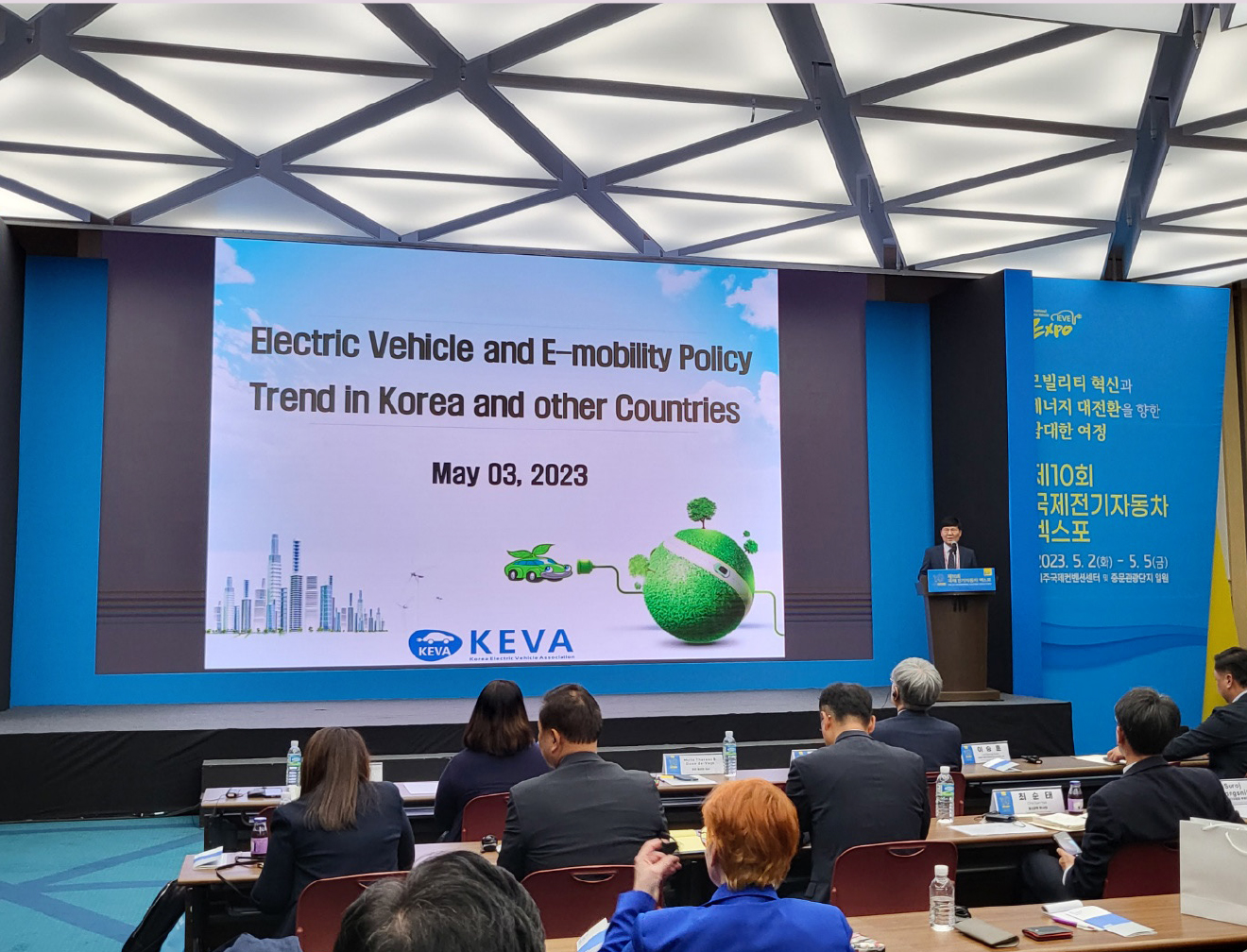
In particular, KEVA is working as a Korea’s representative EV professional organization by expanding information through overseas exchanges, strengthening international relations, and conducting various educational activities and programs in preparation for the EV era.

As a future-oriented EV organization representing Korea, KEVA is also strengthening mutual cooperation and linkages with relevant organizations at home and abroad, and is thus playing an important bridging role in the overseas expansion of Korean companies.
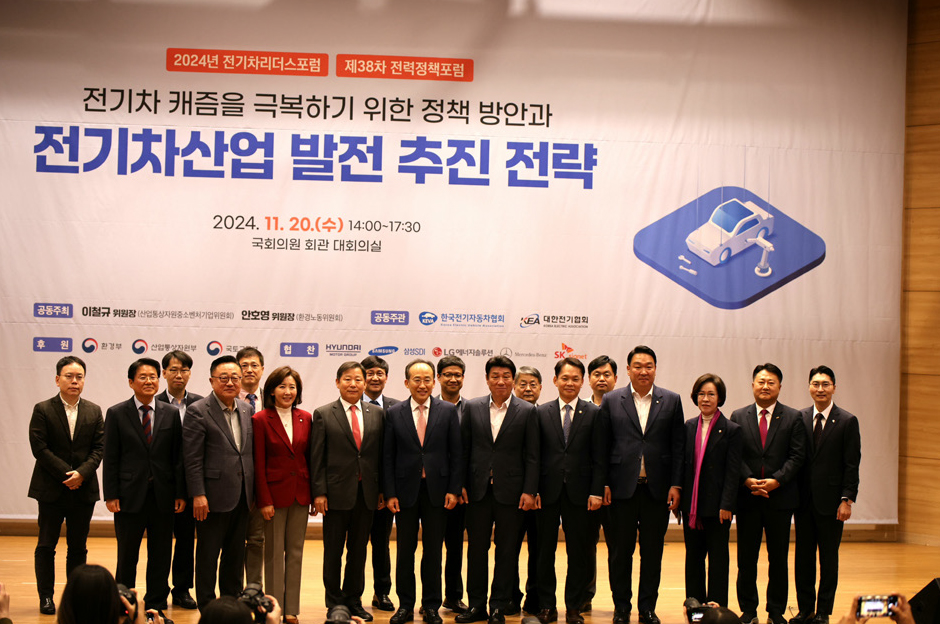
Core Projects

Policy Researches and Proposals

  • Research and propose to the government policies and institutional improvement measures for expanding the supply of EVs
  • Conduct various policy-related research activities such as expansion of charging infrastructure, subsidy policies, and tax benefits

Analyses of Technology and Industry Trends

  • Analyze and provide information on technology development trends, market trends, and industry trends
  • Support activities for standardization of technology related to EVs
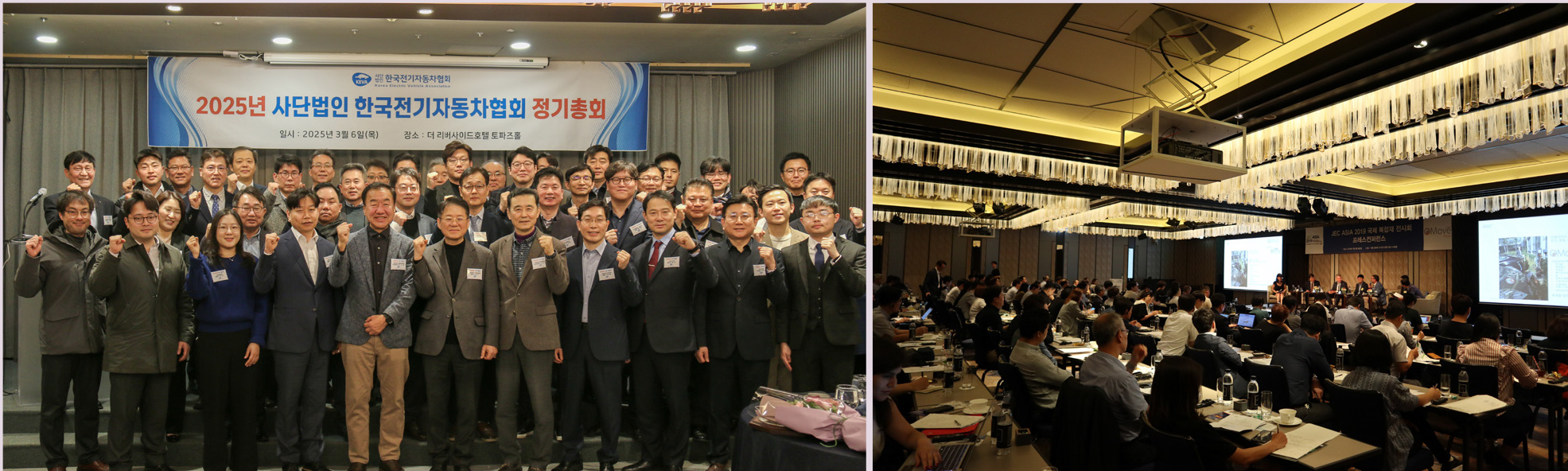
Education and Promotions

  • Develop and operate educational programs related to EVs
  • Conduct promotional activities to increase the general public’s understanding of EVs

International Cooperation

  • Strengthen the international competitiveness of Korea’s EV industry through cooperation with international EV-related organizations
  • Share international standards and information

korean-machinery.com | Blog Magazine of korean-machinery, brands and Goods

KEVA

https://korean-machinery.com///inquiry

KEVA, Korea’s Representative Organization for EVs

Acting as a bridge for discovering future business models

The Korea Electric Vehicle Association (KEVA) is a representative organization established for the development of the electric vehicle (EV) industry in Korea.

KEVA’s member companies comprise four divisions ― EV manufacturers, EV batteries, EV charger manufacturing and service, and EV-related parts companies. Currently about 100 companies are active, including Hyundai, Samsung, LG, and SK, which are Korea’s major global companies.

KEVA is carrying out various activities for the future of electric vehicles, which is a trend of the times, and is acting as a bridge for discovering future business models in the public and private sectors, as well as providing policy, legal, and institutional advices to the Korean government.

In particular, KEVA is working as a Korea’s representative EV professional organization by expanding information through overseas exchanges, strengthening international relations, and conducting various educational activities and programs in preparation for the EV era.

As a future-oriented EV organization representing Korea, KEVA is also strengthening mutual cooperation and linkages with relevant organizations at home and abroad, and is thus playing an important bridging role in the overseas expansion of Korean companies.

Core Projects

Policy Researches and Proposals

  • Research and propose to the government policies and institutional improvement measures for expanding the supply of EVs
  • Conduct various policy-related research activities such as expansion of charging infrastructure, subsidy policies, and tax benefits

Analyses of Technology and Industry Trends

  • Analyze and provide information on technology development trends, market trends, and industry trends related to EVs
  • Support activities for standardization of technology related to EVs

Education and Promotions

  • Develop and operate educational programs related to EVs
  • Conduct promotional activities to increase the general public’s understanding of EVs

International Cooperation

  • Strengthen the international competitiveness of Korea’s EV industry through cooperation with international EV-related organizations
  • Share international standards and information

korean-machinery.com | Blog Magazine of korean-machinery, brands and Goods
EV-related Solutions

https://korean-machinery.com///inquiry

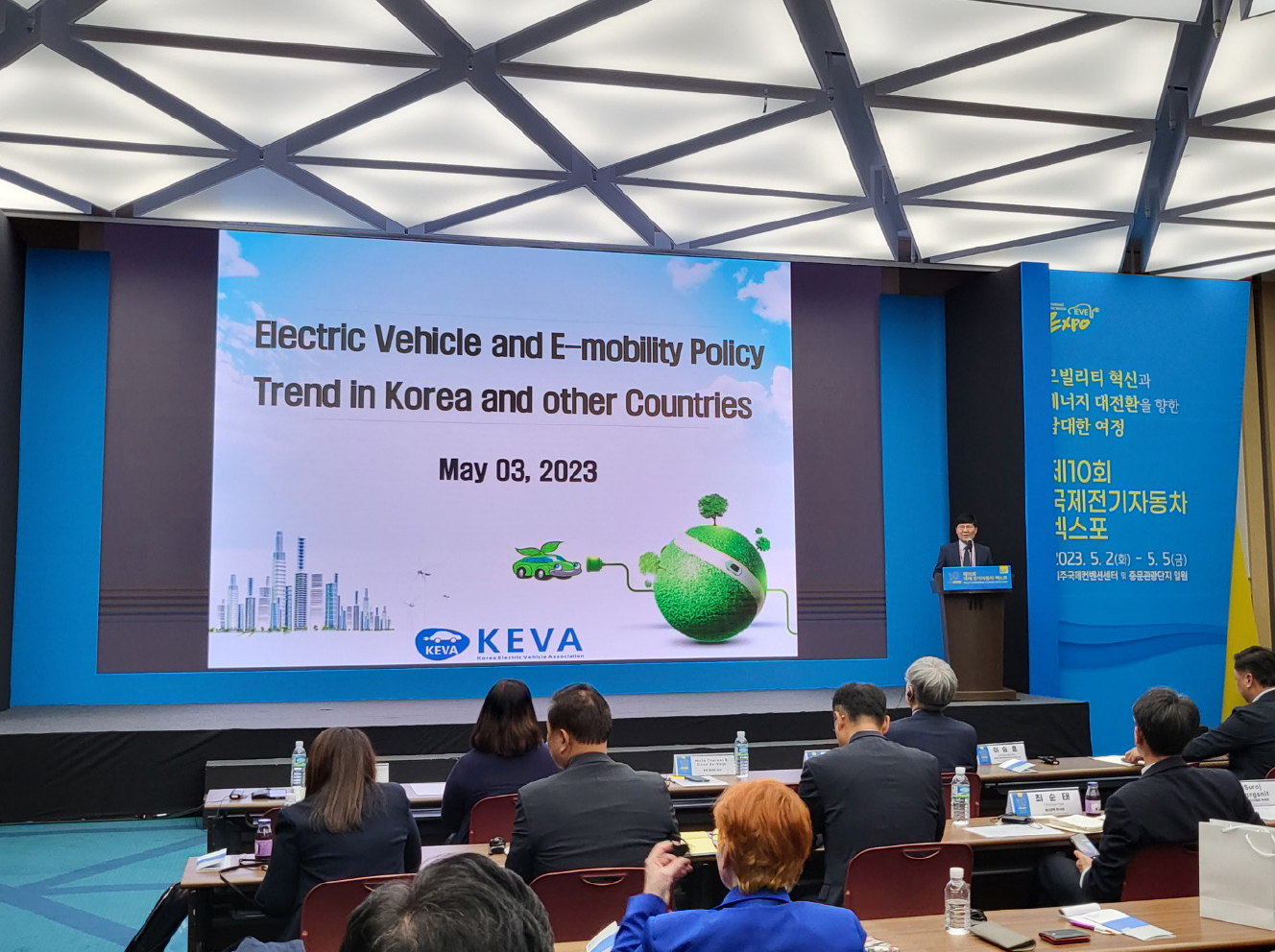
Even as the global chasm (temporary slowdown in demand) in electric vehicles continues, the global electric vehicle (EV) industry is continuously developing.
The EV industry in Korea is seen as a very important as a future growth engine, and as a key industry of the future, and due to this importance, the government is sparing no efforts in providing various policies and financial support necessary for the transition to zero-emission vehicles.
As of the end of 2024, a total of 700,000 EVs have been distributed in Korea, and the charging infrastructure has also exceeded 400,000. The proportion of zero-emission vehicles among new vehicles released annually is approaching 10%.
The Korean EV market, which has shown rapid growth in recent years, is slowing down due to reduced subsidies, lack of charging infrastructure, and high interest rates.

Latest trends in Korea’s EV industry
Automakers are expanding their investments in the development of next-generation EV platforms, battery technology innovation, and transition to software-centric vehicles (SDVs). In particular, software competitiveness such as AI-based autonomous-driving technology, connectivity, and infotainment systems is being highlighted as important.
Korea’s battery companies are focusing on developing next-generation battery technology, expanding production capacity, and stabilizing the supply chain. In particular, there is fierce competition in the development of next-generation battery technologies such as high-performance batteries, and all-solid-state batteries.

The Korean government and private companies are spurring the expansion of charging infrastructure to expand the supply of EVs. Various efforts are actually being made, such as expanding rapid-charging facilities, improving charging convenience, and introducing charging roaming services.

Kim Pil-soo, chairman of the Korea Electric Vehicle Association (KEVA), commented on the future outlook for the Korean EVs industry: “The Korean EV market is expected to continue growing thanks to active support from the government and the technological advancement of domestic companies. It is expected that innovation in battery technology, expansion of charging infrastructure, and advancement of autonomous driving technology will further accelerate the growth of the industry. And continued growth in the EV-related parts industry is expected.”

 
korean-machinery.com | Blog Magazine of korean-machinery, brands and Goods
KEVA, Korea’s Representative Body Implementing Various EV-related Projects

https://korean-machinery.com///inquiry

The era of EVs is widely opening globally as shown by the release of growing numbers of new EV models caused by the accelerated increase in the supply of future cars to cope with climate change and fine dust, and to lead the global market for future cars.
The yearly numbers of EVs are increasing exponentially — affected by the highlighted advantages of exclusive platforms for EVs and the rapidly disappearing shortcomings of EVs.
There are also tangible effects being seen in the EV-applied areas of autonomous vehicles and mobility sharing models. Moreover, as EVs are considered nonpolluting vehicles in line with the strengthening of international environmental regulations and standards, global makers’ massive interest in manufacturing EVs is increasingly evident.
EVs are emerging as an essential lifestyle choice, and various EV-based business models are being created.
The Korea Electric Vehicle Association (KEVA) is carrying out various activities for the future of the general trend of the era of EVs. KEVA faithfully provides not only political, legal, and institutional consultancy, but also plays a role in bridging the gap between private- and public sectors for the future business models.
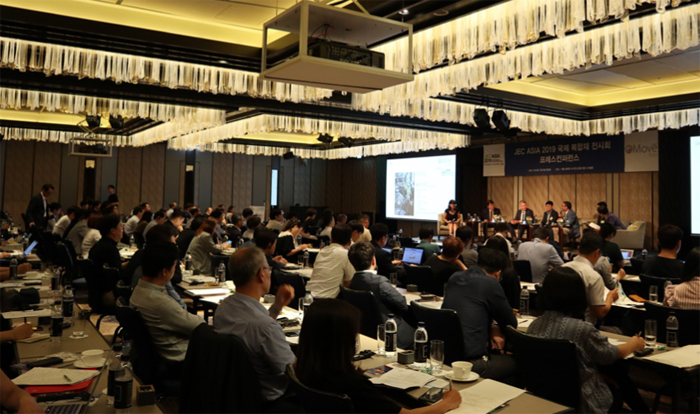
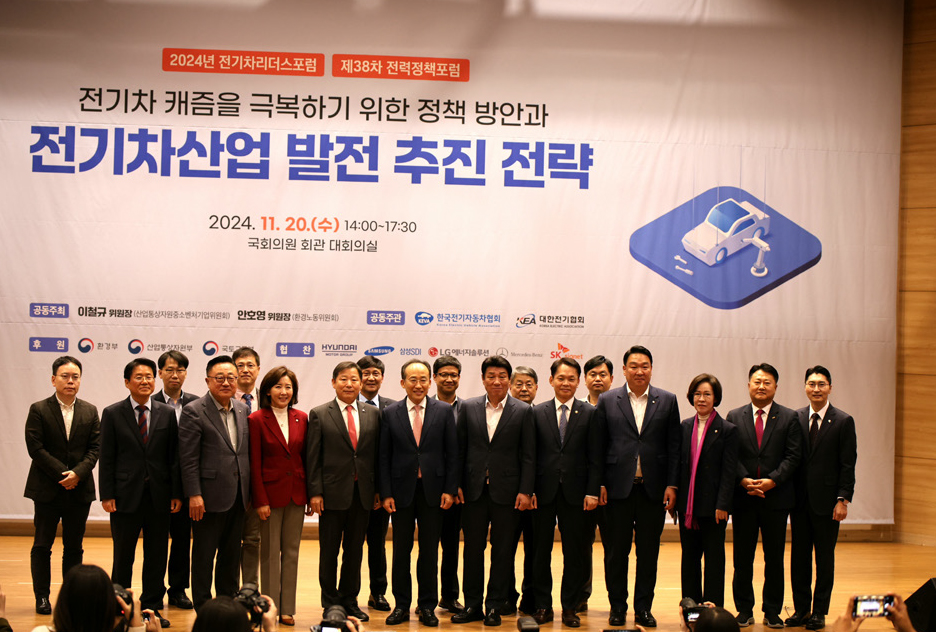
In particular, KEVA is playing a leading role as Korea’s representative body carrying out various kinds of challenging projects such as the information expansion and strengthening of international relations through overseas exchanges, the hosting of various related exhibitions, forums and training programs, etc.
As Korea’s representative agency for future EVs, KEVA will also intensify the linkages with other relevant organizations, both domestically and abroad.

 
korean-machinery.com | Blog Magazine of korean-machinery, brands and Goods
Charging Station

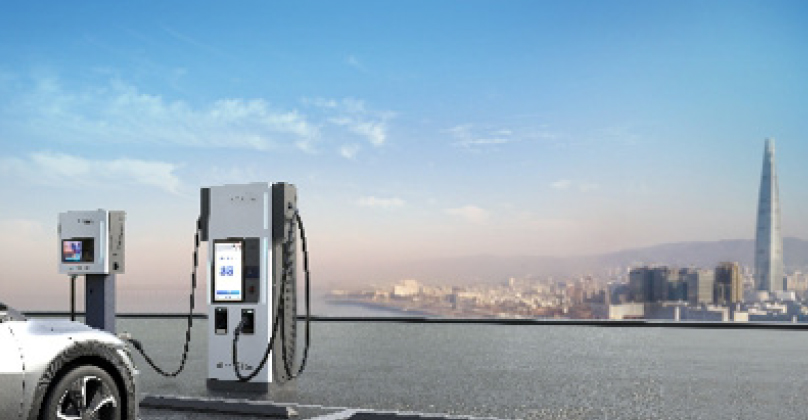
https://korean-machinery.com///inquirySIGNET EV INC. has since 2011 been supplying EV chargers to globally renowned car makers including Hyundai, Kia, BMW, VW, Ford, Honda, etc. In 2017, the company has proved it has the world’s highest level technology by acquiring an accreditation of CHAdemo protocol 1.2 version for both large output charging and simultaneous charging.
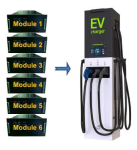
SIGNET EV’s EV charger has a module-type power conversion unit and thus allows easier maintenance than other companies’ chargers. This is not nearly exposed to the danger of being shut down even when one module remains broken because the remaining modules still operate as they did before. In recent years, as vehicles’ battery capacity and mileages respectively increase, the increasing demand for higher capacity charging system is becoming a growing trend. In line with this trend, the company has already finished developing an ultra-large output charging system (about 350 kW class) and further obtained UL accreditation.
This charging station is what is called the dispenser type of future charging systems that can replace the existing gas stations. Already, until April, this year, this charging station was supposed to be installed on highways and downtown locations in the United States. Also, unlike other existing companies’ charging systems, it is considered in designs for all maintenance activities to be carried out in an open condition of the front door only. Designed to be far slimmer than the existing models, this can be installed at the wall side by being attached, and thus giving more benefits in the management of parking lots.
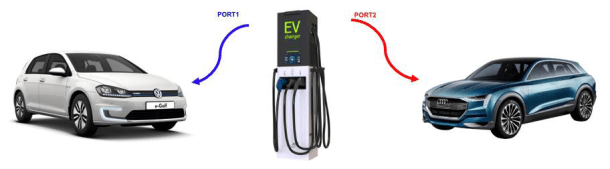
This charging system also supplies the most efficient charging services for those who are engaged in businesses of car rental, taxi, buses, etc. by automatically charging two vehicles in order and simultaneously charging (called power-sharing technology) of two vehicles in which electricity is divided in the highestefficiency, together with the contribution to the basic role of charging infrastructure.


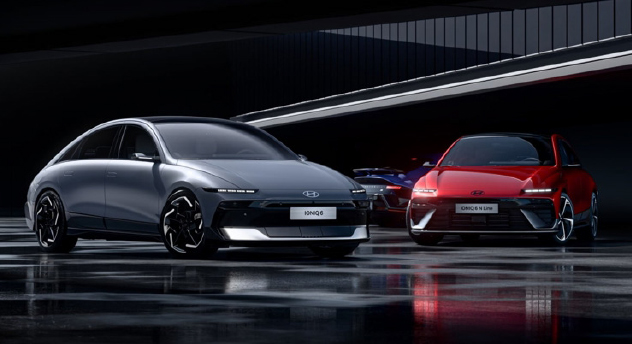
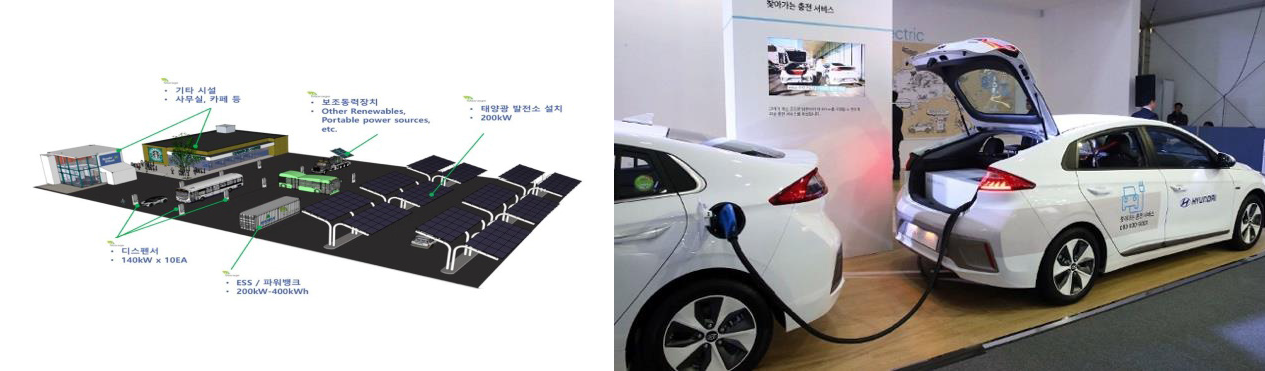
Moreover, this company has the world’s first-developed V2V charger by which charging between two vehicles can be performed and now supplies emergency charging service for discharged vehicles on the road by using Hyundai IONIQ.
SIGNET EV is proceeding with what is called a microgrid type charging station demonstration project incorporated with the ESS system and renewable energy. In particular, this micro-grid type charging station started to receive great attention as an active-type power management charging station that consumes the power stored at ESS in peak time when the electricity fee is most high and uses electricity from an electrical grid.

korean-machinery.com | Blog Magazine of korean-machinery, brands and Goods
Greetings from the Chairman of KEVA

https://korean-machinery.com///inquiry

KEVA will be Leading the Development of S. Korea’s EVs Industry to the Highest Level in the Global EVs Market.


Electric Vehicles (EVs) are considered the very best eco-friendly transportation mode these days, basically featuring pollution-free and technologically most stable among eco-friendly transportation means commensurate with the new era.

The current global automobile markets are facing an era where the international standards on environment and the basic conditions for purification of transportation means are being respectively intensified.

Fully meeting such conditions, various concepts of EV models are, with a significant decrease of comparative disadvantages against the existing general vehicles, being mass-produced in increasing numbers.

Recently, there have been growingly positive perceptions on EVs not only in advanced countries but also in South Korea. Moreover, it is so meaningful that this trend is spreading more widely, and thus promoting the growing necessity for EVs.
The Korea Electric Vehicle Association (KEVA), an affiliated organization of The Ministry of Environment, is composed of more than 50 member companies who are largely involved in the manufacturing of electric vehicles, batteries, chargers, charging services, electric vehicles parts, etc. KEVA carries out mediation and communication among the related governmental organizations. And also it performs the roles as cooperator and helper among the related industries. Thus, KEVA contributes to leading the development of South Korea’s EVs industry into the highest level in the global EVs markets.

There are numerous difficult issues to resolve in such related various areas as trade, environment and safety, horizontal industrial cooperation, etc. in the global EVs markets. KEVA was thus determined to try to have such pending issues well resolved through active steps.
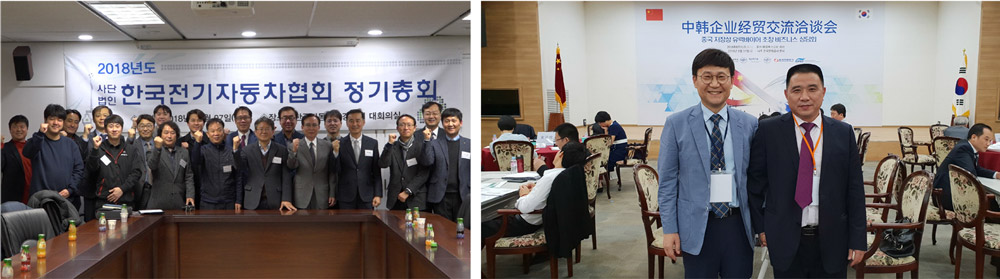


KEVA will do its best to solve such challenging issues by enhancing the professionalism befitting the rising status of South Korea in the global electric vehicles industry.

korean-machinery.com | Blog Magazine of korean-machinery, brands and Goods