CLM, the World’s First Developer of an Automotive Safety Device that Prevents Things from Being Jammed under the Brake Pedal

[INQ. NO. 1607M37] “Our business goal is to completely eliminate drivers’ concerns over safety accidents in driving, and thus to allow them to https://korean-machinery.com///inquiryenjoy safer and happier lives every day. For this, we have always sought ways to develop a new conceptual device that can solve the issue. And we actually could see the device as a result of longtime intensive investment,” said CLM’s CEO Choi Joung-kyoung.

CLM recently released its automotive safety device “Life Brake” in an effort to greatly decrease the potential occurrence of car accidents caused by things getting stuck beneath the brake pedal. Life Brake is the world’s first device to prevent things from being jammed under the brake pedal. Thus, it can certainly prevent accidents, which can be caused by objects being jammed under the brake such as canned beverages, mineral water bottles and shoes. It can also prevent accidents, which can also be caused by the car mat being rolled back under the brake pedal.

CEO Choi Joung-kyoung

Untitled-57.jpg
Life Brake consists of three components – the main body, two wings, and a fixed part. Made of soft synthetic resin, Life Brake can fit in the interior structure of any car. Regardless of type, the driver first has only to insert this product into the space under the brake pedal and make the adjustment as needed. The next three stages allow the driver to enjoy the benefit of the product.
Looking closely back on its development history, in 2009, CLM found structural problems of vehicle brakes and started to develop a brake safety device. CLM saw result of prototype and carried out a performance test by using sponge. In 2012, CLM acquired Korea patent registration for its new product. In 2013, CLM succeeded in releasing a new kind of brake safety device by using a new material of silicon. CLM successfully carried out two million times of test over durability of life brakes, assuring reliable capability. With the product, CLM received a “Gold Award” at the Seoul International Invention Fair in 2013. CLM was designated as the so-called quality assurance supplier and acquired the Q-mark.
CLM finally could take an opportunity to advance into the North American market through participating in AAPEX 2014, the largest-scale automotive parts fair in the United States, through which CLM could capture keen attention of potential buyers, with some amount of actual contracts.
Recently, CLM applied for patents aiming for exports to 11 major nations including Japan. To realize its vision of growing into a major exporter that leads global market trends, CLM is making further intensive efforts based largely on R&D.

2016-07-18 10;42;27.PNG

 korean-machinery.com | Blog Magazine of korean-machinery, brands and Goods

Korea’’s export hit hardest among OECD

Korea seems to have been hit more seriously than other countries by the global economic downturn as its exports are contracting steeply. With the outlook still negative due to external uncertainties, economists estimate that exports, once a sustaining pillar of the economy, will eat into economic growth this year.
According to OECD data, Korea’s exports have been contracting since January last year when they marked a 0.9 percent decrease. That figure, however, was the fourth best among 31 OECD countries where data was available, as most countries saw exports decrease. Only Japan, Ireland and Mexico saw their exports increase.
However, Korea has seen its exports dip steeper than most other countries. Exports contracted 10.6 percent in May last year, and dipped 15 percent in August, making the country rank 19th in terms of exports. Korea has since slid to 28th as its exports dipped 18.9 percent in January and 12.7 percent in February.
“Domestic consumption will contribute to most of the economic growth this year while exports will continue to be negative,” the National Assembly Budget Office forecast in a report. It estimated that contracting exports will pull down the GDP growth rate by 0.2 percentage points. Exports are likely to fall 5.6 percent this year while imports will drop further by 7.4 percent, according to the budget office.
Last year, exports pulled down economic growth by 1 percentage point as exports dropped 8 percent. As a result, economic growth stood at 2.6 percent, propped up by domestic consumption. “Due to a slowdown in the global economy and trade, coupled with falling oil prices and excessive supply, exports are expected to contract this year as well,” the budget offi ce said.
The government is turning somewhat optimistic about exports, pointing out that the decrease is slowing its pace. “As the quantity of exports is increasing, we expect that a recovery of prices will lead to an improvement in the latt er half of the year,” said Cheong Seung-il, deputy trade minister.
Experts, however, are pessimistic about seeing a notable rebound amid contracting global trade. “It will take some considerable time until exports make a notable increase,” said Ju Won, an economist at Hyundai Research Institute, pointing out that there are both structural problems and short-term factors behind the falling exports.
“It is impossible to pull up exports without the Chinese market. The government should focus on enhancing use of the Korea-China FTA as well as strengthening diplomatic efforts toward the Chinese government and advancing into high-growth regions within China.”
The government is planning to include diverse measures to pull up exports in economic policy directives for the latter half of the year which will be announced around the end of this month. Ju said the government should be fl exible in economic policies. “To prepare for the worst-case scenario of contracting exports, it needs more aggressive monetary and fiscal policies,” he said. “It should stop exports from negatively aff ecting domestic consumption as well.”

< Source: KITA>


 korean-machinery.com | Blog Magazine of korean-machinery, brands and Goods

Hyundai, Kia global sales up thanks to SUV hit in U.S., China

Combined global sales of South Korea’s largest and second-largest automakers Hyundai Motor Co. and Kia Motors Corp. climbed 6.7 percent on year to 672,000 units in May, thanks to an increase in sales of sports utility vehicles (SUVs) in the world’s two largest auto markets – China and the United States, Hyundai Motor Group said recently. It is the first on-year rise in their monthly car shipments in fi ve months.
According to Hyundai and Kia, their total global shipments during the January-May period amounted to 3,139,000 units, down 4.1 percent from the same period of last year. Their sales fell 13.7 percent on year in January, 3.8 percent in February, 1.7 percent in March and 7.7 percent in April.
Snapping the losing streak, the Korean auto group’s sales at overseas markets gained 5.4 percent on year in May – in particular, in the U.S. and China. Hyundai and Kia’s total shipments to China jumped 16.6 percent to 150,000 units in May from a year earlier, the highest sales record for May in the country. Market experts expect their sales to the world’s largest auto markets are likely to continue to improve for the next few months partly because of the base effect as their sales in China had been sluggish from May to August last year.

Untitled-58.jpg
The automakers in May also delivered combined 133,900 units to the U.S., up 6.3 percent from a year earlier to all-time monthly high. Hyundai and Kia’s total sales made up 8.7 percent in the U.S. market, the highest this year.
The recovery in sales in the U.S. and China largely owe to growing demand for their SUVs that sold 53,000 units last month in China, up a whopping 85 percent on year. Hyundai’s fl agship SUV models Tucson and Santa Fe as well as Kia’s Sportage drove their U.S. sales in May, according to the companies. Total sales of the three SUV models surged from 88 percent to 91 percent from a year ago. An unnamed offi cial at Hyundai Motor Group said Hyundai and Kia are upbeat for the remainder of the year as newer Tucson and Sportage model have been faring well in key markets and releases of compact SUVs Niro and Creta are planned for the second half.

< Source: KITA>

 korean-machinery.com | Blog Magazine of korean-machinery, brands and Goods

Hyundai Motor signs MOU on hydrogen electric vehicle revitalization with Air Liquide

South Korea’s Hyundai Motor Co. announced recently that it signed a memorandum of understanding with Air Liquide S.A., a French industrial gas company, to boost cooperation to take lead in the global hydrogen electric vehicles, as part of its efforts to vitalize the hydrogen electric vehicle market.
The Korean car maker explained that Air Liquide is a French company with world-class technologies related to hydrogen production and construction and operation of hydrogen plants. Hyundai Motor in cooperation with Air Liquide plans to push for the revitalization of the hydrogen electric vehicle market, utilizing hydrogen as a clean new renewable energy and development of business models of hydrogen energy stations.

Untitled-59.jpg
A hydrogen electric vehicle refers to a car that drives by operating a motor using electricity generated by hydrogenoxygen reaction. The car is regarded as an eco-friendly car emitting not air pollution substances and green house gases but just water.
Hyundai Motor successfully mass produced hydrogen electric vehicles of the Tucson in 2013. The company has developed a next-generation hydrogen electric vehicle with higher mileage, aiming to release it in 2018. Hyundai Motor Group plans to increase hydrogen electric vehicle models to two by 2020.

< Source: KITA>

 korean-machinery.com | Blog Magazine of korean-machinery, brands and Goods

Korea’s exports continue sagging, likely end June in 18-straight-month fall

South Korea’s exports continue in downward spiral, recording double-digit contraction in the first 20 months in June to suggest that Korea would extend losing streak in exports for the longest-ever 18 consecutive months.
According to Korea Customs Service the country’s outbound shipments amounted to $25.66 billion in the first 20 days of June, down 12.8 percent from the same period last year. Korea has never had experienced such lengthy setback on the external trade front since exports data was compiled from a half century ago. This year’s accumulated exports up until June 20 amounted to $222.1 billion, down 11.6 percent from the same period last year. The decline was steeper than the 11.5 percent on-year drop in the Jan.- May period.
The customs office said that the fall in exports was largely due to reduced shipments of electronic integrated circuits amid flood of cheaper Chinese products. Exports of electronic integrated circuits in the June 1-20 period plunged 9.1 percent from a year ago. In May, Korea’s exports came to $39.8 billion, down 6 percent from a year ago to register 17-straight-month decline amid prolonged sluggishness in global economy and oil prices.

 korean-machinery.com | Blog Magazine of korean-machinery, brands and Goods

Insadong features a mixture of historical and modern atmosphere

Untitled-7.jpgLocated in the heart of Seoul, Insa-dong Street is one of the most memorable attractions in Seoul and represents the focal point of Korean traditional culture and crafts. Stores in Insa-dong specialize in a wide variety of goods that can only be purchased or appreciated in Korea: hanbok (traditional clothing), hanji (traditional paper), traditional teas, pottery, and folk crafts.

There is one main road in Insa-dong with alleys on each side. Within these alleys are galleries and traditional restaurants, teahouses, and cafes. The galleries are the heartbeat of Insa-dong. There are about 100 galleries in the area and you can see every example of traditional Korean fine art from paintings to sculptures. The most famous galleries are Hakgojae Gallery, which functions as the center of folk art, Gana Art Gallery, which promotes many promising artists, and Gana Art Center.
The teahouses and restaurants are the perfect complement to the galleries. At first they might be hard to find, but if you take the time to stroll around the twisting alleyways, the window shopping in itself can be very entertaining. The shops in Insa-dong are very popular among all age groups, because each one is unique.

The Deep Roots of Insa-dong Street

Insa-dong Street stretches over 700 meters between the Anguk-dong Rotary and Tapgol Park (Jongno 2-ga). During the Joseon Dynasty (1392-1910), the street was dominated by Dohwawon, a place of study for painters. The area is still a center for the arts, and painters, craftsmen, and art lovers continue to set up shop along the narrow alleys, making it a unique place full of folk crafts, pottery, and paintings. The street offers rich opportunities for visitors to experience Korean traditional culture and arts. Various art events and festivals are regularly held along the street.

From Expensive Ceramics to Daily Use Items

Approximately 40% of Korean crafts are exchanged in Insa-dong. Some products even trace back to the Three Kingdom Period (57 B.C.-668 A.D.) The most popular items are Korean ceramics ranging in price from hundreds of dollars to thousands of dollars.
Other items sold in Insa-dong include earthenware, calligraphy materials, antique furniture, hanji, hanbok, teas, souvenirs, and cute accessories. Nearby shops include cafés, restaurants, ateliers, and galleries specializing in a diversity of items.
Every Saturday from 14:00 to 22:00 and Sunday from 10:00 to 22:00, the main street is blocked off from traffic and it becomes a cultural space. Insa-dong is especially popular among foreign tourists. This is where they can experience and see traditional Korean culture firsthand, and also purchase pieces of fine art. Insa-dong is also close to other tourist attractions such as Cheonggyecheon Stream and Gyeongbokgung (the royal palace during the Joseon Dynasty).

• Inquiries
1330 Travel Hotline: +82-2-1330 (Korean, English, Japanese, Chinese)
For more info: +82-2-732-2235~40 (Korean, English, Japanese)

 korean-machinery.com | Blog Magazine of korean-machinery, brands and Goods

Deoksugung Palace Royal Guard-Changing Ceremony

Untitled-1.jpg

Deoksugung Palace has held a guardchanging ceremony since 1996 after thorough historical research by leading historians. The ceremony, which is held in front of the Daehanmun Gate of Deoksugung Palace, is a tradition similar to the Changing of the Guards at Buckingham Palace and offers a rare opportunity to experience royal culture.
The royal gate is opened and closed at predetermined times, and the gatekeepers in charge of guard duty and patrols hold a shift ceremony three times a day.
Special Programs: The Royal Guard-C h a n g i n g C e r e m o n y i s a h i g h l y recommended event for tourists. It is held three times a day (11:00 / 14:00 / 15:30) in front of Daehanmun Gate at Deoksugung Palace. As each ceremony follows the same procedure and lasts for thirty minutes, visitors can choose whichever time is most convenient. The ceremony is free of charge. There are no ceremonies on Mondays as well as on severely cold or hot days.
As the ceremony begins, the changing of the guards commences replete with traditional musical instruments, and exchanges a password for verification. An eight-minute guard ceremony ensues, followed by a seven-minute change ceremony, and finally a patrol that completes the ceremony. The procedure takes a dramatic turn when 18 guards in six official positions beat a drum and bellow some orders.
Major Highlights: The Royal Guard-Changing Ceremony is a great opportunity to experience a rare traditional scene.
Be sure to bring a camera. The guards’ splendid costumes, with their brilliant primary colors, are a pleasure to view.
While you cannot take pictures with the guards during the changing of guards, you can take a background picture of the guards and palace. You can also take photographs with the gatekeepers after the ceremony is over. Visit the palace and enjoy the beauty of Korean palaces following the ceremony.

Performance Times
11:00-11:40 / 14:00-14:40 / 15:30-16:30 (excluding Mondays)
* Schedule is subject to change and the program may be canceled due to weather conditions.

• Transportation
[Subway] City Hall Station (Seoul Subway Line 1, 2), Exit 2. – Go straight 100m to arrive at Daehanmun Gate on the right.
Homepage: http://www.royalguard.or.kr (Korean, English, Chinese, Japanese)

 korean-machinery.com | Blog Magazine of korean-machinery, brands and Goods

Steel castings

[INQ. NO. 1607M15] Samyoung M-TEK. https://korean-machinery.com///inquiryCo.Ltd. was established with full assistance from Samsung Heavy Industries Co.,Ltd. as expertise venture corporate in Production of Steel Industry in Oct. 1997.
Main products are steel casting, alloy steel parts and components in marine, bridge, construction, locomotive and heavy vehicle industry as well, and 50% of them are exported to Japan, U.S.A and European countries. Qualities of its products have been highly recognized among its valuable global customers.

2016-07-14-14;21;41.jpgSamyoung has been developed technologies of steel casting and bridge shoes used in full range of suspension bridge, meeting the high safety regulation in designing, manufacturing, testing and inspection.

Samyoung is able to provide various materials & size of steel castings with reasonable prices, high quality and quick delivery time. Samyoung has been expanded its business into not only steel structures, shipbuilding and industry plants fields, but also the bridge bearings, earthquake proof construction.
Steel castings that Samyoung M-TEK produces are casting products of general carbon steel and alloy steel so it is more advantageous for manufacturing large products or complicated products with large shape. It is also possible to manufacture products with various materials that can endure extremely low temperature as well as high temperature like 1,000 degrees.
For example, the pallet car, which is its main product, can be manufactured up to the assembling process, and its products take up more than 50% of the international market with recognition from all over the world.

 korean-machinery.com | Blog Magazine of korean-machinery, brands and Goods

Development of plastic-based chemical materials for transportation

Untitled-25

For young people starting their careers in society, newlywed couples with their first sons, and middle-aged people who feel the burden of their work, the purchase of a new car in our society is something more than culture. Every day, new cars are massively launched in the marketplace. It is the era when, regardless of the country of origin for cars, there is fierce competition for new cars equipped with new technologies ranging from a change in the design of the car’s exterior to invisible details. The trends in the automotive industry have continuously developed over the past ten years, evolving from high performance cars to green cars such as electric cars, hybrid, and fuel-cell vehicles and to smart cars like autonomous cars. For the general public, such concepts are also well known to the point of predicting the future of vehicles.

However, from the perspective of technology, the future of both cars and the automobile industry in Korea is not that much brighter than people expect. Fortunately, Korea domestically produced major chemical materials by promoting the field of the heavy chemical industry in the early 1970s. With the world’s fifth-largest production based on chemical materials and original technology development project for chemical materials, Korea becomes a leader in the chemical materials industry. The future trends in the transportation industry are, as mentioned before, eco-friendly and smart. The most important factor is, at this point, an improvement in driving efficiency when a new power source is applied. Technically, the major issue is naturally the lightweight of materials used for transportation. Accordingly, if Korea systematically promotes industry sectors that integrate with the automobile industry by applying chemical materials in which Korea gained global competitiveness, it is likely to take the lead in the global market.
To maintain and expand the market share of domestic strategic industries, there is an urgent need to establish a virtuous circle in the ecosystem of the plastic-based chemical materials industry for transportation by improving technical skills in the domestic chemical materials industry through technical R&D promotion, fostering customized manpower for on-site work such as the chemical materials sector for transportation, and establishing infrastructure for the growth of SMEs. In this respect, this issue explores the trends in plastic-based chemical materials for transportation, the current status of the domestic and overseas market, the suggestions and problems of an industry ecosystem in Korea, and the directions and expected effects of R&D.

Evolving paradigm shift in the transportation industry

In the transportation industry, the major priorities are lightweight, functional, and eco-friendly technologies due to tightening regulations on fuel efficiency and carbon dioxide (CO2).
Such technologies are emerging as contributory factors for survival in the industry. In the case of vehicles, the standards of vehicle fuel efficiency in Korea will be 20km/L, which is significantly strict. The United States and the EU are also expected to tighten regulations.
In the case of shipbuilding, as the Energy Efficiency Design Index (EEDI) has required new ships to meet the standards since 2013, any ships failing to meet such standards can be prevented from sailing. As for aircraft, the EU will implement a law restricting CO2 emissions from aircraft engines.
The most effective way to respond to a new paradigm in the transportation industry is to improve engine performance; however, considering the pace of technical development and its costs, the realistic way is to develop high value-added chemical materials.

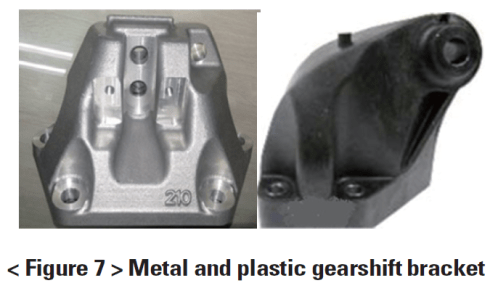
The conventional metal is strong and heat resistant, but in reality, it has limitations when responding to fuel economy regulations due to its heavy weight. High value-added chemical materials, such as engineering plastics, make it possible to be lightweight innovatively compared to metal components. They also can provide various functions, thus making it possible to streamline relevant parts. For these reasons, the transportation industry is gradually expanding from metal components to chemical materials in terms of the composition of materials.

2016-06-07 10;08;23.PNG2016-06-07 10;09;16.PNG
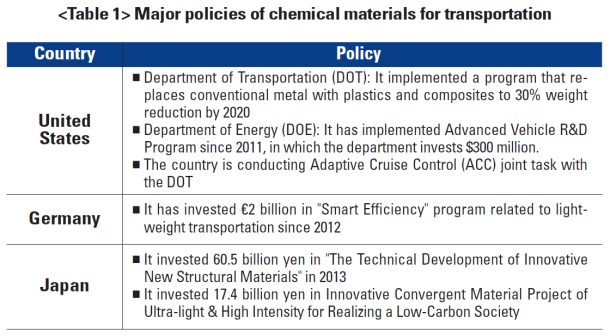
To respond to such environmental regulations and take the lead in the transportation industry, developed countries have implemented various policies by linking the chemical materials sector to the transportation industry. There are typical examples as follows:

2016-06-07 10;09;54.PNG

In Korea, some efforts are made to respond to the rapid paradigm shift in the chemical materials industry. However, to lead such paradigm, there is a shortage of corporate size, R&D investment, domestic technology level, and infrastructure, so the government support is urgently needed. Companies specializing in chemical materials for transportation in Korea amount to a total of 2,400, among which 90% of the companies are small and medium-sized firms; the automotive component sector is about 880, among which 80% of the sector consist of SMEs and middle-standing firms. A 2009 report by the Korea Institute for Industrial Economics and Trade found that the competitiveness of eco-friendly automotive components’ materials only stands at about 70~80% compared to developed economies. In particularly, Korea is lagging in its ability to lead the commercialization of findings based on base technology to
develop materials for high-efficiency automotive components.

With countries around the world imposing stringent regulations on fuel economy by 2025, the transportation industry and the chemical materials sector also face a drastic change in their industrial environment. Accordingly, if the government fails to provide active support, Korea is expected to have to rely on imports of high value-added chemical materials. Considering shrinking yields in the domestic chemical industry that focuses only on conventional generalpurpose materials, it is deemed to be an urgent crisis situation.
If the government, however, plays an active and supportive role in R&D technology and successfully provides various programs to create an industry ecosystem, it is likely to secure global competitiveness in the transportation sector, as well as the domestic chemical materials & automotive parts industry.

What is the chemical materials/components industry for transportation?

The chemical materials/automotive components industry for transportation is an industry that manufactures and produces key interior and exterior parts for transportation, including automobiles, using chemical materials, such as plastics. The industry is divided into two categories: an industry that provides special functions to materials (materials/composites) and a mold manufacturing industry (molding/processing, parts/ modules, finished products). From the perspective of supply / value chain, it is generally created in a linear way: materials → composites and molding/processing → parts and modules → finished product.

2016-06-07 10;10;27.PNG
The features of the industry ecosystem of the chemical

materials/components for transportation

There are about 3,300 manufacturers in the chemical industry for transportation, in which the amount of production is approximately KRW31 trillion and about 110,000 people are employed. The chemical materials/components industry, which is one of the largest industries, accounts for 5.6%, 2.8%, and 4.7% of the total manufacturing sector, respectively, thus having a significant influence on the domestic industry. Among 3,300 manufacturers, there are about 2,420 ones in the composites and molding/processing field, amounting to about 75%; there are about 880 companies in the parts and modules area, representing about 27%, which are mostly composed of SMEs and middle-standing firms. Accordingly, the average operating profits are only 5.3% and the average ratio of R&D investment remains at a disappointing 1.6%. Furthermore, excluding materials sectors, the remaining fields are closely related, serving as first tier, second tier, and third tier subcontractors, respectively, of transportation manufacturers/ producers. For example, manufacturers for parts and modules mostly server as first tier subcontractor and producers for composites and molding/processing act as second and third tier subcontractors. The distribution of subcontractors by region indicates that they are closely located at the transportation manufacturers/producers, representing 34% in the metropolitan area, 29% in the Southeast area, 13% in the Daegu-Gyeongbuk area, and 11% in the Honam area. From the perspective of value chain, the details are as follows: 

Chemical materials 

Chemical materials are a capital-intensive process industry mostly led by large companies, serving to produce low valueadded chemicals for general purpose or high value-added high-performance chemical materials. Barriers to entry into the market are generally high, and compared with technological competitiveness from developed economies, general-purpose resin accounts for more than 95% of the total chemicals, gaining excellent technical skills. However, the highperformance engineering plastics industry is about 70%. In Korea, there are 10 suppliers, including Kolon Plastics Inc, GS Caltex Corporation, and LG Chem, Ltd.

Composites and molding/processing 

This industry is a labor-intensive industry mostly led by small and medium-sized enterprises (SMEs). Depending on the level of difficulty, about 2,400 firms make various products in small quantity. The industry is mainly in the form of simple toll processing, with lower barriers to entry in the market: its technical skills are regarded as about 70~80%, compared with  developed economies.

Parts/modules

This industry is a labor-intensive process industry mostly led by large companies and middle-standing firms. It has similar structure to composites and molding/processing, but about 880 manufacturers specialize in specific goods. With higher barriers to entry in the market, its technical skills are about 80% compared with advanced countries. Domestic suppliers include Hyundai Mobis, Han IL E-Wha Co., Ltd., and Duckyang Ind, Co., Ltd.

Finished products

This industry is a technology-intensive process industry mostly led by large companies, serving as manufacturers/producers for transportation (passenger cars, railroad cars, and so forth). Its suppliers include Hyundai-Kia Motors and Renault Samsung Motors Co., Ltd.

The market-size and prospects for the chemical
materials/components industry for transportation

The global market size of the chemical materials/components industry for transportation is expected to reach KRW1,450 trillion in 2025, rising from KRW 310 trillion in 2012.
It is forecast to register over double digit growth driven by the growth of the transportation market and an increase in the rate of chemical application.
– The global market size: KRW310 trillion (2012), KRW737 trillion (2018), KRW1,450 trillion (2025)
– The rate of chemical application: 8% (2012), 15% (2018), 30% (2025)

2016-06-07 10;17;54.PNG

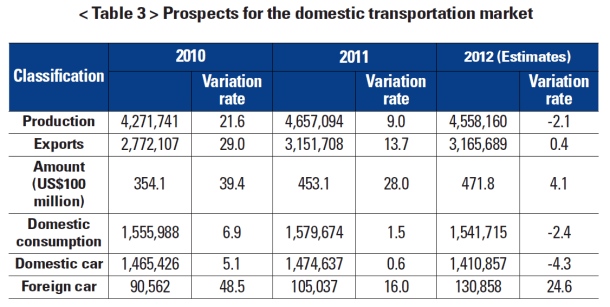
Contrary to global market trends, in the domestic market, the growth of production, domestic consumption, and exports is on the decline in the domestic transportation market, which is an end market, so it is expected to reach its limits if the existing strategy is the only method. On the production and domestic consumption front, it registered a negative growth in 2012 due to shrinking consumer confidence; exports growth also declined markedly.

By contrast with the global market, the domestic chemical market size for transportation is expected to register KRW69 trillion in 2025, rising from KRW18 trillion in 2012. It is true that there is a growing demand for the application of high stiffness and lightweight chemical materials to transportation vehicles. However, considering that the level of technology of domestic chemical materials falls behind that in developed countries, overseas chemical companies are likely to mostly occupy the market demand from Korea. Under the circumstances, an effective related strategy is urgently needed.

2016-06-07 10;18;222016-06-07 10;18;47
– Production: KRW18 trillion (2012) KRW35 trillion (2018), KRW69 trillion (2025)
– Export: KRW13 trillion (2012) KRW25 trillion (2018) KRW48 trillion (2025)
– Employment: 85,000 persons (2012), 166,000 persons (2018), 324,000 persons (2025)
– Added value: KRW5.2 trillion (2012), KRW10.2 trillion (2018), KRW20.0 trillion (2025)

Technological convergence among different industries, such as the transportation industry and the chemical sector, produces creative added value with high-risk and high profit. It requires longer time and higher costs, so it is hard for the private sector to take the lead in such investment projects.
Accordingly, it is necessary for the government to provide policy support.

The characteristics and weaknesses of the related industry in Korea

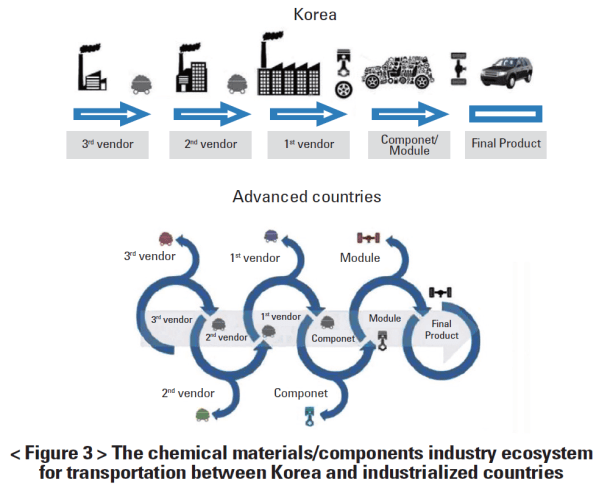
Industrialized countries now have a virtuous circle in an ecosystem of the chemical materials and the auto industry, while Korea has a linear ecosystem that focuses on specific companies in demand. Accordingly, suppliers are not diversified and fail to obtain sufficient technological skills, so they tend to depend largely on domestic companies in demand. This indicates that it is likely to have a poor growth base.

2016-06-07 10;19;42.PNG
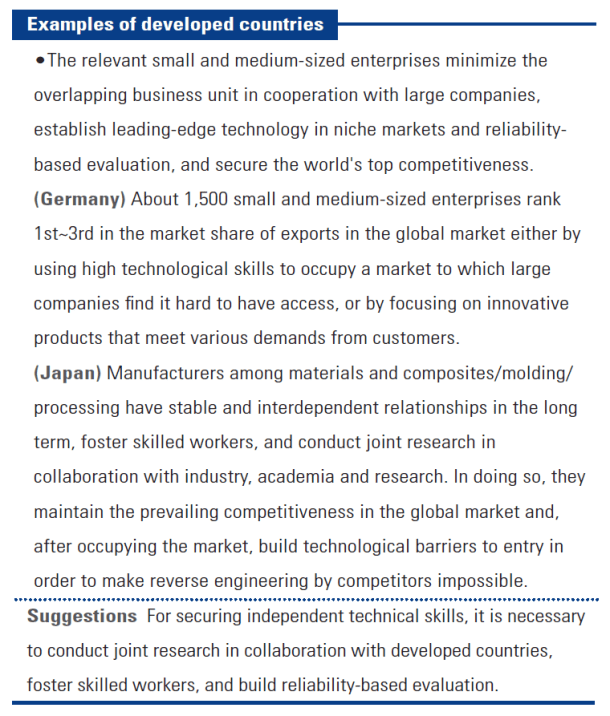
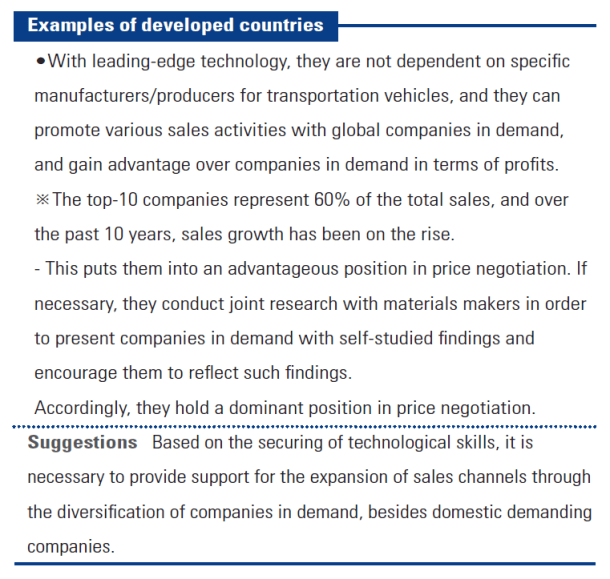
The analysis for the problems of the industry ecosystem for transportation is made by the value chain, and the examples of developed countries and suggestions are summed up as follows:

Chemical materials

Korea has secured technological skills in general-purpose chemicals, vying with global companies. However, the huge cost of technological development and the uncertainty of securing the market discouraged investment, so it lacks in the manufacturing and processing technology of original materials compared with advanced economies countries. For instance, the current status of the application to domestic transportation vehicles by alternative chemicals in developed countries finds that Nylon 66, typical engineering plastics, represents 80% (Rhodia, the United States), polyacetal resin, which is generalpurpose engineering plastics, accounts for 64% (KEP, the United States), ployphenylene sulfide, heat resistant hyperplastics, 52% (Toray, Japan), and other engineering plastics, such as MPPO and fluoride resin, 100% (Dupont, the United States). Up until now, special upgraded engineering plastics in Korea are relatively falling behind other developed countries, thus making it difficult for related Korean companies to develop and supply chemical materials for transportation.

In addition, the production of high functional chemicals, which account for more than 30% of the market share in the domestic chemical industry for transportation, is currently discontinued and, due to the lack of communications with companies in demand and joint research, the development of demand-based materials is not yet made. Thus, the analysis suggests that manufacturers of chemical materials lack product information from companies in demand.

2016-06-07 10;20;09.PNG

Composites and molding/processing

This industry is regarded as a 3D industry, although it has a core ecosystem in the value chain of transportation. Researchers in the analysis point out that there is lack in technology arising from a shortage of skilled workers for research and production technology, as well as poor reliability assessment. In other words, first-tier subcontractors, which are small and medium-sized firms, find it difficult to obtain the durability of new materials and compounded components due to expenses. They also have difficulties in introducing specific production facilities or analysis equipment. In addition, secondtier subcontractors, which are typically regarded as 3D industries, lack in molding and processing technologies, so they are mainly dependent on first-tier subcontractors. Some small and medium-sized companies with technical skills were taken over by large firms. In other cases, shrinking business areas from the expansion of business units by large companies undermine the independent growth.

2016-06-07 10;20;46

Untitled-26.jpg

Parts/modules

The parts and modules industry has vertical and dependent relationships with transportation vehicle manufacturers and producers, and is influenced by their demands. In many cases, such industry is operated as a specialized company. Accordingly, the industry finds it difficult to enter the ecosystem market as a new entrant, has poor global marketing, and, when it makes a deal for the price of products, is in a disadvantageous position due to single suppliers. This leads to low profits, undermines investment in technology development, and in turn, aggravates the development of key components. This vicious circle results in lower technology than foreign parts makers.
In some cases, the industry cannot rely on the quality of products self-developed by composites and molding/processing manufacturers. When problems occur, companies in demand do not want to apply such products because of poor ability to respond to the problems. Automobiles, particularly, have a short development cycle, so it is fair to say that they have no ability to apply the above self-developed products.

2016-06-07 10;21;05.PNG

Analysis of related industries

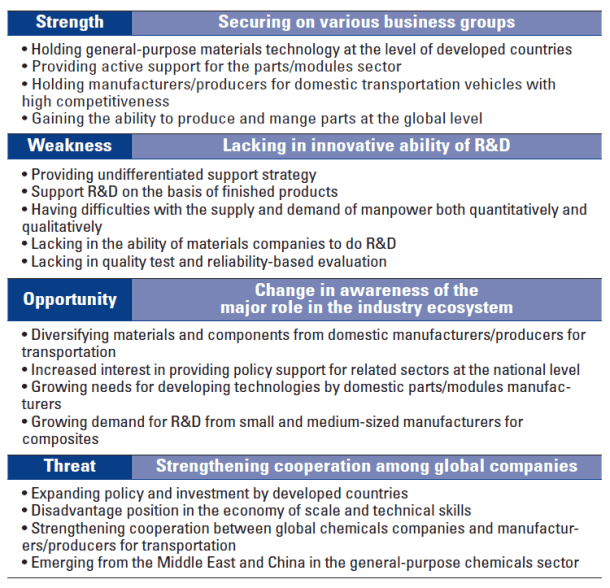
Previously, this issue explored the analysis of value chain in the entire industry for transportation vehicles and resulting suggestions. Based on such analysis, it presented the strengths and weaknesses of the chemical materials/components industry for transportation in Korea. The industry is expected to continue to grow in the future, because it has business groups with various technologies and there is growing demand from the global market. However, this industry has its own weakness: it lacks the innovative ability to do R&D, has poor reliability evaluation, and is weak at exploring sales channels. So this will hinder the growth of such manufacturers.
Based on SWOT analysis above, the policy directions for promoting the chemical materials/components industry for transportation are explored and the results are as follows: First, there is a need to foster global middle-standing companies and develop innovative products in order to build close connection with the industry in demand and improve the reliability of the components of alternative chemicals. Second, with the aim of improving quality in response to the demand, it is necessary to strengthen the base that makes it possible to develop original processing technology and practical technology. Third, based on technology, the policy is required to maximize the sales channels and marketing capacity through diversified suppliers.

Fourth, focusing on small and medium-sized enterprises, there is a need to attract excellent researchers and cultivate technical talents necessary for industrial demands.

2016-06-07 10;22;06.PNG

Basic policy directions

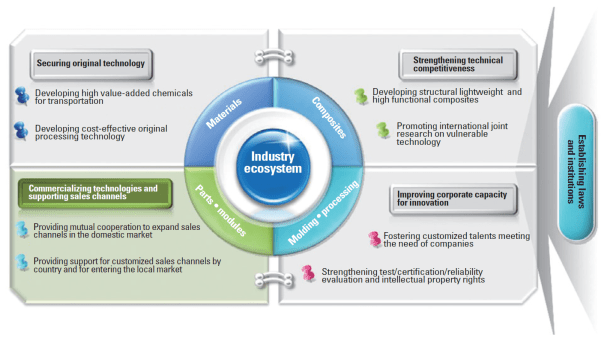
With the aim of establishing a virtuous circle where the chemical materials/components industry for transportation builds cooperative relations for workforces, technical reliability evaluation, and sales channels, the Korean government carries out strategies by securing original processing technology, strengthening technical competitiveness, commercializing technologies, providing support for sales channels, improving corporate capacity for innovation, and establishing laws and institutions.

2016-06-07 10;22;48.PNG

① Reinforcing support for international joint research on vulnerable technology areas and for securing low-cost processing technology by using the existing R&D supporting system→securing world-class technology
② Fostering the flow of new and excellent workf orce, establishing a re-training system for on-site technical talents, and building test/reliability based evaluation→improving corporate capacity for innovation
③ Providing support for promoting mutual growth with companies in demand, for exploring customized sales channels by country, and for entering the local market→commercializing technologies and establishing a supporting system for sales channels
④ Providing support for specialized complex, improving employment environment, and providing support for establishing mutually shared infrastructure→establishing laws and institutions

• To specify policy directions, it is necessary to focus on three goals: developing low-cost (↓20%) chemicals for transportation, fostering 10 small hidden champions, and creating a virtuous circle of industry ecosystem.

Process plan for building an industry ecosystem of

plastic-based chemical materials for transportation


Establishing development system for lightweight/ functional and eco-friendly technology

In Korea, the chemical materials industry focuses on developing and producing general-purpose chemical materials. Serving as a national basic industry, the industry has achieved technological competitiveness to the point of vying with global companies through various R&D activities. However, the high value-added chemical sector, such as supper engineering plastics, is in a technologically disadvantageous position compared to global companies, so it depends on imports of such materials.

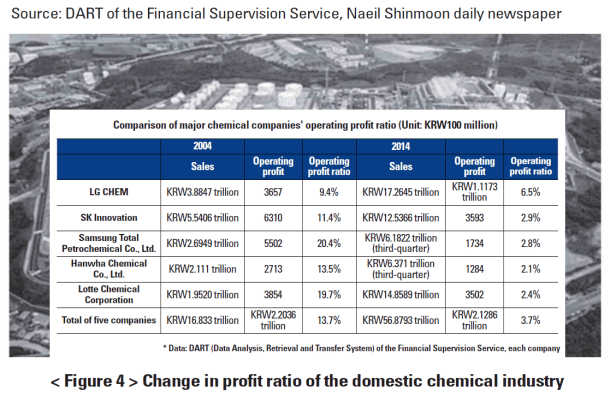
Currently, the change in operating profit ratio of the Korea’s top-five chemical companies suggests that the ratio has declined to about a quarter over the past ten years, leading to shrinking profits. This results from the domestic petrochemical industry’s concentration on general-purpose materials. If the industry fails to depart from industrial structure that centers on generalpurpose materials, it is expected to face limitations to growth in the near future.

2016-06-07 10;23;34.PNG

In addition, there is an oversupply of general-purpose materials across the world due to an increase in production by China, which was once in a technologically disadvantageous position against Korea, and the Middle East, which holds an advantageous position as an oil-producing country. This increasingly leads to a shrinking growth rate in the domestic chemical materials industry and causes the industry to have less influence on the global market. With the domestic transportation industry and each country imposing stringent regulations on fuel economy and CO2, lightweight/ functional and eco-friendly factors are increasingly essential for survival. Most of all, to resolve problems with fuel efficiency (air pollution), there is a growing demand for lightweight-related research. Generally, the ultimate way to improve fuel efficiency is to enhance the performance of power engines. However, in terms of efficiency, automobile manufacturers make efforts to develop technologies that make it possible to use materials that reduce vehicle weight and substitute metal parts by developing highperformance plastics with the features of high-tensile strength and high-thermal stability. Under the circumstances, in line with a strong base in the domestic chemical materials industry, the trend in finished car makers toward lightweight vehicles, and the demand for high-functional materials, the development of high functional and value-added plastic materials, which substitute metals, will drive a new growth engine for the domestic chemical materials industry.
Depending on the availability of crystalline in internal chemical structure and continuous use temperature, plastic materials are subdivided into three sections: standard; engineering; and highperformance plastics. High-performance plastics are the general term, including high temperature and high-tensile strength plastics with continuous use temperature of over 150℃. They typically include Polysulfone (PSU), Polyethersulfone (PES), Polyetherimide (PEI), and Polyphenylenesulfide (PPS).

2016-06-07 10;24;05.PNG
Unlike plastic materials for general use, high-performance plastics feature high continuous use temperature and excellent mechanical properties. Most of all, PPS consists of phenyl and sulfides, has a high melting point of about 280℃, and has an excellent high thermal stability with continuous use temperature of 200~240℃. Owing to low coefficient of linear thermal expansion and flame retardant and high chemical resistance, and mechanical properties, PPS has recently gained attention as a material for transportation and electric and electronic parts. In addition, PPS has the highest growth rate among highperformance plastics and due to the expansion of electric cars, demand for it is expected to grow continuously in the future.

Source: The current status of market trend and development of SK Chemicals Co., Ltd., 2014

2016-06-07 10;24;44.PNG

Korea once depended solely on imports of PPS base resin, but in recent years, it has established a foundation for producing PPS base resin that is more eco-friendly and economic base resin than the conventional method used in Japan and the United States through the development of the domestic new polymer processing. Compared with the conventional solution processing that used sodium sulfide, this polymer processing is a melting processing method that directly uses sulfide, which provides not only the minimized content of chlorine but also excellent costeffective properties, compared to the conventional processing.
High-performance plastics can substitut various components to which metals only applied in the transportation and electrical/ electronics industry, so the development of high-performance plastics will provide an opportunity for the application of lighter materials with low costs. For instance, functionally high thermal stability resin will be developed with the features of dimensional stability, electrical properties, and radiation resistance. If such resin is substituted with metal materials that are applied to the module of automobile headlamps, this is expected to achieve a reduction of more than 30% for lightweight vehicles. The compounding of chemical materials enables the application of materials with high thermal stability and high tensile strength to automotive engine peripheral parts. So it is expected to substitute metal materials.

2016-06-07 10;26;04.PNG
To materialize such technologies, the domestic chemical materials industry makes various efforts to develop eco-friendly raw materials for high tensile strength and high thermal stability to ultra-light and functional composite materials using organic and inorganic materials, as well as material processing and molding technologies. Among 14 tasks from industry engine projects, the industry first promotes seven technology development tasks, considering the urgency and redundancy as below, and plans to carry out the remainder of tasks.

2016-06-07 10;26;33.PNG

Conducting joint international research for completing domestic vulnerable technology

To make up for vulnerable technologies in Korea, the related industry plans to conduct joint international research with universities, research institutes, and companies from technologically developed countries, such as the United States, Germany, and Japan, in order to shorten the R&D period. First of all, in the case of technology development task for 2014, this industry plans to create a synergy effect of R&D by systematically connecting the findings of basic research from the United States with applied research from Korea in research collaboration with Florida International University and Northeastern University in the United States. It will promote joint R&D of chemical materials for vehicles and the linkage of technological commercialization by establishing cooperative relations between domestic specialized institution of chemical materials and automotive cluster Thüringen under the development corporation of Thuringia (LEG Thüringen) consisting of 114 companies, universities, and institutions, including BMW and MITEC.

Untitled-27.jpg

<Ceremony for establishing international cooperation
for industry growth engines on Dec. 29, 2014>

Strengthening the linkages among technological development ecosystems

To operate effective projects at the government level, share accomplishments, and secure the linkages among industry ecosystems, such as materials, parts, and modules, the related industry plans to promote and operate polymer materials research association. The research association will see the participation of automobile materials, processing and parts makers to reinforce industrial value chains. The United States, for instance, created the Society of Plastics Engineers Automotive Section consisting of researchers in the fields of material processing (molding), equipment, and finished cars to strengthen the linkages among industry ecosystems.

Fostering a highly skilled workforce to meet industrial demand and reinforcing capacities of on-site workforce

The industry plans to actively provide support for cultivating highly skilled human resources (advanced degrees) that could meet the demand of companies by linking the education project of materials and parts’ workforce, promoting retraining of on-site technical staff, and smoothly supplying manpower to the chemical industry. By using specialized education systems, such as material & convergence graduate school, it will foster human resources with advanced degrees who meet the demand of plastic composites-related companies. In addition, it plans to provide education by creating new training curriculums for the sectors of new processing processes, processing simulation, extrusion & injection precision engineering, and molding analysis, in which are very short of human resources, and by making use of outside instructors with their specialties, except full-time professors from universities.

To nurture on-site technical manpower, it will create new curriculums for on-site technical manpower of SMEs and middlestanding firms that intend to participate in “the development of plastic composites,” and offer training by making use of experts from participatory research institutes (Korea Research Institute of Chemical Technology, the Korea Automotive Technology Institute, etc.). Based on difficulties that engineers experienced in the workplace, it will provide short-term training for the latest technology, seminars, and joint workshops.

Untitled-28.jpg

Building basis for testing, certification and reliability evaluation and the management of intellectual property rights

To succeed in the development and commercialization of materials and parts, there is an urgent need to establish support infrastructure for producing a prototype connected with analysis and molding, for evaluating reliability of testing and certification, and for managing intellectual property rights. For technology development companies to receive full support for prototyping production and testing evaluation, the related industry is considering support for infrastructure in areas, such as the central, southeastern, and southwest regions, given regional industrial placement and the network of technology development. With regard to intellectual property rights, it plans to promote support for IPR in connection with IP management, IP Pool membership service subscription, and IP-R&D strategy support project.

Conclusion and suggestions

In Korea, the chemical materials industry focuses on producing general-purpose materials, so this puts the country in a difficult situation when it swiftly responds to the competition with China and the Middle East for the market share. Since the chemical materials industry is a large-scale process industry, it is difficult for companies to change conventional materials into new ones. In the case of the transportation industry, which is a core national industry, it of course serves as a driving engine for economic growth. Due to stringent environmental regulations from each country, this urgently requires the industry to develop new materials.

However, companies in the domestic chemical materials industry are in a poor position in regard to their technical skills, so the domestic chemical materials industry for transportation is likely to expect to gradually lose market share.

To maintain the competitiveness in the chemical materials and the transportation industry in Korea and expand the market share in the global market, an integrated approach needs to be taken in order to secure the soundness of the industry ecosystem, rather than simple support for technological development. In other words, based on the global trends and future market prospects, a virtuous cycle in an industry ecosystem should be created where SMEs and middle-standing firms from diverse sectors and classes can pursue mutual growth by clearly establishing the direction of technological development in the chemical materials and the parts industry, fostering human resources for industrial demands, building infrastructure for providing support for companies, and offering support for technical commercialization and tax benefits. As for the research and development, the chemical materials industry has to focus on lighter, smarter, more eco-friendly chemical materials. This will make companies substitute metals with new materials, and improve the performance of components. If materials that are not harmful to humans are developed, this will likely pave the way for taking the lead in the marketplace, as well as meeting needs from the global market. In addition, along with various institutional support for improving research and corporate conditions of domestic SMEs and middlestanding firms, which represent more than 80% of the chemical
and materials industry, training programs are developed to directly help people in the on-site workplace. So it will act as an opportunity to improve capabilities in the industry ecosystem.

korean-machinery.com | Blog Magazine of korean-machinery, brands and Goods

The Smart Biologics Production System

The global bio industry recorded annual growth rate of 9.9% during the period between 2007 and 2011, which was higher than the automobile industry (6.4%) and the IT industry (9.5%). In particular, the global market in 2011 for biopharmaceuticals such as biosimilars, antibody products and cell therapy products, which accounts for more than 60% of the entire bio market, amounted to US$190 billion. In addition, the compound annual growth rate (CAGR) of the biological product segment for a period between 2011 and 2015 was projected at 18.1%, indicating a significantly higher rapid growth compared to the projected CAGR of the entire pharmaceutical market of 5.8%. Accordingly, demand for a biologics production system to manufacture biologics products is also expected to grow.
As for biosimilars, it is essential to prove their sameness with original drugs. Also, they are highly sensitive to production costs.
Under the circumstances, development of new biologics production facilities is required to improve yield of biologics and to prove their sameness. In particular, there is a growing demand for developing systems that can efficiently operate the complex and highcost biologics production procedures. In this context, this article intends to delve into the current status and the direction for R&D strategies of biologics and their production systems.

Overview and characteristics of biologics

Drugs/medicines refer to substances that are used for the purpose of diagnosing, treating or preventing diseases of humans and animals and affect their bodily structures and functions. In general, quasi-drugs, cosmetics, machinery and devices are not included in their categories.

2016-06-07 10;27;44.PNG

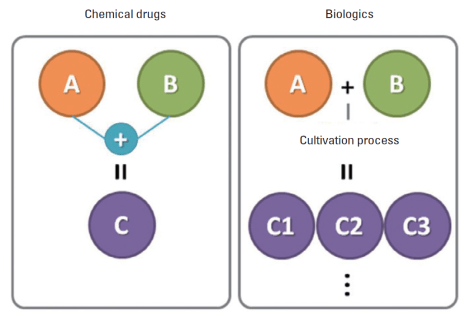
The drugs/ medicines are classified into chemical drugs and biologics, depending on their manufacturing methods. A chemical drug is manufactured through chemical reactions, whereas biologics are developed on the basis of byproducts obtained through cultivation, not through synthesis processes, employing molecular biological techniques by using such substances as cells, tissues and hormones derived from living organisms. As for chemical drugs, their efficiency over tremendous R&D investments has started to decrease as development of new substances and new drugs has reached limitations. In addition, it is impossible to employ targeted therapies for diseases, which increases the burden of side effects of chemical drugs, calling for development of new alternatives. In particular, new blockbuster drugs launched into the market by the 1980s are awaiting their patent expiration after 2000. Given that chemical drugs are manufactured through chemical reactions, anyone can produce products with the same ingredients and efficacies right after their patent expiration. Chemical drugs that are manufactured at the time of patent expiration are called “generic drugs.” As governments around the globe have adopted policies to cut back on medical and pharmaceutical expenditures, the use of generic drugs has been encouraged, whereas the launch of new blockbuster drugs with annual sales of more than US$1 billion is on the decline. This indicates that they are departing from the categories of new drug development which aims for new growth and high profits in the future. The numbers of new substance/drug approvals by the U.S. Food and Drug Administration (FDA) has decreased from around 30 each year in the 1990s to around 20 since 2000. According to Datamonitor, an international market survey company, in 2012, the chemical drug market was valued at US$370 billion. On the other hand, the market for protein therapeutics, which includes monoclonal antibody, one of the representative biologics, stood at mere US$110 billion in 2012.

Untitled-29.jpg
However, the six-year CAGR for chemical drugs and biologics were 0.61% and 8.1%, respectively, indicating high-growth prospect for biologics. As such, drug production is shifting from synthesis-based production to bio-based production.
The second-generation antibody drugs, which had started to enter the market in the late
1990s, are being hailed in the market, thanks to their outstanding medicinal effects and fewer side effects for indications of cancer, autoimmune diseases, and incurable, chronic diseases. In addition, it is known that new biologics products show good R&D productivity over investments. Also, success rates of new biologics by clinical stage are higher than the existing new chemical drugs by two to three times, while development periods of new biologics are shorter and their development costs are relatively lower. In particular, biologics aims for targeted therapies for specific diseases, relieving the burden of side effects. Moreover, it is possible for biologics to be utilized as personalized treatments by patients thanks to the completion of the human genetic map.

In this light, biologics are expected to lead the next-generation healthcare market. Based on such expectations and some of the recent success stories, mega-gigantic multinational pharmaceutical companies conducted mergers and acquisitions (M&As) of biotechnology companies in 2008 and 2009. Mega M&A deals such as the Pfizer-Wyeth merger, the Roche-Genentech deal, and the Merck-Schering-Plough deal were the inevitable choices made by multinational pharmaceutical companies which had been losing their growth engines and had to prepare for their future.
Biologics have been steadily launched not only by several multinational pharmaceutical companies, but also by Korean pharmaceutical companies since 1990. Some of them will witness patent expiration in the near future. However, even after the patent expiration, it is difficult to manufacture biologics with 100% identical ingredients like chemical drugs because biologics are manufactured based on production methods through cultivation, not through synthesis. Therefore, biologics manufactured after patent expiration are called “biosimilars,” not “generic drugs.” Biosimilar products should pass strict approval standards and countries are coming up with respective regulations and guidelines on biosimilars.

Biologics approval process

Approval for general products focuses on manifestation of their desired performances in a consistent and safe manner after product completion. Therefore, approval is mainly granted after going through procedures to ascertain the product’s performance.
In the case of medicines/drugs, their sale is approved only after product approval is acquired involving all stages of the manufacturing process. In other words, all the relevant processes should conform to internationally recognized standards. In the case of synthetic drugs which are synthesized through certain chemical procedures, relatively substantive processes have been in place for them given development and manufacturing experience accumulated over the long period of time.
However, biologics are made from living organisms or substances derived from them and thus their manufacturing processes take place based on diverse biological reactions. Given this, it is difficult to guarantee that the final outcomes may be perfectly identical as in the synthetic drug manufacturing processes even though they are made under the same conditions.
In addition, it is no wonder that approval procedures for biologics should be stringent if the distinctive nature of medications that they are involved in human lives is taken into consideration.
There are two laws pertaining to new drug approvals granted by the U.S. FDA: the Federal Food, Drug and Cosmetic Act (FDCA) is applied to synthetic drugs, while the Biologic License Application (BLA) approval process under the Public Health Service Act (PHSA) is applied to biologics. The BLA approval process and regulations are identical with the New Drug Application (NDA) approval process, which is designed for approval of chemical drugs. However, they differ in that the BLA has provisions designed to prevent pollution and infection of biological substances and that it requires compliance not only with the Current Good Manufacturing Practice (CGMPs) for traditional chemical drugs, but also with the Good Transportation Practice (GTP) involving cell banks. In South Korea, the Ministry of Food and Drug Safety established the biosimilars approval system in July 2009 and set up the public notification of evaluation guidelines and regulations on approval process.
Europe where patents are strictly protected has greatly contributed to the development of the biosimilars approval regulation framework. The European Medicines Agency (EMEA) already came up with a biosimilar product approval mechanism in 2004 which went into effect from fall, 2005. The World Health Organization (WHO) came up with international standards on biosimilars for 10 countries including South Korea, yet there are no unified global guidelines on biosimilars available at the moment.

Smart Bio-Production System

What is the bio-production system?

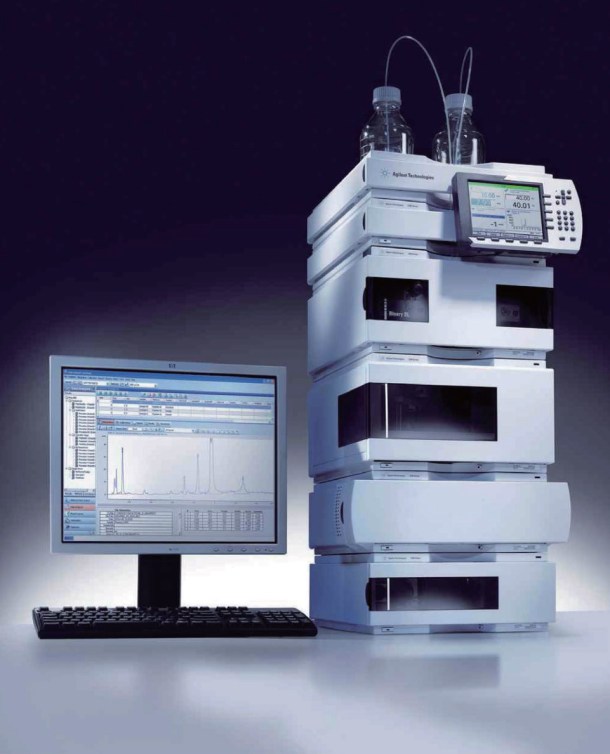
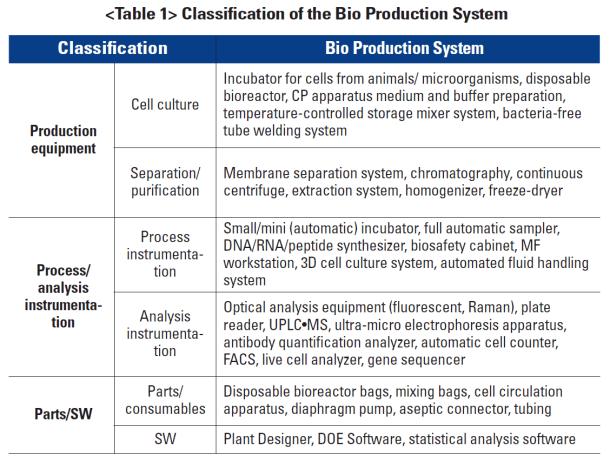
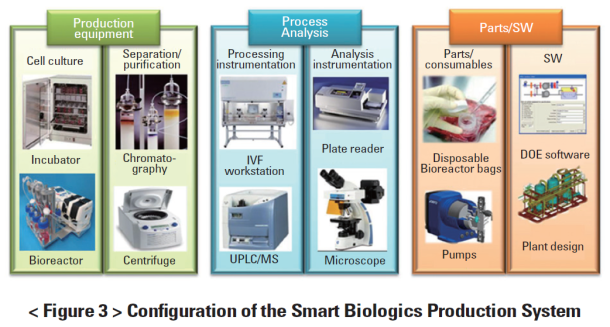
The bio production system can be defined as devices or their assemblage which are necessary for production process of biological products and are designed to be used for biological engineering technology. In addition, it can be classified into production equipment, process/analysis devices and components, and software (SW).
(Production equipment) Equipment required for such processes as cultivating cells (microorganisms, animals, humans) under certain conditions to produce final biological products and separating/ purifying final products from the cultivated cells.
(Process/analysis devices) Devices designed to conduct production process feasibility or process optimization tests or devices designed to analyze characteristics of interim or final
products.
(Parts/consumables and SW) Parts comprising the production system, disposable consumables used in the production process, and software that is capable of operating the production system in an integrated manner and of interpreting and storing data on a stable basis.

2016-06-07 10;28;38.PNG

Characteristics of the bio-production system industry

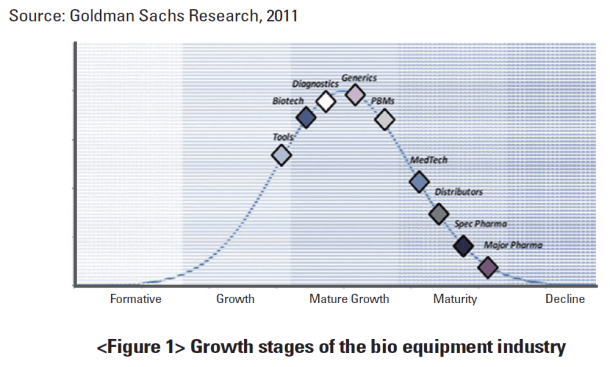
Compared to other healthcare industries, the bioproduction system industry is relatively less mature and continues to record a steady growth with bright business prospects.

2016-06-07 10;30;34.PNG

In the bioproduction system, reproducibility and reliability are of great importance given the characteristics of its products. In addition, emphasis is placed on greater precision and accuracy as the bio sector has become increasingly complex and differentiated. If problems occur during the production process due to equipment defects or lack of stability, the damage in terms of cost and time is considerably greater than in other industries.
Accordingly, most of the customers of the bioproduction system industry show preference for the existing products with proven reliability, thus posing a high entry barrier. More specifically, on the part of customers, there are few incentives to change products due to costs and risks associated with verification of new products and thus they show high loyalty to the existing products. Also, small quantity order-based production takes the most part in the bioproduction system industry rather than large-quantity order-based production as products are high-priced (some equipment are priced at more than KRW1 billion) and products have long-lasting durability (5-10 years). Also, differences in production system conditions required by respective bio products lead to various production system products, necessitating development of systems meeting the needs of customers.
In order to develop the bioproduction system, it is essential to promote development through a multidisciplinary approach involving basic science, engineering, computer science, medicine and biology. New added-value or market can be created in the existing pharmaceutical, food, chemical and agricultural fields through convergence of BIT (bio-information technology) and NBT (nano and bio-technology). As South Korea has already secured global competitiveness in the fields of machinery, electric/ electronics, and IT which are the foundation for the development of the bioproduction system, it is anticipated that the country will be able to secure global competitiveness if it develops the bioproduction system through convergence of base technologies in various fields.

Current market status

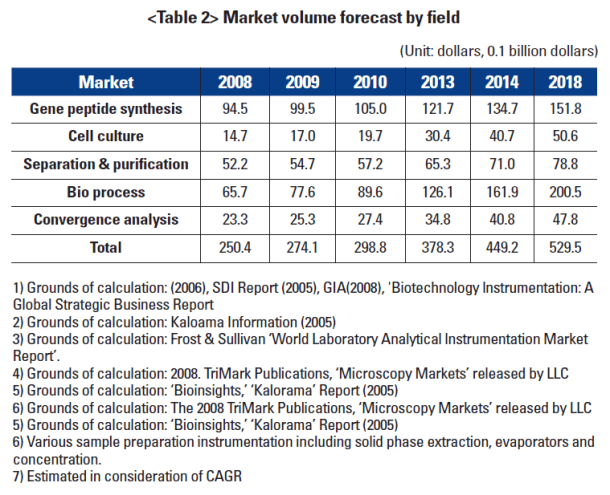
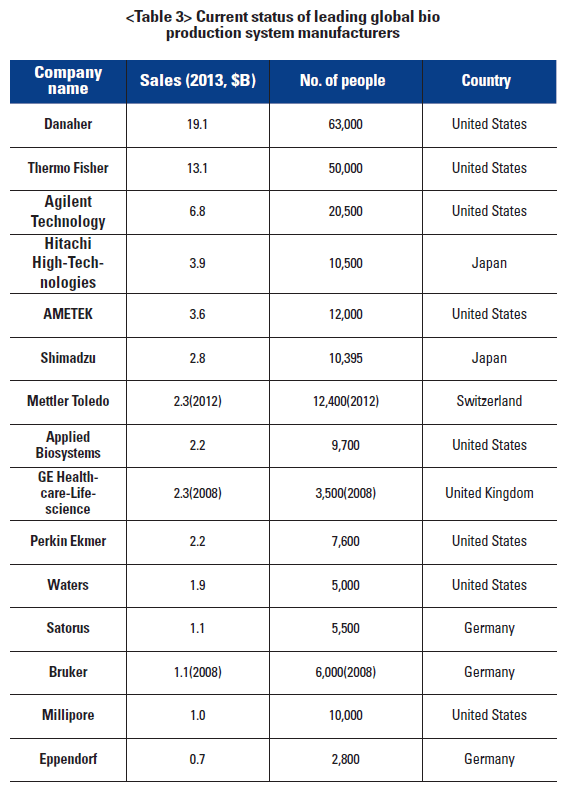
The global market for bioproduction systems is expected to grow rapidly from US$25 billion in 2008 to US$201.8 billion in 2018.
Among the bioproduction systems, cell culture apparatus is expected to grow at the highest CAGR with 13.2% in CAGR between 2008 and 2018. In terms of market sizes by different fields of bioproduction systems in 2018, bioprocess instrumentation is expected to be the largest with US$20 billion in value.

2016-06-07 10;32;152016-06-07 10;32;45

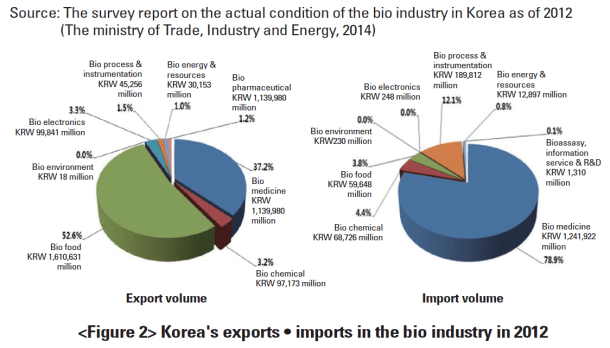
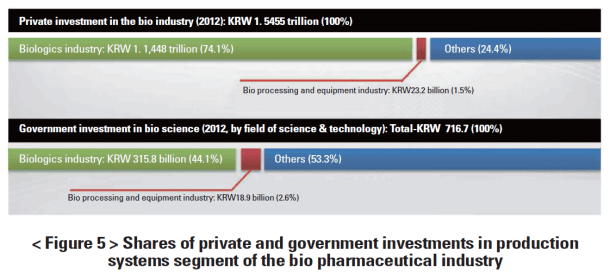
As of 2012, the bioproduction system production in South Korea is valued at KRW121.9 billion, accounting for 1.7% of the entire bio industry production worth KRW7.1292 trillion (The 2012 Bio Industry Status Report (MOTIE, 2014). However, in terms of CAGR, the bio production system industry shows a high growth trend recording a CAGR of 12.5%. The export volume of the bio production system industry in the nation is estimated at KRW 45.3 billion making up 1.5% of the entire bio industry, while the import accounts for 12.1% or KRW 189.8 billion, recording trade deficit by KRW 150 billion.

2016-06-07-10;33;59.jpg

2016-06-07 10;35;02.PNG

2016-06-07-10;33;59

The import of the bio production systems is the second-largest in the nation’s bio industry after the bio pharmaceutical industry. In addition, the share of imports in the bioproduction system industry is 71.2% (KRW 189.8 billion) in the domestic market (KRW 266.5 billion), raising the need for local technology development.
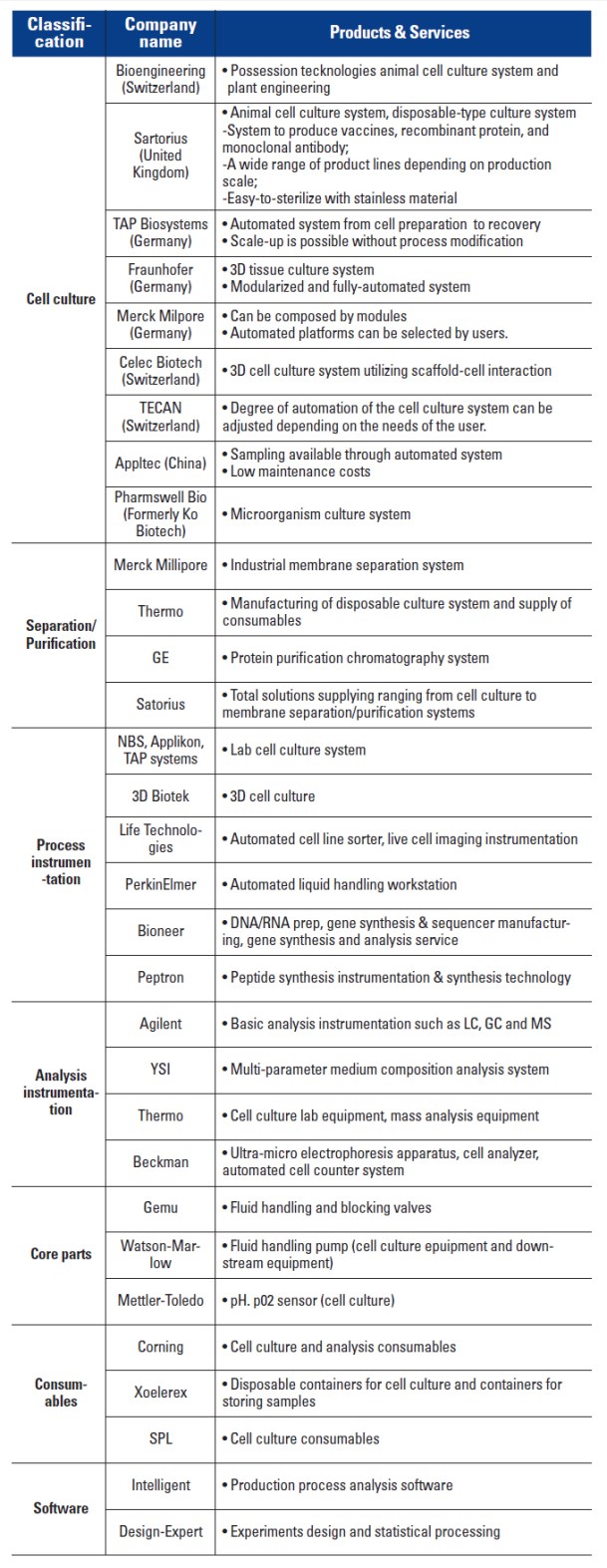
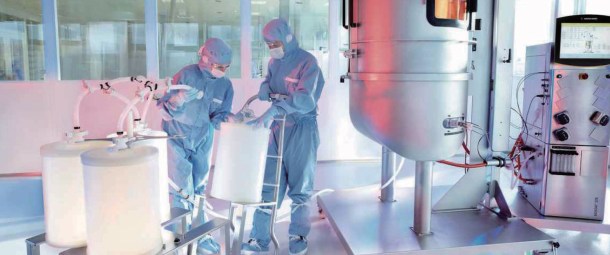
In South Korea, the launch of such systems has not been reported as yet. Some companies launch such systems under the name of “bio reactor,” yet it is mainly about enzyme reactions in large containers. Most of such systems used by some large enterprises in the nation are imported from abroad.

Untitled-30.jpg

Technology level in Korea

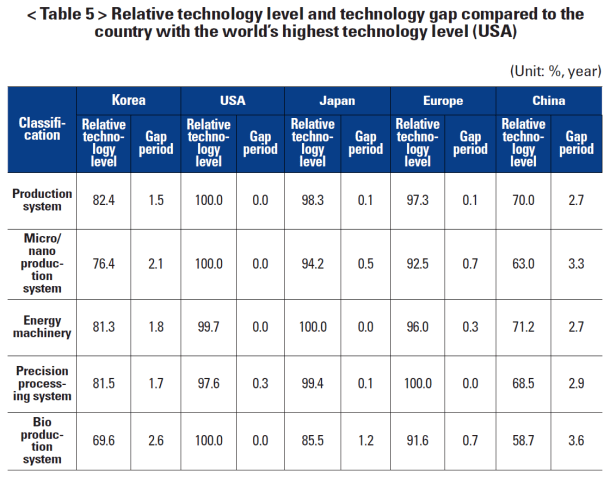
Although continuous research efforts have been made to secure original technology for bioproduction system development in Korea, there is still a long way to go to achieve its industrialization. The industrial technology level for bioproduction system development in Korea stands at 69.6, compared to the highest level (when technology level of the United States is assumed as 100), showing a gap in technology level even when compared to general production system (82.4).

2016-06-07 10;36;37.PNG

Key Development Contents of the Smart Biologics
Production System

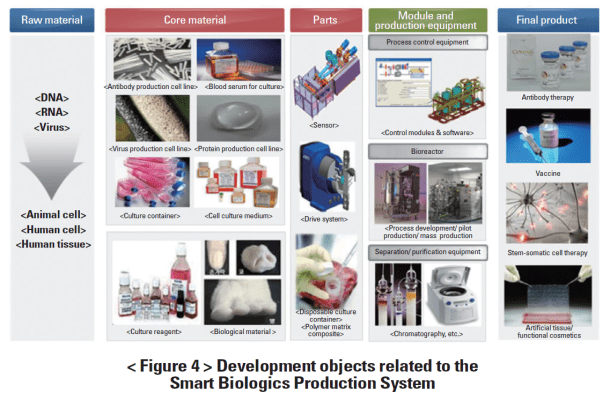
The production system for all biologics can be divided into material installation, production process, and verification. As for the biologics production system, the principal material is generally cells, while the production processes involve cell culture, extraction and purification of related substances, followed by the biological verification process. Meanwhile, the system composition comprises production equipment, process analysis equipment, and related parts and software. Functions of respective components are described as follows in terms of Classifi- manual equipment currently used:

2016-06-07 10;36;56.PNG

It is imperative to garner assistance on convergence technology to develop independently operable systems that integrate respective equipment into a single process. Meanwhile, key aspects that should be implemented based on local conditions in Korea are summarized as follows, which indicates components including materials in addition to relevant software:

2016-06-07 10;37;19.PNG

2016-06-07 10;38;03.PNG

In the case of raw materials, the technology level in Korea has already reached the level of advanced countries. As for core materials, although some of them have been localized, total quantities of some consumables are imported from abroad. Also, despite their high prices, some parts such as disposable culture containers are fully imported from abroad.

However, related sensors and driving systems, which are produced by combining those sensors, can be fully accommodated by adopting local technologies. Meanwhile, as mentioned before, there have been no certified cases in Korea where modules and resultant production equipment by combining the modules have been intended for biologics production. Yet, the Korean government’s share of investment in the relevant area show downward trends.
Given the local conditions that local technologies by respective fields have reached certain levels, the key to establishing a production system is to secure engineering technology that can integrate all the elements. However, in addition to securing engineering technology for integrated production system, if we give consideration into stringent conditions that have to be met in the final product phase, more specifically the fact that final product process makes up considerable share of approval requirements in the case of biologics, it is anticipated that not only investment is needed, but also tremendous trials and errors should be experienced.

Promotion Strategies for the Smart Biologics
Production System

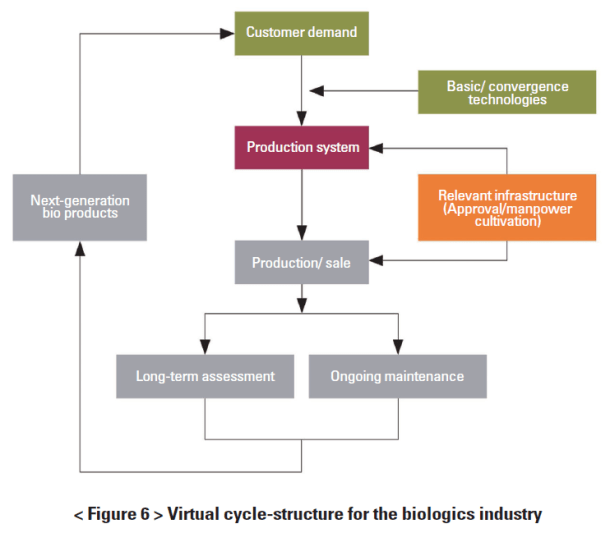
Establishment of a virtuous cycle-structure is essential in all industries to achieve ongoing development and to identify nextgeneration industrial growth engines through application of derivative technologies. The virtuous-cycle structure from the standpoint of the biologics industry can be displayed as follows:

2016-06-07 10;38;24.PNG

It is evident that, as this is a cyclical structure, it is impossible to secure international competitiveness in the biologics industry if even one single element among them is unstable. In Korea, customer demand and basic/convergence technologies have reached considerably high levels, yet the absence of production systems and poor infrastructure (approval, related human resources) still pose obstacles, making it difficult to move forward in the industry.
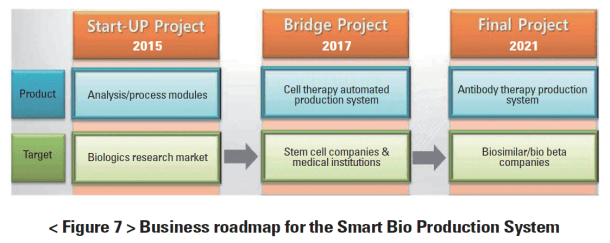
Even though belated, it is very encouraging that the Ministry of Trade, Industry and Energy has recognized the need for development of relevant systems and has presented the following roadmap. In addition, it is advised that the government, relevant organizations and academia make ongoing efforts to create the relevant infrastructure. Particularly, academia should make concerted efforts to diversify related education programs and to foster relevant biomedical engineering personnel from the engineering perspective.

2016-06-07 10;55;21.PNG

However, what should not be overlooked in the system development is the importance of securing original technology. Original technology can be found not only in core materials or raw materials of biologics, but also in production system. In the case of materials, discovery of new functions based on raw materials carries significant importance from the standpoint of securing original technology. In addition, in the case of the system, in order to secure original technology, it is important to adopt new concepts such as conducting cell culture by using tissues and organs and to develop systems that can realize a human environment, rather than following the existing system where cell culture is simply intended for cell expansion. By combining these new concepts, we will be able to add the term “smart” to the existing biologic production system.

Untitled-31.jpg

Conclusion and Suggestions

We are currently living in an era where many people become healthy centenarians. Given that countries around the global are fiercely competing with one another to secure next-generation growth-engine industries, it is evident that securing biologics production technology and establishment of its virtuous-cycle structure is not a choice, but a must. In particular, biologics have extremely high market potential and will become high valueadded products to the extent that it would be difficult to even predict the scope of its applications amid the rise of new diseases due to change in the environment. The fact that it is impossible to define the boundaries of its applications signifies the ceaseless creation of new industries, which will definitely play an important part of the basic engine for the creative economy.
Driving this creative engine will face limitations if only a few businesses, academic and research institutions in the related industries make concerted efforts to engage. The development of the biologics industry achieved through the pan-government support and PR activities based on creative mindset ceaseless research by academia and research institutions, and attention from the public will result in powerful operation of the engine of the creative economy and subsequent productive outcomes in an ongoing virtuous-cycle structure.

korean-machinery.com | Blog Magazine of korean-machinery, brands and Goods