Cheollipo Arboretum

Untitled-70.jpg

Cheollipo Arboretum located in Taean Coast National Marine Park was built in 1966 by C. Ferris Miller. The park currently contains approximately 14,000 different plant species, including some rare and endangered species.
[Suggestion: Officially recognized by the International Society of Arboriculture, the arboretum is one of the most beautiful in Korea.
This arboretum consists of 7 areas (ex: Main Garden, Dakseom Island, Sea Dune Area, etc.) on a 595,044m² (180,000 pyeong) of land. Almost 7,000 different species have been collected for nearly 3 decades. The arboretum also enjoys a coastal climate, and can sustain a variety of plant species from subarctic to subtropical environments. Tours are available throughout the year.
The value of Magnolia kobus (1,800 plants in 450 species) and Ilex cornuta (400 species) received international recognition during the hosting of the World Magnolia kobus Seminar in 1997 and World Ilex cornuta Seminar in 1998. Additionally, thanks to the balanced and healthy ecosystem, a variety of birds (nearly 60 species per year) and insects also make their homes in this arboretum.

korean-machinery.com | Blog Magazine of korean-machinery, brands and Goods

Juknokwon

Untitled-73.jpgJuknokwon in Damyang is a bamboo forest cultivated by the town of Damyang. Seonginsan Mountain behind Damyang Hyanggyo (Confucian school) was transformed into Juknokwon Bamboo Garden featuring a beautiful artificial waterfall, pavilion, walking paths and an eco-exhibition center, a popular destination for visitors.
It takes about 1 hour to tour around the entire garden. Crossing Hyanggyo Bridge from Juknokwon, a forest for preventing floods can be seen. Lights are turned on in the evenings in the bamboo forest for night walk.
As one of popular tourist attractions in South Korea, Juknokwon has more than 1.5 million visitors annually. In 2012, the CNN picked up it as one of the 50 places that visitors to Korea must go to in South Korea.

korean-machinery.com | Blog Magazine of korean-machinery, brands and Goods

Manufacturing technology of low-cost, high-strength, and anti-abrasion silicon nitride and silicon carbide with lifespan enhanced by 10% for next-generation high-efficiency equipment

Technology overview: Related to SRBSN (Sintered Reaction Bonded Silicon Nitride), as the silicon nitride ceramics is excellent in high- strength, high-toughness, anti-abrasion properties compared with other materials, https://korean-machinery.com///inquiryand shows stable performance in extreme surroundings, such as high temperature, high load, etc., it is in the limelight as a promising material capable of replacing the existing materials, such as metal, sintered carbides, etc. As the silicon nitride ceramics were manufactured using the high-price and high-purity overseas silicon nitride powder until now, its application to industry has been limited. In order to solve this problem, we have developed the silicon nitride material based on SRBSN technology using low-cost silicon powder which can be mass-produced with low cost. Due to its eco-friendliness and reduction of the manufacturing cost, we expect that our product will be briskly applied to the overall application industry. Next, related to CDC (Carbide Derived Carbon), mechanical seal parts are mainly used in the severe surroundings both mechanically and chemically, and until now sintered carbon, sintered carbides, etc. were mainly used as the raw material of the parts, but there is a drift that the demand on the structural ceramics is increasing day by day, such as silicon carbide which is outstanding in high hardness, chemical resistance and heat resistance, or alumina. However, the performance of structural ceramics gets lowered at the unlubricated state caused by high frictional coefficient and brittleness via-a-vis general solid lubricant material, and in order to solve this problem, coating of solid lubricant is tried on the surface of ceramics.  Among them, CDC is the method of extracting only metal atom from carbide ceramics like silicon carbide and forming the carbon layer on the surface, and its property is very excellent compared with the thin film, such as DLC, MoS2. etc., already used as coating for lubrication. It is expected that application of the developed  CDC product  to the mechanical seal parts will contribute to strengthening the technology of domestic enterprises and market competitiveness pursuant to increase of the product’s lifespan.

Untitled-30.jpg

Industrialization: Related to SRBSN, the existing SUS material has been used as the material of bush bearing for zinc galvanizing and sputter roller for LCD, it is being replaced to silicon nitride material due to its weakness in anti-abrasion, and Wonik QnC Corporation  has the record of having delivered some silicon nitride products engrafted with low-price SRBSN technology. Also, we plan to carry forward sales increase by entering the market of insulation-bushing silicon nitride product for grinding pad and solar CVD of the semiconductor CMP process. Next, related to CDC, we have secured the reliability test of the CDC product  for the mechanical seal used in general pump and high-speed pump, and now we are proceeding with the customer certification test for replacing the existing mechanical seal product. We expect to have a considerable ripple effect when entering the market through already secured customers.

Problem-solving in industrialization: When developing the SRBSN material, we could solve the problem caused by the hydration reaction in the mixture pursuant to use of Si, the starting raw material, through optimization of the mixture time. Although the problem of the product’s unit cost increase was anticipated as a long-time nitriding process was required for reverting to the silicon nitride, we could produce the product with low cost vis-a-vis the existing silicon nitride through optimization of the equipment for nitriding process and the jig structure design.

Technology developer: Wonik QnC Corporation  / +82-54-479-9800 / www.wonikqnc.com

korean-machinery.com | Blog Magazine of korean-machinery, brands and Goods

Key components of auto-seeding for high-quality sapphire ingot growth furnace

Technology overview: Sapphire is a crystal created by melting aluminum oxide at temperature higher than 2,100˚C followed by being grown as a single crystal. Up until now, https://korean-machinery.com///inquiryindustrial use of sapphire was limited to LED field; however, application fields have been expanded and diversified due to improvement in manufacture technique and cost reduction by entrance of new manufacturers. Among various methods of growing sapphire, Kyropoulos method has an advantage of producing high-quality crystal, better for large caliber; however, process of seeding that induces initial crystallization by contacting seed crystals to surface of melted material must be performed. This process has to be conducted following an instruction manual strictly by a highly skilled engineer who has obtained work technique for a long period of time, which may be considered as a disadvantage. Since it is highly dependent on engineer and manual, the yield has not been stable, thereby posing difficulty in increasing production capacity. The problem triggered the development of key components for auto-seeding.

Core technologies of auto-seeding, which are the measurement of temperature and surface image of melted material, driving module automation and development of linking program, were developed and applied to growth furnace of sapphire. Through application of auto- seeding technology to existing process, sapphire production has been standardized, thereby contributing to stabilization of production yield rate. Therefore, the production is expected to grow more than 200% compared to the previous production when a Kyropoulos grower equipped with the developed technology is installed in mass-production line.

Industrialization: The iPhone by Apple, the smartphone manufacturer, uses sapphire for marketing of premium-quality phone, and major cell phone companies of China have also introduced products with application of sapphire front glass, targeting the large market of China. Furthermore, based on rapidly growing distribution rate of smartphones, China has aggressively engaged in investment for production facility of sapphire single crystal. Kyropoulos equipment applied with auto-seeding technology developed by DKAZTEC Co., Ltd. was acknowledged with its stable yield, large quantity productivity and low production cost, accomplishing sales in scale of KRW 14 billion to a Chinese company. In addition, large sapphire with excellence in optical quality was manufactured, and sapphire window used for defense was produced, which successfully internalized the material highly dependent on foreign countries. Through establishment of the foundation for the domestic field of sapphire and development of the technology, global competitiveness and leadership were secured.

Problem-solving in industrialization: Since the manual seeding previously used implemented the best decisions through multilateral interpretation on the situation based on various information, it posed a problem that was highly dependent on skills and experiences of engineers. In order to automate the process, the development was proceeded separately for a vision system that acts as human eyes, algorithm acting as brain, and driving module part acting as human arms. Errors created from the process of development were interpreted in a simple sense. For example, contamination created from evaporation of melted material and deformation of internal material by high temperature causes a problem of interfering with the vision system; however, the problem was solved with the development of the multichannel system. In addition, for performance of components in driving module (e.g. precision of pulling transfer distance, repeatability, weight accuracy, etc.) and reproducibility of initial form of the grown crystal, reliabilities of materials were obtained through the authorized testing institutes (utilized as statistical figures). As a result, reproducibility could be obtained by characteristics of highly repetitive motion, and the process stabilization was achieved based on the result. In particular, growth furnace of high-quality sapphire was applied with auto-seeding system, thereby preparing a foundation for improvement of the sapphire industry to higher level.

Technology developer: DKAZTEC Co., Ltd. / +82-61-460-5800 / www.dkaztec.co.kr

Kyropoulos growth equipment applied with the developed key components of auto-seeding
/  Analysis image (Captured) of auto-seeding


korean-machinery.com | Blog Magazine of korean-machinery, brands and Goods

International standards on the electro-foaming fusion wrap

Technology overview: The existing electro-fusion sheet for pipes has superior watertightness and durability, compared to a mechanical connection method, as the https://korean-machinery.com///inquirysurface of a pipe and a PE sheet  is melted by electrothermal wire for fusion. However, a gap caused by the overlapped part of sheets or a difference in external diameters of two pipes, arising during production or moving of pipes, can’t be solved by the heat of electrothermal wire, which often leads to leakage. This problem can be solved by the electro-foaming fusion wrap, which can close such gaps through a foaming method for improved watertightness and durability. The electro-foaming  fusion wrap contains electrothermal wire and a temperature sensor inside the foaming fusion sheet. As for products with small and medium diameters (D150~D600), electrothermal  wire is laid at an interval of 8㎜ (single) and 10㎜ (dual) in order to prevent a dent of a pipe wall, caused by rising temperatures of the overlapped part. In addition, electrothermal wire is coated with glass fiber, and base mesh which fixes the wire is included in the foaming sheet so as to solve the short circuit problem of the wire. And the surface area for heat dissipation has been increased by adopting an indirect heating method through glass fiber coating instead of direct heating, which also prevents carbonization of resin caused by high temperature.

Industrialization: The product has especially targeted the European market where most countries use PE pipes. Between 2011 and 2012, a sample of the electro-foaming fusion wrap was sent to KWH Pipe in Finland for testing. As a result, the product was registered with KWH Pipe in 2013 for regular supply, and products of various diameters have been exported to KWH Pipe Sweden. In 2012, KWH Pipe presented the electro-foaming fusion wrap at the Water and Sewer Pipe Exhibition held in Sweden. The successful results in Sweden led to another opportunity such as sample presentation and testing for Plastitalia S.p.A in Italy, Pipelife in Austria, and INOAC in Japan. In particular, there has been an effort to register international standards for the product, so that NP (New Proposal) and CD (Committee Draft) in the area of ISO/ TC 138/SC 1(pipes) were submitted in 2012. The DIS (Draft International  Standard) was circulated to the member bodies for the vote but the draft is to be approved as TS (Technical Specification) first and then as an international standard later because the product is a relatively new item and has not many cases of use in countries other than Korea.

Problem-solving in industrialization: The entry to the domestic market was relatively easy, but penetration to the global market as a new item and standardization was a significant challenge. Therefore, joint research with KWH (Finland), leading the PE sewer pipe market in terms of technologies and scale, began in 2008 prior to the submission of NP (New Proposal) in 2012, and samples were presented to Plastitalia in Italy and Pipelife in Austria so as to make known the product to the global market. In addition, a presentation on the product and standardization was given at the Plastic Pipe Conference in 2011, drawing the attention of the market to EFF WRAP, and then NP was submitted to ISO.

Technology developer:

Industry Academic Cooperation Foundation Mokwon University / +82-42-829-7831 / http://sanhak.mokwon.ac.kr

AZUMI / +82-31-701-1305 / www.azumi.co.kr

korean-machinery.com | Blog Magazine of korean-machinery, brands and Goods

Development of sensor for sensing the brake lining

Technology overview: https://korean-machinery.com///inquiryAt present, the Lining Wear Sensor (LWS), notifying the worn-out condition of the lining among the domestic automobile parts, is entirely occupied by the product of H Company, a European automotive electronic component company. However, following the requirement of the digitization and the communication mode, merits of the Inductive, an electronic sensor (non-contact type), have been magnified, thereby changing as a global trend.

H Co’s LWS judges the worn-out degree using plenty of Hall-ICs by the sensing method of Hall-IC type, and then informs the driver of the replacement time of the lining. On the other hand, the Inductive sensor technology of TRUWIN Co., Ltd. using the law of electromagnetic induction is the product which does not need the permanent magnet nor need to consider the characteristic of the magnetization curve of the magnet and the temperature, and it is composed of the sensor part coil sensing the movement of the pedal, the exclusive ASIC design for drive of the whole system, the FET drive circuit of the ECU transmission signal, etc. And we also have enhanced the reliability and the accuracy by grafting the microprocessor as well as upgraded the existing non-contact inductive method in order to be capable of sensing the wide angle . We plan to increase the technology share in the domestic automobile market through development of the sensor like this, and keep on securing price competitiveness in the global market through continuous technical development.

Industrialization: As the inductive sensor design for sensing the wide angle, requiring the program design for the development of the microprocessor and development of the optimal product for the automotive environment, has a considerable level of difficulty in verifying the reliability, it is the cutting edge technology to the extent that at present only three companies can develop the product in the world. TRUWIN has succeeded in localizing almost all of the parts and technologies of the inductive sensor. Having achieved recognition of such excellence, we passed the quality verification system of our customer companies in 2014, thereby applying our product to the domestic vehicles produced in large quantity, and we are mass-producing our product as it has been applied distendedly, step by step. In the overseas market, we are in consultation with M Company regarding various options for entering the Europe market, and we expect to control about 10% of market share in the global commercial vehicle market when we find our way in the world market.

Problem-solving in industrialization: At home and abroad, there is no company owning the technology of the product developed by TRUWIN Co., Ltd (the sensor for sensing the non-contact brake lining using the inductive sensor). The product of H Company has to inevitably use a permanent magnet as it has adopted the method using the Hall element, and thus has the problem of assuring the temperature characteristic of the permanent magnet and solving the weakness for the increase of the cost price. The product of ‘sensor development for sensing the brake lining’(LWS) using the Inductive sensor developed by TRUWIN Co., Ltd. through the ATC project can solve the above- mentioned problems, and it is outstanding and excellent in the aspect of insuring the quality stability and price competitiveness. In addition, we are striving for continuous research and development in order that the LWS developed by TRUWIN Co., Ltd. can be applied to the product specifications by model as the product for the commercialized vehicles. By possessing the fundamental technology in consequence of research and development over the past two years, we expect to secure market competitiveness and advance as a global enterprise and create added value.

Technology developer: TRUWIN Co., Ltd. / +82-42-612-5211 / www.truwin.co.kr

korean-machinery.com | Blog Magazine of korean-machinery, brands and Goods

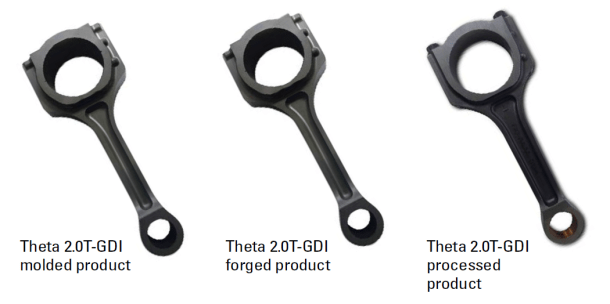
1200MPa-level high-strength connecting rod-making technology

Technology overview: Connecting rods used in automobile engines are the power transmission part converting the linear motion of the piston into the rotating motion at the https://korean-machinery.com///inquirycrank shaft by explosion of fuel, thereby requiring high strength and toughness, and fatigue strength. In addition, recently as the demand for high-strength connecting rods increased with the development of high-powered engines (GDI, T-GDI etc.), we needed the mass production technology of high-strength and high-precision connecting rods, thereby developing the relevant technology. In this study, we have secured the mechanical properties capable of responding to the high-powered engine through the high- strength powder alloy design for powder forging, and have reduced number of processing times and improved the mechanical property relative to the competing production methods by complementing the optimized design of mold (Net-Shape) and the post-treatment process.

In addition, based on the connecting rod design technology using the computer simulation, we have succeeded in producing the connecting rod for high-powered engine. By producing and supplying the test specimen and the test product developed without investment and change of equipment in the short term on the basis on these technologies, we have evaluated the product and applied the mass production system in early stages. Recently with the increasing demand for high-strength and lightweight connecting rods following the downsizing trend of high-powered engines, the recent issue of the automobile industry, it is expected that the demand trend of such connecting rods will be applied to both domestic and foreign markets, thereby doubling the economic effect.

2016-03-17 09;03;50.PNG

Industrialization: We succeeded in mass-production of the developed connecting rod without change of the existing production line or additional investment, and beginning with application of the rod to the 2000cc T-GDI engine of Hyundai Motor Company in 2011, we applied the rod to all of the models mounted with a gasoline engine of 2000cc or larger (four models mounted with a 2000cc Theta Engine, three models mounted with a 3000cc Lambda Engine, and one model mounted with a 5000cc Tau Engine) of Hyundai Motor Company in 2013, thereby achieving turnover of about KRW 54 billion from 2011 to 2014 (KRW 2.4 billion in 2011, KRW 14 billion in 2012, KRW 18 billion in 2013, and KRW 20 billion in 2014, respectively). In addition, we also came to achieve the effect that the items of the localized parts pursuant to the reinforcement of Hyundai-KIA Motors’ localized production were maintained by or converted to domestic production. Therefore, it has become more likely that our connecting rod will be applied distendedly to various automobile parts requiring high-tensile and high-fatigue features, and it has become possible for the overseas competitors to produce, substitute and supply the connecting rod in Korea vis-a-vis the localization investment in China. Thus, it is expected that increase of export will be possible as the factories of GM, FIAT, etc. located in China are also reviewing development of the product.

Problem-solving in industrialization: Composition of the alloy powder mainly used for producing the connecting rod with the powder forging process before the research and development was Fe-Cu-C based alloy, and its tensile strength was 800MPa level having difficulty in being applied to the high-powered engine. In order to secure hardness, overseas competitors produce the product by increasing the content of copper(Cu) and sintering at high temperature (1,250℃), there is a limit in securing the property only by adjusting the content of copper and carbon(C), and increasing  the sintering temperature causes the increase of investment for the processing equipment and processing cost. In order to solve this problem, we have concentrated on developing new alloy material for the connecting rod capable of responding to the high-powered engine without introduction of new production method or change of owned equipment. Besides, we could succeed in industrialization by mass-producing the product early as rapid evaluation of the product and complement verification of technology and quality were implemented for the development product attributing to the concentrative research and development through the connection of both the enterprise-oriented industry∙institute research system and the production∙demand enterprise.

Technology developer: Sinteron Co., Ltd. / +82-31-299-8114 / www.sinteron.com

korean-machinery.com | Blog Magazine of korean-machinery, brands and Goods

Digital UV inkjet press

Technology overview: Offset, Flexo, etc., the existing typical printing methods, are the analog printing method requiring the process of more than 10 steps in order to acquire the desired results. For example, after plating the color separation film by color, the experienced experts have to adjust the alignment of each color plate. However, with the UV inkjet press developed and industrialized by DILI Corporative Company, you can check the result immediately after having inputted the digital file, https://korean-machinery.com///inquiryand also can enjoy the cost-saving effect, along with the fast output speed, through variable data processing, eco-friendly printing environment, and process simplification which were impossible in the existing analogue printing. In order to realize the digital UV inkjet press like this, DILI has developed the inkjet control technology which forms the image by controlling individually the injection amount of thousands of inkjet nozzles with the level of pico liter (a trillionth liter) on the media transferred with high speed of 50 meters per minute, the high-power UV curing system which cures the injected ink, the output bed optimization technology, the high-accuracy position control system, the automatic head cleaning and capping system, the media tension adjustment algorithm, etc., thereby having optimized them with one another. Though the Korean manufacturing industry reveals to prominence in the world, the printing machine alone showed inferiority compared with Europe and Japan. However, we have received the evaluation that we marked a new milestone through the fundamental technology and product development related to this digital UV inkjet press. We have received the IR 52 Jang Young-sil Award in recognition of the excellence of the relevant product and applied technology.

Industrialization: More than 10 digital UV inkjet press, industrialized through years of development and investment, have been installed at home and abroad, thereby getting the attention of the market at the same time of being launched. The digital UV inkjet press market utilizing the inkjet is in its embryonic stage and on account of the high technical barrier, explosive growth of the market is expected with DILLI and several globalized enterprises having already entered the market as the center. Especially, due to the unique advantage of the digital equipment, replacement demand and interest of the customers owning the existing analogue equipment have greatly picked up. In addition, DILLI’s industrialization of the digital UV inkjet press is a barrier to imports against the foreign-made equipment, and also contributing to increase of exports. In the beginning, DILLI’s equipment was designed to be capable of printing out at the speed of 50 meters per minute with the maximum output width of 216mm and using 5 colors. However, reflecting the demand from both domestic and overseas markets, now the model line is strengthened to be able to print out with the maximum width of 324mm.

Untitled-22.jpg

Problem-solving in industrialization: Although we secured the core technology through development of the algorithm for controlling thousands of inkjet nozzles individually,  optimal concave surface design for securing the media oblateness on the printed face, development of the UV curing system, etc., we have faced with the problem of having to align 15 inkjet heads accurately for obtaining the better product of printout. Therefore, DILLI developed the head alignment system capable of fine adjustment easily from the customers’ point of view, and then has completed application for PCT and registration of patent at each relevant country. Through this, we are receiving favorable reaction in the market with the differentiated quality of enabling the installation within a short period compared with competitors as well as improvement of the product of printout.

Technology developer: DILI Corporative Company / +82-31-860-5500 / www.dilli.co.kr

korean-machinery.com | Blog Magazine of korean-machinery, brands and Goods

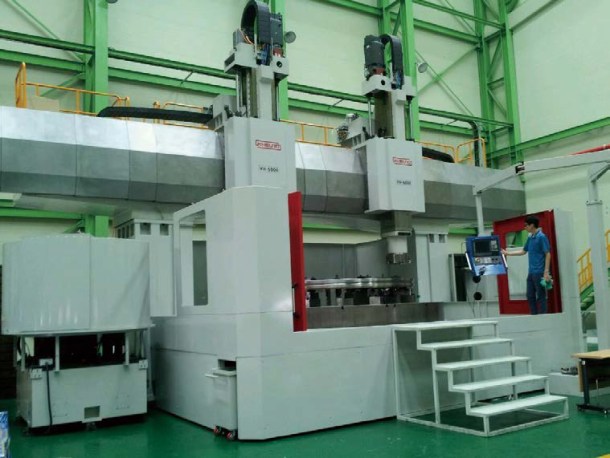
Large-sized multi-tasking vertical lathe for windmill parts

Technology overview: Just recently a large-sized multi-tasking vertical lathe has been required at the parts machining market of the wind power generator, along with the vertical lathe having been conceived as the device exclusively for the parts machining of the large-sized wind power generator. Although, until now, https://korean-machinery.com///inquirythe parts of the wind power generator have been machined using large-sized machining center for vessel, aircraft and construction equipment, more and more specialized large-sized multi-tasking machining systems tend to be developed targeting the wind power generator market which will develop rapidly from now on. However, the Yaw & Pitch bearing machining equipment for the wind power generator is the field under examination in Korea without any full-fledged production, and all of the equipment used domestically are imported from overseas countries. The high-speed, high-precision and hydrostatic rotary table which is the core fundamental technology as the typical high-value equipment among large-sized machining systems in the future and the hard-turning technology of the high-hardness materials on the lathe with the high-stiffness ram are urgently needed to be developed in Korea for advancement of the large-sized vertical lathe. It is expected that with the development of this technology, the fundamental technology will be secured for localization of the multi-tasking vertical lathe for machining the Yaw & Pitch bearing of the wind power generator entirely dependent on import, the foundation for developing various high-value large-sized machining system by overcoming the technical dependencies will be prepared, and the economical effect will be doubled, such as import substitution effect, targeting the overseas wind power generator markets and technical ripple effect on the development of similar high-value machining system.

Industrialization: We have secured the core fundamental technology of the multi-tasking vertical lathe for machining the Yaw & Pitch bearing of the wind power generator previously entirely dependent on import. We autonomously developed the machine tool structure optimization technology, having applied the techniques of core module design and analyzation, and the topology and dimensional optimization method in order to localize the parts machining system for the wind power generator monopolized by the advanced countries. Also we have secured the core technology through the autonomous development of large hydrostatic rotary table and performance verification, and have achieved the preoccupancy effect of the high-value market for the parts machining of the wind power generator by developing the commercialization model. At present, there are active test cuttings by the overseas buyers and customers visit us frequently. We have already concluded three Memorandums of Understanding(MOUs).

Untitled-21

Problem-solving in industrialization: For the purpose of localizing the core technology of the multi-tasking vertical lathe for machining the Yaw & Pitch bearing for the wind power generator, as a result of having performed the structural analysis taking the case of machining in the worst conditions through technical exchange and cooperation with the government-funded research institutes, we have confirmed its structural safety. After having checked the occurrence of distortion at the cross rail of the initial model, we performed the topology optimization and the dimensional optimization in order to reduce the distortion. As a result, we came to compensate and manufacture the cross rail by decreasing the displacement of the tool center point in comparison with the initial model.

Technology developer: Kiheung Machinery Co., Ltd. / +82-42-933-5500 / www.kiheung.com

korean-machinery.com | Blog Magazine of korean-machinery, brands and Goods

80kW traction motor and decelerator technology for C-segment electric vehicles

Technology overview: Unlike an internal combustion engine that is mainly operated by an engine, the powertrain of an electric vehicle is a system run by an electric motor with a decelerator using battery.

https://korean-machinery.com///inquiryThe powertrain of an electric vehicle consists of a driving mechanism that directly uses a motor’s torque to run wheels. Since it only uses battery as a power source, it is very important to develop high power output and high performance of traction motor and decelerator, and weight reduction technology. Once these are accomplished, it is possible to extend the vehicle miles traveled. In advanced countries, permanent magnet synchronous motor made of rare earth materials is generally used to achieve high performance and high power density. An acquirement of cost-competitiveness has been greatly attracted in automotive industry as the cost of rare earth materials has been on the rise.

In addition, it is very important to maximize the vehicle miles traveled, reduce the material cost of electric components as well as weight, and improve loadability while maintaining the same amount of battery capacity. In this project, a powertrain mass production technology of weight reducing single- stage decelerator and permanent magnet synchronous motor have been developed to reduce weight and maximize efficiency.

Industrialization: A traction motor, one of the core components of powertrain for electric vehicles and single-stage decelerator have been developed in this project and applied to the mass-production of Soul EV, a C-segment electric vehicle. Moreover, obtaining high performance (vehicle miles traveled), low noise and parking safety are enormously essential for electric vehicles.

In order to maximize productivity, the 80kW traction motor for C-segment electric vehicles developed in this project employs the magnet assembly step-skew technology and the pole pitch angle optimization technology for a reduction of torque ripple which affects the noise and vibration of an electric vehicle.

High performance cooling system to increase the heat dissipation area of cooling channel is crucial for maximizing performance of motor, thus the pin-shaped water cooling channel housing has been employed.

A decelerator is a device that delivers a motor torque to the wheels, and we have developed a decelerating device that can increase motor torque by about 8 times while maintaining the rotational speed.

In this project, a gear layout design of 80kW electric vehicle’s decelerator has been optimized for high performance. Also, transmission efficiency reached the goal by using low viscosity oil and minimizing friction loss. Parking performance and durability specification were acquired through a vehicle test. In addition, by conducting NVH module analysis, support stiffness design optimization and stator tooth design (tooth design decision test), a competitive single-stage decelerator with good NVH performance has been developed.

Problem-solving in industrialization: To increase driving motor’s power density (kW/kg), weight reduction design and reluctance torque design optimization have been applied in this project. Furthermore, for a production cost reduction of permanent magnets, GBD (Grain Boundary Diffusion) technology has been employed to minimize the amount of Dysprosium (Dy) by more than 40%, a rare earth material.

Technology developer: Hyundai Mobis Co., Ltd. / +82-31-288-5103 / www.mobis.co.kr

Decelerator     /     Driving motor     /     Motor decelerator assy


korean-machinery.com | Blog Magazine of korean-machinery, brands and Goods