 For S. Korea’s exports in 2019, the trend is expected to be sluggish and within a narrow range when compared to last year. This is due to a series of negative factors including trade conflict between the United States and China, a rise in interest rates by the United States, the possibility of financial crises in developing nations, etc., in spite of the gradual growth trend of global economy and a steady global demand on IT.
The nation’s exports and imports in 2019 are expected to rise by 0.3 percent to US$625 billion and 3.7 percent rise to US$557 billion, from last year, respectively, accomplishing US$1 trillion in trade for three years in a row.
By item, exports of semiconductors are expected to reach US$130 billion, the nation’s first among single items, spurred by the demand increase for the servers of data centers and the new market growth including artificial intelligence (AI), Internet of Things (IoT), and self-driving automobiles.
The export increase rate of semiconductors is, however, expected to be much more sluggish, from the thirties last year to five percent this year, caused by the decrease of semiconductors’ unit costs. The export increase rate of ships is 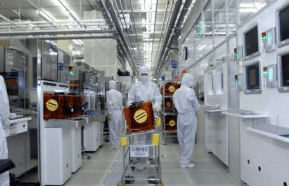 predicted to reach 10 percent thanks to the delivery of orders received over the past two years and the base effect. Petrochemicals are anticipated to see a 5.2 percent increase in exports with the help of the increase of export volume by the operation of the domestic new facilities.
Moreover, general machinery and computers are also expected to enjoy increased export volume, due to the investment increase in infrastructure in major nations including China, the United States, and India and the increased demand for SSD used in cloud servers for enterprises and personal PCs, respectively.
For automobiles, exports are expected to reach the record levels of last year, due to the potential financial crises in developing nations affected by the rise in interest rates, in spite of some positive factors including the release of some new car models, the increased demand for some eco-friendly cars and SUVs. The export of display is expected to decrease to 2.2 percent, caused by the decrease in price affected by the 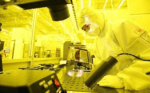 oversupply of liquid crystal display (LCD) taking 60 percent of the whole, despite the anticipated upswing in the demand for organic light emitting diode (OLED).
For wireless communication devices and home appliances, the decrease trend of exports is expected to continue. As for steel, the decreased trend is expected to expand, caused by some factors including the restriction of exports by the United States.
korean-machinery.com | Blog Magazine of korean-machinery, brands and Goods
 Just one unit of ecarPlug EV charging station can charge up to three EVs. The ecarPlug EV charging station is conveniently available for both apartment housing and commercial buildings, thereby enabling residents to use it together and contributing to the solving of the allocation of exclusive parking space for EVs.
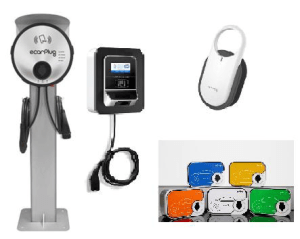 based on the fact that within a few years, EVs would dominate more than 50 percent of the overall vehicle production despite the fact that the current popularization level of EVs still remains relatively low.
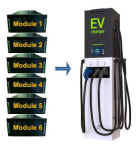 This charging station is what is called the dispenser type of future charging systems that can replace the existing gas stations. Already, until April, this year, this charging station was supposed to be installed on highways and downtown locations in the United States. Also, unlike other existing companies’ charging systems, it is considered in designs for all maintenance activities to be carried out in an open condition of the front door only. Designed to be far slimmer than the existing models, this can be installed at the wall side by being attached, and thus giving more benefits in the management of parking lots.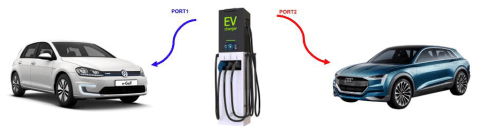
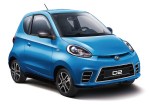 Nissan Leaf, Tesla model S and model X. The D2 sold more than 50,000 models in Europe and China. In Korea, it is getting popular quickly as a next-generation means of transportation that fits the travel distance and purposes, e.g. for commuting, deliveries and public service.
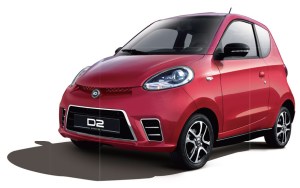 battery (17.3kWh) with a capacity about double that of vehicles in the same class, it can run up to 150km. Compared to general micro e-mobility that can run 80km on one charging. It has nearly double the range.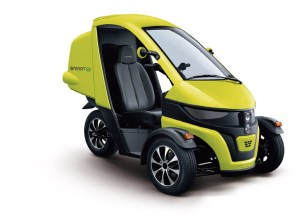
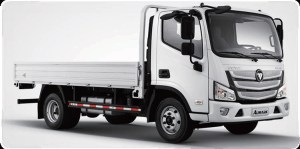 Beijing Motors Korea was determined to expand the supply of commercial trucks which are in relatively short supply in South Korea, targeting independent businessmen and company customers. With comparatively lower maintenance costs than internal combustion engines, they are expected to be popular among customers.
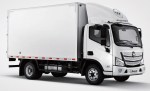 purpose in use.
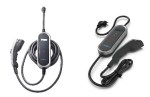 DCV-3MC3 (5PIN)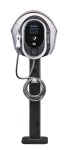
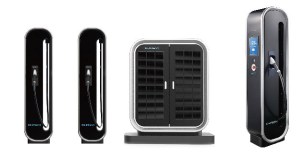 The High Power Charger can charge at a super charge rate within 4 to 10 minutes depending on the battery capacity of the vehicle. Fast chargers made by Daeyoung Chaevi feature a variety of interfaces to accommodate a wide array of vehicles and guarantee ease of use. By offering the three interfaces of AC fast charging, CHAdeMo, and DC combo, it ensures compatibility with an extensive range of cars made by domestic and renowned international carmakers. The company has also invented a mechanical apparatus for positioning each vehicle properly while charging. Such design enables women and elderly drivers to easily handle charge guns.
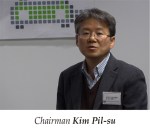 Recently, there have been growingly positive perceptions on EVs not only in advanced countries but also in South Korea. Moreover, it is so meaningful that this trend is spreading more widely, and thus promoting the growing necessity for EVs.
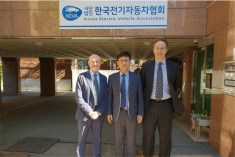 There are numerous difficult issues to resolve in such related various areas as trade, environment and safety, horizontal industrial cooperation, etc. in the global EVs markets. KEVA was thus determined to try to have such pending issues well resolved through active steps.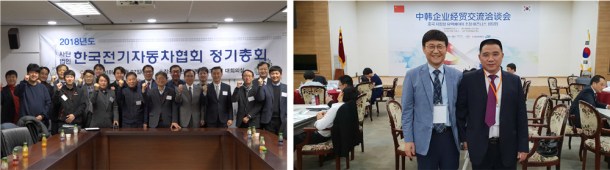
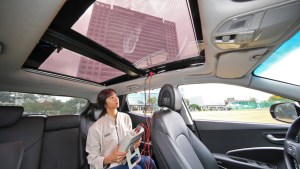 applied to the eco-friendly model is a method of composing a solar battery as an all-in-one type on the lid


 Korean-Machinery.com