Wine Bottle Corker

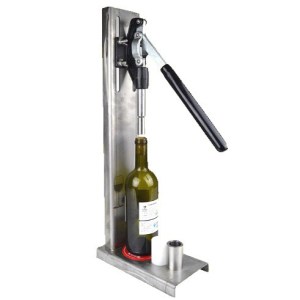
https://korean-machinery.com///inquiry[INQ. NO. 1807M02] This product is a machine that inserts (sealing) the cork (stopper) on the top of a wine bottle, it has a very simple structure. It does not use electricity nor does it apply a pneumatic system.
Put the bottle on the fixing frame placed at the bottom of the machine as shown in the picture above, adjust the height and lower the lever at the top downward and then, the cork will be automatically inserted into the bottle, then, the wine bottle is sealed.
The cork holders made of stainless steel have two sizes and the cork in the holder is injected into the bottle without getting broken.
Bottle height should be 40 cm or less and cork holders are available in 2 sizes – (a) 21mm in diameter and 38mm in height / (b) 22mm in diameter and 44mm in height.
In case the size of the cork injection part of the wine bottle is different, the corker can be manufactured with PE material as special production upon request. The size of the machine is 25cm * 15cm * 65cm and its weight is about 7kg. The operation principle is very simple and about 6 to 10 bottles are corked per minute.
 

korean-machinery.com | Blog Magazine of korean-machinery, brands and Goods

Auto-Sensing Conveyor Date Marking Machine

https://korean-machinery.com///inquiry[INQ. NO. 1807M01] Goodprice’s auto-sensing conveyor date marking machine moves the container, when laid on the left side of the top conveyor, to the right automatically. One container is recognized by a motion sensor and is stamped with inkjet printer. Marking is available anywhere, including circular containers, top or side of a bottle, side of the rectangular container, etc.
It is possible to mark date (numeric figures) like manufacturing date, expiration date, English alphabet, logo, barcode, etc. The automatic conveyor is speed adjustable in 10 steps and has a guide for width adjustment.
220V general electricity is used for power and electricity consumption is 90w. This product moves up to 20 meters per minute. The total size of the conveyor is 1500mm in length, 250mm in width and 720mm in height (the height of guide: 20cm). The inkjet marking machine is fixed on a tripod and the maximum usable height is 500 ~ 1550mm. This product consists of inkjet marking machine set and conveyor and each part can be used individually.
Goodprice specializes in manufacturing, importing and supplying various food machines, filling machines, mixers, blenders and various packing machines. Goodprice’s products are designed in a simple yet intuitive structure and are available at a reasonable price.

korean-machinery.com | Blog Magazine of korean-machinery, brands and Goods

Overall Growth of Five Korean Automakers in Domestic and Overseas Auto Markets

https://korean-machinery.com///inquiry

During the month of March 2018, five Korean automakers sold a total of 719,003 units in domestic and overseas markets, which was up 0.7% from the previous year, and up 25.8% from the previous month.


According to sales figures of five Korean automakers on March 2, domestic sales in March 2018 decreased by 4.4% from March last year to 139,932 due to the massive crisis of GM Korea, which is about to close its Gunsan factory, and Renault Samsung Motors currently experiencing a slump in sales. On the other hand, Ssangyong Motor and Kia Motors maintained a similar level of sales as in the previous year. Hyundai Motor has grown significantly in size with the blessing of the good sales of its new models.
Hyundai Motor grew 6.0% year-on-year with sales of 67,577 vehicles in March alone in the domestic market. Sales of the newly released Santa Fe model recorded a 13,05% increase from last year to 13,076 units and became the best seller of the year. The company explained that the number of Santa Fe’s stacked contracts surpassed 32,000 units, with as many as 13,000 units standing by. Grandeur also sold over 10,000 units, a decrease of 20.7% compared with the previous year, but 16,928 cars were delivered to consumers. It was followed by Avante with 5,928, down 15.3 % from March last year, and Sonata with 5,685, down 25,0 %. In the same period, Tucson recorded a decrease of 6.9% to 3,390 units, while Kona sold 4,098 units. Starex and Porter achieved sales of 4,540 and 8,881 units respectively.
The Genesis brand was up 7.4% year-on-year to 5,843. The G80 decreased by 10.6% to 3,618 units, while the EQ900 fell 28.8% to 992 units. The G70 sold 1,233 units leading the sales momentum.

Kia Motors sold 48,540 units, up 1.9% from March 2017. The new K3, which was introduced at the end of last February, as well as Ray, and the partially remodeled K5 changes led to the growth. K7 and Sorento have enjoyed steady popularity as well. In particular, the K3 sold 5,085 units, up 95.4% from the previous year, while the remodeled K5 sold 5,043 units, up 37.3%. In the same period, Ray increased 41.0% to 2,713, while Sorento increased 10.1% to 6,965. In addition, K7 decreased by 39.2% to 3,309, and Carnival fell by 12.4% to 5,708. Stonic, a small SUV, sold 1,625 units, Niro with 1,982 and Sportage with 3,147.
Ssangyong Motor posted sales of 9,243 units in the Korean market in March, up 0.2% from the previous year. Since its release, Rexton Sports has recorded cumulative contracts of more than 20,000 units, selling 3,007 units, and has achieved record monthly sales since 2004 (3,180 units for Musso Sports in April). As a result, the company plans to increase its production volume by changing the work patterns such as consecutive double shifts on three assembly lines that will produce Rexton Sports starting from this month. Tivoli sold 4,121 units, down 24.0% from a year earlier, while G4 Rexton sold 1,541 units, up 410.3% along with 288 Korando Cs and 286 Korando Turismos.
Renault Samsung sold 7,800 units, down 25.8 % year on year. SM6 dropped to 2,767 units, 42.9% from the previous year, and QM6 dropped 6.9% to 2,254 units. QM3 fell by 70.5% to 480 units, SM7 dropped by 20.5% to 465 units, while SM3 decreased by 25.2% to 397 units. However, SM5 grew 114.9% over the same period and delivered 950 units to consumers. SM3 Z.E., an electric model released from this year, sold 88 units while Twizy sold 399 units
GM Korea sold 6,272 units in the domestic market in March, plunging 57.6% from a year earlier but up 8.1% from February, when the shock hit Gunsan City in North Jeolla Province, Korea. This improvement was presumed to be the result of properly targeting consumers who hesitate to buy through the Chevy Promise program, which extends the warranty period to guarantee the used car values. Spark jumped 5.0% MoM to 2,518 units, and Cruise rose by 141.9% to 566 units. Captive delivered 138 units to customers, up 56.8% from February, while Orlando increased 20.0% to 438. However, Malibu dropped 21.7% to 909 units and Trax dropped 4.3% to 707 units. Damas and Labo sold only 285 and 351 units respectively. With more than 5,000 units pre-contracted, Bolt EVs started a full-scale delivery with the sales of 160 units in March.
Meanwhile, exports of five Korean auto makers in March 2018 totaled 579,571, an increase of 2.0% from March last year, showing growth of 24.4% from the previous month. Hyundai Motor’s exports grew by 0.8 % to 329,464 units, while Kia Motors exported 193,734 units, up 3.7 %. Renault Samsung posted a 30.4 % increase to 19,259 units. In the same period, GM Korea dropped 3.0% to 34,988, while Ssangyong Motor dropped 43.5% to 2,126.

korean-machinery.com | Blog Magazine of korean-machinery, brands and Goods

Emerging as the New Leader in Korea’s Electric Car Market

https://korean-machinery.com///inquiry[INQ. NO. 1805M25] Semisysco is a semiconductor and display equipment manufacturer that was established in 2000 with three founders. It produces related equipment such as plasma diagnostic equipment, glass substrate inspection equipment, and flexible organic light emitting diode (OLED) inspection equipment. This equipment is supplied to major Korean IT companies such as Samsung Electronics, LG Display, and SK Hynix as well as exported to countries including the UK, the USA, and France.
Semisysco started its electric car business last year and established an electric car factory in Sejong City for the first time in Korea in May last year. The city has been selected for being the multifunctional administrative city accommodating the Ministry of Land, Infrastructure, and Transport (MoLIT), the Ministry of Environment (ME), and the Ministry of Trade, Industry and Energy (MOTIE). Sejong City also has the highest population inflow of all cities in the country, and is close to many areas, while being an emerging city.
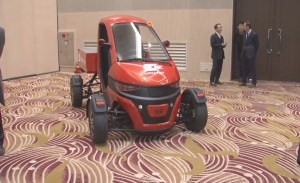
Semisysco’s lineup includes D2, a two-passenger compact car, U4, a four-wheeled micro freight car, and R3, a three-wheeled vehicle. The D2 travels up to 150km, the highest mileage on a single charge among the micro compact EVs available in Korea. It is equipped with an air conditioner and heater to suit the climate of Korea and has acquired L7, the European safety certification for microcompact cars. The R3 and U4 have the same vehicle structure and dynamics as a regular automobile and have an advantage of 25 to 30% uphill gradability.
Although it is not possible to disclose specific figures for pre-orders for the D2 received last year, the number of orders and the actual purchase rate are positive. The R3 and U4 are also aiming to launch in May and June this year, respectively.
Semisysco focuses on micro-compact models. The reason is that the micro car is a suitable model for the Korean environment and can also avoid competition with other big auto manufacturers. The advantages of a micro car include smallness in size, affordability, and free from the shortage of EV-charging infrastructure.
Since releasing the D2 in February, Semisysco started to yield profits in the electric car business. Currently, the model is manufactured by Zhi Dou (ZD), an electric car manufacturer in China. However, Semisysco plans to shift it to “Made in Korea” in the near future. The company has had this vision since it entered the electric car business. Semisysco expects its break-even point at about 200 units per year as of now.

korean-machinery.com | Blog Magazine of korean-machinery, brands and Goods

Light Commercial Truck

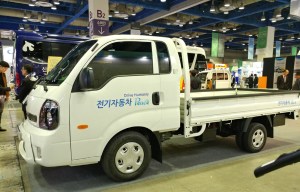
https://korean-machinery.com///inquirySince 2007, Power Plaza has entered the ecofriendly electric vehicle business as a next-generation growth industry and successfully converted 0.5-ton and 1-ton commercial vehicles into electric vehicles in 2009. PEACE, an electric vehicle modified and supplied by Power Plaza, has been developed in a power pack structure that integrates a battery and an inverter. Adopting the designs optimized for vehicle structure and glass fiber, a lightweight material, this model has passed various tests, securing the highest safety.
PEACE features a maximum output of 26kW, maximum torque 108Nm, and load weight of up to 500kg. It is also equipped with a 17.8kWh lithium-ion battery, and the mileage on one charge is 72km. The empty vehicle mileage is up to 100km for one charge and a full charge takes around four hours.
The batteries, drive motors, and inverters carry a 7-year or 150,000 km warranty, while the electric car parts produced by Power Plaza including OBC, PDU, LDC, BMS, and dashboard module come with a lifetime warranty and free repairs.
Unlike ordinary electric vehicles, PEACE is equipped with a manual transmission in consideration of gradability energy efficiency. The gear shifting while driving is the same as that of a regular engine vehicle and the safe running speed is 80 km. PEACE is registered in the e-shopping mall run by the Korea ON-Line E-procurement System in order to ensure stable supply to public institutions.

korean-machinery.com | Blog Magazine of korean-machinery, brands and Goods

Korea-U.S. FTA Revision Negotiation

https://korean-machinery.com///inquiry

Extension of Tariff Elimination on Freight Automobile Exports up to 20 Years·Exemption from Tariffs on Steel under Article 232


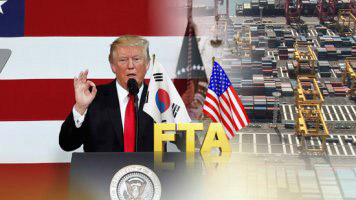
The negotiations for the revision of the Korea-U.S. FTA have been concluded under a cloud of great concern among the entire nation. Although the final procedures are still under way, it has been resolved in effect. The United States has decided to exempt
Korea from tariffs on steel and aluminum products under Article 232 of the Trade Expansion Act, and Korea has decided to extend tariff elimination on freight automobile exports and to lower the automobile safety and environmental standards.
The two countries agreed to exempt Korea from tariffs on steel products under Article 232 of the Trade Expansion Act. Meanwhile, Korea’s steel exports to the United States were set to a quota of 74% compared to the previous year, which corresponds to an average export volume of 3.83 million tons for the period from 2015 to 2017.
The Ministry of Trade & Industry (MOTIE) estimated that the uncertainty of Korean companies was eliminated by securing 74% of exports to the USA last year without additional 25% tariffs, with the early exemption of Korea.
Boards, one of the nation’s main export items, in particular, secured a quota of 111 % compared to the previous year, yet the quota on steel pipes, such as oil country tubular goods (OCTG), was confirmed at 1,040,000 tons.
Accordingly, MOTIE expected a significant decrease compared to last year’s exports of 203 million tons and stated that it would plan to draw up measures to reduce damages including diversification of exports and boosting domestic demand. Talks on steel products are scheduled to commence on May 1.
South Korea also pushed on its concerns through the amendment of the agreement in the field of investor-state dispute settlement (ISDS) and trade remedies through a revised agreement. In regard to the ISDS, it incorporates factors related to the prevention of investors’ abusive litigations and the government’s legitimate policy mandates and has decided to ensure transparency in trade remedies.
It also announced that the uncertainty has been removed by revising the rules of origin standards for some textile items and achieving a position on the further opening of the agricultural and livestock market, a core sensitive area of the country, and the use of U.S.-made auto parts.
On the other hand, instead of obtaining steel, agricultural products, and ISDS, it was decided to step back in the automotive field. Korea has extended the tariff elimination on freight automobile exports to the USA from 2021, the tenth year, up to 20 years until 2041.
In addition, provided that a company complies with American automobile safety standards up to 50,000 units per year, it will be regarded as compliant with the safety standards of Korea, and the detailed test procedures and methods of gasoline vehicles using exhaust gas will be acknowledged alongside.

korean-machinery.com | Blog Magazine of korean-machinery, brands and Goods

Busan International Motor Show 2018

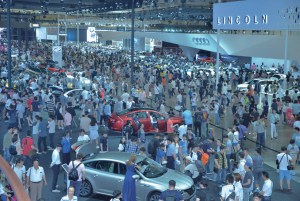
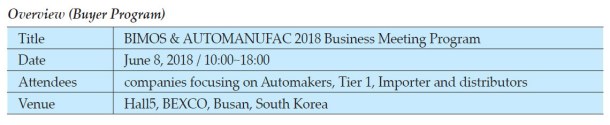
https://korean-machinery.com///inquiryThe Busan International Motor Show 2018, based on the theme of “Beyond Innovation, Into the Future,” will be held over a period of 11 days, from June 7 (Thursday) to June 17 (Sunday), at BEXCO, Busan, Korea, starting with the press day on June 7 followed by the opening ceremony on June 8.
This year’s Busan International Motor Show 2018 will be held as a new type of motor show, demonstrating the development of information technology, which can be easily enjoyed by anyone.
Currently, 19 brands from both Korea and overseas completed vehicles have finished applications, ranging from the domestic complete vehicle brands, such as Hyundai Motor Company (including Genesis), Kia Motors Corporation, GM Korea Company’s Chevrolet, Renault Samsung Motors, etc. to Audi Korea, Toyota Motor Korea Co., Ltd., Lexus, Nissan Korea, Mercedes-Benz Korea, BMW, Mini, Jaguar, Land Rover Korea, Infiniti, MAN Truck & Bus Korea, Edison Motors, etc.
Next Mobility. So, in what form will the futuristic automobile of the next generation emerge? Reflecting the current trend that electronic vehicles and autonomous driving technology equipped with cutting-edge innovation are made public in full force and changes of the future automobile industry are suggested, the Busan International Motor Show 2018 plans to consider the future market and technology and keep pace with the tide of change, departing from the previous approach that focused on getting large and splendid.
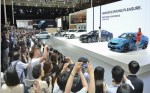
The best feature of this year’s Motor Show is that it will be a diversified motor show revealing the extensive spectrum of the life with cars. In this context, besides car display of complete vehicle brands, various events will be held on the 3rd floor of the Second Exhibition Hall, such as Automotive Manufacturing Expo Korea 2018 for expanding the association effect of the car industry, and the Camping Car Show, for spreading the car-related leisure culture, The Special Room of the Future Automobiles for viewing the future of the car industry, and Personal Mobility Show and The Room of Car Life encompassing our life with cars. The KSAE (The Korean Society of Automotive Engineers) 2018 Annual Spring Conference, which will be held simultaneously from June 7 (Thursday) to June 9 (Saturday), will include paper presentations of studies covering the whole field of automobiles and will be the venue for exchanging updated information on automobiles. Especially, it is expected that important people will attend in full force this year in commemoration of the 40th anniversary of the KSAE.
korean-machinery.com | Blog Magazine of korean-machinery, brands and Goods

Automobile Parts

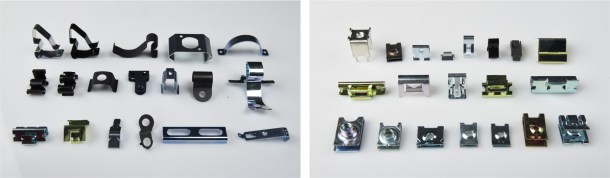
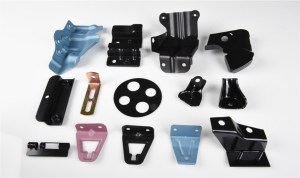
https://korean-machinery.com///inquiry[INQ. NO. 1805M19] PKFC was initially established in 1999 under the name of Pyeonggang Precision. As a leader in the auto parts industry, PKFC manufactures various kinds of automobile parts by using a press production line, a multi-forming production line, an MCT processing line, and an assembly production line.
PKFC’s press is equipment that is widely used in producing various automobile, electric and electronic parts –brackets, special fixed parts in the chassis, engine, bumper, power steering, etc.
PKFC’s multi-former can be used in various fields including automobile parts and electric and electronic parts as it can produce several types of complex structures in various ways. The amount of material consumption in the production process using this equipment is lower than any other equipment due to its lower loss rate.
PKFC manufactures various hood rods, loop rings, etc. to be used as automobile and electric parts and production facilities. PKFC also produces the assembled products by utilizing a machining center. PKFC can perfectly design and manufacture the consumer-oriented parts to be used as hinges in automobiles, electric and electronic equipment. PKFC was determined to commit to supplying its customers with best-quality products by heavily investing in R&D.


PKFC secured reliability of the products it manufactures by obtaining various certifications and shows comparative competitiveness in technologies over its rivals by winning several patents on products. PKFC aims to become a global leader that helps global partners that produce precision parts, auto parts, electric and electronic products, ultimately to improve their competitive edge. This drive is based on its unique corporate philosophy – “sincere service spirit.”
Beyond short-term profit and gain, PKFC pursues sustainable happiness of all and continues to strengthen its competitiveness by securing global competitiveness and quality superiority.
PKFC is focused on the realization of its vision toward globalization.

korean-machinery.com | Blog Magazine of korean-machinery, brands and Goods

Alternator Regulators and Rectifier

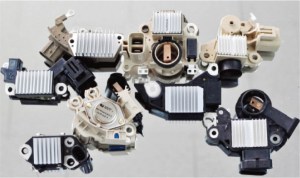
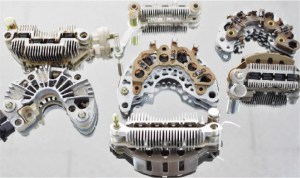
https://korean-machinery.com///inquiry[INQ. NO. 1805M18] Genon Electric manufactures alternator regulators and rectifiers for automotive manufacturers, and currently exports to 36 countries including the USA, Japan, Russia, Egypt, Australia, and Venezuela.
The alternator regulator in the aftermarket will be undergoing more changes over the next five years than what it has over the past 50 years since such new competitive products as COM type, RLO type, RVC type, LIN/BSS types are emerging. Genon has developed them already after a lot of trial and error tests. For this reason, Genon provides all customers with a two-year warranty while other companies have only less than a one-year warranty.
Alternator regulators apply for 12V and 24V charging systems with a wide range of operating temperatures, from -45 to 135°C. A selfcompensating thermal circuit with custom setting voltage as well as custom package design is available. They are multifunctional with HIC & ASVR types, including LRC function, faulty warning and protection.
Alternator rectifiers also apply for 12V and 24V charging systems with press-fit type zener diode. Alternator die-cast and extrusion-type heat sink are available with welded connection to the stator wire.
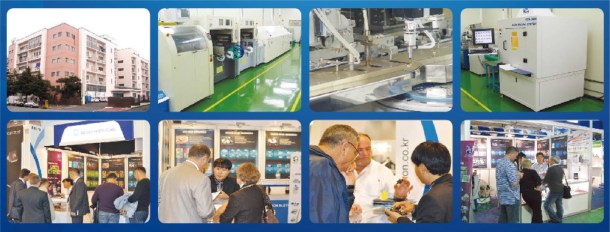
Genon produces test systems for alternator regulators and rectifiers as well. The test systems for alternator regulators are classified into mono and multi-function regulator test systems. They have a gauge analysis tool and a process capability analysis tool. Also they are equipped with a complex dut board system and kelbin matrix board.
Test system for alternator rectifier is alternator rectifier ASM test system. Zener and avalanche type diode tests are available with programmable super power and V/I source. Testing usually takes only six seconds.
Genon’s engineers have more than 21 years of experience in the fields of R&D, manufacturing and automotives in Korea. This is why the maker can supply various kinds of alternators, starter motors and parts for cars.


korean-machinery.com | Blog Magazine of korean-machinery, brands and Goods

Laser Processing System

https://korean-machinery.com///inquiry[INQ. NO. 1805M17] SIS Corporation is specialized in automation equipment and TWB mass production, providing automationrelated services in various fields such as automobile, steel & heavy industry, and logistics automation. Major business fields include factory automation (Arc / Spot welding, press automation, Gantry & Carriage system, panorama sunroof assembly automation line etc.), laser welding & cutting, hybrid welding, laser vision inspection, jig & fixture, (AGV / RGV, EMS), steel automation (band cutting, roll transfer, and coil marking system), railway automation (Roof, sidewall, endwall, body assembly etc.). The company is providing its unique technology to clients in various countries.
Since its establishment in 2004, SIS Corporation a specialized company for automation equipment, has developed new system-related technologies that will lead the new millennium in cooperation with advanced foreign companies, progressing to become a manufacturer with world-class competitiveness in terms of technology and quality. This automation system specialist has recently found its way into the world market and is steadily exporting automation systems to countries including India and China.

Tailored Weld Blank (TWB)

Tailored Weld Blank (TWB) is a laser processing system using high-powered laser to weld and cut various car body parts. It is a production method for automobile steel plates in which automobile steel sheets having different thicknesses, strengths, and materials are cut into appropriate sizes and shapes, and then welded by using a laser beam to produce the desired shapes.
It is possible to reduce fuel consumption and improve vehicle stability by reducing the total weight of the vehicle by 10%.


Laser Processing System to Manufacture Sidewall for Railway Vehicles

This is a laser processing system to manufacture sidewalls for railway vehicles through repeated laser cutting and welding by using a highpowered laser beam.


Laser Cutting System

It is a system designed to increase space efficiency and minimize work space by integrating all the devices such as laser oscillation parts, optical parts, and robots, thus maximizing the degree of users’ freedom.
It is a laser cutting system to cut various materials available along with newly developed automobile interior materials such as new materials called bioplastics as well as conventional plastics by minimizing changes in conditions.

korean-machinery.com | Blog Magazine of korean-machinery, brands and Goods