
South Korea’s full-service carrier Asiana Airlines Inc. will confidently confront the multiple challenges from domestic budget carriers and cheaper airlines from China and Middle East. This comes on top of higher oil prices and volatile foreign exchange rates, which has led to the enhancement of Asiana’s fleet with fuel-efficient aircraft and cost-saving efforts, according to its chief executive officer.
“This year will be a turning point for us to go offensive from defensive,” said Kim Soo-cheon during an interview with Maeil Business Newspaper recently.
The airliner is ready to adopt an aggressive posture and invest, having streamlined through restructuring over the past three years. Its first weaponry is the deployment of the A350-900, the latest product of French maker Airbus boasting lightness with its frame made 53% out of carbon composite material and in aerodynamic design to offer 20 percent to 25 percent better fuel efficiency than others in the same class. Industry experts estimate the average operating expense per seat could be reduced by 10 percent when fuel efficiency is improved by 20 percent.
The second largest air carrier in Korea would bring in the first four this year to run a fleet of 30 and deploy them on the longer-haul routes. At the same time the company would be refurbishing the business-class section of the flagship B777 aircraft tor differentiated look and service, according to the CEO.
Thanks to restructuring through sales of unprofitable assets and rationalization of routes, the company registered an operating profit of 257.0 billion won ($224.8 million) last year, the highest in five years on a consolidated basis. Net profit reached 54.3 billion won for for the whole of 2016. The company will focus on long-haul routes while short destinations are covered by its budget carriers Air Seoul and Air Busan, explained Kim. The company’s operating profit was boosted by 6.4 billion won by scrapping money-losing money-losing short-distance routes.
korean-machinery.com | Blog Magazine of korean-machinery, brands and Goods

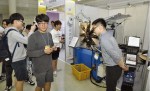 Marking its 13th year, the Fair aims to increase the international competitiveness of the industry by boosting demand for the exportation of smart factories, automation equipment, facilities, and related equipment, exchanging information, and technology development. Every year, it serves as a venue for exchanging information on technology and markets among participants and searching for new business partners.
 Organized by KOAMI and held by the Gyeongsangdam-do and Changwon-si, the exhibition is sponsored by some of the most representative companies and organizations in various industries in Korea. Other affiliated events such as seminars and lectures will also be held along with the event.
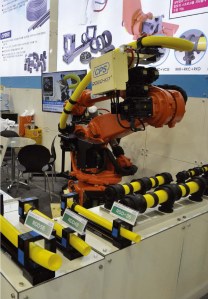 A total of nine themed exhibitions along with a special exhibition will be held displaying FA equipment focusing on innovative process management solutions, sensors and control equipment, network systems, designing and process analysis programs, and measuring instruments for smart factories. The exhibitions will also feature metal processing machinery, molding tools, hydraulic pressure equipment, and part materials to respond to the demands of the global market.
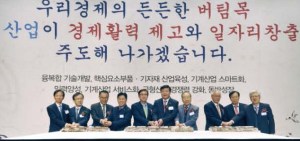 industry; it has been part of the development of core technology, pioneering overseas markets, initiatives to increase the export of Korean machinery, and promoting the sharing of mutual interest among the members. Moreover, KOAMI provides machinery companies with professional services involving support to policymaking and research activities, technology development, and exportation in response to the government’s policies. It also provides them with useful information on the machinery industry and training.
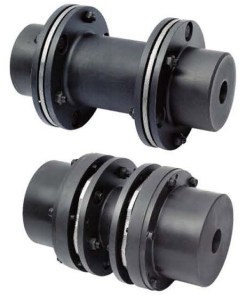 assembly. The company accomplished an export of US$5 million in 2011. Korea Coupling has participated in the “Beijing Coal & Mining Exhibition” in 2011, launching its drive to open the potentiality of China.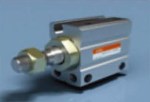
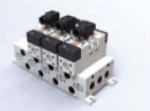 automotive industries. Basically it boasts high production capacity ensuring two weeks of average lead times. With the service of all inspection, the so-called closed quality control is possible. It recently launched 3D printers for its potential business partners. The ration of its customers composed of Korea (50%,
 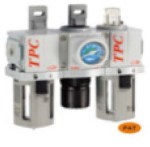 Hyundai/Kia, GM, LG Display, Samsung Electronics), China(20%, BOE, Faxcom), Japan (10%, MiSUMi, MAKINO, and others (20%, including Thai).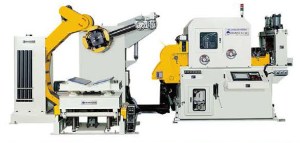
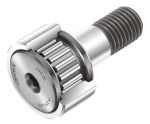 The maker’s cam followers consist of a stud serving as a shaft, a roller and needles, which are placed between the roller and head of the stud. Cam followers can be effectively applied into static loads and heavy loads at low and middle high speed. Most elements such as shafts, rollers, needles and thrust washers are made of carbon chromium bearing steel.
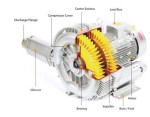 When the air reaches a “stripper section” at the outlet, it is “stripped” from the impeller and expelled out of the blower. The stripper section is located between the inlet and the outlet where the annulus is reduced in size to fit closely to the sides and tips of the impeller blades.

 Korean-Machinery.com