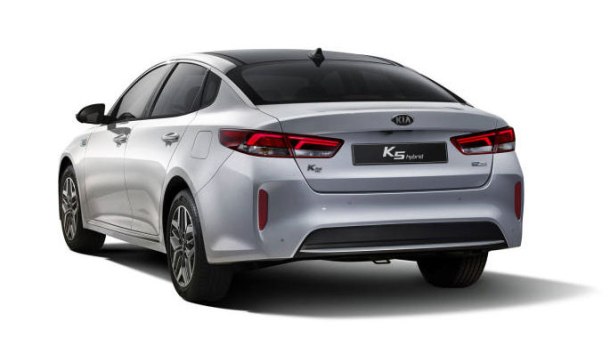
 [INQ. NO. 1810M07] Hyundai Motors and KIA Motors are dreaming of reviving ‘the peoples cars’ this year by introducing face-lifted and fully-changed models of semi-midsize sedans and sports utility vehicles (SUVs).
According to the industry, Hyundai Motors has recently launched ‘The New Avante’ which is the face- lifted model of Avante (AD) released in September 2015.
The New Avante was inspired by ‘a jetliner that glides low like grazing the ground,’ creating an agile and dynamic design. The front part of the car has a strong and stable image, the rear part shows a stylish and sleek figure, and the interior looks three-dimensional and sporty.
As for the price of the New Avante including 3.5% of the individual consumption tax: KRW15.51 million for the smart stream gasoline 1.6 style based on application of IVT (KRW14.04 million based on MT), KRW17.96 million for Smart, and KRW22.14 million for Premium KRW17.96 million for diesel 1.6 style, KRW20.37 million for Smart, and KRW24.54million for Premium KRW16.17 million for LPi 1.6 style, KRW18.61 million for Smart, and KRW20.10 for Modern.
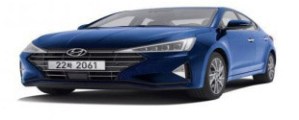 Hyundai Motors will hold a special exhibition for the New Avante on the 5th floor of Hyundai Motor Studio Seoul this month, providing customers with the opportunity to compare various colors, trims, specifications of the New Avante at a glance.
Also, until the 20th of this month, the ‘Block-type moving show room,’ which is a movable exhibition hall made like a block with a 5-ton truck, will visit customers, touring 23 regions nationwide from Seoul to Jeju.
Hyundai Motors will launch a mobile game with the New Avante being unveiled this coming November, and it also plans to launch the ‘New Avante Sports’ equipped with the gasoline 1.6 turbo engine and 7-speed DCT in the same month.
Earlier this year, KIA Motors also unveiled its ‘All New K3’ of the same class as the New Avante. This is the second-generation fullychanged model that has been renewed six years after launching the first-generation model in 2012, which is composed of four 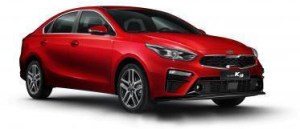 trims including Trendy, Luxury, Prestige and Nobless.
The all-new K3 was certified for the light-car-level fuel efficiency of 15.2km/l (based on the 15-inch tire) through the optimal combination of the smart stream G1.6 gasoline engine that KIA Motors applied for the first time and the smart stream IVT transmission. This is an improvement of more than 10% compared with the existing K3 model.
In this regard, KIA Motors also conducted a life fuel efficiency contest for 200 all-new K3 customers (selected among UVOequipped vehicles) at the end of last month. KIA implemented the nationwide contest for nine days and recognized the result only when the mileage exceeded 100km. As a result, the highest fuel efficiency recorded a whopping 31.2 km/l, and the average fuel efficiency of the top 50 was 20.8 km/l.
Both Hyundai Motors and KIA Motors are actively competing in their sales figures thanks to the popularity of their semi-midsize, face-lifted SUV models. As many as 4,148 units of Hyundai Motor’s Tucson were sold last month, an increase of 0.3% compared with the 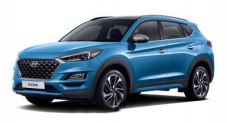 same period of the previous year, and 3,786 units of Sportage were sold over the same period, increasing by 33.5% compared with the previous year.
Hyundai Motor’s face-lifted ‘Tucson’ model has such features as a more refined and sporty exterior design, a powertrain with increased efficiency, the highest level of fuel efficiency in its class, and dynamic driving performance that can be felt in everyday life as well as in off-road situations.
In particular, as for the face-lifted Tucson, Hyundai Motors has expanded customers’ choices by operating the ‘Ultimate Edition’ which is a special model applying exclusive design and specialized specifications such as front and rear skid plates, side garnish, metallic silver outside mirror and door spot lamp, including a glossy black 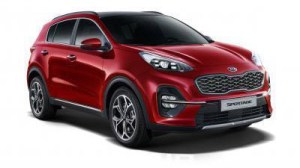 radiator grill.
‘Sportage The Bold’ of KIA Motors, launched last July, has the advantages of much easier connectivity services and convenience specifications, including sporty and robust exterior design, luxurious interior space, powertrain with high efficiency and gas mileage, and more enhanced driving safety.
package, KRW439,000 for marvel package, and KRW499,000 for marvel connected package respectively based on 64G memory.
korean-machinery.com | Blog Magazine of korean-machinery, brands and Goods
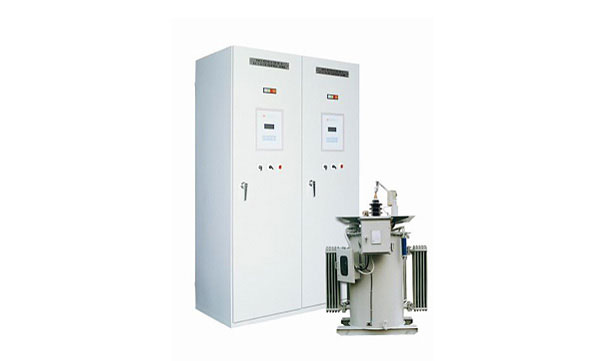
 Though 500 engines were supplied for propulsion of small and medium vessels in the meantime, this is the first time it has been mounted on a passenger ship. More than 11,300 HiMSEN Engines were exported to 50 countries all over the world by the end of last August, occupying the first place with 20% of the world market share in the medium-sized engine sector.
 development of technology and human resources, and enhancement of product competitiveness, the company is devoting all its energy into winning the hearts and minds of customers. Based on ‘Branson,’ its local subsidiary in the USA incorporated in 2003, the company is establishing itself as a global enterprise by exporting agricultural equipment worldwide including to clients in China and other Asian nations, as well as the USA and Europe.
 ranging from 21 horsepower to 100 horsepower. In addition, the company is equipped with a range of combine harvesters from 4-row to 6-row and has developed a diesel rice transplanter for the first time in Korea, leading the advanced culture of agricultural machines.
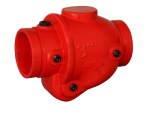 force makes the crapper press the disc, blocking the flow of fluid.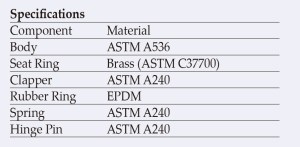

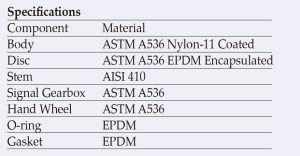
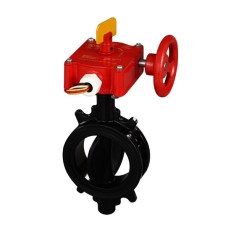
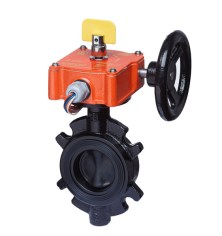
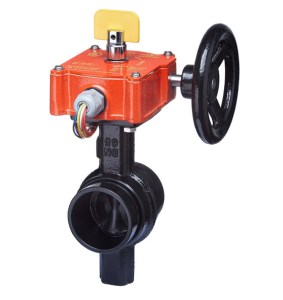
 It is designed for use in fire protection systems where a visual indication is required as to whether the valve is open or closed. It has grooved inlet and outlet connections that are suitable for use with grooved end pipe couplings that are listed and approved for fire protection systems.
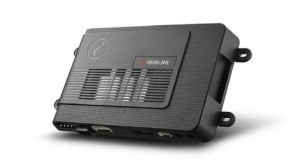 real-time in the low-speed driving of 30km or slower per hour in addition to the high-speed driving and notifies the driver of the situation to prevent collision. Thus, INAVI X3 Cube supports the largest level of functions such as existing lane departure detection systems, front-car departure alerts, traffic light change alerts, rapid-curb deceleration alarm systems. etc.
 detecting and notifying the driver of risks which could occur while driving.


 Korean-Machinery.com