The Korea Institute of Machinery & Materials (KIMM) under the Ministry of Science and ICT has succeeded in developing 400nm laser direct lithography equipment for the first time in Korea. It is considered as technology that could remarkably improve semiconductor productivity.
KIMM’s research team has developed laser lithography equipment that is able to process the resist coated on a substrate by moving a micro focus of 400nm at a speed of 40mm per second.
Laser lithography is technology developed for creating micro shapes as the resist reacts to light and becomes hardened when a laser beam is focused on the resist on substrate.
The research team has succeeded in creating a very fine focus with a size of 400nm by utilizing a blue-violet laser diode with the wavelength of 405nm, among various other laser beams, to process a substrate.
By using the equipment developed by the research team, a laser focus is able to process a substrate with a thickness of 200mm at a speed of 40mm per second, as if it were sketching on a sheet of drawing paper with a sharp pencil.
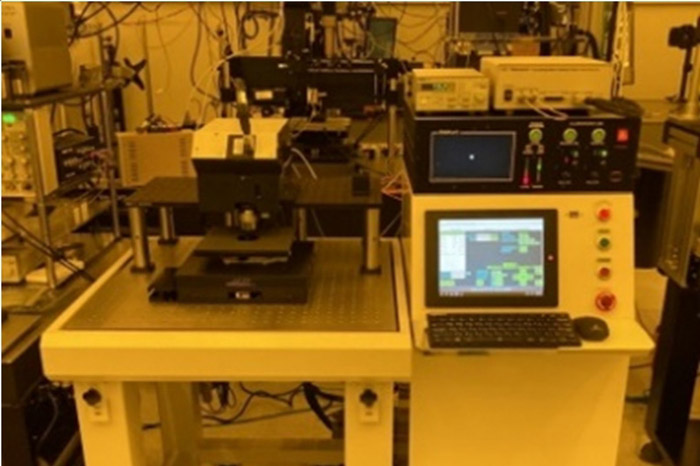
The team has also devised and applied for a patent on technology that could enlarge the line width by up to 50 times so as to shorten the process time that is extended when a micro-focus is applied onto a wide space.
Nano-scale lithography is considered to be one of the most-important technologies for the next-generation semiconductor lithography process. And most of the commercialized lithography technologies are led by Germany, the Netherlands, and other nations. It is the first time in Korea for the creation of precise patterns of 400mm on planar and non-planar substrates.
When applying the newly developed technology, it is possible not only to create a three-dimensional nano-micro composite structure, which is impossible to create by utilizing the existing lithography technology but also to form a nano-structure on any shape surfaces.
This technology is expected to be used for the production of biosensors, medical devices, micro optical devices and microfluidic channels in the future. Furthermore, it is expected to replace costly foreign-made devices.
korean-machinery.com | Blog Magazine of korean-machinery, brands and Goods

 Europe, and North America. However, new equipment markets in Taiwan and South Korea contracted. The 2018 equipment market rankings for Japan, North America, Europe, and Rest of World remained unchanged from 2017.
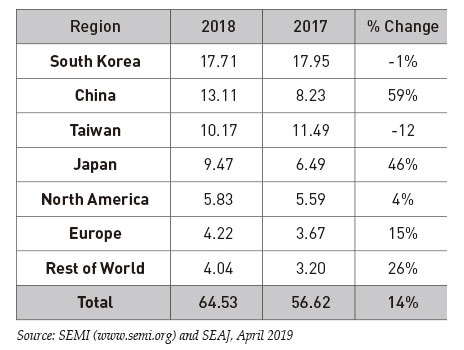 increased 20 percent as assembly and packaging sales increased two percent.
 equipment. Other front-end includes mask/reticle manufacturing, wafer manufacturing, and fab facilities equipment.
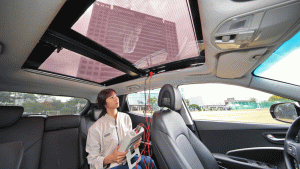 The solar charging system consists of a solar panel, a controller, and a battery. In the solar panel, energy is generated as the sunlight is separated into an electron and a positive hole when it contacts the surface of the cell of a solar battery.
 applied to the eco-friendly model is a method of composing a solar battery as an all-in-one type on the lid
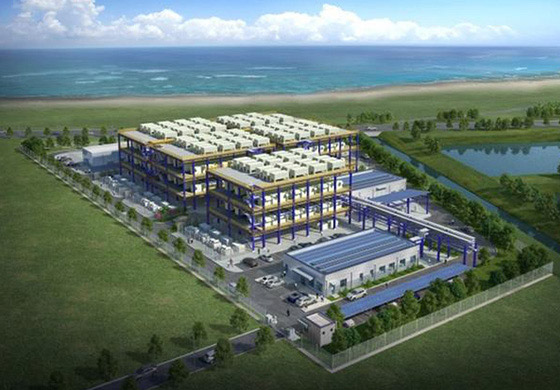
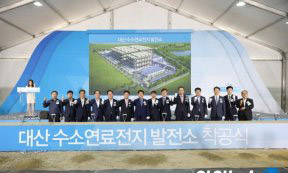 The power plant will be the world’s first of its kind using byproduct hydrogen as fuel, the companies accounced. Byproduct hydrogen fuel cell uses hydrogen created as byproduct in various chemical processes as energy source. Doosan will supply 114 fuel cell units and be responsible for long-term service once the plant is completed. Doosan developed byproduct hydrogen fuel cell units based on home-grown technology last year with plans to supply them to hydrogen power plants starting in the fourth quarter of this year.