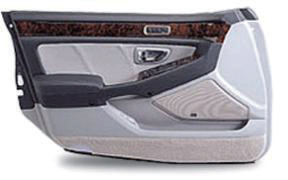
Eco-friendly replacement of PVC skin, automotive interior material, to reduce toxic substances

Technology overview: PVC Skin has been used on the surface of interior parts such as automotive interior seats, door trims, sun visors, etc. Its application has been gradually expanded as its surface quality is good compared with productivity and production cost.https://korean-machinery.com///inquiry
However, the constant increase in demand for automobiles and interior products has required safety securement of a product and development of an eco-friendly product all over the world. Also, there has been a need for the development of a product that can replace PVC skin vulnerable to ejection of VOCs. Accordingly, to replace PVC, a replaceable product that reduces harmful VOCs and is cost-effective as well has been successfully developed by applying TPO where a manufacturing process and raw material are improved. A database has been established to systematically analyze and improve reasons causing VOCs by dividing a manufacturing process into the calender, surface treatment, embo half-finished product process and shaping stage and sub-dividing these. Raw materials such as a surface treatment agent necessary to manufacture automotive interior materials have been improved and replaced after analysis. The developed TPO product (TPO Sheet-Termoplastic Polyolefin Sheet) has reduced injection of Toluene among VOCs, the problem of PVC skin, by one tenth. It has satisfied domestic and overseas requirements for toxic substances. As eco-friendliness and productivity of the product have improved, the economic effect of export increase in not only Korea but also overseas can be expected and it has set a foundation to increase eco-friendly competitiveness of the domestic automotive industry which has a significant omnidirectional ripple effect. Also, it is expected to contribute to reduction of economic loss and improvement of people’s health as it has strengthened safety of drivers and passengers from ejection of VOCs.
Industrialization: Since it was introduced to Korea in 2014 after a product was developed in August 2013, sales of about 2 billion won have been accomplished. As safety standards of automotive interior air quality have been tightened and interest and demand by domestic/overseas customers for an eco-friendly product have been increasing, it is predicted that sales will continuously increase by expanding automotive interior material applied items and it is judged that the developed product can be replaced on existing automobiles. After supplying in Korea stably, an effort to supply the developed product to global automotive makers (U.S. Europe, Japan and China) has been made. It is expected that the recent global outsourcing policy of GM Global will work as an opportunity to target overseas markets and increase exports.
Untitled-20.jpgProblem-solving in industrialization: A close analysis DB on products and raw materials for each manufacturing process is required to analyze causes of VOC of PVC skin and replacements but it was difficult to establish improvement direction because there was no professional data or accumulated data from the past. To solve this problem, an analysis plan was established and a process product was sampled at the right time. Systematic DB was established and it could be used for development of replacements. Also, to solve a problem of productivity decline and production cost rise due to increase of production lead time after reducing VOCs, the BRX free surface treating solvent exclusive line has been newly created with a developing company’s customer company by benchmarking H company in the USA and the drying process has been optimized. As a result, industrialization has been successful by complementing, verifying and mass-producing the product quality of the developed product.

korean-machinery.com | Blog Magazine of korean-machinery, brands and Goods

High power/small (10W Class) telemetry system for development of aircraft

Technology overview: The telemetry system for aircraft, a device displaying, saving, reproducing and analyzing the condition of an aircraft https://korean-machinery.com///inquirywhen testing a developed aircraft in flight by checking an aircraft’s conditions and transmitting them to the ground in real-time and transmission and reception device provides a pilot, and as for a drone, a pilot on the ground, with feedback enabled data as an engineer monitors flight data of an aircraft in real time and judges and responds to an unexpected emergency. The telemetry system for aircraft should secure real-time, continuity of data and robustness of communication link for these functions. Telemetry for aircraft is a major electronic device to develop an aircraft. It is classified as an essential element technology of the aircraft industry along with aircraft manufacturing technology. It is the necessary technology to develop an aircraft autonomously but previously, it depended on the introduction of overseas devices. As this telemetry technology for aircraft has localized every important device used in telemetry for aircraft such as a data collecting device to collect data, a high power (100W class) transmitter to transmit collected data to the ground, a data storing device that saves collected data in an aircraft and compares and analyzes the collected data with wireless data when a test is completed, a ground system that can receive data on the ground, etc., it strengthens the basis to contribute to test evaluation airworthiness certification for the government to export a finished aircraft at this point of time where a domestic aircraft development project is being activated.
Industrialization: By replacing components introduced from overseas, sales of about 4 billion won have been attained to date in 2016, since industrialization of the drone project field was launched in 2012. It is expected that sales will continuously rise as the aircraft development industry is recently growing with the support from the government. It is increasing the domestic market share with strong points such as securement of price competitiveness through developing core technologies in Korea, flexibility of system design, technology support and reduction of time taken until getting A/S. A miniaturized, lightened product has been developed by additionally developing image-processing technology based on telemetry technology for aircraft and composing as a single device through modularization. Also, it increased the possibility of additional industrialization by establishing a system and reducing stabilization time through constantly developing technologies. There is also a high possibility to advance into the fields of bridges, shipbuilding, automobiles, railroads, satellite and bio.

Problem-solving in industrialization: Telemetry for aircraft has the technology-level equivalent to overseas advanced companies by localizing telemetry technology that depended on overseas introduction at this point where the domestic aircraft development industry has been vitalized. However, there was some difficulty in submitting review data for performance and environmental conditions when reviewing applications of other customers and other projects due to changes in shape design according to a customer’s request by applied project. On this, base data that can secure reliability of a product has been complemented by making system composition through changing a module according to a customer’s request available by developing an aircraft telemetry platform model, and preparing a test report after conducting an environmental test on a platform model. As a result, additional industrialization was possible based on a platform model and at present, a project has been constantly promoted based on that platform model.

korean-machinery.com | Blog Magazine of korean-machinery, brands and Goods

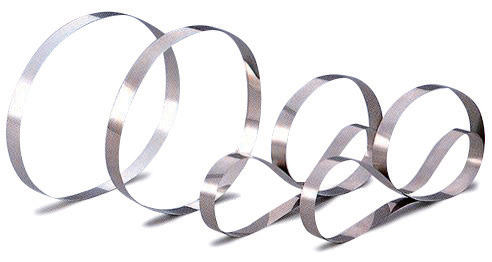
Welding technology for 0.5mm-thick metal and development of conveyor belt system

https://korean-machinery.com///inquiryTechnology overview: The demand for metal sheet conveyor belts keeps increasing in response to the special demands of the rapidly changing industrial environment (i.e. hygiene, high temperature, chemical resistance, clean environment, etc.). In particular, steel is preferred by the aviation industry and the space industry (NASA), etc. for a power transfer unit with permanent life and by the petrochemical industry for chemicalresisting (e.g. sulfur) conveyor systems. Even the food industry and environmentally friendly products (e.g. Choco Pie, Lotte) prefer steel conveyors for clean and sanitary transport of products. In line with these trends, the import of steel products by developed countries is increasing as well, and this calls for R&D efforts on welding technologies for flexible steel sheets.

In addition, the solar power industry (EVA line) such as LG and JIN HEUNG, using relatively new materials and technologies, is requesting conveyor systems of no-stick tabber belt for solar cells, especially for processes of EVA sheet production, IPO film production, and high-temperature forming. However, there is no welding technology needed for such conveyor belt systems and the entire plant or welded belts are being imported without any other option. Therefore, development of the welding technology is crucial to the supply of the metal sheet conveyor systems. In these circumstances, the company has successfully developed the welded parts and surface processing technologies, which allow ultra-thin metal to be made into conveyor systems.

Industrialization: A top priority is to develop stainless steel materials for demonstration of steel processing technologies, optimized for each intended use, and to localize imported belts to be supplied to a local company (JUST IN TIME) through massproduction systems. The company has developed technologies of joining stainless steel belts with metal sheets by welding to make conveyor systems and also a processing machine to sell the product in the form of part materials or plant. The patents for the technologies have been obtained as well. Currently, total inspection is applied to the products. Taking into consideration a rotation test (a nondestructive inspection), the company has conducted a life test under the same conditions as those of the customer’s site and reflected the results in product development.

Problem-solving in industrialization: Due to the nature of small quantity batch production, the belt system needs to be customized and this requires manufacture of a mold, causing increasing costs of a jig. In the initial stage, a customized jig was outsourced and this led to high costs, but now the company uses its own tools and equipment (lathe and milling) to lower the costs.

Untitled-17.jpg

korean-machinery.com | Blog Magazine of korean-machinery, brands and Goods
125℃ (exhaust temperature) heat recovery hot-air drying unit that saves energy with a heat pump

Technology overview: The company has designed a refrigerant system and heat https://korean-machinery.com///inquiryexchanger in order to increase the maximum hot blast temperature up to 125℃ and also designed/realized a waste heat recovery cycle and independent hot blast system, applied to 125℃ refrigerant (R22, R407c) and four cycles. Their design and development include 125℃ evaporator and condenser as well as a pressure backup and control system to prevent high
pressure above 32kgf/㎠.
The company has developed an optimized compressor and expansion valve in addition to multi-step control and proportional control technologies depending on inlet-air temperatures. The newly developed automatic control system can save energy by 40% compared to a regular electric heater (95kWh capacity). The company’s automatic distribution control technology can control hot blast according to inlet-air temperatures. Furthermore, they have optimized a heat pump and auxiliary heater distribution control and improved the range of temperatures control and accuracy.
Also, their air volume control technology significantly enhances accuracy of air volume measurements across the range of temperatures. Air volume is controlled based on the average air volume measurement, taking into account air volume, wind velocity, temperatures, and specific gravity of air. The company has tested a 125℃ waste heat recovery hot-air drying unit and established a measurement platform (supported by KTL). Energy saving has been tested across the range of the highest heat blast temperatures and measurement platform has been designed. They have established measuring systems for waste heat recovery rates, auxiliary heater operation rates, and power consumption. The basic performance test and environmental test for the 125℃ waste heat recovery hot-air drying unit have been done and assessed (KTL) as well.

Industrialization: According to regular printing processes, eight or nine-color printing is applied to gravure while 4-color printing is applied to dry laminate printing, and the final drying process is applied to both. In this case, 10 units are needed for one production line of gravure and five units for dry laminate printing. Each dryer can control temperatures, air volume, and cooling cycle automatically. For gravure 10 units can be controlled in an integrated manner for batch operation of one production line.

In addition, a duct for exhaust gas, containing organic solvent, and a dust collector has been developed. Supplying heat blast optimized for the site by controlling temperatures and air volume could save energy by 70% in case of 200M/MIN gravure printing. ROI (return on investment) is estimated at 1.6 years, which proves high energy-saving effects.

Problem-solving in industrialization: Initially, there was a lack of data on energy saving rates, which can provide assurance to overseas buyers, but the results of tests on residual solvents and adhesive strength and energy-saving test by Armco Thailand proved 70% reduction for gravure printing and met the requirements of the internal standards and international environmental standards on residual solvents and adhesive strength. The data have been sent to the head office and the U.S. branch office of Armco with high prospects for being selected by the company to meet its energy reduction targets, and installation of an e-Saver has been under discussion since March 2015 with the U.S. branch office.
Armco is running over 40 printing factories worldwide, and replacing the existing 4,000 units with e-Saver is worth approximately KRW 80 billion. Armco Beijing, a joint stock company, has decided on the installation of e-Saver in April 2015 and shipment is under way as well.

korean-machinery.com | Blog Magazine of korean-machinery, brands and Goods

Mobile core component production based process platform technology

Technology overview: Production base process platform technology was https://korean-machinery.com///inquirydeveloped for each mobile core component module (substrate module, display module, external module), where production based process platform technology for mobile core component is a portal technology that can develop and supply from materials to common production base process technologies including cast, mold, metal forming, heat treatment, surface treatment, and welded connection to produce mobile core components. Of display modules, technology development for ultra-thin light guide panel that is a core component in LCD BLU is described in this volume. Guide panel, a core component in LCD BLU, is an optical part to transform point light source from LED into uniform surface light source, and its size has been bigger and its thickness has been thinner according to the smartphone market trend of light weight, slim, and large screen. Flagship models that are currently being produced by all the global major companies average about 5 inches in size and 0.3mm in thickness for light guide panels. When 5-inch size and 0.3mm thick light guide panel is produced using high speed injection, it was hard to secure mass productivity. In order to produce ultra-thin light guide panel, it is necessary to solve critical problems created from high speed injection production such as uncompleted molding, bending, and residual stress. Injection compression molding method was developed to solve such problems, which improves the resin flow in injection molding, enhances formability and allows ultra-thin light guide panel production through advantages like residual stress improvement. The mass-production of ultrathin light guide panel manufactured based on this development technology can be performed by U-tech only among domestic companies in the same line of business, which is expected to enhance U-tech’s competitiveness in the Chinese smartphone market that will have bigger growth rate in future.

Industrialization: Now in 2015, 0.28mm thick ultra-thin light guide panel developed through injection compression molding technology is a component of a global top maker’s product, and that can be produced by U-tech only domestically and by only two companies in the world including U-tech.
Consequently, since 2011 when sales were started in full-scale through injection compression molding technology, sales amount has been increased gradually, and in 2014 especially, over 10 billion won of sales was achieved with the success of 0.28mm ultra-thin light guide panel development. Because not just thickness but also optical properties were improved compared with existing film type high speed injection products base on form compression molding technology developed by U-tech, great outcome could be achieved in terms of quality. Accordingly, because demand for ultra-thin light guide panel is expected to be increased worldwide, U-tech’s slim technology will have great competitiveness in the market, and the company would advance to become a leading company of ultra-thin display technology in the global market based on constant improvement in form compressing technology.

Problem-solving in industrialization: Injection compression molding technology has been considered as almost the only solution for injection molding method to produce ultra-thin light guide panel in previous years. Therefore, not only U-tech but also competitors have been working on the development, but keep failing because they cannot secure mass productivity. Major mass production issues include defects in product reproducibility, dimension, and appearance. U-tech also had difficulties in mass production due to such problems in injection compression molding technology, but the company succeeded in mass production with benefits of accumulated precision mold manufacturing technology, close cooperation with injection molding companies, it molding technique improvement, and could be recognized as a manufacturer of ultra-thin light guide panel in global markets.

korean-machinery.com | Blog Magazine of korean-machinery, brands and Goods

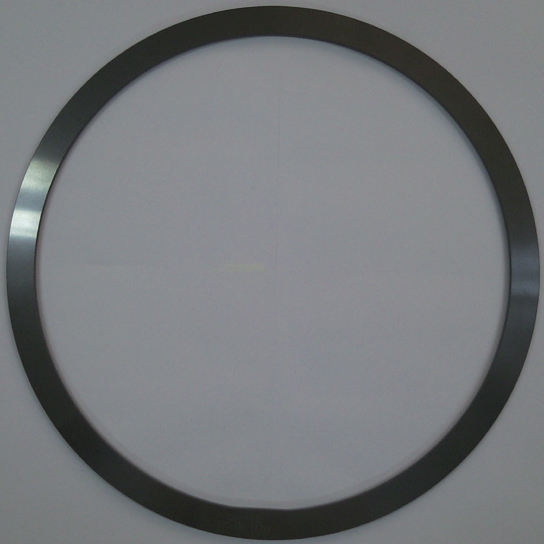
Particle control and corrosion resistance enhancement process for reaction sintering silicon carbide ring

Technology overview: reaction sintering silicon carbide is compact https://korean-machinery.com///inquirysintered body manufactured by mixing silicon carbide powder and carbon and then impregnating metal Si at high temperature. Penetrated metal Si reacts to carbon and creates new reaction sintering silicon carbide, while the rest fills the remaining pores, so that almost 0% porosity product can be produced. This method is applied to large tube, boat or ring type products in semiconductor process. Reaction sintering SiC fixture has such high resistance against plasma that more usage time can be expected compared with existing silicon ring, thus it is applied to the etching process, one of the critical processes in semiconductor manufacturing. Functions required for silicon carbide ring in this application include long life cycle in plasma environment containing fluorine, substandard particle generation, and low surface impurity concentration. To solve this, development including consideration on etching tool was performed for raw material high purification, optimized final product cleaning method, and longer life cycle in fluorine constraining plasma environment. Studies were performed on drug types, cleaning methods, and degreasing methods to be used in developing product cleaning method. Also, high density can be achieved through silicon carbide powder composition adjustment by observing the etching trend of plasma in reaction sintering silicon carbide, and reducing usage time can be resulted from testing in an environment similar to actual environment. This was proven from actual final consumer environment, and the capability on silicon carbide material and quality was recognized. The application scope of developed silicon carbide ring becomes wider, the demand keeps increasing, and application to different shape of products other than rings is consistently increasing, so great economic benefits are expected.

Untitled-12.jpg
Industrialization: Si ring consistently used in semiconductor processes is gradually substituted by reaction sintering silicon carbide rink. As a result of consistently contacting to the world’s number 1 semiconductor chip maker who has business transaction with Inocera and concentrating on new product promotion, now Inocera has about 600~800 million won of annual sales and gets favorable technical comments on product durability, therefore its sales are expected to be increasing accordingly. Now the company is widening its technical application to different shapes of fixtures other than ring shape. Also, being recognized with its technical skills, the company concluded a product supply contract with a global semiconductor equipment company, and is trying to enter the global market based on that.
Problem-solving in industrialization: Optimized cleaning method, particle measuring technique, and plasma resistance measuring techniques in the material are product element technologies required for industrialization. But entering the market was difficult in the early stage, because cleaning methods or particle measuring techniques are not commonly shared, but rather treated as companies’ know-how. Also, etching tool in the plasma environment for reaction sintering silicon carbide was an unknown field, because nobody had tried it before. But, as the company developed appropriate particle measuring method first, they can understand impact on many cleaning processes. Based on that, the company developed a nearly optimized cleaning method. Also, as the company established test etching equipment with the support of this task and observed the etching ratio of silicon carbide materials and etching tool, the company can understand optimal silicon carbide composition and solve issues through existing silicon carbide composition adjustment techniques.

Micro structure_before etching  /  Micro structure_after etching


korean-machinery.com | Blog Magazine of korean-machinery, brands and Goods

Combined vibration controlling mount industrializing technology

https://korean-machinery.com///inquiryTechnology overview: The goal is to develop a vibration controlling system essential to operate semiconductor and display manufacturing devices and other extremely sensitive manufacturing/ inspection devices. The combined controlling system has been developed, which operates vibration proof and controls transient vibration and micro-vibration at the same time. It has been industrialized by applying vibration criteria of a device considered structural dynamic characteristics and excitation force of superfine production line. It can survey and monitor the status of a PC interface device. It meets with the BBN Criteria Class D level. A combined mount combining a MR damper vibration controller and an electro-magnetic shaker with an air spring vibration proof device has been designed and manufactured.
Vibration controlling algorithm considering excitation force, dynamic characteristics of a building structure and vibration guides of a device has been developed. Controlling system technology has been developed. The combined vibration controlling system using a MR damper, electro-magnetic and intelligence control type module to synthetically control environmental vibration, transient response vibration, etc., occurring when operating an extremely sensitive device has been industrialized.

Product Outline                                                          Controller

It is the specialized diagnosis system including a control system of 4~24 controllable mounts and monitoring, as the six-degrees of freedom combined vibration proof system. It has input and output by vibration controlling algorithm, this algorithm-realized embedded controller and CAN communications. The combined mount is the active control system that combines a vibration proof device blocking excitation force, a semi-active vibration controller controlling power and an active type shaker. The controlling algorithm calculates the controlling power using a vibration status measured by a vibration sensor and vibration is removed by sending the calculated controlling power to an operator as a controlling order.

Industrialization: Sales of MRAM, a combined type of Air Spring and MR Damper, have risen upon completion of development, once commercialized while conducting a research and after its industrialization applied to the production lines of Samsung Electronics Co., Ltd, MEMC, LG Electronics, etc. Since domestic technology is applied, it can significantly lower time and engineering fees. After development, we received many inquiries from companies requiring precise vibration control such as semiconductor devices, coater devices, thickness gauges, nanoprocessing, high-sensitive devices, etc. and applied the combined vibration controlling mount system.
Personnel from SK Hynix participated in research so that it can be applied in the actual field. SK Hynix is actively involved in R&D and industrialization so that it can applied to a field right away. Despite high prices in Japan, the USA, etc., performance is dissatisfactory
and getting AS is difficult. However, there is no proper alternative.
It seems promising since development of the combined vibration controlling mount system has been accepted as a good alternative to consumers of domestic displays and precision devices.

Problem-solving in industrialization: The key of the device is credibility of performance. When carrying out a task, a leveling location, controlled frequency area, noise level, control freedom, etc., are evaluated using various measurement evaluation methods by stating controlling performance in the quantitative performance evaluation item and the product credibility is evaluated by KTL. Vibration environment and characteristics of an applied field are analyzed, an installation planned superfine device is produced and dynamic characteristics of a testing device are analyzed and evaluated. The optimal smart-VS considering vibration tolerance criteria and dynamic characteristics of a device is selected. A professional engineer of RMS Technology Co., Ltd. precisely adjusts vibration proof and vibration control performance suitable for a selected field and device. After confirming targeted performance of vibration control and vibration proof by measuring and evaluating vibration, an optimized product is installed with setting tuning work. After
installation is completed, whether vibration performance is satisfactory or not is confirmed. A product is marketed to existing customers through actual results in the vibration controlling area of displays and semiconductor devices and provision of various vibration controlling total solutions. The product is drawing positive responses based on level of satisfaction after use.

korean-machinery.com | Blog Magazine of korean-machinery, brands and Goods

Manufacturing technology of low-cost, high-strength, and anti-abrasion silicon nitride and silicon carbide with lifespan enhanced by 10% for next-generation high-efficiency equipment

Technology overview: Related to SRBSN (Sintered Reaction Bonded Silicon Nitride), as the silicon nitride ceramics is excellent in high- strength, high-toughness, anti-abrasion properties compared with other materials, https://korean-machinery.com///inquiryand shows stable performance in extreme surroundings, such as high temperature, high load, etc., it is in the limelight as a promising material capable of replacing the existing materials, such as metal, sintered carbides, etc. As the silicon nitride ceramics were manufactured using the high-price and high-purity overseas silicon nitride powder until now, its application to industry has been limited. In order to solve this problem, we have developed the silicon nitride material based on SRBSN technology using low-cost silicon powder which can be mass-produced with low cost. Due to its eco-friendliness and reduction of the manufacturing cost, we expect that our product will be briskly applied to the overall application industry. Next, related to CDC (Carbide Derived Carbon), mechanical seal parts are mainly used in the severe surroundings both mechanically and chemically, and until now sintered carbon, sintered carbides, etc. were mainly used as the raw material of the parts, but there is a drift that the demand on the structural ceramics is increasing day by day, such as silicon carbide which is outstanding in high hardness, chemical resistance and heat resistance, or alumina. However, the performance of structural ceramics gets lowered at the unlubricated state caused by high frictional coefficient and brittleness via-a-vis general solid lubricant material, and in order to solve this problem, coating of solid lubricant is tried on the surface of ceramics.  Among them, CDC is the method of extracting only metal atom from carbide ceramics like silicon carbide and forming the carbon layer on the surface, and its property is very excellent compared with the thin film, such as DLC, MoS2. etc., already used as coating for lubrication. It is expected that application of the developed  CDC product  to the mechanical seal parts will contribute to strengthening the technology of domestic enterprises and market competitiveness pursuant to increase of the product’s lifespan.

Untitled-30.jpg

Industrialization: Related to SRBSN, the existing SUS material has been used as the material of bush bearing for zinc galvanizing and sputter roller for LCD, it is being replaced to silicon nitride material due to its weakness in anti-abrasion, and Wonik QnC Corporation  has the record of having delivered some silicon nitride products engrafted with low-price SRBSN technology. Also, we plan to carry forward sales increase by entering the market of insulation-bushing silicon nitride product for grinding pad and solar CVD of the semiconductor CMP process. Next, related to CDC, we have secured the reliability test of the CDC product  for the mechanical seal used in general pump and high-speed pump, and now we are proceeding with the customer certification test for replacing the existing mechanical seal product. We expect to have a considerable ripple effect when entering the market through already secured customers.

Problem-solving in industrialization: When developing the SRBSN material, we could solve the problem caused by the hydration reaction in the mixture pursuant to use of Si, the starting raw material, through optimization of the mixture time. Although the problem of the product’s unit cost increase was anticipated as a long-time nitriding process was required for reverting to the silicon nitride, we could produce the product with low cost vis-a-vis the existing silicon nitride through optimization of the equipment for nitriding process and the jig structure design.

Technology developer: Wonik QnC Corporation  / +82-54-479-9800 / www.wonikqnc.com

korean-machinery.com | Blog Magazine of korean-machinery, brands and Goods

Key components of auto-seeding for high-quality sapphire ingot growth furnace

Technology overview: Sapphire is a crystal created by melting aluminum oxide at temperature higher than 2,100˚C followed by being grown as a single crystal. Up until now, https://korean-machinery.com///inquiryindustrial use of sapphire was limited to LED field; however, application fields have been expanded and diversified due to improvement in manufacture technique and cost reduction by entrance of new manufacturers. Among various methods of growing sapphire, Kyropoulos method has an advantage of producing high-quality crystal, better for large caliber; however, process of seeding that induces initial crystallization by contacting seed crystals to surface of melted material must be performed. This process has to be conducted following an instruction manual strictly by a highly skilled engineer who has obtained work technique for a long period of time, which may be considered as a disadvantage. Since it is highly dependent on engineer and manual, the yield has not been stable, thereby posing difficulty in increasing production capacity. The problem triggered the development of key components for auto-seeding.

Core technologies of auto-seeding, which are the measurement of temperature and surface image of melted material, driving module automation and development of linking program, were developed and applied to growth furnace of sapphire. Through application of auto- seeding technology to existing process, sapphire production has been standardized, thereby contributing to stabilization of production yield rate. Therefore, the production is expected to grow more than 200% compared to the previous production when a Kyropoulos grower equipped with the developed technology is installed in mass-production line.

Industrialization: The iPhone by Apple, the smartphone manufacturer, uses sapphire for marketing of premium-quality phone, and major cell phone companies of China have also introduced products with application of sapphire front glass, targeting the large market of China. Furthermore, based on rapidly growing distribution rate of smartphones, China has aggressively engaged in investment for production facility of sapphire single crystal. Kyropoulos equipment applied with auto-seeding technology developed by DKAZTEC Co., Ltd. was acknowledged with its stable yield, large quantity productivity and low production cost, accomplishing sales in scale of KRW 14 billion to a Chinese company. In addition, large sapphire with excellence in optical quality was manufactured, and sapphire window used for defense was produced, which successfully internalized the material highly dependent on foreign countries. Through establishment of the foundation for the domestic field of sapphire and development of the technology, global competitiveness and leadership were secured.

Problem-solving in industrialization: Since the manual seeding previously used implemented the best decisions through multilateral interpretation on the situation based on various information, it posed a problem that was highly dependent on skills and experiences of engineers. In order to automate the process, the development was proceeded separately for a vision system that acts as human eyes, algorithm acting as brain, and driving module part acting as human arms. Errors created from the process of development were interpreted in a simple sense. For example, contamination created from evaporation of melted material and deformation of internal material by high temperature causes a problem of interfering with the vision system; however, the problem was solved with the development of the multichannel system. In addition, for performance of components in driving module (e.g. precision of pulling transfer distance, repeatability, weight accuracy, etc.) and reproducibility of initial form of the grown crystal, reliabilities of materials were obtained through the authorized testing institutes (utilized as statistical figures). As a result, reproducibility could be obtained by characteristics of highly repetitive motion, and the process stabilization was achieved based on the result. In particular, growth furnace of high-quality sapphire was applied with auto-seeding system, thereby preparing a foundation for improvement of the sapphire industry to higher level.

Technology developer: DKAZTEC Co., Ltd. / +82-61-460-5800 / www.dkaztec.co.kr

Kyropoulos growth equipment applied with the developed key components of auto-seeding
/  Analysis image (Captured) of auto-seeding


korean-machinery.com | Blog Magazine of korean-machinery, brands and Goods

International standards on the electro-foaming fusion wrap

Technology overview: The existing electro-fusion sheet for pipes has superior watertightness and durability, compared to a mechanical connection method, as the https://korean-machinery.com///inquirysurface of a pipe and a PE sheet  is melted by electrothermal wire for fusion. However, a gap caused by the overlapped part of sheets or a difference in external diameters of two pipes, arising during production or moving of pipes, can’t be solved by the heat of electrothermal wire, which often leads to leakage. This problem can be solved by the electro-foaming fusion wrap, which can close such gaps through a foaming method for improved watertightness and durability. The electro-foaming  fusion wrap contains electrothermal wire and a temperature sensor inside the foaming fusion sheet. As for products with small and medium diameters (D150~D600), electrothermal  wire is laid at an interval of 8㎜ (single) and 10㎜ (dual) in order to prevent a dent of a pipe wall, caused by rising temperatures of the overlapped part. In addition, electrothermal wire is coated with glass fiber, and base mesh which fixes the wire is included in the foaming sheet so as to solve the short circuit problem of the wire. And the surface area for heat dissipation has been increased by adopting an indirect heating method through glass fiber coating instead of direct heating, which also prevents carbonization of resin caused by high temperature.

Industrialization: The product has especially targeted the European market where most countries use PE pipes. Between 2011 and 2012, a sample of the electro-foaming fusion wrap was sent to KWH Pipe in Finland for testing. As a result, the product was registered with KWH Pipe in 2013 for regular supply, and products of various diameters have been exported to KWH Pipe Sweden. In 2012, KWH Pipe presented the electro-foaming fusion wrap at the Water and Sewer Pipe Exhibition held in Sweden. The successful results in Sweden led to another opportunity such as sample presentation and testing for Plastitalia S.p.A in Italy, Pipelife in Austria, and INOAC in Japan. In particular, there has been an effort to register international standards for the product, so that NP (New Proposal) and CD (Committee Draft) in the area of ISO/ TC 138/SC 1(pipes) were submitted in 2012. The DIS (Draft International  Standard) was circulated to the member bodies for the vote but the draft is to be approved as TS (Technical Specification) first and then as an international standard later because the product is a relatively new item and has not many cases of use in countries other than Korea.

Problem-solving in industrialization: The entry to the domestic market was relatively easy, but penetration to the global market as a new item and standardization was a significant challenge. Therefore, joint research with KWH (Finland), leading the PE sewer pipe market in terms of technologies and scale, began in 2008 prior to the submission of NP (New Proposal) in 2012, and samples were presented to Plastitalia in Italy and Pipelife in Austria so as to make known the product to the global market. In addition, a presentation on the product and standardization was given at the Plastic Pipe Conference in 2011, drawing the attention of the market to EFF WRAP, and then NP was submitted to ISO.

Technology developer:

Industry Academic Cooperation Foundation Mokwon University / +82-42-829-7831 / http://sanhak.mokwon.ac.kr

AZUMI / +82-31-701-1305 / www.azumi.co.kr

korean-machinery.com | Blog Magazine of korean-machinery, brands and Goods