Hoong-A — Global Leader in the Automation Packaging

https://korean-machinery.com///inquiry

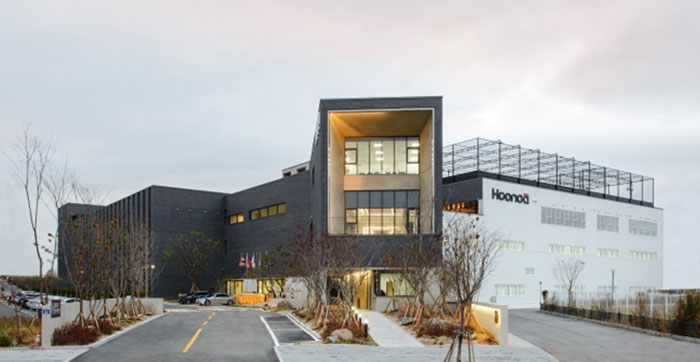
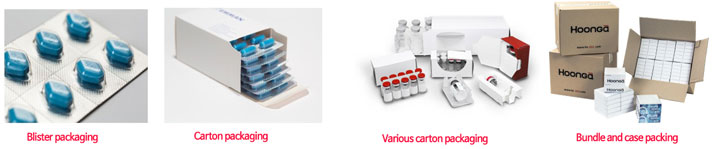
Hoong-A Corporation is a global company specialized in manufacturing packaging machines for various industries such as pharmaceuticals, cosmetics, foods, oral products and consumable products, etc. Based on almost 50 years of experienced technology, Hoong-A has provided excellent packaging solutions for blister, cartoner, bundler, case packer and palletizer, with its automation system.
This is a company specializing in high-speed and volume-packaging for mass-production with operations in the USA, China, India, Bangladesh, Egypt, Algeria, and Iran — servicing over 800 customers throughout 70 countries across the globe.
Hoong-A — Global Leader in the Automation Packaging


Its customers include Pfizer, GlaxoSmithKline, Merck, Sanofi, Sandoz, Colgate, Johnson and Johnson, P&G, Unilever, and Abbott Laboratories — among other multinational giants of industry.
Also, to meet any and all of customer needs anywhere in the world, around 50 countries’ distributors are offering comprehensive diagnostic services.
Hoong-A’s products employ unique and patented features and functions — to guarantee reliable, efficient, flexible, and easy-to-use production for all your manufacturing needs.
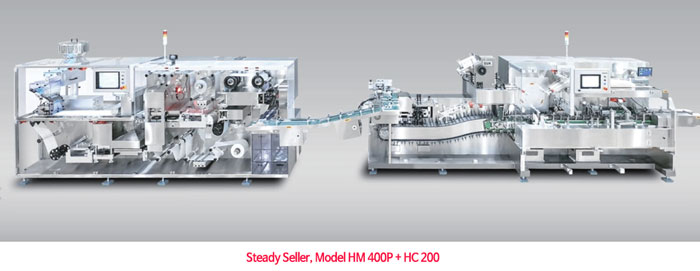
Hoong-A’s blister machines produce 100 to 1,000 blisters per minute and offer intermittent and continuous motion options. The machines can be easily utilized to produce tablets, capsules, soft gel, liquid dose and oral care products, and industrial goods. Multiple forming and lid materials are accessible including CR (child resistant) and tropical foil.
Hoong-A — Global Leader in the Automation Packaging


Hoong-A’s cartoners operate at speeds of 100 to 500 cartons per minute through intermittent and continuous motion options. End-product capabilities include blisters, pillow packs, bottles, tubes, vials, and sachets — with options for data code printing, reading, labeling and booklet inserter. Designed for easy operation, cartoners ensure reliable production through patented integration with the company’s blister machines.

Hoong-A — Global Leader in the Automation Packaging


Hoong-A’s easy-to-operate products enable its customers to produce efficient and cost-effective packaging of the highest quality with the best ROI in the industry.
All Hoong-A’s machines and parts are certified and guaranteed through rigorous quality-control inspections. Hoong-A not only delivers and installs the machines quickly to over 50 affiliated locations, but also speedily responds to customers’ queries and feedback. If the security of your product is of paramount of importance, then Hoong-A is the best choice for your company’s success.
Hoong-A — Global Leader in the Automation Packaging


Hoong-A has successfully and continuously invested in its resources for research and development for future product development. As a result of accumulated experienced technology and constant investment, Hoong-A received an award for “Exporting 50 million dollars in sales” in 2021. It is the first company to receive an award in this packaging field in Korea.
Hoong-A is always striving to ensure customer satisfaction with the best service and high quality of its products.

Hoong-A — Global Leader in the Automation Packaging


korean-machinery.com | Blog Magazine of korean-machinery, brands and Goods

Hottest Attractions on Jeju Island’s Eastern Coast

https://korean-machinery.com///inquiry

Hamdeok Seoubong Beach
HHamdeok Seoubong Beach is located just over 50 minutes’ drive away from Jeju International Airport in the direction of Seongsan Ilchulbong Tuff Cone. The beach is perfect for beginner swimmers and touring families as the waters are only waist-high even away from shore.

Hamdeok Seoubong Beach

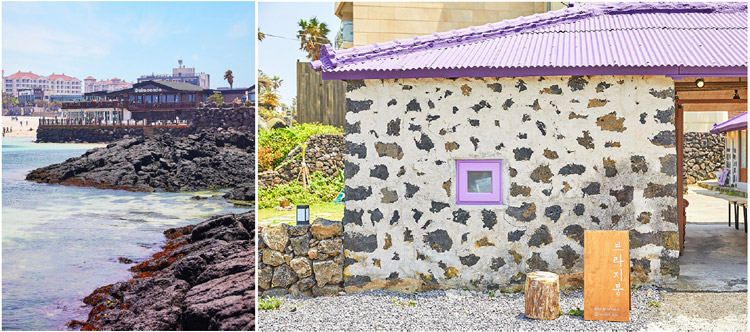
Delmoondo & Bora Roof
Located at Hamdeok Seoubong Beach, Café Delmoondo is the perfect spot to relax. A sip of an icy cold drink while taking in the ocean view from Café Delmoondo’s terrace is its own reward.
Another trending café near the beach is Bora Roof, newly opened in early 2021. As the name implies, the purple colored roof and window frames are quite eye-catching, quickly becoming a hot spot for social media photos.

Delmoondo & Bora Roof


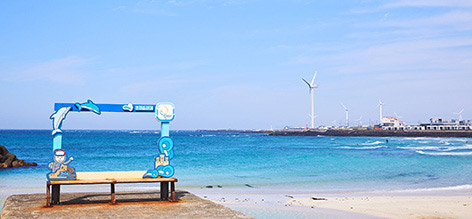
Gimnyeong Seongsegi Beach
Gimnyeong Seongsegi Beach is famous for its cobalt blue waters. Every summer, the beach is filled with people looking to swim, surf, paddle board, and enjoy other aquatic activities. For something really special, we recommend the yacht tour. Aboard the yacht, you can try your hand at sea fishing, or simply keep your eyes peeled for sightings of the dolphins that naturally swim here.

Gimnyeong Seongsegi Beach

Daesugil Dabang, Sosimhan Bookstore and Bravo Beach
Souvenirs make great mementos to remind you of your trip after it ends. At Daesugil Dabang in Pyeongdae-ri, you will find a variety of gift options, including candles, postcards and dream catchers. In particular, the jelly candles make for excellent gifts as they bear the beauty of Jeju by using seashells and sand collected from Jeju beaches.
At Sosimhan Bookstore, you can find cute items made by Jeju illustrators, ranging from postcards and posters to mobiles. In a corner of the store, tourists can rest with a cup of coffee or barley tea.
Bravo Beach is a new café located near Seongsan that gives off the atmosphere of a beach resort. There are plenty of bed-shaped rest areas in the outdoor garden, spread over an impressive 1,650m2.

Daesugil Dabang, Sosimhan Bookstore and Bravo Beach

The above article is courtesy of VisitKorea, the official website of the Korea Tourism Organization (www.visitkorea.or.kr)
 
korean-machinery.com | Blog Magazine of korean-machinery, brands and Goods
Korea’s Beautiful Script, Hangeul

https://korean-machinery.com///inquiry

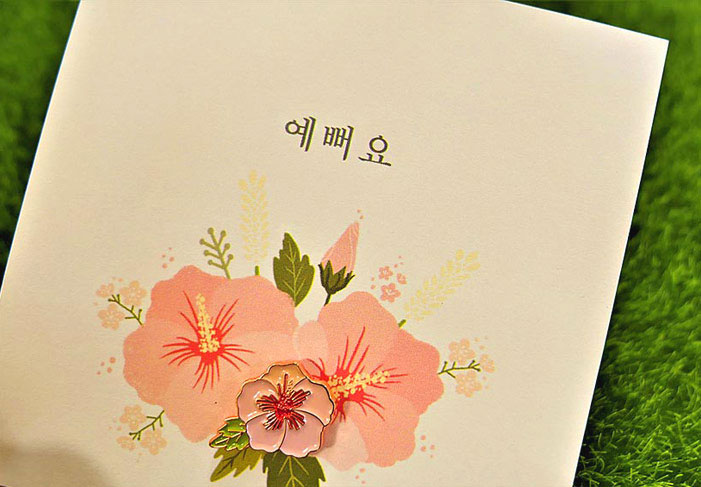
October 9 of every year holds a very special place in the hearts of Koreans; it is the birthday of Hangeul, the native Korean alphabet. The Korean alphabet is unique in that it is the only writing system in the world about which both the creation date and creator are known. Before the invention of Hangeul, Chinese characters called “hanja” were used in Korea. However, hanja was difficult to learn, especially for people of lower social status with little to no access to education, and this led to rampant illiteracy throughout the country.
In order to resolve the problem, King Sejong the Great (r. 1418-1450) began developing a new writing system that would be easy to access as well as to learn. The invention of the new script was started in 1443 and Hangeul underwent three years of trials before being official completed in 1446. At that time, Hangeul was disseminated with a thorough explanation of logic behind each stroke of its characters in the text

Korea’s Beautiful Script, Hangeul

What does Hangeul mean?

The name Hangeul is made up of two words: han (한) and geul (글). Han means either “big” or “great,” and geul refers to a writing script; Hangeul, therefore, means “great alphabet.” The original name of the Korean alphabet was “Hunminjeongeum,” which translates to “the proper guiding alphabet of the people.”
When Hunminjeongeum was first created, it consisted of 28 letters. From its original system, four letters have been dropped and the remaining 24 letters are now commonly referred to as Hangeul. Hunminjeongeum, or Hangeul, is not only easy to learn and convenient to use, but also uniquely scientific in its creation. In recognition of such virtues, the UNESCO inscribed the Hunminjeongeum Haeryebon (Guidebook) on its Memory of the World Register in October 1997.
Hangeul is a writing system that involves combining any of the standard 14 consonants and 10 vowels to form one-syllable blocks. Each vowel is made of a line or lines that represent the sky, the earth and people, while consonants reflect the shape of a human mouth during pronunciation. Besides the standard consonants and vowels, there are also 5 compound consonants and 11 compound vowels that make up additional 16 common sounds.

Who exactly was King Sejong the Great?

King Sejong the Great was inaugurated as the fourth king of the Joseon dynasty in 1418. As a leader, he put his passion for intellectual pursuits, love for his people, and keen interest in improving the lives of the common people into action. Consequently, the Joseon dynasty made great strides in various fields during his reign, improving the lives of his subjects in all aspects. Ultimately, the king’s achievements and benevolence led to the coining of the nickname, “King Sejong the Great.” The warm-hearted king is revered today, as demonstrated by his portrait on the 10,000 won bill!

Korea’s Beautiful Script, Hangeul

Where can I experience Hangeul?
The breath of living language, National Hangeul Museum

The National Hangeul Museum showcases the history and changes over time of the national script. Visitors can also play and learn Hangeul in the museum’s unique activity zones. See the changes to the way Hangeul is written from 1443 until now, play games using Hangeul toys, and learn to read and write your name!
•National Hangeul Museum
•>> Address: 139, Seobinggo-ro, Yongsan-gu, Seoul
•>> Admission: Free
•>> Website: http://www.hangeul.go.kr (Korean, English, Japanese, Chinese)

All about King Sejong! King Sejong Story & King Sejong the Great Memorial Hall

If you’re curious about the creator of Hangeul, visit King Sejong Story or King Sejong the Great Memorial Hall. These two exhibition halls display the story of King Sejong’s life, as well as his many achievements, including Hangeul.
•King Sejong Story
•>> Address: 175, Sejong-daero, Jongno-gu, Seoul
•>> Admission: Free
•>> Website: http://www.sejongstory.or.kr (Korean, English, Japanese, Chinese, Spanish)
•>> King Sejong the Great Memorial Hall
•>> Address: 56, Hoegi-ro, Dongdaemun-gu, Seoul
•>> Admission: Adults 3,000 won / Teenagers & Children 1,500 won
•>> Website: http://www.sejongkorea.org/ (Korean only)

More info
▶ National Institute of Korean Language website: http://www.korean.go.kr (Korean, English)
▶ 1330 Korea Travel Hotline: +82-2-1330 (Korean, English, Japanese, Chinese, Russian, Vietnamese, Thai, Malay)
The above article is courtesy of VisitKorea, the official website of the Korea Tourism Organization (www.visitkorea.or.kr)


korean-machinery.com | Blog Magazine of korean-machinery, brands and Goods
A Shopping Paradise Under your Feet, Seoul’s Top Underground Shopping Malls

https://korean-machinery.com///inquiry

Korea’s four distinctive seasons, with cold winds in winter or the sudden downpours during the rainy season in summer, may cause varying levels of inconvenience in having a pleasant shopping experience in Korea. However, the weather causes no problem at the top five underground shopping malls in Seoul, where one can go and fully enjoy shopping, without being restricted by the whims of weather. Not only are these shopping malls lined with shops, but they are also packed with restaurants, cafés, and cultural attractions. Plus, these malls are connected to the subway, allowing you visit the malls conveniently and enjoy shopping while keeping your feet dry even in the middle of a rain storm.

Goto Mall (Gangnam Terminal Underground Shopping Center) and Famille Station

Goto Mall, a contraction of gosokteomineol, meaning “express bus terminal,” and Famille Station are often referred to as shopping heaven for women. A long shopping aisle connecting Banpo Station (Seoul Subway Line 7) and Express Bus Terminal Station (Seoul Subway Line 3, 7, 9) flourishes with multitude of stores offering various goods, making it the largest underground shopping mall of its kind in Seoul. The latest clothing trends, accessories, cosmetics, interior products and wholesale flowers – there’s nothing here you won’t find. You can also enjoy a delicious meal or a cup of coffee at one of the many popular restaurants and coffee shops, or seek entertainment at a movie theater. In addition, shoppers can move easily around the area due to the expansion of aisles that connect Shinsegae Department Center, Central City Terminal, and Express Bus terminal.

Goto Mall (Gangnam Terminal Underground Shopping Center) and Famille Station

Yeongdeungpo Underground Mall and Times Square

Yeongdeungpo has long been a hub of public transportation in Seoul that is always crowded with people coming and going. Since the opening of the mega shopping mall Times Square, it has been drawing even more traffic. Yeongdeungpo Underground Mall offers a variety of products marketed to different age groups from teenagers to seniors. In addition, visitors can also visit Shinsegae Department Store and Times Square connected to the underground mall for a variety of shopping options.

Yeongdeungpo Underground Mall and Times Square

StarfieldCOEX Mall

Starfield COEX Mall is a well-known underground shopping mall in Korea that houses many brand stores. A movie theater, aquarium, duty-free shops, casino, COEX InterContinental Seoul, and department stores are delightfully connected to the underground mall, making it possible to enjoy shopping and cultural experiences without leaving the building. Famous restaurants and trendy dessert cafés, along with character pop-up stores and kid’s cafés located in the mall provide a fun day for all generations. With the opening of Starfield Library in May 2017 (bottom right photo), Starfield COEX Mall is gaining more popularity than ever!

StarfieldCOEX Mall

The above article is courtesy of VisitKorea, the official website of the Korea Tourism Organization(www.visitkorea.or.kr)


korean-machinery.com | Blog Magazine of korean-machinery, brands and Goods

Enjoy Spring Blossom Roads in Seoul

https://korean-machinery.com///inquiry

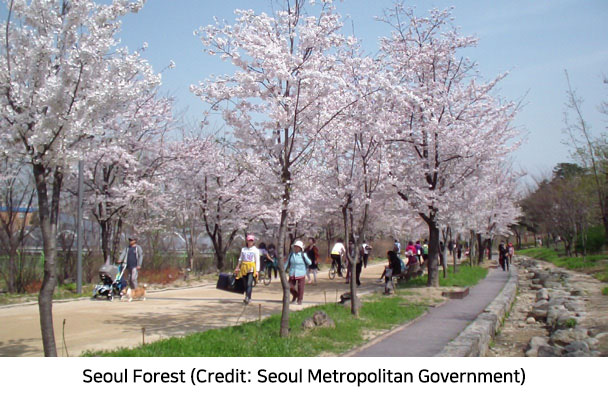
Central Park in Seoul, Seoul Forest
Recognized as one of Seoul’s premium city-parks, a magnificent sight of giant cherry blossom trees can be found at Seoul Forest. Visitors to the park are welcome to enjoy a light walk or a picnic under the gently fluttering cherry blossoms. Don’t miss your chance to get to see deer and observe butterflies at the Ecological Forest while at the park.
Address: 273, Ttukseom-ro, Seongdong-gu, Seoul (more info)

Central Park in Seoul, Seoul Forest

A Perfect Picnic Spot, Children’s Grand Park
Children’s Grand Park is considered to be most stunning during springtime when cherry blossoms are in full bloom. In addition, other attractions such as the zoo and the botanical garden found within the park offer more to see, making the park a perfect picnic spot. Snacks for sale can be found at every corner and full meals are also available at the park’s cafeteria.
Address: 216, Neungdong-ro, Gwangjin-gu, Seoul (more info)

A Perfect Picnic Spot, Children’s Grand Park

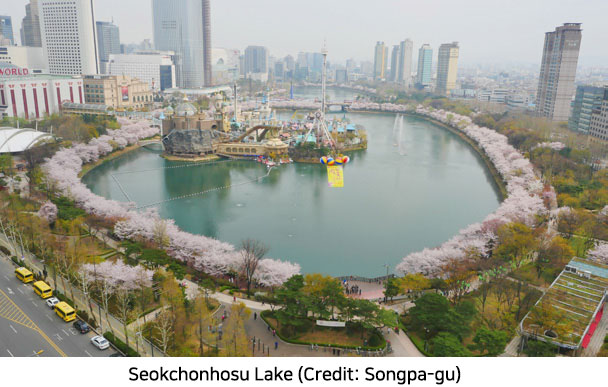
A Scene from a Fairy Tale, Seokchonhosu Lake
Every spring, Seokchonhosu Lake boasts a splendid view of approximately 300,000 cherry blossoms and wild flowers in bloom. In particular, the sight of Lotte World nestled in the middle of Seokchonhosu Lake creates a fairy tale-like picture. The annual Seokchonhosu Lake Cherry Blossom Festival is also held here, offering various events and programs for visitors to enjoy.
Address: 180, Jamsil-ro, Songpa-gu, Seoul (more info)

A Scene from a Fairy Tale, Seokchonhosu Lake

A Park Nearest to the Sky, Haneul Park in World Cup Park
Haneul Park (Sky Park), located within the World Cup Park, stands at the highest elevation among the other parks. Colonies of forsythias can be found along both sides of the trekking paths, creating the mood to enjoy spring to its fullest. Man-made structures are rarely found around the area as the park was formed as a restoration project to preserve ecological environment. Visitors are recommended to prepare a few drinks and snacks in advance before visiting.
Address: 95, Haneulgongwon-ro, Mapo-gu, Seoul (more info)

A Park Nearest to the Sky, Haneul Park in World Cup Park

A Romantic Getaway, Noeul Park in World Cup Park
Noeul Park offers a pleasant sight of forsythias and royal azaleas in early spring and changes its colors to lovely shades of purple around May to June when the iris are in bloom. In addition, metasequoia trees path is well sought by couples as the trees that stretch down along both sides of the walking path set a romantic mood perfect for a relaxing stroll.

A Romantic Getaway, Noeul Park in World Cup Park

Address: 84, Haneulgongwon-ro, Mapo-gu, Seoul (more info)

A Fabulous Flower Party, Seoul National Cemetery
The cherry blossoms cultivated at the Seoul National Cemetery resemble willow trees with their branches hanging down towards the ground as they age, giving one an image of waterfall of flowing flowers. Although Seoul National Cemetery is popular for its fascinating cherry blossoms, other spring blossoms such as forsythias and fringe trees serve as welcoming sights. In addition, the annual Seoul National Cemetery Event with Weeping Cherry Blossoms is held every April, offering various entertainment and experience opportunities.

A Fabulous Flower Party, Seoul National Cemetery

Address: 210, Hyeonchung-ro, Dongjak-gu, Seoul (more info)


korean-machinery.com | Blog Magazine of korean-machinery, brands and Good

Exclusive Agency for Halal Certification in Korea

https://korean-machinery.com///inquiry

The New Halal Certification Act (Act No. 33) on the certification of halal products, which was announced by the Indonesian government and came into effect on October 17, 2019, states that “all products exported to Indonesia must be certified as halal, and the certification is not optional.” However, a grace period of about five years until October 17, 2024 will be allowed. The Act will be applied to food and beverage products first, and to other products (medical devices, health foods, cosmetics, and medicines) in consecutive order.

BPJPH

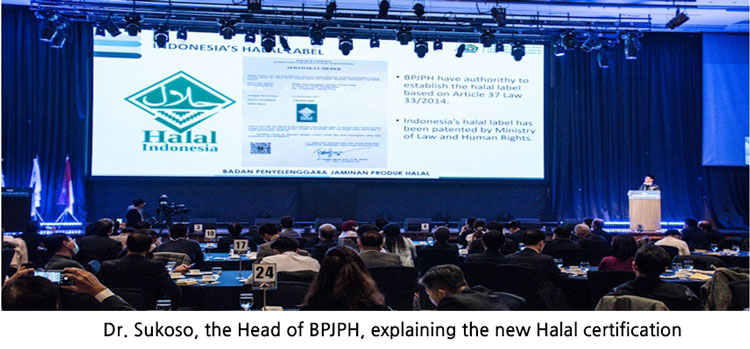
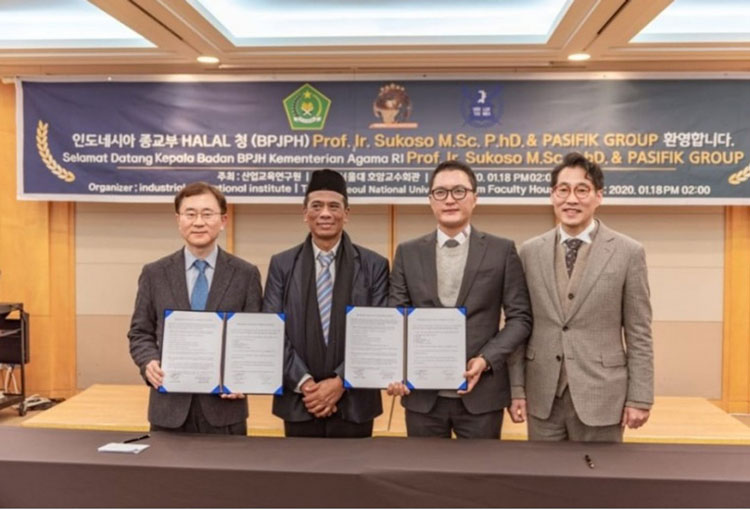
In this regard, Prof. Ir. SUKOSO. M. Sc. Ph.D of BPJPH, Indonesia visited Korea to promote the new certification law. Dr. Sukoso held in-depth discussions on the overall processes applicable to various halal certificates and quarantine products with Lee Kwang-yeon, the Chairman of Pasifik Korea, who was granted the authority to issue halal certificates.

Exclusive Agency for Halal Certification in Korea


“To become successful in the Islamic market with 2 billion in population, a halal certificate, a powerful weapon, is essential,” said Dr. Sukoso in a conversation with Chairman Lee after he visited Korea. “However, Korean companies will have to explore the Indonesian market slowly because the halal certification process is very rigorous,” he continued.
Dr. Sukoso said that he will spare no effort to provide full support to Pasifik Korea, so that Pasifik Korea can successfully carry out its role as a bridgehead into Indonesia for the Asian countries, as the company has been given the authority to review the halal certification applications from Vietnam, Japan, and China, as well as Korea.

“K-Quarantine Product Conference”, “New South Trade & Industry Vision Proclamation Ceremony”

Exclusive Agency for Halal Certification in Korea

Opportunities for expansion into Indonesia
For Muslims, halal is an absolute belief. Because halal means what has been allowed by God, eating anything else is simply incomprehensible and an anti-religious act. In mid-August, a Pakistani couple who had been diagnosed to have been infected with COVID-19 left the self-quarantine area because they had to buy halal food. It was a symbolic event that made us understand what halal food meant for Muslims.
The halal certification is essential for Korean companies that want to enter Indonesia. Mr. Lee, the Chairman of the Pasifik Group, is carrying out the official work of the Representative Office of the Indonesian Chamber of Commerce in Korea, and has been delegated the role of issuing the halal certificates for the applications made from Korea, China, Japan, and Vietnam on behalf of BPJPH.
In other words, Mr. Lee is officially holding the key to the huge Indonesian market.

Exclusive Agency for Halal Certification in Korea


On November 12 and 13, 2020, a quarantine conference and the New South Trade & Industry Vision Proclamation Ceremony were held to caution against the spread of indiscriminate halal certification practices in Korea, and to present a way for true and correct halal certification.
Dr. Sukoso claimed that Koreans still do not correctly understand the halal certification, informed about the negative effect of the existing halal certification agency continuing to issue the halal certificates, and announced the correct procedure on the new halal certification.

halal certification


During his visit to the Quarantine Bio Conference held at COEX on November 12, last year Dr. Sukoso, the Head of BPJPH, said he sincerely hoped that Korea’s excellent quarantine products will advance into Indonesia after being halal-certified. He also heard the explanation about the products and stressed the importance of a halal certificate again while he visited the participating Korean businesses. The Conference opened a new opportunity for Korean companies that produce quarantine materials in a saturated market to expand to Indonesia.

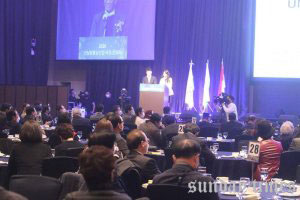
Dr. Sukoso also attended the New South Trade & Industry Vision Proclamation Ceremony held at the K Hotel on November 13 and explained the changes in the new halal certification system in accordance with the law, and future plans.

During his speech on the halal certification at the Ceremony, Dr. Sukoso pointed out the negative impact of the halal certification abuse that is rampant in Korea. He emphasized that the halal certificates issued by the existing halal certification agencies are no longer accepted, and halal certificates not approved by BPJPH are invalid in Indonesia. He went on to warn Korean businessmen not to make the mistake of receiving a halal certificate from private agencies who are abusing their unawareness and still issuing halal certificates.
Mr. Tito Karnavian, the Minister of Home Affairs, Mr. Pachrul Razi, the Minister of Religious Affairs, Ms. Nurwahidayasale, the Secretary-General of the Islam Businesswomen Association, and Mr. Park Jae-hwan, the Chairman of the Korean Association in Indonesia sent congratulatory video messages expressing their regrets for not being able to attend the event personally.

Exclusive Agency for Halal Certification in Korea


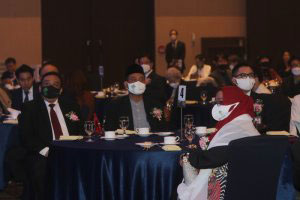
Even though many people could not travel because of COVID-19, the ceremony was attended by Daniel Koo, the Ambassador of BPJPH, and Widia, chairman of the Korea Committee of Islam Businesswomen Association, Anggoro Budiman, chairman of the Korea Committee of the Indonesia Chamber of Commerce, and Deni Isiawan, director of the Economic Cooperation of the Islam Association.
The Indonesian government officials who attended the ceremony talked about the newly changed halal certification with business officials and asked them to achieve many things together, such as distribution and promotion, so excellent Korean products can enter Indonesia through communication and harmony beyond the halal certification.
In his welcoming speech Lee Kwang-yeon, the Chairman of Pasifik Group, expressed his deep gratitude to Dr. Sukoso and the government officials for coming to Korea despite the difficulties caused by COVID-19, and to the ministers and government officials who sent the video messages from afar. Mr. Lee explained that there are people who misunderstand Muslims, but in fact, there is no religion that is as considerate and compassionate as Islam, and that Indonesians respect each other with the idea that “God” is one, even if each other’s religions may be different, and that they are accustomed to caring and humility because Indonesia had been subjected to occupation by other countries.

Exclusive Agency for Halal Certification in Korea


He also commented that the halal certification is a huge opportunity for Korean companies to grow because it is officially carried out by the Indonesian government, and Pasifik Korea will help Korean products make inroads into Indonesia in various ways as a proper certification agency – not as an indiscriminate certification agency, but one which issues certificates under the standardized procedures and strict management.
Dr. Sukoso assured Mr. Lee that he would spare no effort in stabilizing and standardizing the new halal certification system, give full support to Pasifik Korea, and work together with others to achieve big dreams despite the difficult circumstances.


korean-machinery.com | Blog Magazine of korean-machinery, brands and Goods
Automatic Packing System

https://korean-machinery.com///inquiry

[INQ. NO. 2011M40] Hanbaeck Precision System, established on September 9, 2016, is focusing on the processing of semiconductor parts and the development of factory automation solutions as its main businesses. It is manufacturing machinery used for processing semiconductor parts and equipment used for factory automation as its main products.
Based on technical power and customers’ trust built up for many years, the company aims to become a leader in the sector of factory automation equipment and semiconductor parts.
With its experience in precise machining, the company will continue to strive to develop and produce machines used for factory automation and conduct R&D on the utmost technical power, production of relevant equipment and related technology in the same field.


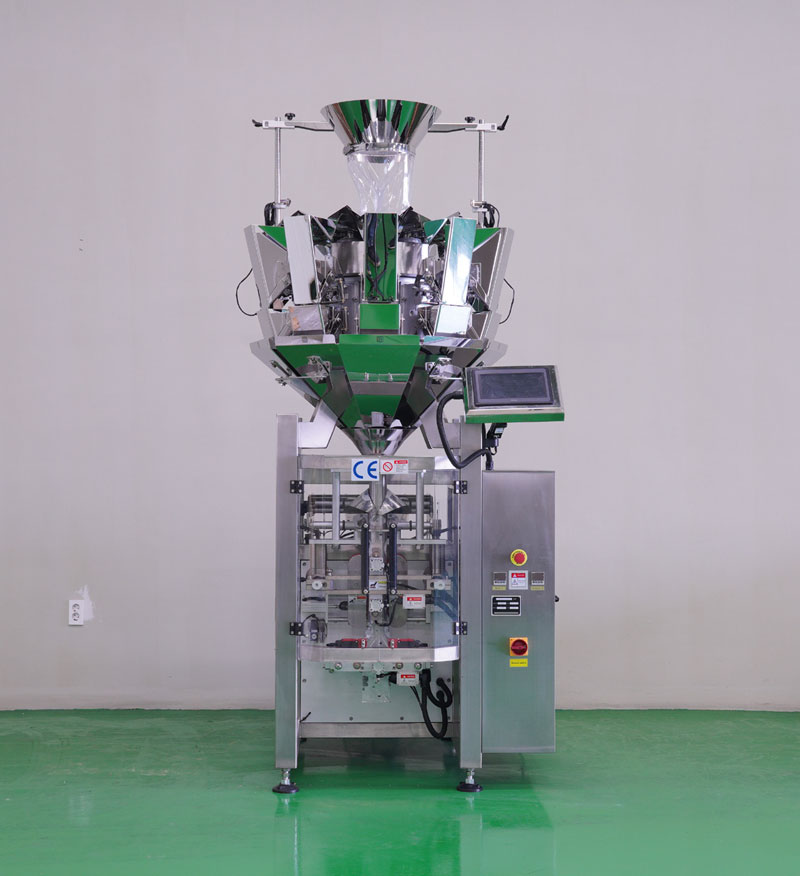
Its automatic packing systems of automatic scales and combined scales are customized to the features of raw materials measured and used for food items, industries, SMEs and large-sized companies.
Thanks to their compact designs, the company’s products are suitable for raw materials requiring high speed and precision, and for the realization of factory automation by connecting with packing systems.
Its products are very easy to keep clean as they can be washed with water thanks to IP65 waterproofing. They are also very simple to clean and maintain as they can be detached without any tools.
The company uses module-based control systems to enhance the safety of its products, so users can save maintenance costs. With high precision and reasonable prices, the company can help realize automation of your company.
In order to keep pace with the rapidly changing factory automation machinery and the growth of manufacturing technology for semiconductor equipment, Hanbaeck Precision System strives to satisfy its customers with outstanding quality and punctual delivery.
Based on the company motto of “I will do it if someone else has to do, I will do it now if it has to be done someday, I will enjoy it if it has to be done anyway,” it will continue to advance.
 
korean-machinery.com | Blog Magazine of korean-machinery, brands and Goods

Small Construction Equipment

https://korean-machinery.com///inquiry

[INQ. NO. 2011M39] Since its establishment in 1986, SHINYOUNG Co., Ltd. has continued to invest in R&D and technical development to become the best small construction equipment manufacturer in Korea.
The company has gained the trust of many customers at home and abroad – based on high-quality products and price competitiveness that meet customer satisfaction.
SHINYOUNG’s SYV series of concrete vibrator action units provide the utmost performance and power. With RPM of 3,000, the rotating parts get less worn out while helping to remove concrete bubbles to make the surface smooth and soft. It is possible to customize rubber hose length for each of the various diameters.


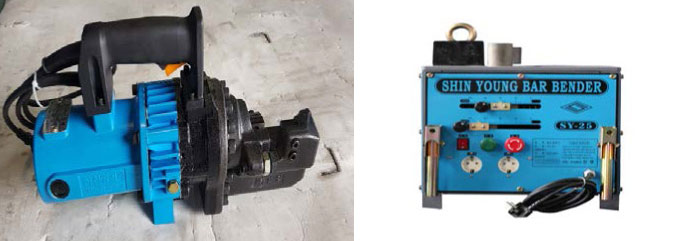
The rebar bender from the company is portable and designed to be continuously used through precise curves. Equipped with a latching device that is able to set two angles in advance, the rebar bender with powerful performance can save valuable working hours. Thanks to its efficient performance, one is able to very simply and safely conduct relevant jobs.
SHINYOUNG’s handy rebar cutter enables one to safely and efficiently cut rebar. The cutter is the lightest in weight, creates a precisely-balanced effect, and provides the most stable performance thanks to the superlatively forged body.
SHINYOUNG is also manufacturing a user-friendly compressor by using an aluminum pulley and rotor.
SHINYOUNG is producing a number of products on its own. And the company has acquired the quality certification mark of CE and is exporting its products manufactured in Korea to many countries around the world. The company is working hard to provide high-quality products to readily meet customers’ particular requests.


korean-machinery.com | Blog Magazine of korean-machinery, brands and Goods

10 Summer Beach Destinations

https://korean-machinery.com///inquiryIf you’re planning on vacationing in Korea this summer, be sure to check out at least one of the following beach destinations! Korea is surrounded on three sides by water, giving it plenty of beaches in a variety of shapes and sizes that offer a welcomed escape from everyday life. Since most beaches in Korea officially open in June or July and close towards the end of August, visitors have only a few months to splash around in the water and soak up the rays. But don’t worry if you miss out on the official summer beach season, as there are plenty of sightseeing activities that you can enjoy all year round!

Map of major beaches in Korea

Guryongpo Beach in Pohang-si, Gyeongsangbuk-doat ongpohang
Guryongpo Beach is about 24 kilometers away from Pohang and 1.5 kilometers from Guryongpo-eup. Thanks to the gentle slope of the ocean floor and the clean seawater, Guryongpo Beach is a favorite vacation spot for swimming enthusiasts. The beach is also popular among fishermen, many of whom troll their lines in Yeongilman Bay.

Sokcho Beach in Sokcho-si, Gangwon-dokcho Beach
Sokcho Beach is well known for the picturesque pine trees that stand proudly along its white sandy coast. One of the perks of this particular beach is that there are many tourist attractions in the surrounding area, including Yeongnangho Lake and Seoraksan Mountain, one of Korea’s most famous mountains.
Given the beach’s range of facilities and nearby accommodations, Sokcho Beach is a convenient place for a weekend trip. Visitors can even rent a fishing rod and go fishing at nearby Jodo Island, or walk towards the pier to get some fresh hoe (sliced raw fish) at one of the local fish markets.
One of the biggest draws of Sokcho Beach is that it is located near Sokcho Express Bus Terminal, making it easy to find for even first-time visitors. Festivals held at Sokcho Beach include the Sunrise Festival on January 1 of every year, and other events that take place during the beach swimming period between July and August for all visitors to enjoy.

Gyeongpo Beach in Gangneung-si, Gangwon-doyeongpo Beach
Gyeongpo Beach is the largest beach on the east coast, and is only about a kilometer away from Gyeongpodae Pavilion, famous for its sunrise view. Perhaps the most striking characteristic of Gyeongpo Beach is its fine powdery sand, which is perfect for barefoot walks along the beach. There is also a beautiful pine tree forest nearby for leisure walks. Beach activities such as banana boating, Jet Skiing, and waterskiing are popular as well. In addition, Gyeongpo Summer Music Festival is held every evening between the end of July and early August, featuring performances from famous bands and hip-hop groups for a beachside party atmosphere.

Naksan Beach in Yangyang-gun, Gangwon-do
With a sandy beach stretching over 1,810 meters, Naksan Beach is one of the top beaches in Gangwon-do, drawing in countless visitors each year. The beach runs along clean waters, bordered by rows of pine trees. In addition to its natural beauty, Naksan Beach also has a variety of water activities such as riding on a banana boat or Jet Ski for those looking for more adventure.
The beach is also a top pick for those who are interested in Korea’s traditional culture, as it is close to Naksansa Temple and Uisangdae Pavilion, which was built to commemorate Great Monk Uisang. As an added bonus, the pavilion is also one of the best places in the area to view the sunrise.

Daecheon Beach in Boryeong-si, Chungcheongnam-do
Daecheon Beach is the largest beach on the west coast, and is known for its shallow and calm waters. The sand on the upper shores of Daecheon Beach is especially soft and easy to wash off because it is composed of finely eroded shells. Closer to the shoreline, the sand is hard packed. These two varieties of sand allow visitors to enjoy both leisure walks and sand scrubs. Daecheon Beach is also home to the annual Boryeong Mud Festival. In the winter, the beach draws large crowds again as locals and tourists flock to the shores for the annual Sunset Festival.

Eurwangni Beach in Jung-gu, Incheon
Eurwangni Beach, located near Seoul and Incheon International Airport, is a popular beach, both for its gorgeous views and clean white sand. The beach’s shallow water also provides the perfect place for children to go swimming. Amenities nearby include a number of lavish resorts and restaurants that serve fresh seafood. Having dinner outside on the terrace of one of these restaurants is the perfect way to watch the final rays of sunlight as they disappear over the horizon! Beachgoers can also rent a fishing boat or a fishing rod to fish off the side of the pier. A variety of beach festivals take place at Eurwangi every summer.

Muchangpo Beach in Boryeong-si, Chungcheongnam-do
Muchangpo Beach is particularly famous for what is known as the “Moses Miracle,” a natural phenomenon in which extreme tides reveal the seafloor for only a few short hours two or three days a month (around the 15th and 30th days of the lunar calendar). The exposed sea floor makes a path about 1.5 kilometers long that reaches all the way from the beach to Seokdaedo Island. The Muchangpo Mystic Sea Road Festival celebrates this occurrence every year in August or September, with the exact timing varying each year. The beach is also known for its scenic coastal drive, clusters of pine trees, and beautiful sunsets.

Haeundae Beach in Haeundae-gu, Busan
The slope of Haeundae Beach is shallow and there is little change in tide, making this beach perfect for swimming. The beach is famous for its views of the sunrise and moonrise as seen from Haewoljeong Pavilion atop Dalmajigogae Hill. Haeundae’s Dalmaji-gil Road, which is located between Haeundae Beach and Songjeong Beach, is another recommended spot for a romantic view of the moonlight glistening off the water’s surface.
Haeundae Beach is also extremely well known for its many cultural events and festivals that are held throughout the year. Visitors can enjoy Haeundae Sand Festival in summer; Busan International Film Festival in fall; and the New Year Festival and Polar Bear Swimming Contest in winter.

Hyeopjae Beach in Jeju-si, Jeju-do
Hyeopjae Beach is one of the best beaches on Jeju Island for swimmers, since the waters are shallow with no sudden drops. Tiny shells in the sand give the beach a silver sheen and make for a firm feel that is perfect for walks along the water’s edge. Once you get into the water, you’ll be pleased to discover that the water is so clean that you can clearly see your toes!
Hallim Park, a major tourist attraction, is only 5 minutes away on foot, and is well worth a visit. The park is landscaped with an abundance of subtropical plants and topiaries, and serves as a cool escape from the summer heat. A pleasant beach with plenty of space, Hyeopjae is all the more beautiful for its view of black basalt rocks to one side and Biyangdo Island standing out in the distance.

Jungmun Saekdal Beach in Seogwipo-si, Jeju-do
Jungmun Saekdal Beach within Jeju Jungmun Resort is a unique beach comprised of a gradient of black, white, red, and gray sand, as well as the famous black volcanic stone of Jeju Island. To the right of the sandy beach is a natural cave that was created by coastal erosion. Rare plants flourish near the cave, offering a convenient spot for some eco-focused sightseeing. The waves and tides can be rather rough along Jungmun, so while conditions are great for wind surfing, Jet Skiing and other water leisure activities, non-swimmers and young children are advised to stick close to the shoreline under the careful watch of lifeguards.
Jungmun Resort is also home to an aquarium, Yeomiji Botanical Garden, Cheonjeyeon Waterfall, and a luster of traditional houses typical on Jeju Island. Various events are held along the beach and within the resort complex throughout the year.

* Swimming season and available facilities subject to change.
* This column was last updated in June 2019, and therefore information may differ from what is presented here. We advise you to check details before visiting.

The above article is courtesy of VisitKorea, the official website of the Korea Tourism Organization (www.visitkorea.or.kr)

korean-machinery.com | Blog Magazine of korean-machinery, brands and Goods

Beginners’ Guide to: Dongdaemun

https://korean-machinery.com///inquiryDongdaemun is a top attraction that is constantly crowded with international visitors! Tourists who visit this area typically only spend an hour or two here, but there are so many things to do or see that you may even spend an entire day exploring. Some of the most representative attractions found in this area include the nation’s first designated treasure, Heunginjimun Gate, the all-time favorite Cheonggyecheon Stream, as well as the notable landmark of this district, Dongdaemun Design Plaza (DDP).
The area of Dongdaemun is bigger than most tourists know and thus, several hidden attractions are often left unexplored. Read on for our very own one-day guide for first-time travelers to have a productive time in the Dongdaemun district!

Heunginjimun Gate & Dongdaemun Seonggwak Park
Heunginjimun Gate is the official name but due to its position on the east side of the outer wall of Seoul Fortress, it is also commonly referred to as Dongdaemun Gate. At that time, four large gates and four small gates were built in the Seoul Fortress surrounding the city. The four main gates (East, West, South, North) each had a Hangeul character attached, indicating benevolence, righteousness, propriety, and wisdom respectively. The east gate of the fortress was formerly named ‘Heunginmun Gate’, but was later changed to ‘Heunginjimun Gate’ with an addition of the Hangeul ‘ji (지)’ which was added to invigorate good energy.
Heunginjimun Gate is the largest gate in Seoul, surpassing even Sungnyemun Gate. It has a semicircular ongsung (a small wall built in front of the gate for complete protection) that differentiates it from the other fortress gates.
There is an uphill road behind the Heunginjimun Gate and it leads to the Dongdaemun Seonggwak Park. Due to the strong presence of other tourist attractions, as well as the small scale of the park, visitors to this area tend to miss out this hidden gem. Here at the park, you can catch a bird’s eye view of Dongdaemun where one can observe a harmonious blend of Korea’s traditional architecture with the modern skyscrapers.
▶TIP) Enjoy night views from Dongdaemun Seonggwak Park
Dongdaemun Seonggwak Park is especially known for its nightscape. Enjoy a spectacular night view of the soft lights glowing from Heunginjimun Gate, along with the vibrant lights emitted from the modern buildings in the background. In particular, the headlights from the countless cars passing on the roads below somehow create an even more dynamic atmosphere.

Cheonggyecheon Stream
Cheonggyecheon Stream flows through Jongno-gu and Jung-gu districts. It is an all-time favorite leisure place for anyone to rest or simply hang out with friends in the heart of the capital.
Though Gwanghwamun is the main entrance to Cheonggyecheon Stream, visitors may also get to the stream from Dongdaemun Station. There are a total of 22 bridges that cross over Cheonggyecheon Stream, with the bridge in Dongdaemun being Ogansugyo Bridge. The bridge is located at the spot of the previous Ogansu Gate, where five streams flowed out of the old capital. Due to urban development, the old gate can no longer be seen, but its memory lives on in the name of the bridge.
Dongdaemun Shopping Complex•Dongdaemun Shopping Town & Pyounghwa Fashion Town
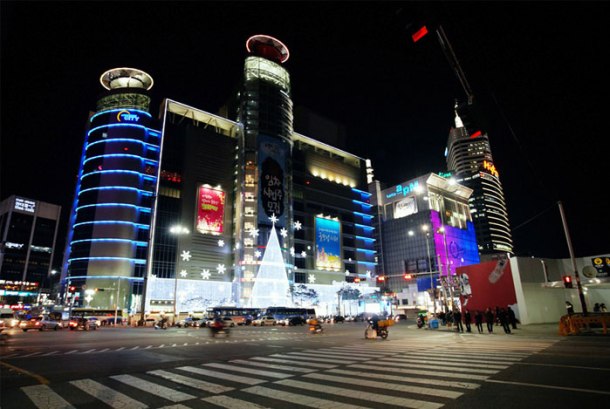
Fashion and shopping are two of the most highly associated words with Dongdaemun. The area was designated as Dongdaemun Fashion Town Special Tourist Zone in 2002 and it gives a completely different vibe from typical shopping malls. Here at Dongdaemun, visitors may enjoy a unique experience of both traditional flea markets, as well as modern shopping complexes.
Although international tourists tend to visit the modern-style shopping malls, Dongdaemun Shopping Complex and Pyounghwa Fashion Town are also highly recommended. Visitors may experience a different vibe from usual shopping, and feel a sense of the traditional flea market instead. Dongdaemun Shopping Complex mainly sells fabric, buttons and other similar materials while fashion-related goods and commodities can be found at Pyounghwa Fashion Town.

Dongdaemun Design Plaza (DDP)
The landmark of Dongdaemun, Dongdaemun Design Plaza (DDP) was designed by world-renowned architect, Zaha Hadid. The DDP is shaped like a swirling spiral, representing the dynamics of Dongdaemun Fashion Town.
The most outstanding feature of DDP lies in its curves and atypical architecture. Neither straight lines nor right angles can be found in the entire structure. There are seven floors (three basement levels and four aboveground levels), but astoundingly, the floors are not exactly distinguishable from the outside.
The structure itself is not only unique on the outside but is also full of fascinating attractions on the inside. The complex is convenient and makes exploring enjoyable as it is divided into four segments namely ‘Art Hall’, ‘Museum’, ‘Design Lab’ and the ‘Oullim Square’. The park next to the DDP is installed with 25,550 LED roses that make a beautiful scene at night. It’s the perfect location for a romantic date night.
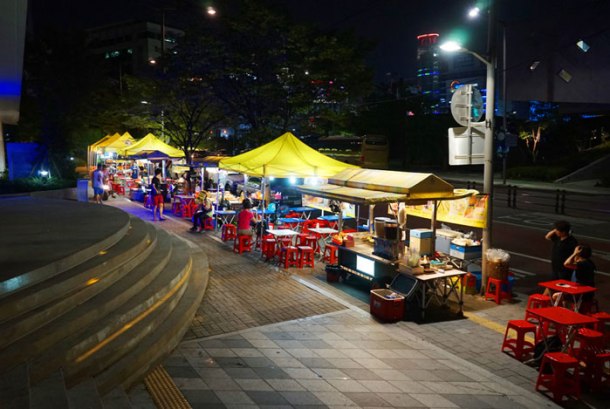
▶TIP) Seoul Bamdokkaebi Night Market exclusively on Fridays & Saturdays
Do not miss out on the exclusive Seoul Bamdokkaebi Night Market. The night market is ongoing until the last week of October, on every Friday and Saturday from 6pm to 11pm. Visitors can enjoy various street foods and even unique fashion shows directed by young designers!

Dongdaemun Night Market (Sebit Market)
As the sun goes down, a night market appears behind Dongdaemun Design Plaza. Street stalls with yellow tents spring up in a row and the place begins to come alive after 11 pm. In the past, this scene was often referred to as “nota,” a compound word formed from ‘noran’ (meaning ‘yellow’ in Korean) and ‘tawol’ (‘tower’ pronounced in Korean), since the market scene is located in front of Doosan Tower. Recently, the name was changed to Dongdaemun Sebit Market.


At the entrance of the Dongdaemun Sebit market, you will be greeted by a cute owl mascot, followed by a row of seemingly countless street stalls selling a wide assortment of items. Besides shopping, you can also enjoy diverse street food for a late-night snack such as gimbap, tteokbokki, and sundae.

* This column was last updated in March 2018, and therefore information may differ from what is presented here. We advise you to check details from the official websites before visiting.

The above article is courtesy of VisitKorea, the official website of the Korea Tourism Organization (www.visitkorea.or.kr)

korean-machinery.com | Blog Magazine of korean-machinery, brands and Goods