 [INQ. NO. 1909M18] The grease trap is a device that filters F.O.G (Fat, Oil, Grease) discharged from restaurants and kitchens. When the wastewater produced in the food treatment process passes through this Grease Trap, it separates the grease using buoyancy created by the difference in oil and water density. This product prevents the oil from flowing into the sewer, which causes the reflux phenomenon. It can also save on costs related to repair work and prevent wastewater from flowing into the sewer
 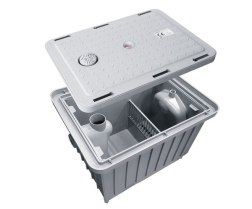 and causing environmental pollution.
Grease Trap (D) features friction between inflow wastewater and a 90° elbow connected to the inlet surface creates the vortex phenomenon with external air through the air-intake-hole.
Wastewater flows down to the oil-separate-plate and FOG float by the plate in the middle of the product. Because of the density difference, the FOG is separated from the wastewater. Then, only the filtered water is emitted through the 90° elbow connected outlet. At the same time, the occurring stench inside the grease trap is emitted with the filtered water that blocks the stench. Of course, the FOG separation ability speaks for itself (CE TEST RESULT).
Grease Trap (E) is a little different from an existing M-43 (D). It is smaller than M-43 (D) to lighten the burden of surface area of the product. Floor shape is changed in accordance with the size of Grease Trap (E) friction between inflow wastewater and 90° elbow connected inlet surface makes vortex phenomenon with external air through the air-intake-hole. Wastewater flows down to the inclined surface and flows over it. F.O.G float in the middle of the product. Because of the density difference, the F.O.G is separated from the wastewater.
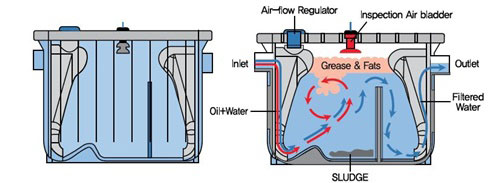 Filter, in front of the outlet strains the debris like food waste. By passing through the blocker, the water flows down goes out through the outlet.
The product features include: Air ventilator integrated type that can be easily installed; gas vent embedded for efficient gas relief; available for both indoor and outdoor use; simple and smart design with PP material. Prevent pipe clogging by grease accumulation, food and backflow. All removable components are easy to clean.
korean-machinery.com | Blog Magazine of korean-machinery, brands and Goods
 HOLO NAVI 1.0 is a HUD navigation for vehicles applying hologram technology; HOLO NAVI 2.0 is a vehicle driving assistance device using motion sensor technology; HOLO NAVI 3.0 implements C-ITS equipment communication between HOLO NAVI products; and HOLO NAVI 4.0 is a solution for the control of automotive electronic platform (AUTO-SAR) using HOLO NAVI products. Accordingly, MAIN INFO is striving for research and development step-by-step based on its long-term roadmap.
 This product is a driving assistance device using motion sensor technology, enabling the driver to receive phone calls and respond to texts (rejection message) using the motion sensor while driving. Also, it is possible to operate Melon Players by applying the motion recognition function.



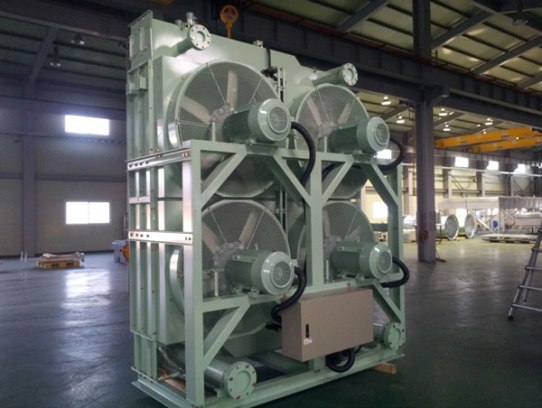
 Construction machines like excavators and forklifts are equipped with not only radiators but also oil coolers and intercoolers. It is mostly made of aluminum and is divided into FIN/TUBE types and BAR types, which are better in terms of the pressure and durability.
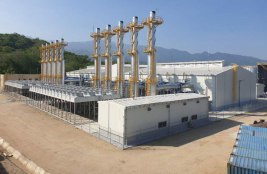
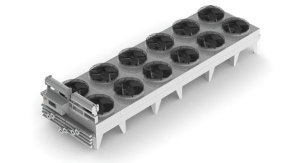 By controlling the temperature and motor speed, such a remote radiator can be manufactured into a quiet type. The anti-corrosion coating process is improving the durability of these products to be used in briny coastal areas. Radiators with capacities ranging from some KW to over 100MW are being operated. In addition, it can also replace a cooling tower that definitely pollutes the environment. Furthermore, a remote radiator can be used as a second cooling system for a generator with the help of a heat exchanger as a first cooling system as shown in the system diagram below.
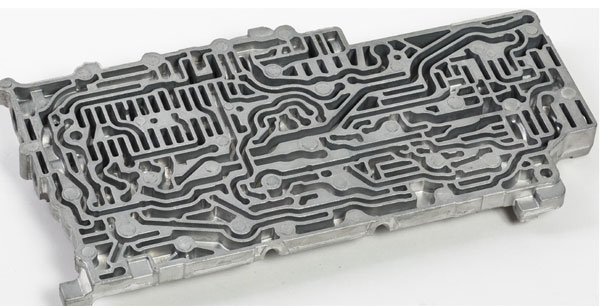 Last year, Daeyong Industry won the ‘Supplier of the Year’ award by GM for its efforts to satisfy customer demands. Its customers require an ever increasing standard of higher quality and more complete structure with lower cost. Following this trend, DaeYong Industry is focusing on the growth of R&D and Quality capabilities and has also achieved certifications such as IATF 16949, ISO 14000, and ISO 45001.
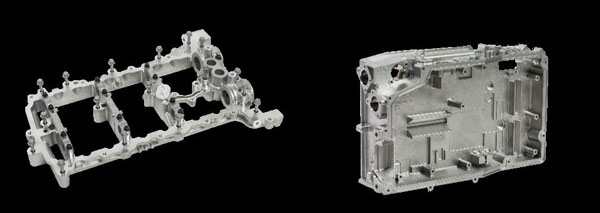 Inverters for EVs are directly supplied to Delphi Technologies, and Hitachi Automotive. The process consists of super high speed, high pressure die casting, machining, and sub assembly and customer requirements are for cleanliness spec- particle size, leak requirement, thin-wall, and light weight.
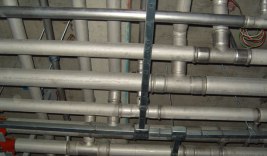 without a welding process. SP-JOINT, the abbreviation of Stainless Power Joint, is non-welded crimping style joint that links stainless steel pipes for general piping work.
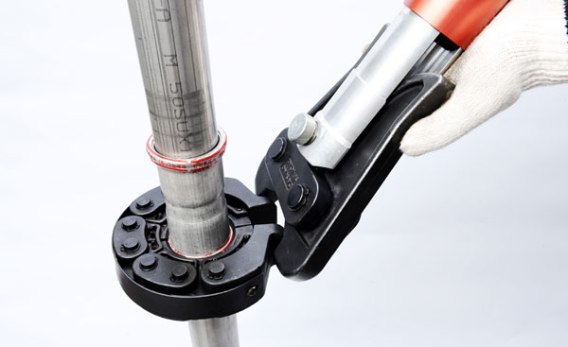 SP-JOINT can be used with 0°C~120°C of water temperature. The serviceable temperature of EMPD rubber ring inserted in SP-JOINT product is –40°C~+140°C. The life of EPDM rubber ring is 45 years when it is consistently used in 80°C, and 114 years in 70°C.
 Dasung Tech acquired certification in 2007 from the Korea Water and Wastewater Works Association for the first time in the field of stainless pipe joints; developed the world’s first double-ring circular crimping method using a rotation gun and produced the product and crimping tools to allow easy fast and economic installation; and contributed to the invigoration of stainless pipelines by applying the product and the tool to drinking water supply, water supply, hot-water supply, heating piping, fire piping, and water supply, hot-water supply and piping in ships.
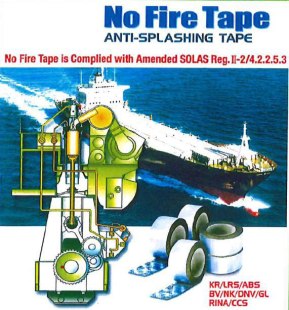 applied to various parts such as ships, offshore structures etc., for the purpose of not burning down in the event of fire, i.e. preventing outbreak of fire, and fire prevention when each fuel and oil pipeline is ruptured.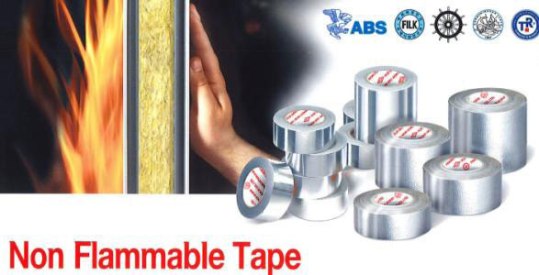
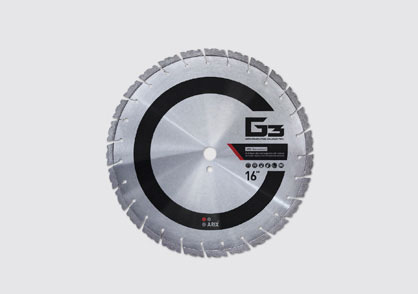
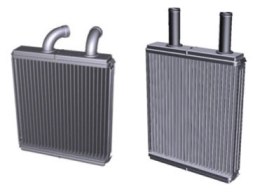 substances. Mainly applied to products, the latter has high heat-exchange efficiency but it is difficult to remove foreign substances, so it is mainly applied to general vehicles. Fan&shroud is a condenser. It is a component that is mounted on the product to allow direct air cooling. It is excellent in mounting and durability with low noise, miniaturization and high performance.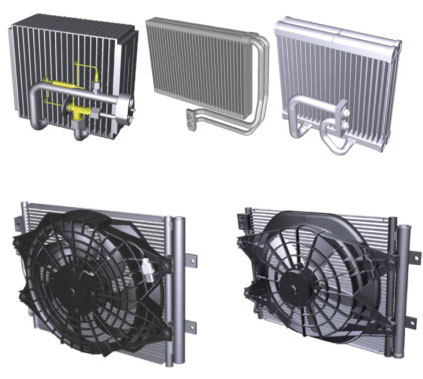
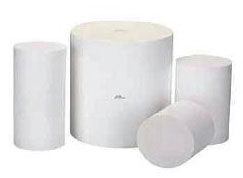 In 2008, the government implemented stronger restrictions requiring higher PM reduction. This prompted Ceracomb to develop and supply a partial DPF system that guarantees more than 50% PM reduction. Restrictions on PM emissions were strengthened in 2011, so Ceracomb developed its active –passive (Hybrid) DPF system that guarantees more than 80% of PM reduction, which is certified by the Korean government.
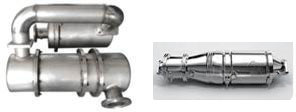 The company also developed the selective catalytic reduction (SCR) catalyst, a technology that removes nitrogen oxides emitted by diesel automobiles, and it is a catalyst which converts NOx into N2 and H2O by reacting the ammonia sprayed from SCR catalyst shear with NOx.


 Korean-Machinery.com