Technology overview: With regard to manufacturing the next-generation high-density semiconductor device, a process that uses Cu substituting the existing AI material has been realized and semiconductor companies of other countries are actively conducting studies on the Cu wiring process. In these circumstances, in the material sector, which is a rear industry, leading companies of other  countries are supplying technocratic products to the market to response to the technology. With domestic ICT industry, which is a front industry, having good international competitiveness, we need to enhance the domestic material industry’s technology power to create a stable industrial environment in the future, and to maintain our competitiveness. At this time, we have developed technologies for manufacturing Cu, Ta and Ni-Cr sputtering targets to apply to the next generation semiconductor, through the project. The sputtering target adopts the PVD method and is used in the form of high purity monometal or alloy as raw material for laminating thin-film onto the substrate. As it is used in LCDs, semiconductors and HDD storage devices to form thin-films of IT devices, it conditions not only the properties of a thin film, but also the performance of an IT device as a key raw material. So, it is required to secure a technology for controlling the purity and microtissues of a material, and to apply the technology to the industrial setting. It is also required to optimize these technology elements. With respect to the Cu target, we have developed a textured material having purity 6N, crystal grain sized 10㎛ or less, and 30% or more of <111>//ND; and a target which sputter yield is improved by 39% compared to the existing target. For Ni-Cr target, its average crystal grain is sized between 0.2 and 2.8㎛, and we have developed a target having a sputter yield at the same level to the existing target for common use.
Industrialization: We have industrialized Cu(>4N5 grade) and Ni-Cr(>2N5 grade) target products since 2011, creating sales amount of KRW 1,200 million and KRW 2,800 million, respectively, until 2014. We have secured some KRW 1 billion of fixed sales every year, and we are now preparing for subsidiary facilities such as a clean room in order to penetrate the semiconductor target market in the future. We have expanded and transferred our factory in 2014 to enhance our competitiveness in terms of size and quality, and making use of the high purity metal dissolution process technology and microtissue controlling technology, developed through the project, we are expanding our business area to other high-value metal product manufacturing.
Problem-solving in industrialization: With respect to Cu (>4N5 grade) and Ni-Cr (>3N5 grade) sputtering targets, developed through technology development, a credibility test by consumer and a field optimization stage were carried out, and we are now in the delivery stage. For Cu (>6N grade) sputtering target, which is a product of semiconductor class, as the requirements for credibility rather than price has priority, it is required to grow material companies in terms of quality and quantity in order to substitute the existing suppliers, i.e. foreign leading companies.


Technology developer: HanKook Vacuum Metallurgy Co., Ltd. / +82-31-433-7477 / www.hvm.co.kr
korean-machinery.com | Blog Magazine of korean-machinery, brands and Goods


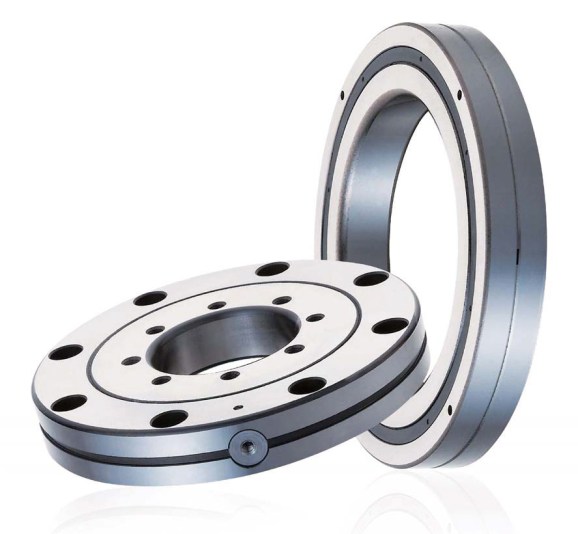
 Industrialization: Environmental-friendly method through re-utilization of aluminum wastes and reduction of carbon emission was developed. Aluminum granule (99%) is used as a material for high-quality ferroalloy (ferromolybdenum, ferrovanadium), and the size of the global market is about KRW 500 billion. Therefore, the balance of trade would be achieved with exports around the world. Essential technology and recycling facilities will be exported.
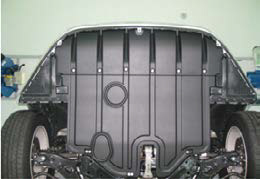 Problem-solving in industrialization: Plate-type lower stiffener was susceptible to deformation in a crash and was hard to obtain the strength of the car body in the installed part. Accordingly, foam was added to improve the stiffness of stiffener and the number of mounting in the car body was added; this resulted in the deformation of the car body and higher repair costs in a low-speed crash. To solve the problem, stiffener can be separated under more than a certain amount of crash impact.
 Industrialization: In 2012, POSCO employed non-coating metal bipolar plate using structural steel in cooperation with Doosan Fuel Cell (formerly Fuel Cell Power) for the first time in the world, thus succeeding in producing 1kW stack and obtaining the certificate of new & renewable energy system from the Korea Energy Management Corporation. In particular, coupled with the development roadmap for eco-friendly vehicles of global automobile companies, the company is in cooperation with bipolar plates for fuel cell vehicles. To promote the strategic items of core materials and components for exports, it is developing a commercialized technology that corresponds to the mass production. In particular, the industrialization of forming parts as well as materials is underway by packaging material technology with fuel cell bipolar plate applied to ultra-thin plate, which was jointly developed with small & medium-sized enterprises. The core material & parts of fuel cell is expected to develop as an export item.
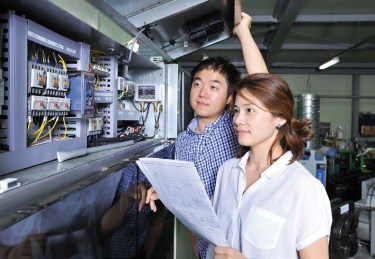 The core technology of this research task ‘hybrid dehumidification air conditioning system technology that performs mechanical dehumidification and desiccant dehumidification with compressor waste heat simultaneously’ acquired green technology certificate (Dec. 2011 ~ Dec. 2015), and won IR 52 Jangyoungsil award (Nov. 7th, 2011) for 40% of energy saving. Product utilizing such technology includes hybrid dehumidifiers, hybrid condensation dehumidifiers, and hybrid HACCP dehumidifiers, and large products include hybrid out air dehumidifiers. For hybrid out air dehumidifiers used in the ship painting process, existing combination system (pre-cooler + desiccant dehumidification) shows 15,000CMH, while AT ENG’s product shows 22,000 and 30,000CMH; doubled performance with identical power. Therefore this product may improve productivity and offer 40% or more energy saving at the site, and will take center stage as a main product in shipping industry.




 Korean-Machinery.com