Micro-Compact Electric Vehicle

https://korean-machinery.com///inquiry[INQ. NO. 1805M23] Daechang Motors’s DANIGO is Korea’s flagship micro-compact, two-passenger electric vehicle model with a length of 2.32meters and a width of 1.2meter.
It weighs 430 kg including battery (7.25 kWh). As for fuel efficiency, it can travel at a maximum speed of 80 km/h and up to 100 km distance on a full charge. In case of driving 30km per day for one year, it can save electricity costs by about KRW 76,000. The mileage on a single charge and power rates can vary depending on driving habits and road conditions.
DANIGO can be charged with a 220V household outlet or a slow charger, and it is the first micro compact electric vehicle to be equipped with a rear camera to ensure safety when backing up or parking. It is also equipped with an air conditioner and heater featuring optimum energy efficiency as well as red lamps that are efficient and bright. A roof rack can be installed separately with an optional loop carrier available. DANIGO has received driving certification from Korea’s Ministry of Land, Infrastructure, and Transport (MoLIT) and signed a supply contract with the American Electric Drive Transportation Association (EDTA).

korean-machinery.com | Blog Magazine of korean-machinery, brands and Goods
SIMTOS 2018

https://korean-machinery.com///inquiry

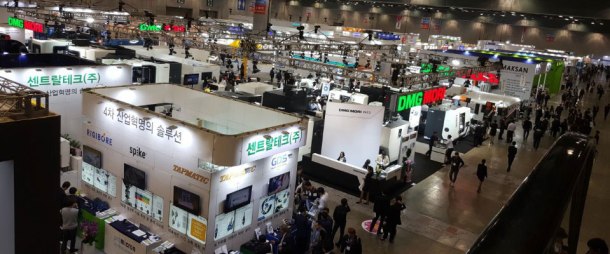
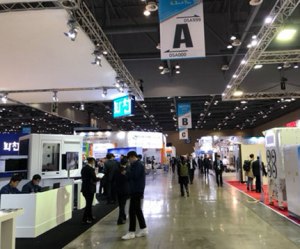
As many as 1,222 companies from 35 countries have showcased products keeping pace with the rapidly changing manufacturing environment.

This year’s exhibition was meaningful as the numbers of visitors that had been sluggish due to the recession in the manufacturing industry in recent years has turned into a recovery and the exhibition regained its stature of accommodating 100,000 visitors again in four years. SIMTOS 2018 was attended by approximately 103,000 visitors, which was an increase of 5.4% compared to last year.
Prominent visitors to SIMTOS 2018 included buyers from those emerging demand regions such as Southeast Asia and Eastern Europe whose markets are difficult for Korean companies to access. A buyer from Oman remarked, “Since we have used Korean machine tools, I have high confidence in Korean products. I believe that they are price-competitive and the quality is as high as any machine tools from advanced countries. Through this visit to SIMTOS, we hope to supply excellent Korean products to the Oman market.”
Behind such active participation of foreign buyers with high purchasing-power lies the effort of the Korea Machine Tool Manufacturers’ Association (KOMMA), the organizer of SIMTOS, to invite buyers from months before the exhibition. Through Matchmaking4U, a matching program between participating suppliers and buyers that has been verified over a long time, KOMMA managed the targeted foreign buyers from the time of the exhibition to on-site consultation during the fair. A large number of buyers’ conferences held in SIMTOS has led to actual contracts, thus directly contributing to the profit generation of exhibitors.


The exhibition concept of many companies participating in this event held in the winds of change of the “4th Industrial Revolution” featured primarily the 4th Industrial Revolution and Smart Factory. Exhibits varied from equipment integrated with ICT technology to automation parts, measurement systems, and tool management systems.
In particular, the Special Exhibition Hall for the 4th Industrial Revolution, opened for the first time this year, attracting attention by demonstrating trial performances centered on processing equipment and suggested ways to build more realistic smart factories. One visitor remarked, “Although the smart factory has been controversial for a long time, I still consider that most talks are not beyond conceptualization. Taking a look around at this exhibition, however, it dawned on me how SMEs need to approach smart factory construction.”
While SMEs’ interest in factory automation is increasing more sharply than ever before in line with the policy issues such as rising minimum wages and shortening working hours, the global equipment manufacturers participating in SIMTOS 2018 largely showcased compact automation and complex solutions. Major machine tool manufacturers such as Doosan Machine Tools, DMG Mori, Yamazaki Mazak, Hyundai Wia, and Hwacheon have exhibited a large number of products using automation applications such as Gantry robots and multi-pallet systems, attracting keen attention from the visitors.
Suppliers of automated cutting equipment such as Bystronic, AMADA Korea, H. K., J. Trump GmbH Korea introduced automation and complex solutions including folding machine automation models for removable robot system and modular multifunction equipment that can implement various functions by attaching a module to a punching machine.
Other exhibits included numerous products released in response to the increased demand for processing equipment for difficult-to-cut materials such as titanium, carbon fiber composite materials, and nickel alloys. In addition, considerable attention was paid to highperformance and high-stiffness equipment as well as machining simulation software to prevent unnecessary cost and reduce time wastage by minimizing errors while processing high-cost difficult-to-cut materials.
SIMTOS 2018 has provided more than 30 events such as the 4th Industrial Revolution Conference and the CAD/ CAM Conference and a variety of accompanying events including a photo zone, stamp tour, and technical tour, offering abundant attractions and entertainment.

korean-machinery.com | Blog Magazine of korean-machinery, brands and Goods
Water Purification Filters

https://korean-machinery.com///inquiry[INQ. NO. 1805M05] Micro Filter is a manufacturer of water purification filters for household and industrial applications. Founded in 1996, with more than 250 employees and annual sales of more than $50million, Micro Filter has global customers like BOSCH and SAMSUNG broadening its market basis with more than 70 partners in 5 continents.
Mirco Filter is exploring the overseas markets with its 5 major water filter products. M9 is the frontrunner of the filter products; with 8, 11, and 13-inch filters, and M9 can be installed as an ‘under the sink system’ in general household.
FLUUX is a commercial filter system for facilities with high flow rate, such as hotels, restaurants, and cafes. 10/15/17/21-inches long filters can be arranged in serial, serial-parallel, and parallel structures.
FX-Series is a hybrid filter that offers 4 layers of water purification system, namely: felt, carbon blocks, UF membrane, and polyphosphate. According to the type of carbon blocks, the FX Series can filter bacteria (FX), lead (FXL), chloramine (FXC), and offer scale reduction.
IEN-Series has features of scale reduction and eliminating the taste and odor of chlorine, with ION exchange resin and activated carbon protecting espresso machines, ice makers, and boilers. K3 is a carbon-block based, in-line filter and has acquired the most NSF claims in South Korea.

korean-machinery.com | Blog Magazine of korean-machinery, brands and Goods

Pipe Cutting and Beveling Machines

https://korean-machinery.com///inquiry[INQ. NO. 1805M04] EEstablished in 2008, DCSENG has been manufacturing its S-Cutter, a cutter made exclusively for pipelines. For the first time as a latecomer in Asia, DCSENG has been recognized for its quality and ability to compete with advanced European products.
DCSENG has produced and supplied a comprehensive selection of pipe cutting machines that can be customized to suit all clients’ needs, regardless of the size, thickness, and material of the pipes.
Semi-automatic cutter S-500 is a cutter that adopts the world’s first ‘pipe rotation cutting’ method. It is possible to cut and bevel the pipes that have O.D ranging from 16mm (3/8inch) to 510mm (20inch). While the existing cutter cuts the pipes turning around the pipes, this cutter was intended for pipes rotating around to be cut. This superior technology well explains how this late starter could win such a high reputation among the industries.
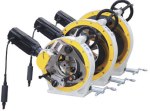
Unlike the existing manual cutters, the company’s handleless semi-automatic cutter S-150 was developed to be safely and conveniently used. Also, it allows not only more precise cutting, but also high-quality cutting and beveling on a regular basis. This cutter can cut the pipes (from 0.5mm to 12mm in thickness) and it is possible to cut and bevel the pipes (from 6mm -when using Collet- to 170mm in O.D).

While actively endlessly pioneering domestic and overseas markets, DCSENG started export to China, Japan, and Vietnam in 2013. In 2017, it established overseas agencies in Russia and Vietnam. Currently, they have agencies in China, Japan, Vietnam, and Russia.

korean-machinery.com | Blog Magazine of korean-machinery, brands and Goods

Metal Roofing Tile-Making Machine

https://korean-machinery.com///inquiry[INQ. NO. 1805M03] Dongyang Industrial Machinery is a specialized company for metal roofing tile-making machines and stone-coated metal roof tiles utilizing its own technology and know-how accumulated over the past years.
Dongyang has been developing various types of roof tile machines, roll forming machines and cladding & facade machines. It has enjoyed exporting to 15 countries around world, and has gained a high reputation for the steady development of design and technology.
DS roofing system is a brand of stone-coated metal roof tiles, which has been designed and manufactured with the company’s own fully automatic stone coating line. Finest aluminum zinc alloy-coated steel covered with Italian ceramic-coated stone granules resisting fading and UV penetration. These tiles are lightweight and extremely durable, and are resistant to damage by wind, fire, and natural disasters like earthquakes, etc. They offer texture, style and longevity, all of which are not found in traditional metal roofing products. They are being supplied to customers in more than 25 countries, and have proved their qualities in various environments.
Dongyang is confident that based on its know-how on the manufacture of machinery according to the needs of customers, it can ensure you feel its differentiated technology and satisfaction, being different from other existing companies.

korean-machinery.com | Blog Magazine of korean-machinery, brands and Goods

Liquid Filling and Packaging System

https://korean-machinery.com///inquiry[INQ. NO. 1805M02] Pack Cheon Machinery Co.,Ltd.(packon) is a global manufacturer specialized in rotary net weight filling and packaging solutions based in South Korea since 1988 with its ambition to ensure customer satisfaction and reliable partnerships in lubricants, chemicals, household, cosmetic, food, and pharmaceutical industry.
Over the past 30 years, packon has been recognized for its tremendous turn-key projects worldwide with its extensive products range from bottle unscrambler, bottle cleaner, orienter, inline/rotary net weight filler and capper, various inspection equipment, labeler, case packer, up to palletizing solutions for each customized performance standard and requirements.


Rotary Net Weight Filler (RWF series)

Liquid filled in big production lots can lose heat as time passes. In colder conditions or with uncontrolled filling equipment, large volume deviation can result in loss of product and higher costs. The answer to this problem is net weight filling.
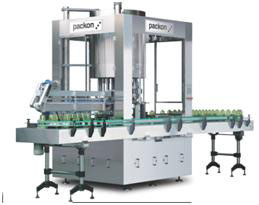
Packon RWF series are rotary filler models that use the net weight filling principle. Every filling station has a weighing plate over an electronic load cell. This is connected to an independent controller linked to the main processor designed by packon to achieve high filling accuracy of +/-0.1%.
This filler is equipped with an industrial computer and a color touch screen. The user-friendly interface with illustrated operational keys and simple selection from pre-set parameters make it possible to set up production item and use the machine conveniently. Easy connection to supervision system, you can see the actual operation status through the office computer. The series can display the filling graph in real time, and supports self-detection of false filling with warning signal and auto rejection, auto evaluation of filling weight with target weights and correction for following cycle. Also, production data is available with spreadsheet, such as the final filling weight, Min. & Max, Standard deviation, sigma value and others.


Rotary Pump Capper (RPC series)

This RPC series is specially developed for a dosing and trigger pump cap with dip tube as a multi-purpose capper using the planetary driven roller capping head. Screw-on caps & snap-on caps are also available by option. A magnetic clutch is practically applied for capping torque adjusters. Automatic height adjustment with pre-set data is possible by selecting HMI. It is easy to use with the help of the HMI control panel. High reliability of inserting is enhanced accurately by adopting the special dip tube guide.
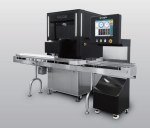
The system is being recognized with more safety features; No-bottle Nocapping function, Timing screw jamming detection device with warning & machine stop function, torque limiter for inner & outer star-wheel with warning & machine stop function, and Warning function for compressed air pressure drop, cap shortage, height adjustment limit.

korean-machinery.com | Blog Magazine of korean-machinery, brands and Goods

Pharmaceutical Packaging System

https://korean-machinery.com///inquiry[INQ. NO. 1805M01] COUNTEC, celebrating its 40th anniversary this year, is growing as a global enterprise supplying various pharmaceutical packaging systems integrated with advanced technologies based on its proprietary technology development to both domestic and overseas markets.


VICOB (All-In-One System, Visual Inspection & Counting & Bottling)

The existing bottle packaging process is vulnerable to risks of contamination, damage and undesired introduction of foreign substances until just before bottling. As VICOB, using both a camera and a sensor, inspects and counts the product by video whether it is normal or not until just before bottling, only defect-free products are bottled. You can inspect, count and bottle all kinds of drugs, such as general tablets, multiple tablets, capsules, soft gels, etc., with this one piece of equipment.
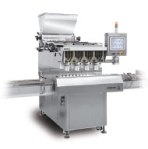
 

Automatic Counter

This is a device for counting tablets, capsules, etc. with an electronically controlled automatic system. Tablets supplied to the hopper are transferred to the sensor part and the shutter part through multiple vibrator trays, counted accurately, and put into the container. In order to enhance the accuracy of counting, up-to-date technological functions are applied, such as the shutter time checking, dark & light timing, vibrator self-adjusting, speed vibration, etc. Especially, as the funnel goes into the container while moving up and down, tablets do not fall out of the bottle and are easily counted through the function of the funnel vibrator.
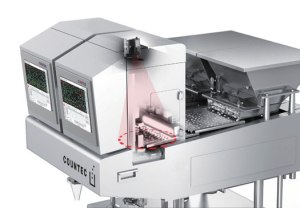
 

COVISS (Vision Inspection System)

COVISS can detect in advance tablets and capsules of colors, sizes and appearances different from those designated, broken tablets, foreign substances, etc. on the track in the process of filling such tablets and capsules into bottles. You can either stop the filling process and eliminate such abnormal items directly or reject them automatically. This is a creative system that the worker can operate conveniently as the product is set easily and quickly through the auto teaching system. While the existing version of other company’s equipment uses a bulky and complicated exterior system by putting it on the counting machine and has to install a separate control system, the vision inspection system has a creative and simple design and has an optimal form not requiring any separate control system. This system has been self-developed in the modular form after a long testing time based on the experience of COUNTEC’s experience in counter development, and it is an innovative technology that can be installed in the company’s existing counters.
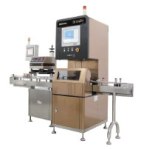
 

Inspect Seal (Induction Sealing Failure Reject System)

This is a system that checks the container sealed in an induction sealing machine with a thermo-graphic camera when it enters the inspection machine and rejects it in case of failure. It is ground-breaking technology enabling you to check the sealing status inside the cover, which is impossible to check with the naked eye. As the data inspected with the thermographic camera is displayed on the monitor in real time, you can quickly and easily monitor the sealing status. Inspect Seal is easily and conveniently linked to the existing line and does not affect the production speed.

korean-machinery.com | Blog Magazine of korean-machinery, brands and Goods

Cold Rolled Steel

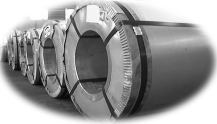
https://korean-machinery.com///inquiryHanmi Resources Co., Ltd., is a Korean based international trading company, which has been incorporated for about 20 years and much experience in iron and steel products and as marketing agent of related machinery & engineering services. The company’s iran and steel products include:

– Steel Sheet & Coils, Galvanized, Pre-painted, Tin Plate
– Steel Pipes, Tube, Steel Bars, Angles, Channels, Rails
– C.H.Q. Wires, Bearing Steel Wires, Ropes, Cables

The company’s corporate philosophy is to do the very best for the clients with sincerity, and to improve both the quality of business and life. Hanmi Resources will do everything possible to ensure the success of your business, so that we can continue to work together for an extensive time.


Specifications:

JIS G 3141 SPCC, SPCD, SPCE
JIS G 3311 (Carbon, Alloy, Tool Steel)
ASTM A 109, ASTM A 366, ASTM A 619, ASTM A 620,
BS 1449/1, BSEN 10130-91, BSEN 10131-92
DIN 1624-87, DIN 1623/2-86
ISO 3474-86 (CR 1/2/3/4), ISO 5954-84(CRH 50/60/70)
Australia/N.Z. AS1595 NZCC NZCE, CA-2SE/CA55NE

Features:
– Commercial quality is used for simple bending, forming or drawing, and has a wide range of uses for automotive, home appliances, building and civil works and base metals for various kinds of pre-painted steel products.
– Drawing quality is used for better than the commercial quality, it’s high formability is used for automotive panels, audio-visual equipment and other heating apparatuses.
– Deep drawing quality is used for the parts of complicated and severe forming products, mainly for the automotive front panels and rear fenders.


korean-machinery.com | Blog Magazine of korean-machinery, brands and Goods

Robot Industry, the Biggest Beneficiary of the 4th Industrial Revolution

https://korean-machinery.com///inquiryThe industrial robot parts produced in China and education services in China and Japan are emerging as the most promising in each industry. In order for Korean robot companies to expand into the global market, it is necessary to seek strategies to enter diverse markets such as joint technological development and investment with local companies by targeting core technologies and markets of promising fields.
In regard to the robot industry, which is emerging as the convergence of traditional manufacturing technologies and information and communications technology (ICT) for the future and the biggest beneficiary of the 4th Industrial Revolution, the global market conditions and prospects was presented along with analysis of the latest technological trend, while local companies were offered a substantive roadmap to expand into foreign markets.
According to the report, Global Robot Industry Market Trends and Strategies to Make Inroads, recently published it is essential to secure technological competitiveness in smart factories, machine learning, cooperative robots, artificial intelligence, etc. for invigoration of expansion into Asian global markets based on robust domestic demand with the number of sales.
Demand for industrial robots is on the rise due to the global companies’ efforts to modernize and automatize production facilities, improve energy efficiency, utilize new materials, and improve product quality. According to the International Federation of Robotics (IFR), a 15 percent annual growth rate is expected by 2020.
China is currently the world’s largest market with 30% market share, but its robot density is significantly lower than that of advanced countries, which leaves its potential still high. The robot sales in China are expected to increase by 140% by 2020. In particular, Korean companies have high potential to export to China in terms of core components such as controllers and speed reducers, which are difficult to produce in China. As of 2016, exports of robot parts to China amounted to KRW 36 billion, up 74% from the previous year.
Even in the advanced markets such as the USA and France, where there are no companies within the global top 10, Korean products have a good reputation for their cost-effectiveness and installation technology. Eastern Europe, India, Thailand, and Brazil are also emerging as new sources of demand despite relatively small market sizes at present, anticipating an annual growth of more than 20% by 2020. However, there is only a limited potential for entering into Japan and Germany where robotic technology for manufacturing is the most advanced.
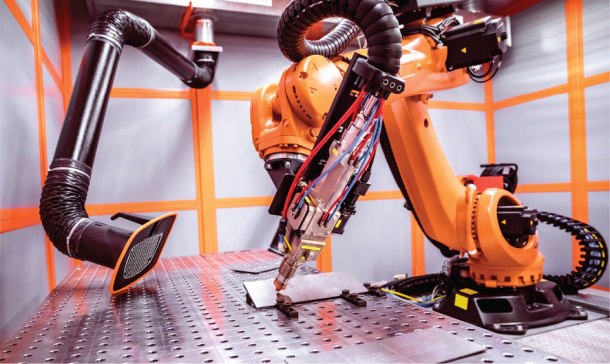
Although it is not easy for Korean companies to narrow the technological gaps against leading global companies in the conventional robot industry, it is necessary to secure technologies related to smart factories and cooperative robots that are currently in the limelight.
Siemens and Adidas have completed the construction of a smart factory equipped with full-blown automation and intelligentization throughout the entire manufacturing processes based on ICT, and are accelerating technological development in the USA, China, and Japan. As machine learning is an essential technology for materializing efficient smart factories, Yaskawa Electric Corporation, a Japanese manufacturer of servos, motion controllers, AC motor drives, switches and industrial robots, has introduced a machine learning software that is capable of mastering a selected craftsmanship within two hours. As for cooperative robots for which the market growth is in full swing from US$100 million in 2015 to US$1 billion in 2020, it is necessary to preempt core technologies such as lightweighting and robot mobile technologies.
It is also expected that the robots market for global services will grow significantly. IFR expects service robots for special purposes and personal services such as housekeeping to grow by 20-25%, 30-35%, and 20-25% each year by 2020. In particular, it anticipates an explosive increase in demand for logistics robots including AGV, an essential item for smart factories, medical robots for surgery and treatments, and promotional robots to provide customers with guides or information.
Held last January in Las Vegas, United States, CES 2018 was dominated by robots equipped with AI. Aibo, a robotic pet produced by Sony, and Sophia, a humanoid robot developed by Hanson Robotics, and some others demonstrated great adaptation in everyday human life through dialogues, questions and answers, and games with human participants. Also, visitors flowed in and out all day at the booths exhibiting displaying housekeeping and entertainment robots.

The most promising field for Korean companies to expand is the educational robots market where global companies have yet to enter. In particular, Korean company’s technological prowess is evaluated positively in the countries with high demand for English education such as China and Japan. It is necessary, however, to develop technologies such as facial recognition for user verification, emotion recognition, speech recognition, and big data in order to ensure product differentiation and competitiveness.
In terms of strategies to make inroads into global markets, it is desirable to reduce the risks involved with overseas expansion by cooperating with local venture capital, accelerators, and start-ups. Meanwhile, American venture capitals’ investments in the U.S. robotics industry are increasing rapidly, while Japan is actively supporting alliances with overseas start-ups and accelerators for the advancement of service robots at the government level. In the case of Chinese companies, the demand for technological cooperation to develop sensors and artificial intelligence is high, thereby making it easy to promote joint research and development programs.
“The robots industry, which is experiencing a rapid increase in global demand, will become a representative food business in the era of the 4th Industrial Revolution,” said Yoon Won-seok, an executive of the Korea Trade-Investment Promotion Agency (KOTRA). “Korean companies need to seek global cooperation such as joint R&D with robot technology leaders and exchange of technology and investment. We will be able to enhance our competitiveness in the global robots market by seizing initiative of future-oriented core technologies such as cooperative robots and AI technologies based on our strengths in IT and manufacturing technology.”

korean-machinery.com | Blog Magazine of korean-machinery, brands and Goods

Industrial Motors

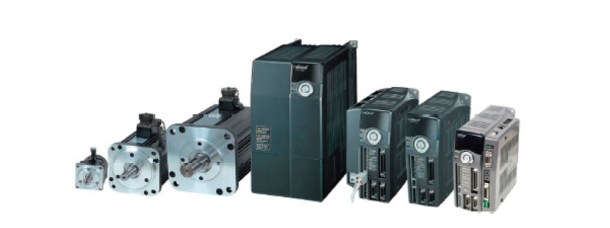
https://korean-machinery.com///inquiry[INQ. NO. 1803M10] In the field of factory automation systems that have significant line-operating losses and risks, motor quality and reliability are the most essential requirements. Therefore, a good motor is supposed to have fine electrical characteristics such as torque, power, and efficiency, and should have smooth rotation as well as durability. In particular, motors that are carefully applied to the main types of factory automation such as robots, are required to be compactness, high-efficiency precision, and high responsiveness with high energy-density.
Based on elevator motor technology of all the industrial motors, Higen Motor Co., Ltd. ensures a high reliability in product quality and functions. In recent years, Higen Motors has been producing high-performance products by acquiring elevator motor technology with inverters commercialized recently. In addition, the company produces stable high-quality motors by using automatic machines for part processing. Meanwhile, the servo systems have built-in components including high-output and high-torque motor, a drive that control them effectively, and a high-resolution encoder that is essential for high-precision control.
Higen Motors manufactures motors and designs structures using low-loss materials to achieve high output with high efficiency and low electricity. In addition, the manufacturing process is managed in order to achieve low vibration, low noise, and high insulation performance and is also aimed to obtain high-durability through improved processing precision.


In general, aluminum die-casting technology of rotors is very important for induction motors, and the motors produced by Higen Motors are manufactured by using a special casting machine for motors. The servo motor and servo drive undergo a lot inspection by using the specially designed inspection equipment to avoid any fault under various environmental conditions, while a high reliability is ensured through aging.
Higen Motors is a company that develops and produces controllers, servo drives, and servo motors that are the main components of robots. Although the company already supplies products to Korean robot producers, the demand is very low in reality. Like the servo market, the robot market in Korea has ended up in the arena of the struggle among the global players. Under such circumstances, Higen Motors has advanced into the robot business based on its accumulated technology and product power and set a new goal of improving competitiveness through vertical integration of products. The ultimate goal of Higen Motors is to become an industry’s giant to compete against Siemens and Mitsubishi in global markets as well as domestically through the diversification of collaborative robots, starting with Delta robots and 6-axis articulated robots.
Higen Motors has successfully completed “Development of GMC based on Standardized Korea Open Source Motion System for Automated Manufacturing (KOSMOS)” a project to develop an open source based motion control system supporting the PLCopen standard, through organic cooperation with related organizations. In addition, the company is currently engaged in research on extended control for general motion control and a variety of robot kinematics. Through such a series of technological development activities, Higen Motors plans to advance to the core technology of automation and robot control composed of high-performance servo motor, sensor, servo drive, and motion control system. Higen Motors has been an eyewitness to the 54-year history of motor development and localization. Now, in the era of the 4th industrial revolution, Higen Motors plans to devote itself to developing IT control technologies with intelligent motor and control technology as a core competency for future growth.


korean-machinery.com | Blog Magazine of korean-machinery, brands and Goods